Christmas Cranberry Orange Chicken in One Skillet
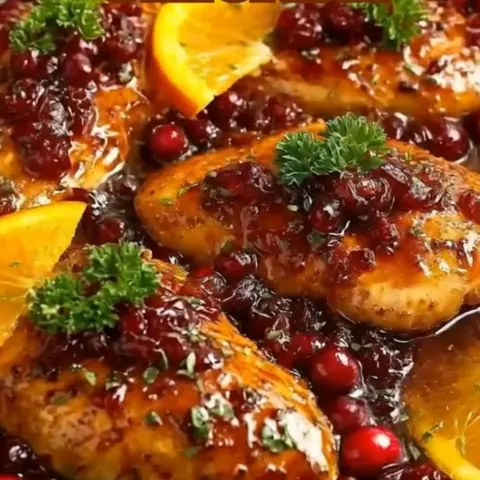
Tender chicken breasts simmered in a glossy cranberry orange sauce with whole berries and orange slices, finished in one black skillet for a festive holiday dinner.
Published 12 min read
- Total time
- Prep
- Cook
- Rest
- Serves
- 4
- Cuisine
- American
- Calories
- 520
- per serving, estimated

On this page16 sections
Think of a holiday dinner that looks special but comes together in one skillet. Glossy cranberry orange sauce, whole berries, bright orange slices and chicken breasts that stay juicy and tender from the first bite. This Christmas cranberry orange chicken brings festive color to the table without a complicated plan. Read on for the method, the sauce ratios and the small steps that keep the meat moist while the glaze thickens.
Christmas cranberry orange chicken is a single-pan dinner built around a sauce that tastes like the season. Chicken breasts are seared until golden, then finished in a bright simmer of cranberries, orange juice, garlic and a little sugar. The cranberries burst and release their tartness, the orange brightens every spoonful, and a light cornstarch slurry gives the sauce a glossy, spoonable body. Because the chicken cooks in the same skillet as the glaze, every piece absorbs flavor while it stays moist. The result is a plate that looks like a holiday centerpiece and needs only a green vegetable or mashed potatoes alongside it. The whole process takes about an hour from the first sear to the finished plate, and most of that time is hands-off simmering.
The appeal
Why you’ll love it
Searing the chicken first builds a golden crust and browned bits in the bottom of the pan. Those bits are full of flavor, so when the cranberry liquid goes in and you scrape the skillet, the sauce picks up a savory depth that plain simmered fruit would never have. Starting with a hot pan and dry chicken gives you color quickly without overcooking the inside. Searing also seals the surface, which helps the meat hold its juices during the gentle simmer that follows.
Cooking the cranberries directly in the sauce lets them break down at their own pace. The berries release pectin and natural tartness, which thicken the liquid slightly, while the sugar balances the sharpness and the orange juice adds sweet citrus. Adding the cornstarch slurry near the end, rather than at the beginning, keeps the glaze glossy and prevents it from turning gluey. Finally, returning the chicken to the simmering sauce and covering the pan allows the meat to finish cooking gently, so the breasts stay tender instead of dry.
What you need
Ingredients
Makes 4 servings.
Cranberry orange sauce
Tools
Equipment
- Large black cast-iron skillet
- Tongs
- Instant-read thermometer
- Small saucepan
- Whisk
- Cutting board and sharp knife
- White ceramic serving plate
Swaps
Substitutions
Instead ofFresh or frozen cranberries
UseWhole-berry cranberry sauce, about 1 1/2 cups, reduced in the same way
Instead ofGranulated sugar
UseLight brown sugar, packed, for a deeper, molasses-like sweetness
Instead ofChicken broth
UseWater with an extra pinch of salt, for a lighter sauce
Good to know
Notes
Boneless skinless chicken breasts are the cleanest choice for this recipe because they cook evenly and slice neatly after resting. If you prefer more flavor and a little more forgiveness, bone-in breasts work too, but they need about 5 to 8 extra minutes in the covered simmer and a thermometer check at the thickest part. Pound very thick breasts to an even thickness before searing so the centers cook through at the same rate as the edges.
A large black cast-iron skillet is the best tool here because it holds steady heat, browns the chicken well and can go directly from the stovetop to the table. A wide nonstick skillet with a lid also works. Fresh cranberries and frozen cranberries both perform well: do not thaw frozen berries first, simply add them to the simmering liquid. Orange juice should be fresh if possible, since bottled juice can taste flat once it is reduced with sugar and cranberries.
Prep
Before you start
Before you turn on the stove, take the chicken out of the refrigerator and leave it on the cutting board for no more than 30 minutes, so it does not warm to an unsafe temperature. Pat each breast completely dry with paper towels, because dry surfaces brown properly and dry chicken will not steam in the pan. Slice the orange into thin rounds and set them aside. Measure the orange juice, the broth and the sugar into a bowl, mince the garlic and mix the cornstarch with the cold water in a small dish. Having every ingredient ready means you can move quickly once the chicken is seared and the sauce starts to simmer. Rinse and dry your hands, the cutting board and the knife once the raw chicken is handled, and clean the surfaces right after you finish.
Step by step
Method
Phase 1
Sear and build the sauce
Step 1: Season and sear the chicken
Pat the chicken breasts dry with paper towels and season both sides with kosher salt and black pepper. Heat the olive oil in the black cast-iron skillet over medium-high heat until it shimmers. Lay the chicken in the pan and sear for 4 to 5 minutes per side until golden. Transfer the chicken to a plate.
You’ll need: boneless skinless chicken breasts · kosher salt · black pepper · olive oil
Look for: Chicken releases easily from the pan and shows a deep golden crust on the underside.
Tip: Keep the chicken refrigerated until it goes into the pan, and never leave it out for more than 30 minutes.
Step 2: Build the cranberry orange sauce
Lower the heat to medium. Add the garlic, orange juice, chicken broth, sugar and cranberries to the skillet, scraping up the browned bits. Bring to a simmer and cook for 5 minutes until the cranberries begin to pop.
You’ll need: garlic · orange juice · chicken broth · granulated sugar · fresh or frozen cranberries
Look for: Cranberries have started to burst and the liquid looks loose and bright red.
Tip: Scrape the bottom of the pan well, since those browned bits add rich flavor to the sauce.
Checkpoint
At the end of this phase the chicken should have a deep golden crust on both sides, and it should be lifted out of the skillet onto a plate. The pan will hold a layer of golden drippings and browned bits. Once you add the garlic, orange juice, broth, sugar and cranberries, the liquid should bubble gently and the cranberries should begin to split and release their red color. Check that the sauce is simmering evenly across the pan and that you have scraped up all the browned bits from the bottom. The smell should be bright, citrusy and slightly savory, and the mixture should look loose but glossy. If the sauce bubbles too hard, lower the heat before you go on, so the cranberries break down gently instead of scorching on the bottom.
Phase 2
Thicken and simmer the chicken
Step 3: Thicken the glaze
Stir the cornstarch and cold water together in a small bowl until smooth. Stir the slurry into the simmering sauce and cook for 2 minutes, stirring, until the sauce turns glossy and coats a spoon.
You’ll need: cornstarch · fresh or frozen cranberries
Look for: The sauce turns glossy and thick enough to coat the back of a spoon.
Tip: Stir the slurry again just before adding it, because cornstarch settles quickly.
Step 4: Return the chicken and add orange
Return the chicken breasts to the skillet with any juices from the plate. Arrange the orange slices around the chicken and spoon the sauce over the top. Cover and simmer over low heat for 10 to 12 minutes, until the chicken is cooked through.
You’ll need: boneless skinless chicken breasts · orange
Internal temperature 165°F (74°C)
Look for: Chicken is opaque and the sauce clings to every piece.
Tip: Spoon the sauce over the chicken several times so the meat stays moist and well coated.
Checkpoint
At the end of this phase the sauce should look thick, glossy and spoonable, clinging to the back of a spoon rather than running off it. The cranberries should be mostly burst, and the whole berries should still be visible in the glaze. After you return the chicken and orange slices and cover the skillet, the meat should look opaque and pale all the way through when you cut the thickest piece. Check the internal temperature with an instant-read thermometer in the thickest part, and confirm that it reads at least 165°F (74°C) before you move on. The kitchen should smell warm and fruity, and the sauce should have reduced slightly during the covered simmer.
Phase 3
Rest and serve the glaze
Step 5: Rest and plate with glaze
Transfer the chicken to a plate and let it rest for 5 minutes. Spoon extra cranberry glaze over each piece, scatter the orange slices on top and garnish with chopped parsley if you like.
You’ll need: boneless skinless chicken breasts · fresh parsley · orange
Look for: Chicken feels firm but springy, and the juices stay in the meat when sliced.
Tip: Spoon the warm glaze on just before serving so it stays glossy.
Step 6: Serve the glazed chicken
Set the chicken on a white ceramic plate, spoon the cranberry orange glaze over the top and serve warm straight from the skillet. Cut into a piece to check that it is moist and fully cooked throughout.
You’ll need: boneless skinless chicken breasts · fresh or frozen cranberries
Look for: The sauce is glossy and the chicken looks tender and moist inside.
Tip: Slice the chicken across the grain so each bite stays juicy and tender.
Checkpoint
At the end of this phase the chicken should be resting on a plate, firm to the touch but still moist and springy, with the juices staying in the meat when you slice it. The glaze should be glossy and warm, spooned generously over each piece, with orange slices scattered on top. Look for bright red berries, a sheen on the sauce and no pooling of thin liquid around the chicken. Before serving, cut into the thickest piece to confirm it is cooked through and tender, with no pink at the center. If the sauce has thickened too much on the plate, add a spoonful of warm broth or orange juice to loosen it.
Doneness
How to tell it’s done
The dish is ready when the exterior shows even golden color, the center feels tender when pressed gently with a fork, and the sauce coats the back of a spoon glossy and fragrant.
Avoid these
Common mistakes
Avoid crowding the pan or flipping too early before a crust forms, keep the burner at steady medium-high heat so aromatics never scorch, and season in balanced layers rather than only at the end.
Cook safely
Food safety
Safe internal temperatures
Cook to at least these temperatures, measured with an instant-read thermometer in the thickest part.
| Food | Minimum internal temperature |
|---|---|
| Poultry | 165°F (74°C) |
Better results
Tips
Tip 1
Keep an instant-read thermometer in the drawer for this recipe. Chicken breasts vary in thickness, and the only reliable sign of doneness is a reading of 165°F (74°C) at the thickest point. Check two pieces rather than one, and avoid bone contact if you cook bone-in breasts. A thermometer also protects the texture, because pulling the chicken at the right moment keeps the meat tender and prevents the dryness that comes from overcooking.
Tip 2
Make the cranberry orange sauce a few minutes ahead of the chicken if you want a calmer evening. The sauce simmers, thickens and tastes better after it has stood for a short while, so you can prepare it while the chicken rests and reheat it gently. Stir in a splash of orange juice or broth if it has thickened too much. Taste it once it has cooled slightly, and add a pinch more salt or a little more sugar to balance the tartness to your liking.
Make it yours
Variations
Boneless thighs
Swap the chicken breasts for boneless skinless thighs, which stay more tender during the covered simmer. Sear them for a few minutes longer and check that the thickest part reaches 165°F (74°C) before serving.
Spiced holiday version
Add a cinnamon stick and a pinch of ground cloves to the sauce while the cranberries simmer. Remove the cinnamon stick before thickening, so the glaze keeps a warm, festive flavor without any woody pieces.
Maple sweetened glaze
Replace the granulated sugar with pure maple syrup, adding it to taste near the end of simmering. The maple adds a rich, mellow sweetness that pairs especially well with the orange and the sharp cranberries.
Orange ginger twist
Grate a teaspoon of fresh ginger into the sauce along with the garlic. The ginger brightens the citrus and gives the cranberry glaze a lively, slightly spicy finish that suits a festive dinner.
On the table
Serving suggestions
Serve the glazed chicken family-style on a large platter with the sauce spooned over the top and orange slices scattered on the side. Roasted potatoes, buttery mashed potatoes or wild rice soak up the glaze well and balance the sweet tartness of the cranberries. A simple green vegetable such as roasted green beans, sautéed spinach or a crisp green salad adds freshness and color to the plate. Garnish with chopped fresh parsley just before serving so it stays bright green against the red sauce.
For a holiday table, plate each piece on a white ceramic dish, spoon the warm glaze over the chicken and add a few extra orange slices for color. Pair it with a crisp white wine or a sparkling water with a twist of orange for a festive touch. Serve the sauce in a small bowl on the side, so guests can add more to their taste. Warm plates keep the chicken and glaze at the right temperature, and carving the breasts in front of your guests makes the dinner feel like a special occasion.
Leftovers
Storage & make-ahead
- Fridge
- Store covered in an airtight container in the refrigerator for up to 3 days.
Store leftover chicken and sauce in separate airtight containers in the refrigerator. Cool the chicken and sauce for no more than 2 hours at room temperature before refrigerating them, and divide large batches into shallow containers so they chill quickly. Keep the chicken for up to 3 days and the cranberry orange sauce for up to 5 days. Keep the orange slices with the chicken, since they soften after a day but still taste good. Label the containers with the date so you can track freshness. When you serve leftovers, spoon out only what you need and return the rest to the refrigerator promptly, so the meat and glaze stay fresh and safe to eat.
Make ahead
You can make the cranberry orange sauce up to three days before you plan to serve the dish. Simmer the cranberries, orange juice, sugar, garlic and broth, then thicken with the cornstarch slurry, and let the sauce cool before storing it in the refrigerator. Reheat it gently in a small saucepan with a splash of water before serving. Chicken is best cooked on the day you eat it, but you can sear the breasts a few hours ahead, chill them on a plate covered loosely and finish them in the warm sauce for about 10 minutes until they reach 165°F (74°C). Keep raw chicken refrigerated until it goes into the pan.
Questions
Frequently asked questions
Can cranberry orange chicken be made with frozen cranberries?
Yes, frozen cranberries work well in this recipe. Add them directly to the simmering sauce without thawing, since they release their juices as they heat. Frozen berries may take an extra minute or two to burst, so watch for the sauce to thicken and the berries to split before adding the cornstarch slurry. The final flavor and texture are the same as with fresh cranberries, and the glaze stays glossy and spoonable.
Why does the cranberry sauce sometimes turn thin after thickening?
A thin glaze usually means the cornstarch was not fully activated or the sauce was not simmered long enough after adding it. Bring the sauce to a gentle simmer and stir for about two minutes until it turns glossy. If it still looks thin, make a fresh slurry with one teaspoon of cornstarch and one tablespoon of cold water, then whisk it in and simmer briefly. Avoid boiling hard, since that can weaken the thickener.
Can you use bone-in chicken breasts for this recipe?
Bone-in breasts work well, but they need more time in the covered simmer, usually 5 to 8 extra minutes. Check the thickest part near the bone with an instant-read thermometer, and make sure it reaches 165°F (74°C) before serving. Let the meat rest for a few minutes after cooking so the juices settle and the glaze clings more evenly to each piece.
What can you serve with cranberry orange chicken for a holiday dinner?
Roasted potatoes, mashed potatoes or wild rice pair well with the glaze, since they soak up the sauce. A green vegetable such as roasted green beans or sautéed spinach adds freshness and color beside the red sauce. A simple green salad with a light vinaigrette also balances the sweet and tart flavors of the cranberries and oranges. Choose one starch and one vegetable so the plate stays balanced and the chicken remains the focus.
How do you keep the chicken from drying out in the sauce?
Sear the chicken first, then return it to the sauce for a gentle covered simmer rather than a hard boil. Cook only until the thickest part reaches 165°F (74°C), then pull the pieces from the pan promptly. Spoon the sauce over the chicken several times during simmering so it stays coated and moist. Resting the chicken for five minutes before slicing lets the juices settle back into the meat.
Everything in one place: the recipe card below gathers the ingredients, steps and estimated nutrition, ready to print.
Recipe card
Christmas Cranberry Orange Chicken in One Skillet
Tender chicken breasts simmered in a glossy cranberry orange sauce with whole berries and orange slices, finished in one black skillet for a festive holiday dinner.
- Prep
- Cook
- Rest
- Total
- Servings
- 4 servings
Ingredients
- 2 lb boneless skinless chicken breasts, about 4 pieces
- 1 tsp kosher salt
- 1/2 tsp freshly ground black pepper
- 2 tbsp olive oil
- 1 orange, thinly sliced into rounds
- fresh parsley, chopped, for serving (optional)
Cranberry orange sauce
- 12 oz fresh or frozen cranberries, whole
- 1 cup fresh orange juice
- 1/2 cup granulated sugar
- 2 cloves garlic, minced
- 1/2 cup low-sodium chicken broth
- 1 tbsp cornstarch mixed with 1 tbsp cold water
Instructions
Season and sear the chicken. Pat the chicken breasts dry with paper towels and season both sides with kosher salt and black pepper. Heat the olive oil in the black cast-iron skillet over medium-high heat until it shimmers. Lay the chicken in the pan and sear for 4 to 5 minutes per side until golden. Transfer the chicken to a plate.
Build the cranberry orange sauce. Lower the heat to medium. Add the garlic, orange juice, chicken broth, sugar and cranberries to the skillet, scraping up the browned bits. Bring to a simmer and cook for 5 minutes until the cranberries begin to pop.
Thicken the glaze. Stir the cornstarch and cold water together in a small bowl until smooth. Stir the slurry into the simmering sauce and cook for 2 minutes, stirring, until the sauce turns glossy and coats a spoon.
Return the chicken and add orange. Return the chicken breasts to the skillet with any juices from the plate. Arrange the orange slices around the chicken and spoon the sauce over the top. Cover and simmer over low heat for 10 to 12 minutes, until the chicken is cooked through.
Rest and plate with glaze. Transfer the chicken to a plate and let it rest for 5 minutes. Spoon extra cranberry glaze over each piece, scatter the orange slices on top and garnish with chopped parsley if you like.
Serve the glazed chicken. Set the chicken on a white ceramic plate, spoon the cranberry orange glaze over the top and serve warm straight from the skillet. Cut into a piece to check that it is moist and fully cooked throughout.
Nutrition (estimated, per serving)
- Calories
- 520 kcal
- Protein
- 42 g
- Carbs
- 48 g
- Fat
- 14 g
- Fiber
- 3 g
- Sugar
- 36 g
- Sodium
- 520 mg
Estimates only: values vary with brands, substitutions and portion sizes.
Recipe by EasyCooks Kitchen · easycooksrecipes.com
Share this recipe
Send it to someone who’d love it, or save it for later.
Spotted a mistake in this recipe? Let us know.
Keep cooking


