Crispy Ham and Cheese Puff Pastry Bites in Under an Hour
Flaky puff pastry, thin slices of ham and melted Gruyère bake into golden, cheesy pastries with a shatter-crisp crust. A simple appetizer that comes together on one baking sheet.
Published 11 min read
- Total time
- Prep
- Cook
- Rest
- Serves
- 8
- Makes 8 pastries
- Cuisine
- French-American
- Calories
- 310
- per serving, estimated

On this page15 sections
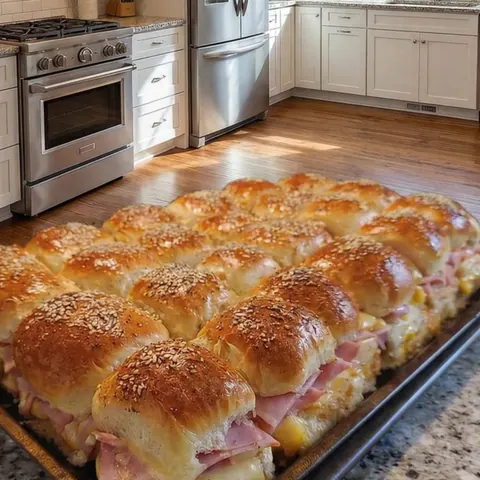
Crisp puff pastry, salty ham and Gruyère that stretches into long, golden strings. These ham and cheese pastries bake in about 20 minutes, and they are ready for a snack, a brunch table or a party platter with very little effort. Each bite gives a shatter of buttery layers before the melted cheese.
These ham and cheese puff pastry bites are a simple way to turn a single sheet of puff pastry into eight crisp, golden appetizers. The method is as straightforward as it looks: layer thin slices of ham and grated Gruyère on pieces of pastry, brush the edges with egg, and bake until the cheese bubbles and browns on top. Everything happens on one lined baking sheet, so cleanup stays easy. Fresh parsley added at the end brightens the rich, savory filling and gives the tray a fresh look. Serve them warm, straight from the oven, when the crust is at its crispest and the cheese is still soft and glossy.
The appeal
Why you’ll love it
Puff pastry is made of many thin layers of dough and butter. In a hot oven the water in the butter turns to steam and pushes those layers apart, so the pastry rises into flaky, airy sheets. That is why the crust shatters when you pull a piece apart, and why starting with a 400°F oven matters: the pastry needs the heat to puff before the butter melts out.
Gruyère is a firm, nutty cheese that melts smoothly without turning oily and browns well at high heat. Grated rather than sliced, it spreads evenly over the ham and fills the gaps between the layers, so every bite gets some cheese. Placing the filling in the center and keeping the edges clear lets the rim rise around it, which creates a crisp border and a cheese-topped center that bubbles and turns golden in the oven.
What you need
Ingredients
Makes 8 pastries.
Contains:
- Gluten
- Eggs
- Milk
Tools
Equipment
- Baking sheet
- Parchment paper
- Rolling pin
- Sharp knife or pizza cutter
- Pastry brush
Swaps
Substitutions
Instead ofGruyère cheese
UseComté or sharp Swiss cheese, grated
Instead ofSliced ham
UseThinly sliced prosciutto or smoked turkey breast
Instead ofEgg, beaten
Use1 tablespoon whole milk brushed over the pastry for a lighter color
Good to know
Notes
Ham is already cooked, so the filling only needs to heat through and melt the cheese. Choose thin deli slices for the best fold and layer. Thick-cut ham is harder to fit on the pastry and can make the bites heavy. Gruyère gives the most classic flavor, but a good aged cheese such as Comté or sharp Swiss works the same way, so use what your market carries.
You need a baking sheet, parchment paper, a rolling pin and a sharp knife or pizza cutter. Parchment keeps the pastry from sticking and makes the bottoms golden without scorching. A pastry brush is the cleanest way to apply the egg wash. Puff pastry is sold frozen in most American supermarkets; thaw it in the refrigerator overnight so it stays cold and easy to cut without tearing the layers.
Prep
Before you start
Thaw the puff pastry in the refrigerator overnight, or follow the package directions for a faster thaw, until it is cold and pliable but not soft. Heat the oven to 400°F (200°C) and place a rack in the center. Line a baking sheet with parchment paper. Grate the Gruyère on a box grater and keep it in the refrigerator until you are ready to assemble. Slice the ham thinly and set it on a plate, and chop the parsley and set it aside. Beat the egg in a small bowl with a splash of water. Having everything ready keeps the pastry cold while you work, which is the key to clean, tall layers.
Step by step
Method
Phase 1
Assemble the pastry bites
Step 1: Preheat the oven and line the pan
Heat the oven to 400°F (200°C) and line a baking sheet with parchment paper. Unfold the thawed puff pastry on a lightly floured counter and roll it slightly to smooth the seams. Cut it into eight equal rectangles so each piece can hold ham and cheese.
You’ll need: puff pastry, store-bought or made ahead, thawed
Look for: Oven reads 400°F and the pastry is cool and flat, not sticky or soft.
Tip: Keep the pastry cold until assembly so the layers puff cleanly.
Step 2: Layer the ham and Gruyère
Lay a folded slice or two of ham on each pastry rectangle, leaving a narrow border around the edges. Scatter grated Gruyère over the ham, then season lightly with black pepper. Keep the filling in the center so the edges can rise.
You’ll need: puff pastry, store-bought or made ahead, thawed · sliced ham · Gruyère cheese, grated · freshly ground black pepper
Look for: Ham and cheese sit in the center with a clean 1/2-inch border.
Tip: Do not overfill, or the cheese will spill out during baking.
Checkpoint
The pastry should be cold, flat and easy to handle. Each rectangle holds a neat layer of folded ham and grated Gruyère, centered with a clear border around it. The egg wash coats only the top edges and does not drip down the sides, which would block the rise. Nothing should be overfilled or sticky. Before going on, check that the sheet is still cool to the touch; if the dough has softened, return the tray to the refrigerator for 10 minutes so the butter holds its shape in the oven.
Phase 2
Bake until golden and bubbling
Step 3: Brush with egg wash
Beat the egg with a small splash of water. Brush the exposed pastry edges lightly with the egg wash, taking care not to let it drip down the sides, which would prevent the layers from rising. Place the pastries on the lined baking sheet.
You’ll need: egg, beaten, for egg wash · puff pastry, store-bought or made ahead, thawed
Look for: Edges look glossy and evenly coated, with no drips pooling on the pan.
Tip: Sealing the drips keeps the edges puffed and golden.
Step 4: Bake until golden and bubbling
Bake for 18 to 20 minutes, rotating the pan halfway through, until the pastry is deep golden, puffed and the cheese is bubbling and browned on top. Steam should rise from the cheese as it melts into the crust.
You’ll need: puff pastry, store-bought or made ahead, thawed · sliced ham · Gruyère cheese, grated
Look for: Pastry is deep golden, puffed high, and the cheese is bubbling and browning.
Tip: Check the bottoms after 15 minutes to avoid over-browning.
Checkpoint
Once the timer goes off, the pastry should be puffed high, deep golden on top and browned at the edges. The cheese should be fully melted, bubbling and browning in spots, and you should see faint steam rising from the center. A quick look at the bottoms shows crisp, golden pastry rather than pale dough. If the cheese is still pale and the layers look flat, give the pastries another 2 minutes and check again. If the tops are darkening too quickly before the sides are set, move the tray to a lower rack for the last few minutes.
Phase 3
Rest, garnish and serve
Step 5: Rest, garnish and serve
Transfer the pastries to a rack and let them rest for 5 minutes so the cheese sets slightly. Scatter chopped parsley over the warm tops and serve while the crust is still crisp.
You’ll need: fresh parsley, chopped
Look for: Cheese has set just enough to hold, and the crust stays crisp when touched.
Tip: Add the parsley just before serving so it stays bright green.
Checkpoint
After resting for 5 minutes on a rack, the cheese should have set enough to hold a clean edge when you lift a bite, while the crust still feels crisp when touched. The parsley should be bright green and evenly scattered over the warm tops. Check that no cheese has melted onto the parchment and that the bottoms are still firm. Serve while the layers are crisp. If the bites are left at room temperature for more than 2 hours, the crust will soften, so plan to serve them within that time.
Doneness
How to tell it’s done
The pastries are done when the puff pastry is deep golden brown on the top and bottom, the sides have risen into clear layers, and the cheese is bubbling and lightly browned at the edges. A ham and cheese bite is fully cooked when the filling is hot throughout and the cheese has melted into a glossy, golden layer. Ham is already cooked, so no meat temperature applies here. Check the bottoms at the edges: they should be golden and crisp, not pale or soggy.
Avoid these
Common mistakes
The most common mistake is letting the pastry warm up. Warm puff pastry is sticky and tears easily, and the butter melts before the oven can turn it to steam, so the layers flatten instead of rising. Work with one sheet at a time and return it to the refrigerator if it turns soft. Another mistake is brushing egg wash over the cut edges: it glues the layers together and blocks the rise. Keep the egg on the top surface only. Overfilling is also common; too much ham and cheese spills over and burns on the pan. Finally, do not cut the pastry with a dull knife, which drags and seals the layers instead of cutting cleanly.
Better results
Tips
Tip 1
Keep the puff pastry cold from the freezer to the oven. Cold butter creates steam in the oven, and steam creates height. If the sheet softens while you work, slide it back into the refrigerator for 10 minutes before cutting or folding.
Tip 2
Grate the Gruyère yourself from a block if you can. Pre-shredded cheese often contains anti-caking starch, which keeps it from melting as smoothly. A fine grater gives the cheese a light, even layer that browns evenly across each pastry without leaving clumps on the surface.
Make it yours
Variations
Mustard Ham Bites
Spread a thin layer of Dijon mustard on each pastry before adding the ham and cheese. The sharp mustard pairs well with the Gruyère and gives the bites a tangy, savory flavor in every layer.
Prosciutto Version
Swap the sliced ham for thin prosciutto, folded loosely on each pastry. The dry-cured meat crisps slightly in the oven, giving the bites a deeper savory flavor and a more refined look for entertaining.
Comté Swap
Use grated Comté instead of Gruyère for a slightly sweeter, nuttier cheese. Its firm texture melts smoothly and browns well, so the bites keep the same golden color and crisp, layered crust.
Herb Topping
Mix the chopped parsley with a little finely grated lemon zest before scattering it over the warm pastries. The bright citrus lifts the rich cheese and adds an aromatic finish that suits a party platter.
On the table
Serving suggestions
Serve the pastries warm on a wooden board or a platter as a party appetizer. Their golden, layered look and melted Gruyère make them a natural choice for a brunch table, a cocktail hour or a casual gathering. A simple green salad with a sharp vinaigrette cuts through the richness and balances the savory filling. Arrange them with the parsley scattered across the tops for a finished presentation that looks as good as it tastes.
For a relaxed buffet, set the pastries out in a single layer and offer a small bowl of Dijon mustard or a bright tomato chutney on the side. Guests can pick them up with their fingers and enjoy the crisp crust while the cheese is still soft. Offering a few napkins makes the bites easier to eat, because the melted cheese can be sticky. Plan to serve them within 2 hours of baking for the best texture.
Leftovers
Storage & make-ahead
- Fridge
- Refrigerate cooled pastries in an airtight container for up to 3 days, separating layers with parchment paper.
- Freezer
- Freeze baked pastries on a tray, then transfer them to a bag for up to 1 month. Reheat from frozen when possible.
- Reheat
- Reheat in a 375°F (190°C) oven for 6 to 8 minutes until the crust crisps and the cheese is hot again.
Store leftover ham and cheese puff pastry bites in an airtight container lined with a paper towel. Let the pastries cool for no more than 2 hours at room temperature before storing, so they do not sit in the danger zone. Keep them in the refrigerator for up to 3 days. The crust will soften over time, but the filling stays flavorful. Do not stack them while they are still warm, because the steam will make the bottoms soggy.
Make ahead
You can assemble the pastries up to 4 hours ahead. Cut the puff pastry, layer the ham and Gruyère, and keep the tray covered in the refrigerator until you are ready to brush with egg and bake. Do not brush the egg wash until just before baking, because it can dry out and stick to the parchment. Baked pastries are best served the same day, but you can rewarm them later as described below.
Questions
Frequently asked questions
Can you use homemade puff pastry for these bites?
Yes, homemade puff pastry works well if it is rolled, folded and kept cold until assembly. Make sure the dough is chilled before cutting, and use a sharp knife so the layers stay separate. Store-bought frozen puff pastry is the simpler choice for most cooks, and it bakes to a similar golden, flaky crust. Either way, keep the pastry cold until it goes into the hot oven so the butter creates steam and the layers rise.
Why does the cheese run off the pastry during baking?
Cheese runs off when there is too much filling or when the pastry edges are sealed with egg wash. Use a light layer of ham and grated Gruyère, keep the filling in the center, and leave a clear border that can rise. Brush only the top edges with egg and avoid the cut sides. If you are using a thick slice of cheese, grate it finely so it spreads evenly and melts into the crust rather than pooling in one place.
Do the pastries need to be eaten warm?
They taste best warm, when the crust is crisp and the cheese is soft and glossy. As they cool, the pastry gradually loses its crunch and the cheese firms up. They are still pleasant at room temperature for a short time, which makes them practical for a buffet. For the best texture, serve them within 2 hours of baking, and rewarm leftovers in a 375°F (190°C) oven to restore the crust.
Can you prepare the pastries the night before a party?
You can assemble them up to 4 hours ahead and keep the tray covered in the refrigerator. Wait to brush on the egg wash until just before baking, because it can dry out and stick to the parchment. Bake the pastries when your guests arrive, and they will come out golden and crisp within about 20 minutes. Baking ahead is less reliable because the crust softens as it cools.
What can you serve with ham and cheese puff pastry bites?
A simple green salad with a sharp vinaigrette is a good match because the acidity cuts through the rich cheese. Pickles, cornichons and a small bowl of Dijon mustard also complement the savory ham. For a brunch table, pair the bites with fresh fruit and a light sparkling drink. Keep the menu simple so the crisp, golden pastries remain the focus of the spread.
Everything in one place: the recipe card below gathers the ingredients, steps and estimated nutrition, ready to print.

Recipe card
Crispy Ham and Cheese Puff Pastry Bites in Under an Hour
Flaky puff pastry, thin slices of ham and melted Gruyère bake into golden, cheesy pastries with a shatter-crisp crust. A simple appetizer that comes together on one baking sheet.
- Prep
- Cook
- Rest
- Total
- Servings
- 8 pastries
Ingredients
- 1 sheet puff pastry, store-bought or made ahead, thawed
- 4 oz sliced ham
- 4 oz Gruyère cheese, grated
- 1 egg, beaten, for egg wash
- 2 tbsp fresh parsley, chopped
- freshly ground black pepper to taste
Instructions
Preheat the oven and line the pan. Heat the oven to 400°F (200°C) and line a baking sheet with parchment paper. Unfold the thawed puff pastry on a lightly floured counter and roll it slightly to smooth the seams. Cut it into eight equal rectangles so each piece can hold ham and cheese.
Layer the ham and Gruyère. Lay a folded slice or two of ham on each pastry rectangle, leaving a narrow border around the edges. Scatter grated Gruyère over the ham, then season lightly with black pepper. Keep the filling in the center so the edges can rise.
Brush with egg wash. Beat the egg with a small splash of water. Brush the exposed pastry edges lightly with the egg wash, taking care not to let it drip down the sides, which would prevent the layers from rising. Place the pastries on the lined baking sheet.
Bake until golden and bubbling. Bake for 18 to 20 minutes, rotating the pan halfway through, until the pastry is deep golden, puffed and the cheese is bubbling and browned on top. Steam should rise from the cheese as it melts into the crust.
Rest, garnish and serve. Transfer the pastries to a rack and let them rest for 5 minutes so the cheese sets slightly. Scatter chopped parsley over the warm tops and serve while the crust is still crisp.
Allergens: Gluten, Eggs, Milk
Nutrition (estimated, per serving)
- Calories
- 310 kcal
- Protein
- 12 g
- Carbs
- 18 g
- Fat
- 21 g
- Fiber
- 1 g
- Sugar
- 1 g
- Sodium
- 620 mg
Estimates only: values vary with brands, substitutions and portion sizes.
Recipe by EasyCooks Kitchen · easycooksrecipes.com
Share this recipe
Send it to someone who’d love it, or save it for later.
Spotted a mistake in this recipe? Let us know.
Keep cooking
More appetizer recipes





Appetizers
Garlic Butter Shrimp and Crab Crescent Ring for a Quick Party Appetizer
Total time: 55 mins


