Creamy Jerk Chicken Rasta Pasta in One Skillet
A one-skillet creamy jerk chicken rasta pasta with penne, tender chicken strips and colorful bell peppers in a cheesy, spiced sauce that comes together fast on a weeknight.
Published 12 min read
- Total time
- Prep
- Cook
- Rest
- Serves
- 4
- Makes 4 generous servings
- Cuisine
- Caribbean-American
- Calories
- 780
- per serving, estimated

On this page16 sections
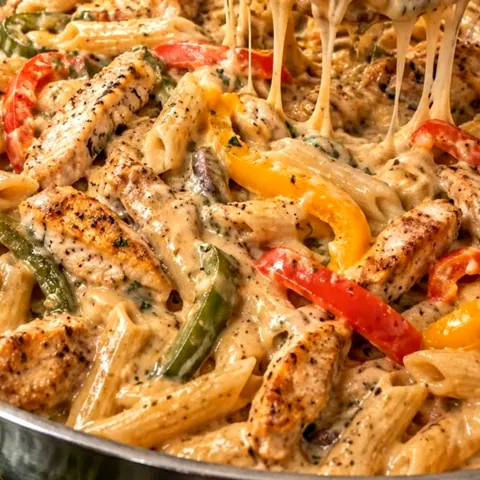
Imagine lifting a spoonful of penne out of a hot skillet, with melted cheese stretching between the pasta and the pan and steam rising past your face. This creamy jerk chicken rasta pasta delivers that moment in a single skillet. Spiced chicken, sweet bell peppers and a silky cream sauce come together in about half an hour, making it a fast, bold dinner for busy evenings.
Rasta pasta is a Caribbean-American favorite that takes the bold flavors of jerk and folds them into a creamy, cheesy pasta. The combination works because jerk seasoning is warm, smoky and slightly sweet, and cream softens its heat into something rich and easy to love. Everything cooks in one deep skillet after the pasta is drained, so the flavors build in layers and the cleanup stays minimal. The sauce starts with browned chicken and pepper bits, which give the dish depth, then picks up body from cream, broth and two kinds of cheese. Serve it straight from the pan while the sauce is glossy and warm, and every bite brings a little spice, a little sweetness and plenty of creaminess.
The appeal
Why you’ll love it
The method starts by searing the jerk-seasoned chicken in a hot skillet. This browning step builds flavor on the surface of the meat and leaves caramelized bits in the pan. When the peppers and onion go into the same skillet, they lift those bits and absorb the seasoning, so the sauce tastes layered instead of flat. Cooking the chicken first also means it is fully cooked and set aside while the vegetables soften, which keeps it juicy rather than dry.
Pasta cooked just until al dente and finished in the sauce is the key to a creamy texture. Reserving a cup of starchy cooking water gives you a way to adjust the sauce without adding more cream. The starch helps the cheese emulsify and cling to the penne, so each bite feels smooth. Cooking the sauce gently over medium-low heat keeps the cream from breaking, and adding the cheese off the heat prevents graininess. Together these choices produce a sauce that is thick, glossy and stable enough to hold on the plate.
What you need
Ingredients
Makes 4 generous servings.
Contains:
- Gluten
- Milk
Tools
Equipment
- Large deep skillet with lid
- Large pot for boiling pasta
- Colander
- Wooden spoon
- Cutting board and sharp knife
- Instant-read thermometer
Swaps
Substitutions
Instead ofHeavy cream
UseHalf-and-half for a lighter sauce that may need a few extra minutes to thicken
Instead ofChicken breast
UseBoneless skinless chicken thighs, cut into strips and cooked a little longer
Instead ofPenne pasta
UseRigatoni or rotini, which also hold the creamy sauce well
Good to know
Notes
Penne is the traditional choice here because its ridges and hollow center catch the creamy sauce and bits of chicken and pepper. Rigatoni or rotini work just as well and give a similar result. Choose a pasta shape with texture rather than a very thin one, which can become too soft when simmered in cream.
A large deep skillet with a lid is the most important piece of equipment, because it holds the pasta, sauce and chicken together and lets you cover the pan to rest the dish. You will also need a large pot for boiling pasta and a colander to drain it. Use a wooden spoon for scraping the bottom of the skillet, and keep an instant-read thermometer nearby to confirm the chicken reaches a safe temperature. If you swap heavy cream for half-and-half, expect a lighter sauce that may need a few more minutes to thicken.
Prep
Before you start
Gather all ingredients and equipment before you turn on the stove, since this dish moves quickly once the skillet is hot. Pat the chicken strips dry with paper towels so the jerk seasoning sticks and the chicken browns instead of steaming. Toss the strips with the jerk seasoning until every piece is evenly coated, then keep them covered in the refrigerator until you are ready to cook. Slice the bell peppers and onion, and mince the garlic. Grate the Parmesan and shred the mozzarella so they are ready to add in handfuls. Set a pot of salted water on to boil, and place a colander in the sink. Measure the heavy cream and chicken broth in a cup near the stove. Chopped parsley, if you use it, can wait on the cutting board until serving.
Step by step
Method
Phase 1
Chicken browned and set aside
Step 1: Season and sear the chicken
Pat the chicken strips dry and toss them with the jerk seasoning until evenly coated. Keep the coated chicken in the refrigerator until you are ready to cook, and cook it within 30 minutes of taking it out. Heat the vegetable oil in a large deep skillet over medium-high heat, then add the chicken in a single layer and cook until browned on the outside.
You’ll need: boneless skinless chicken breast, cut into strips · jerk seasoning · vegetable oil
Internal temperature 165°F (74°C)
Look for: Chicken strips are browned on the edges and no longer pink in the center when cut.
Tip: Work in two batches if the skillet looks crowded, so the chicken browns instead of steaming.
Step 2: Cook the pasta
Bring a large pot of generously salted water to a boil and cook the penne until just al dente, about 1 minute short of the package time. Reserve 1 cup of the cooking water, then drain the pasta in a colander and set it aside.
You’ll need: penne pasta · kosher salt and black pepper
Look for: Pasta is tender with a slight bite in the center.
Tip: Save a splash of pasta water; it helps the sauce cling to every piece.
Checkpoint
At the end of this phase, the chicken strips should be golden brown on the outside and no longer pink in the center when you cut into the thickest piece. The skillet should have a light coating of seasoned oil and small browned bits stuck to the bottom. The aroma should be warm, smoky and spiced. Before moving on, check that the chicken has reached 165°F (74°C) in its thickest part with an instant-read thermometer. Transfer the chicken to a plate, leaving the drippings in the pan, so you can build the sauce on that flavor.
Phase 2
Peppers softened, sauce thickened
Step 3: Build the pepper base
Move the chicken to a plate. In the same skillet, add the sliced bell peppers and onion and cook over medium heat, stirring, until they soften and pick up browned bits from the pan. Stir in the minced garlic for about 30 seconds until fragrant.
You’ll need: bell peppers (red and yellow), sliced · yellow onion, sliced · garlic, minced · boneless skinless chicken breast, cut into strips
Look for: Peppers are softened at the edges and the kitchen smells of garlic and spice.
Tip: Scrape up the browned bits from the bottom of the skillet; they add deep flavor.
Step 4: Make the creamy sauce
Pour in the chicken broth and simmer for 2 minutes, scraping the pan. Stir in the heavy cream and bring the sauce to a gentle simmer, then reduce the heat to medium-low and let it thicken for 3 to 4 minutes.
You’ll need: chicken broth · heavy cream
Look for: Sauce coats the back of a spoon and bubbles gently at the edges.
Tip: Keep the heat moderate so the cream does not catch on the bottom of the pan.
Step 5: Add the pasta and cheese
Add the drained penne and the reserved chicken to the sauce and toss to combine. Add the mozzarella and Parmesan a handful at a time, stirring until melted and smooth. Thin with a splash of reserved pasta water if the sauce feels too thick.
You’ll need: penne pasta · boneless skinless chicken breast, cut into strips · shredded mozzarella cheese · grated Parmesan cheese
Look for: Cheese melts into a smooth, glossy sauce that clings to the pasta.
Tip: Add the cheese off the heat or on low heat to prevent it from turning grainy.
Checkpoint
At this stage, the bell peppers and onion should be softened at the edges, with some golden spots where they touched the hot pan. The garlic should smell fragrant without turning brown. After adding the broth and cream, the sauce should bubble gently and coat the back of a spoon when you lift it. The color should be a pale, creamy orange from the seasoning and peppers. Before you add the pasta, check that the sauce is not boiling hard, because high heat can cause the cream to separate. If it looks thin, let it simmer gently for another minute or two before going on.
Phase 3
Pasta and cheese melted together
Step 6: Rest, season and serve
Cover the skillet and let the pasta rest for about 5 minutes so the sauce thickens further. Taste and adjust with salt and black pepper, then spoon the pasta onto warm plates and sprinkle with parsley if using.
You’ll need: kosher salt and black pepper · fresh parsley, chopped · penne pasta
Look for: Sauce is creamy and thick enough to cling, with a cheese pull when scooped.
Tip: Serve right away while the sauce is at its creamiest.
Checkpoint
By the end of this final cooking phase, the penne should be coated in a smooth, glossy sauce with no dry patches. The cheese should be fully melted and blended, with no clumps or grainy texture. When you lift a spoonful, the sauce should cling to the pasta and stretch slightly as it falls. Taste the sauce now and adjust the seasoning before covering the pan to rest. If the pasta has absorbed too much sauce, loosen it with a splash of reserved pasta water until it looks creamy and tender.
Doneness
How to tell it’s done
The chicken is done when it reaches 165°F (74°C) at its thickest point, measured with an instant-read thermometer inserted from the side. Visually, the strips should be opaque white inside, with golden browned edges and no pink near the center. Cut one of the largest pieces to confirm. The pasta is done when it is tender with a slight firmness in the center, which takes about 10 to 11 minutes of boiling for most penne. The sauce is ready when it is thick enough to coat the back of a spoon, glossy, and tender on the tongue, with the cheese fully melted and no grainy texture.
Avoid these
Common mistakes
The most common mistake is adding cheese to a sauce that is boiling hard, which makes it grainy and oily. Keep the heat moderate once the cream goes in and add the cheese in small handfuls, stirring until each addition melts before adding the next. Another frequent problem is overcooking the pasta before it reaches the skillet. Drain it a minute short of the package time, because it will keep softening as it absorbs the sauce. Crowding the chicken in the pan also causes trouble: it steams, turns pale and loses the flavor that browning creates. Finally, do not skip reserving pasta water. Without it, the sauce can feel heavy or tight, and you will have no easy way to loosen it.
Cook safely
Food safety
Safe internal temperatures
Cook to at least these temperatures, measured with an instant-read thermometer in the thickest part.
| Food | Minimum internal temperature |
|---|---|
| Poultry | 165°F (74°C) |
Better results
Tips
Tip 1
Keep the jerk chicken and the sauce on separate timelines so each component gets the attention it needs. Sear the chicken first and set it aside, then build the pepper base and sauce in the same skillet. This keeps the chicken juicy and lets the peppers pick up its seasoning. If you want more heat, add a pinch of cayenne or a little extra jerk seasoning with the peppers rather than the cream.
Tip 2
Taste the sauce before serving, because jerk seasoning and cheese vary in salt. Add black pepper and kosher salt gradually, tasting after each pinch. If the sauce tightens as it sits, stir in a splash of hot pasta water or a spoonful of cream to restore its silky texture. Serve immediately, while the pasta is at its creamiest and the cheese is still stretchy and warm.
Make it yours
Variations
Extra spicy
Add a pinch of cayenne pepper or a finely minced scotch bonnet pepper with the bell peppers and onion. Start small and taste as you go, since the heat builds once the cream and cheese are added.
Extra vegetables
Stir in a handful of spinach or chopped kale at the end of cooking so it wilts into the sauce. Add it after the cheese melts, keeping the heat low so the greens stay bright and tender.
Shrimp version
Replace the chicken with peeled shrimp seasoned with jerk seasoning. Sear them quickly for 1 to 2 minutes per side until pink and opaque, then add them back to the sauce at the end.
Lighter sauce
Substitute half-and-half for the heavy cream and add a little extra broth. The sauce will be thinner, so let it simmer a few minutes longer until it coats the spoon.
On the table
Serving suggestions
Serve this creamy jerk chicken rasta pasta straight from the skillet in warm bowls or on plates, while the cheese is still melted and the sauce is glossy. Scatter chopped fresh parsley over the top for color and a fresh herbal note. The creamy sauce pairs beautifully with a simple green salad dressed with lime juice and olive oil, which adds brightness to balance the richness and spice of the jerk seasoning.
For a relaxed family dinner or a casual gathering, set out extra grated Parmesan and a bowl of hot sauce so everyone can adjust the spice and creaminess to their taste. Warm crusty bread is also excellent for scooping up any sauce left on the plate. Serve with cold lemonade or a crisp sparkling water to refresh the palate between bites of rich, cheesy pasta.
Leftovers
Storage & make-ahead
- Fridge
- Store cooled leftovers in an airtight container in the refrigerator for up to 3 days, after cooling within 2 hours.
- Freezer
- Cream sauces can separate when frozen, so freezing is not recommended for the finished pasta dish.
- Reheat
- Reheat gently in a skillet over medium-low heat with a splash of milk or broth, stirring until warm and creamy.
Leftover rasta pasta keeps well when cooled and stored properly. Let the pasta cool for no more than 2 hours at room temperature before transferring it to an airtight container. Store it in the refrigerator, where it stays good for up to three days. Keep the chicken and pasta together or store them separately if you prefer. Separating the components makes reheating easier and keeps the pasta from absorbing too much sauce. Label the container with the date so you can track freshness.
Make ahead
You can prepare most of this dish earlier in the day. Season the chicken with jerk seasoning, cover it and keep it in the refrigerator until you are ready to cook, but do not leave it out at room temperature for longer than 30 minutes before searing. Slice the peppers, onion and garlic, and grate the cheeses ahead, storing each in its own container in the refrigerator. Boil the pasta earlier, drain it and toss it lightly with a little oil so the pieces do not stick together. When you are ready to serve, reheat the sauce gently in the skillet before adding the pasta and chicken. This way you cook only the final steps just before dinner.
Questions
Frequently asked questions
Can this jerk chicken pasta be made ahead?
Yes, most of it can be prepared earlier in the day. Season the chicken and keep it covered in the refrigerator, and chop the vegetables and grate the cheese in advance. Cook and drain the pasta a little short, then finish the sauce and combine everything just before serving. Making the sauce fresh gives the creamiest result, but it can be reheated gently if needed.
Why does your cheese sauce turn grainy?
Grainy cheese usually means the sauce was too hot when the cheese went in. Once the cream and broth are added, keep the heat at medium-low and stir in the cheese a handful at a time. Let each addition melt before adding more. Adding the cheese off the heat also helps keep the texture smooth and glossy.
How do you know the chicken is fully cooked?
Cut into the thickest strip and check that the center is opaque white with no pink. For a reliable reading, use an instant-read thermometer inserted into the thickest part. The chicken is safe to eat when it reaches 165°F (74°C). Once it is cooked, transfer it to a plate so it does not overcook while the sauce is made.
Can you use a different pasta shape?
Yes, rigatoni, rotini and other shapes with ridges or hollow centers work well because they hold the creamy sauce and small pieces of chicken and pepper. Avoid very thin pasta, which can turn soft when simmered in cream. Cook the pasta to al dente, a minute short of the package time, so it finishes tender in the sauce without becoming mushy.
What can you serve with creamy jerk pasta?
A simple green salad with a lime dressing is a good match, because its acidity cuts through the richness of the cream and cheese. Warm crusty bread is useful for soaking up extra sauce. A cold drink such as lemonade or sparkling water also balances the warm spice of the jerk seasoning. Keep side dishes light so the pasta remains the focus of the meal.
Everything in one place: the recipe card below gathers the ingredients, steps and estimated nutrition, ready to print.
Recipe card
Creamy Jerk Chicken Rasta Pasta in One Skillet
A one-skillet creamy jerk chicken rasta pasta with penne, tender chicken strips and colorful bell peppers in a cheesy, spiced sauce that comes together fast on a weeknight.
- Prep
- Cook
- Rest
- Total
- Servings
- 4 generous servings
Ingredients
- 12 oz penne pasta
- 1 lb boneless skinless chicken breast, cut into strips
- 2 tbsp jerk seasoning
- 1 tbsp vegetable oil
- 2 bell peppers (red and yellow), sliced
- 1/2 yellow onion, sliced
- 3 cloves garlic, minced
- 1 cup heavy cream
- 1/2 cup chicken broth
- 1 cup shredded mozzarella cheese
- 1/2 cup grated Parmesan cheese
- kosher salt and black pepper to taste
- fresh parsley, chopped, for serving (optional)
Instructions
Season and sear the chicken. Pat the chicken strips dry and toss them with the jerk seasoning until evenly coated. Keep the coated chicken in the refrigerator until you are ready to cook, and cook it within 30 minutes of taking it out. Heat the vegetable oil in a large deep skillet over medium-high heat, then add the chicken in a single layer and cook until browned on the outside.
Cook the pasta. Bring a large pot of generously salted water to a boil and cook the penne until just al dente, about 1 minute short of the package time. Reserve 1 cup of the cooking water, then drain the pasta in a colander and set it aside.
Build the pepper base. Move the chicken to a plate. In the same skillet, add the sliced bell peppers and onion and cook over medium heat, stirring, until they soften and pick up browned bits from the pan. Stir in the minced garlic for about 30 seconds until fragrant.
Make the creamy sauce. Pour in the chicken broth and simmer for 2 minutes, scraping the pan. Stir in the heavy cream and bring the sauce to a gentle simmer, then reduce the heat to medium-low and let it thicken for 3 to 4 minutes.
Add the pasta and cheese. Add the drained penne and the reserved chicken to the sauce and toss to combine. Add the mozzarella and Parmesan a handful at a time, stirring until melted and smooth. Thin with a splash of reserved pasta water if the sauce feels too thick.
Rest, season and serve. Cover the skillet and let the pasta rest for about 5 minutes so the sauce thickens further. Taste and adjust with salt and black pepper, then spoon the pasta onto warm plates and sprinkle with parsley if using.
Allergens: Gluten, Milk
Nutrition (estimated, per serving)
- Calories
- 780 kcal
- Protein
- 42 g
- Carbs
- 68 g
- Fat
- 36 g
- Fiber
- 4 g
- Sugar
- 5 g
- Sodium
- 1,100 mg
Estimates only: values vary with brands, substitutions and portion sizes.
Recipe by EasyCooks Kitchen · easycooksrecipes.com
Share this recipe
Send it to someone who’d love it, or save it for later.
Spotted a mistake in this recipe? Let us know.
Keep cooking


