Creamy Tuscan Chicken Bowtie Pasta in One Skillet
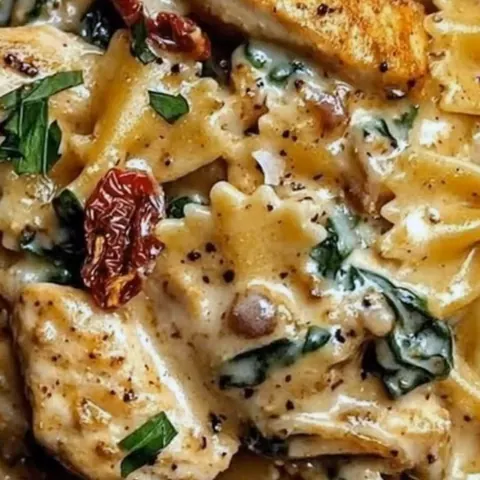
Golden seared chicken, bowtie pasta, wilted spinach and sun-dried tomatoes come together in one skillet with a rich, glossy cream sauce for a satisfying weeknight dinner.
Published 12 min read
- Total time
- Prep
- Cook
- Serves
- 4
- Makes 4 generous servings
- Cuisine
- Italian-American
- Calories
- 640
- per serving, estimated

On this page16 sections
Imagine a skillet of golden chicken, bowtie pasta and bright spinach, all coated in a rich cream sauce scented with garlic and sweet sun-dried tomatoes. This Tuscan-style dinner comes together in one pan, so you spend less time washing dishes and more time at the table.
This creamy Tuscan chicken bowtie pasta is built for busy evenings. You sear bite-size pieces of chicken until golden, then use the same skillet to build a sauce with garlic, sun-dried tomatoes, chicken broth and heavy cream. Bowtie pasta goes straight into that sauce with wilted baby spinach and a handful of grated Parmesan. The result is a warm, comforting plate with tender chicken, pasta that holds the sauce, and a silky finish that tastes like a restaurant dish made at home. Every step uses ingredients you can find at any American supermarket, and the whole method stays simple enough for a first-time cook. Keep the heat moderate through the cream stage, and the sauce will stay smooth and glossy from the first spoonful to the last.
The appeal
Why you’ll love it
Searing the chicken first builds a golden crust and deep flavor in the bottom of the skillet. Those browned bits, called fond, dissolve into the broth when you deglaze the pan, so the sauce tastes savory and rich rather than flat. Cooking the chicken before anything else also means it is fully cooked and tender by the time the pasta joins the pan.
Simmering the cream gently for a few minutes lightly thickens it without reducing it too far. The spinach wilts into the warm sauce, and the pasta releases a little starch as it finishes cooking, which helps the sauce cling to every bowtie. A splash of reserved pasta water and the final addition of Parmesan off the heat bring everything together into one smooth, cohesive sauce.
What you need
Ingredients
Makes 4 generous servings.
Contains:
- Gluten
- Milk
Tools
Equipment
- 12-inch skillet with lid
- Large pot
- Colander
- Tongs
- Wooden spoon
- Cutting board
- Serving plates
Swaps
Substitutions
Instead ofBowtie pasta
UseRotini or penne, cooked to the same al dente stage
Instead ofHeavy cream
UseHalf-and-half for a lighter sauce, stirred in over low heat so it does not split
Instead ofBaby spinach
UseChopped frozen spinach, thawed and squeezed dry before adding
Good to know
Notes
Bowtie pasta, also called farfalle, is the classic shape for this dish because its pleats and center pinch catch the cream sauce and small bits of chicken and tomato. If you cannot find it, rotini or penne work well, since both hold sauce and cook at a similar pace. Choose a shape that is sturdy enough to stay al dente while it sits in the warm sauce.
Use a 12-inch skillet with a lid so you can sear the chicken, build the sauce and toss the pasta in one pan. Oil-packed sun-dried tomatoes add more flavor than dry-packed ones, and you should drain them well before chopping. Heavy cream gives the most stable sauce, while half-and-half is a lighter option that needs gentle heat so it does not separate.
Prep
Before you start
Gather every ingredient before you turn on the stove, because this dish moves quickly once the chicken hits the skillet. Cut the chicken into bite-size pieces, pat them completely dry and season them with the kosher salt and black pepper. Drain the oil from the sun-dried tomatoes and chop them into small pieces so they spread evenly through the sauce. Mince the garlic, measure the broth and cream, and grate the Parmesan on a fine grater so it melts smoothly. Wash and dry the baby spinach, and set out a colander in the sink. Fill a large pot with water, add a generous pinch of salt and bring it to a boil. Set out a serving spoon, tongs and warm plates so the pasta can go straight from the skillet to the table.
Step by step
Method
Phase 1
Sear the chicken until golden
Step 1: Season and sear the chicken
Pat the chicken pieces dry, then season them with the kosher salt and black pepper. Heat the olive oil in the skillet over medium-high heat, add the chicken in a single layer and sear without moving it until golden on the bottom, about 4 minutes. Turn and cook until golden all over.
You’ll need: boneless skinless chicken breasts, cut into bite-size pieces · kosher salt · black pepper · olive oil
Internal temperature 165°F (74°C)
Look for: Chicken pieces are golden brown outside and no longer pink at the edges.
Tip: Work in two batches if the skillet looks crowded so the chicken browns instead of steaming.
Step 2: Cook the pasta
Bring a large pot of salted water to a boil and cook the bowtie pasta until just al dente, about 10 minutes. Reserve 1 cup of the cooking water, then drain the pasta and set it aside.
You’ll need: bowtie pasta
Look for: Pasta is tender with a slight bite in the center.
Tip: Salt the water generously so the pasta is seasoned from the inside out.
Checkpoint
The chicken pieces should be deeply golden on the outside, with a crisp, slightly browned crust and no visible pink at the center. As you turn the pieces, you should hear a steady sizzle and smell toasty, savory aromas from the pan. Before moving on, cut one of the larger pieces in half and check that the inside is opaque and white throughout. Remove the chicken to a plate if the skillet is crowded, and leave the browned bits stuck to the bottom of the pan, since they will flavor the sauce once you add the broth. The chicken will finish cooking in the sauce, so it only needs to be seared well at this stage, not fully cooked through. Keep the heat at medium-high so the browning develops quickly without burning the oil.
Phase 2
Build the cream sauce
Step 3: Build the Tuscan sauce
Lower the heat to medium and add the garlic and sun-dried tomatoes to the skillet with the chicken. Stir for about 1 minute until fragrant, then pour in the chicken broth and scrape up the browned bits from the bottom of the pan.
You’ll need: garlic · oil-packed sun-dried tomatoes, drained and chopped · chicken broth · boneless skinless chicken breasts, cut into bite-size pieces
Look for: Garlic smells sweet and the broth bubbles along the edges of the pan.
Tip: Scraping up the browned bits adds deep savory flavor to the sauce.
Step 4: Add the cream and spinach
Pour in the heavy cream and simmer gently for 3 minutes until slightly thickened. Add the spinach by handfuls, stirring until it wilts completely into the sauce.
You’ll need: heavy cream · baby spinach
Look for: Sauce coats the back of a spoon and the spinach has fully wilted.
Tip: Keep the heat at a gentle simmer so the cream stays smooth and does not split.
Step 5: Toss the pasta into the sauce
Add the drained pasta to the skillet and toss well with the sauce, chicken and spinach. Add a splash of the reserved pasta water if the sauce feels too thick, then season with salt and pepper to taste.
You’ll need: bowtie pasta · boneless skinless chicken breasts, cut into bite-size pieces · heavy cream · baby spinach
Look for: Pasta looks glossy and each piece is evenly coated with sauce.
Tip: Pasta water helps the sauce cling to the bowties without making it watery.
Checkpoint
The sauce should look smooth, rich and lightly thickened, with a glossy surface and a pale golden color from the broth and cream. The garlic should smell fragrant and sweet rather than sharp, and the sun-dried tomatoes should be softened and spread evenly through the liquid. Check that the sauce coats the back of a wooden spoon in a thin layer and does not look grainy or separated. If the cream is bubbling hard, lower the heat right away to keep it smooth. The spinach should be completely wilted and bright green before you add the pasta, and the chicken should be cooked through and tender. Taste the sauce for salt now, since the Parmesan will add more savory depth later in the process.
Phase 3
Toss the pasta and finish
Step 6: Finish with Parmesan
Remove the skillet from the heat and stir in the grated Parmesan until melted and smooth. Taste and adjust the salt and pepper before serving.
You’ll need: grated Parmesan cheese
Look for: Parmesan has melted into a silky, creamy sauce.
Tip: Add the cheese off the heat so it melts evenly and does not turn grainy.
Step 7: Plate and serve warm
Spoon the creamy pasta onto warm plates, making sure each portion includes chicken and sun-dried tomatoes. Top with extra Parmesan and torn basil leaves if you like, then serve right away while the sauce is glossy.
You’ll need: boneless skinless chicken breasts, cut into bite-size pieces · oil-packed sun-dried tomatoes, drained and chopped · fresh basil · grated Parmesan cheese
Look for: Each plate is glossy with sauce and the chicken is hot throughout.
Tip: Warm the plates first so the pasta stays hot longer at the table.
Checkpoint
The pasta should be coated in a silky, glossy sauce that clings to each bowtie without pooling at the bottom of the skillet. The mixture should look creamy and warm, with flecks of green spinach and red tomato visible through the sauce. Check the texture by tasting one piece of pasta: it should be tender with a slight bite in the center. If the sauce looks too thick, add a splash of the reserved pasta water and toss again. Once you stir in the Parmesan off the heat, the sauce should look smooth and cohesive, with no clumps of cheese. Taste for salt and black pepper and adjust as needed before you plate.
Doneness
How to tell it’s done
The dish is ready when the chicken is cooked through to an internal temperature of at least 165°F (74°C), which you can confirm by cutting into the thickest piece and checking that the center is opaque with no pink. The pasta should be tender with a slight bite, and the sauce should be creamy, glossy and coat the back of a spoon. The spinach should be fully wilted and the Parmesan completely melted into a smooth sauce. When these signs appear together, the skillet is done and should be served right away while the sauce is warm and silky.
Avoid these
Common mistakes
The most common mistake is crowding the skillet, which steams the chicken instead of browning it. Cook the pieces in batches if needed, and let them sit undisturbed long enough to form a crust. Another frequent problem is letting the cream boil hard, which can make the sauce grainy or cause it to separate. Keep the heat at a gentle simmer once the cream goes in, and remove the skillet from the heat before adding the Parmesan. Overcooking the pasta is also a risk, since it keeps softening in the warm sauce; pull it from the water while it still has a bite. Finally, do not skip reserving pasta water, because the starch in it is what helps the sauce cling to the bowties and turns a thin cream into a satisfying, cohesive dish.
Cook safely
Food safety
Safe internal temperatures
Cook to at least these temperatures, measured with an instant-read thermometer in the thickest part.
| Food | Minimum internal temperature |
|---|---|
| Poultry | 165°F (74°C) |
Better results
Tips
Tip 1
Keep the sauce gently simmering rather than boiling once the cream is in. A calm simmer keeps the sauce smooth and glossy, while hard boiling can make it grainy or cause the fat to separate. Stir occasionally and lower the heat if you see large bubbles breaking across the surface.
Tip 2
Taste before you serve. Parmesan and sun-dried tomatoes both bring salt, so season at the end rather than at the beginning. A pinch of black pepper or a squeeze of lemon juice can brighten the sauce if it tastes heavy, though the lemon is not part of the original method and can be left out.
Make it yours
Variations
Spinach-free version
Leave out the spinach and add an extra handful of sun-dried tomatoes for a bolder, sweeter sauce. The flavor stays rich and the dish remains quick to make in one skillet.
Extra garlic sauce
Increase the garlic to five cloves and add it at the same stage as the original recipe. The sauce becomes more aromatic, and the garlic softens into the cream as it simmers gently.
Lighter cream swap
Replace the heavy cream with half-and-half and keep the heat low when you add it. The sauce is a little less thick, but it still coats the pasta and stays creamy.
Short pasta shape
Use rotini or penne in place of bowties. These shapes hold the sauce well and cook in about the same time, so the method stays exactly the same.
On the table
Serving suggestions
Serve the pasta straight from the skillet while the sauce is hot and glossy. A simple green salad with lemon vinaigrette balances the richness of the cream and makes the meal feel complete. Offer extra grated Parmesan at the table so everyone can add more to their taste, and tear fresh basil leaves over the top just before serving for color and fragrance.
For a relaxed family dinner, pair the pasta with crusty bread to soak up any sauce left in the bowl. Warm plates keep the dish hot for longer, which matters because the sauce is at its best when it is warm and silky. A chilled white wine or sparkling water also works well alongside this creamy, savory plate.
Leftovers
Storage & make-ahead
- Fridge
- Refrigerate leftovers in an airtight container for up to 3 days, and reheat gently in a skillet with a splash of water or broth.
- Freezer
- Freezing is not recommended, because the cream sauce can separate and the pasta becomes soft when thawed.
- Reheat
- Reheat gently in a skillet over medium-low heat, adding a splash of milk or broth and stirring until the sauce is smooth and hot throughout.
Store leftover Tuscan chicken pasta in an airtight container in the refrigerator within 2 hours of cooking. Let the pasta cool for no more than 2 hours at room temperature before refrigerating, so it stays safe and keeps its texture. Divide large batches into shallow containers so they chill quickly. Leftovers keep well for up to 3 days, and the chicken should stay moist and tender when you reheat it gently.
Make ahead
You can prepare the components ahead to save time on a busy night. Cook and chill the seared chicken for up to one day in the refrigerator, and chop the sun-dried tomatoes and grate the Parmesan in advance. Keep the cooked pasta separate from the sauce so it does not soften or swell. When ready to serve, warm the chicken in the skillet, add the cream and spinach, then toss in the pasta with a splash of warm water. This short finishing step takes about 10 minutes and keeps the sauce creamy and the pasta firm.
Questions
Frequently asked questions
Can this creamy Tuscan chicken pasta be made ahead?
Yes, you can prepare the main components in advance. Cook and refrigerate the seared chicken for up to one day, and chop the sun-dried tomatoes and grate the Parmesan ahead of time. Cook the pasta separately and keep it apart from the sauce so it does not soften. When you are ready to eat, warm the chicken in the skillet, add the cream and spinach, then toss in the pasta with a splash of warm water. Finish with Parmesan off the heat so the sauce stays smooth and glossy.
Why does the cream sauce sometimes look grainy?
Grainy cream sauce usually means it has been boiled too hard or the Parmesan was added over high heat. Keep the cream at a gentle simmer once it goes into the skillet, and always remove the pan from the heat before stirring in the cheese. Using freshly grated Parmesan rather than the pre-shredded kind also helps, because pre-shredded cheese often contains anti-caking agents that make the sauce look gritty when it melts.
Can you use a different pasta shape for this dish?
Yes, rotini or penne are good substitutes for bowtie pasta. Choose a shape with ridges or pockets that catch the cream sauce, and cook it to al dente so it keeps its texture when tossed with the warm sauce. The cooking time will be similar, so you can follow the same steps and simply watch the pasta for doneness.
How do you know the chicken is fully cooked?
Cut into the thickest piece and check that the center is opaque and white with no pink. For food safety, the chicken should reach an internal temperature of at least 165°F (74°C) measured with a food thermometer. The meat should also feel firm and tender when pressed, and any juices should run clear rather than pink.
Can this dish be frozen for later?
Freezing is not recommended for this recipe. The cream sauce can separate when thawed, and the pasta becomes soft and mushy. For the best texture, refrigerate leftovers for up to three days and reheat them gently in a skillet with a splash of milk or broth, stirring until the sauce is smooth and hot throughout.
Everything in one place: the recipe card below gathers the ingredients, steps and estimated nutrition, ready to print.
Recipe card
Creamy Tuscan Chicken Bowtie Pasta in One Skillet
Golden seared chicken, bowtie pasta, wilted spinach and sun-dried tomatoes come together in one skillet with a rich, glossy cream sauce for a satisfying weeknight dinner.
- Prep
- Cook
- Total
- Servings
- 4 generous servings
Ingredients
- 1 1/2 lb boneless skinless chicken breasts, cut into bite-size pieces
- 1 tsp kosher salt, plus more to taste
- 1/2 tsp freshly ground black pepper
- 2 tbsp olive oil
- 8 oz bowtie pasta (farfalle)
- 3 cloves garlic, minced
- 1/2 cup oil-packed sun-dried tomatoes, drained and chopped
- 4 cups baby spinach, loosely packed
- 1/2 cup low-sodium chicken broth
- 1 cup heavy cream
- 1/2 cup finely grated Parmesan cheese, plus more for serving
- fresh basil leaves for serving, optional
Instructions
Season and sear the chicken. Pat the chicken pieces dry, then season them with the kosher salt and black pepper. Heat the olive oil in the skillet over medium-high heat, add the chicken in a single layer and sear without moving it until golden on the bottom, about 4 minutes. Turn and cook until golden all over.
Cook the pasta. Bring a large pot of salted water to a boil and cook the bowtie pasta until just al dente, about 10 minutes. Reserve 1 cup of the cooking water, then drain the pasta and set it aside.
Build the Tuscan sauce. Lower the heat to medium and add the garlic and sun-dried tomatoes to the skillet with the chicken. Stir for about 1 minute until fragrant, then pour in the chicken broth and scrape up the browned bits from the bottom of the pan.
Add the cream and spinach. Pour in the heavy cream and simmer gently for 3 minutes until slightly thickened. Add the spinach by handfuls, stirring until it wilts completely into the sauce.
Toss the pasta into the sauce. Add the drained pasta to the skillet and toss well with the sauce, chicken and spinach. Add a splash of the reserved pasta water if the sauce feels too thick, then season with salt and pepper to taste.
Finish with Parmesan. Remove the skillet from the heat and stir in the grated Parmesan until melted and smooth. Taste and adjust the salt and pepper before serving.
Plate and serve warm. Spoon the creamy pasta onto warm plates, making sure each portion includes chicken and sun-dried tomatoes. Top with extra Parmesan and torn basil leaves if you like, then serve right away while the sauce is glossy.
Allergens: Gluten, Milk
Nutrition (estimated, per serving)
- Calories
- 640 kcal
- Protein
- 40 g
- Carbs
- 50 g
- Fat
- 30 g
- Fiber
- 3 g
- Sugar
- 4 g
- Sodium
- 900 mg
Estimates only: values vary with brands, substitutions and portion sizes.
Recipe by EasyCooks Kitchen · easycooksrecipes.com
Share this recipe
Send it to someone who’d love it, or save it for later.
Spotted a mistake in this recipe? Let us know.
Keep cooking


