Easy Cowboy Breakfast Casserole with Sausage and Peppers
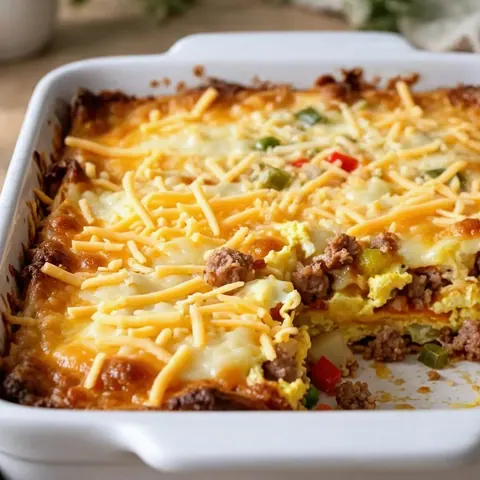
Start your morning with a hearty, one-dish meal featuring savory breakfast sausage, colorful peppers, diced potatoes, and melted pepper jack cheese baked in fluffy eggs.
Published 8 min read
- Total time
- Prep
- Cook
- Rest
- Serves
- 8
- Makes one 9x13 inch casserole
- Cuisine
- American
- Calories
- 420
- per serving, estimated

On this page16 sections
Discover the ultimate breakfast solution that brings savory, hearty comfort to your table with minimal effort. This Cowboy Breakfast Casserole combines everything needed for a satisfying morning meal into one simple baking dish, making it the perfect choice for busy weekend mornings or feeding a hungry crowd without spending hours in the kitchen.
This recipe relies on a straightforward layering technique to build deep, savory flavors. By combining potatoes, peppers, breakfast sausage, eggs, and spicy pepper jack cheese, you create a balanced dish that is both filling and flavorful. Because the ingredients are baked together, the potatoes absorb the juices from the sausage and the rich, creamy texture of the eggs, resulting in a cohesive meal that is as visually appealing as it is delicious. It is a reliable, no-fuss method for creating a breakfast that feels like a special occasion every time.
The appeal
Why you’ll love it
The method of layering ingredients directly into the baking dish ensures that every bite contains a perfect ratio of potato, sausage, and pepper. As the casserole bakes, the eggs act as a binder, setting everything into a firm, sliceable square that holds together beautifully when served. This technique allows for even heat distribution, ensuring the potatoes tenderize while the eggs reach the proper temperature without drying out.
Baking the casserole in a single dish simplifies the cleanup process significantly. By layering the components rather than mixing them in a bowl first, the distinct textures of the vegetables and the sausage remain intact. The final layer of pepper jack cheese melts into the top, creating a golden, bubbling crust that provides a sharp contrast to the soft, fluffy egg base and the soft, hearty potatoes hidden beneath.
What you need
Ingredients
Makes one 9x13 inch casserole.
Contains:
- Eggs
- Milk
Served raw or lightly cooked
The eggs in this dish are served soft. Use pasteurised eggs for pregnant women, young children, older adults, and anyone with a weakened immune system.
Tools
Equipment
- 9x13 inch ceramic baking dish
- Mixing bowl
- Whisk
- Spatula
- Knife
Swaps
Substitutions
Instead ofPepper jack cheese
UseSharp cheddar or monterey jack cheese
Instead ofBreakfast sausage
UseCooked ground turkey or diced ham
Good to know
Notes
For the best results, use a high-quality breakfast sausage that is well-seasoned, as it provides the primary flavor profile for the entire dish. If using a milder sausage, feel free to add a pinch of salt and pepper to the egg mixture. Using a ceramic baking dish helps retain heat, which promotes even cooking and prevents the edges from becoming too brown before the center is fully set.
While pepper jack cheese is recommended for its slight kick, this recipe is highly adaptable. If pepper jack is unavailable, sharp cheddar or monterey jack will work perfectly. Ensure the potatoes are cut into uniform pieces no larger than half an inch to guarantee they soften properly during the baking time. If you prefer a more rustic texture, leaving the skins on the potatoes is a perfectly acceptable variation.
Prep
Before you start
Before beginning, ensure all ingredients are ready and the oven is preheated to 375°F. Dice the potatoes and peppers uniformly to ensure they cook evenly. If the breakfast sausage is not already cooked, brown it in a skillet and drain the excess fat before adding it to the casserole. Having all components measured and prepared allows for a smooth assembly process and ensures the best final texture for the dish.
Step by step
Method
Phase 1
Layering the base
Step 1: Prepare the base
In a large 9x13 inch ceramic baking dish, spread the diced potatoes evenly across the bottom. Scatter the diced red and green peppers over the potatoes, then top with the cooked crumbled breakfast sausage, ensuring a balanced distribution of ingredients throughout the dish.
You’ll need: diced potatoes · diced red and green peppers · cooked crumbled breakfast sausage
Look for: The dish is filled with an even layer of potatoes, peppers, and crumbled sausage.
Tip: Ensure the potatoes are cut into small, uniform cubes to guarantee they cook through completely while in the oven.
Checkpoint
At the end of this phase, the baking dish should be neatly filled with a base of potatoes, followed by an even layer of peppers and sausage. Check that the ingredients are distributed evenly across the bottom of the dish to ensure every serving has a balanced mix of flavors and textures. The dish is now ready for the liquid components.
Phase 2
Adding the eggs and cheese
Step 2: Add eggs and cheese
Pour the beaten eggs evenly over the potato and sausage mixture until the ingredients are just covered. Sprinkle the shredded pepper jack cheese generously over the top of the egg mixture to create an even, cheesy layer.
You’ll need: beaten eggs · shredded pepper jack cheese
Look for: The eggs cover the solids and the cheese forms a full layer on top.
Tip: Whisk the eggs thoroughly in a bowl before pouring to ensure a smooth, uniform texture once the casserole is baked.
Checkpoint
The casserole should now look uniform, with the beaten eggs filling the gaps between the potatoes and sausage. The cheese is spread across the top, ready to melt. Verify that the egg mixture has reached the edges of the dish and that the cheese is evenly distributed for a consistent golden crust during the baking process.
Phase 3
Baking to perfection
Step 3: Bake until golden
Place the baking dish into a preheated 375°F oven and bake until the edges are golden brown and bubbling. To cook the eggs through to a safe internal temperature of 160°F (71°C), continue baking until the center is firm. Let the casserole rest for five minutes after removing it from the oven to allow the layers to settle, making it easier to slice neatly.
You’ll need: beaten eggs
Internal temperature 160°F (71°C)
Look for: The casserole is golden brown, bubbling, and firm to the touch.
Tip: Let the casserole rest for five minutes after removing it from the oven to allow the layers to settle, making it easier to slice neatly.
Checkpoint
Once finished, the casserole will have a firm, set center and a beautiful golden-brown top. The edges should be bubbling, and the aroma of the sausage and cheese will be prominent. Ensure the internal temperature has reached 160°F (71°C) and let the dish rest for at least five minutes before slicing into neat squares for serving.
Doneness
How to tell it’s done
The casserole is done when the eggs are completely set and no longer appear liquid in the center. The surface should be golden brown, and the cheese should be bubbling across the entire top. A knife inserted into the center should come out clean, and the internal temperature of the egg mixture must reach 160°F (71°C) for food safety. Allow the dish to rest for five minutes after baking to ensure clean, neat slices.
Avoid these
Common mistakes
A common mistake is cutting the potatoes too large, which prevents them from softening properly and results in hard, undercooked chunks. Another error is failing to ensure the eggs are fully set; always check the internal temperature to confirm safety. Avoid overcrowding the dish with too many ingredients, as this can prevent the eggs from binding the mixture together effectively, leading to a casserole that falls apart when served. Finally, do not skip the resting time, as it is crucial for slicing.
Cook safely
Food safety
Safe internal temperatures
Cook to at least these temperatures, measured with an instant-read thermometer in the thickest part.
| Food | Minimum internal temperature |
|---|---|
| Ground meat | 160°F (71°C) |
| Egg dishes | 160°F (71°C) |
Raw or lightly cooked ingredients
The eggs in this dish are served soft. Use pasteurised eggs for pregnant women, young children, older adults, and anyone with a weakened immune system.
Better results
Tips
Tip 1
For a more vibrant flavor, add finely chopped fresh herbs like chives or parsley to the egg mixture before pouring it over the base. These herbs add a fresh note that cuts through the richness of the sausage and cheese. If you enjoy a bit more heat, a dash of hot sauce stirred into the eggs can elevate the overall profile of the dish without overpowering the other ingredients.
Tip 2
If you find the top of the casserole is browning too quickly before the center is fully cooked, cover the dish loosely with a piece of aluminum foil. This allows the potatoes and eggs to finish cooking without burning the cheese. Always ensure the foil is removed during the final few minutes of baking to allow the cheese to achieve a perfect, golden finish.
Make it yours
Variations
Vegetarian Option
Replace the breakfast sausage with extra diced bell peppers, mushrooms, and zucchini. Sauté the vegetables briefly in a pan before adding them to the dish to ensure they are tender and have lost excess moisture before baking.
Spicy Kick
Incorporate diced jalapeños and a teaspoon of crushed red pepper flakes into the egg mixture. Use a spicy sausage blend and extra pepper jack cheese to intensify the heat and create a bolder breakfast profile.
On the table
Serving suggestions
Serve the casserole warm, directly from the baking dish. It pairs exceptionally well with a side of fresh fruit or a simple green salad to balance the richness of the sausage and cheese. Because it is a complete meal, it requires very little accompaniment, making it an ideal centerpiece for a relaxed weekend brunch or a quick family breakfast where efficiency and comfort are the top priorities.
When slicing, use a sharp knife to cut through the crust and the firm egg base to ensure clean squares. If serving to a group, place the dish on a heat-proof mat in the center of the table and allow guests to serve themselves. The casserole holds its heat well, so it will remain warm and satisfying even as the meal progresses, ensuring everyone enjoys a comforting, hearty breakfast.
Leftovers
Storage & make-ahead
- Fridge
- Store in an airtight container in the refrigerator for up to 3 days. Allow the casserole to cool for no more than 2 hours before refrigerating.
- Freezer
- Wrap individual portions tightly in plastic wrap and store in a freezer-safe bag for up to 1 month. Thaw overnight in the refrigerator before reheating.
- Reheat
- Reheat portions in the microwave on medium power until heated through, or place in a 350°F oven until warmed to an internal temperature of 160°F (71°C).
Store any leftovers in an airtight container or wrap the baking dish tightly with plastic wrap. Keeping the casserole properly sealed prevents it from absorbing other odors in the refrigerator and helps maintain its moisture. Properly stored, the leftovers will remain safe and flavorful for several days, making them an excellent option for quick, pre-portioned breakfasts throughout the busy work week.
Make ahead
This dish can be prepared in advance by assembling the base and the egg mixture the night before. Keep the assembled dish, covered, in the refrigerator until you are ready to bake it the next morning. If baking directly from the refrigerator, you may need to add five to ten minutes to the total baking time to ensure the center reaches the required temperature of 160°F (71°C).
Questions
Frequently asked questions
Can this casserole be made ahead of time?
Yes, this dish can be assembled the night before and kept covered in the refrigerator. When ready, bake it as directed, adding a few extra minutes to the cooking time if starting from a cold state. Ensure the internal temperature reaches 160°F (71°C) before serving.
How can the potatoes be ensured to cook through?
The key is to dice the potatoes into small, uniform pieces no larger than half an inch. Smaller pieces cook much faster and more evenly in the egg mixture. If you prefer, you can par-boil the potato cubes for five minutes before layering them to guarantee they are perfectly tender every time.
What is the best way to reheat leftovers?
Reheat individual portions in the microwave on medium power until they are hot throughout. Alternatively, place a portion in a 350°F oven until warmed to an internal temperature of 160°F (71°C). Covering the dish while reheating helps prevent the edges from drying out and maintains the fluffy texture of the eggs.
Everything in one place: the recipe card below gathers the ingredients, steps and estimated nutrition, ready to print.
Recipe card
Easy Cowboy Breakfast Casserole with Sausage and Peppers
Start your morning with a hearty, one-dish meal featuring savory breakfast sausage, colorful peppers, diced potatoes, and melted pepper jack cheese baked in fluffy eggs.
- Prep
- Cook
- Rest
- Total
- Servings
- one 9x13 inch casserole
Ingredients
- 4 cups diced potatoes
- 1 cup diced red and green peppers
- 1 lb cooked crumbled breakfast sausage
- 8 large beaten eggs
- 2 cups shredded pepper jack cheese
Instructions
Prepare the base. In a large 9x13 inch ceramic baking dish, spread the diced potatoes evenly across the bottom. Scatter the diced red and green peppers over the potatoes, then top with the cooked crumbled breakfast sausage, ensuring a balanced distribution of ingredients throughout the dish.
Add eggs and cheese. Pour the beaten eggs evenly over the potato and sausage mixture until the ingredients are just covered. Sprinkle the shredded pepper jack cheese generously over the top of the egg mixture to create an even, cheesy layer.
Bake until golden. Place the baking dish into a preheated 375°F oven and bake until the edges are golden brown and bubbling. To cook the eggs through to a safe internal temperature of 160°F (71°C), continue baking until the center is firm. Let the casserole rest for five minutes after removing it from the oven to allow the layers to settle, making it easier to slice neatly.
Allergens: Eggs, Milk
Nutrition (estimated, per serving)
- Calories
- 420 kcal
- Protein
- 22 g
- Carbs
- 28 g
- Fat
- 24 g
- Fiber
- 2 g
- Sugar
- 2 g
- Sodium
- 750 mg
Estimates only: values vary with brands, substitutions and portion sizes.
Recipe by EasyCooks Kitchen · easycooksrecipes.com
Share this recipe
Send it to someone who’d love it, or save it for later.
Spotted a mistake in this recipe? Let us know.
Keep cooking


