Garlic Herb Butter Salmon
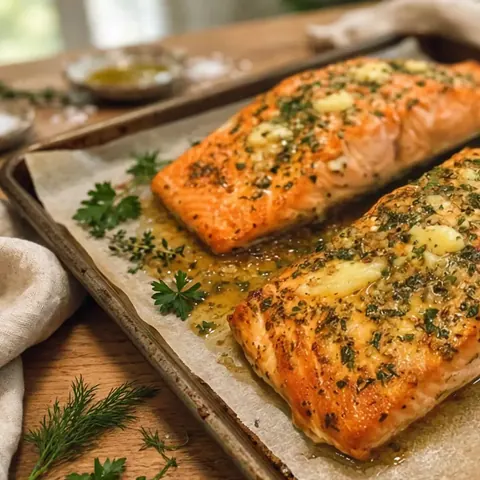
Enjoy tender, oven-baked salmon fillets coated in a rich, aromatic garlic herb butter. This simple preparation creates a juicy, flavorful crust that is perfect for a quick and elegant meal.
Published 8 min read
- Total time
- Prep
- Cook
- Rest
- Serves
- 4
- Makes 4 salmon fillets
- Cuisine
- American
- Calories
- 420
- per serving, estimated

On this page16 sections
Elevate your weeknight dinner with this simple, luxurious garlic herb butter salmon. This recipe focuses on high-quality ingredients and a straightforward cooking method to ensure a perfect result every time. By utilizing a compound butter, you create a flavorful crust that keeps the fish incredibly moist and tender while it bakes in the oven, making it an ideal choice for both quick family meals and elegant dinner gatherings.
This garlic herb butter salmon recipe is designed for ease and consistency. By combining garlic, fresh herbs, and butter, you create a versatile topping that melts into the fish as it cooks. The parchment-lined baking sheet not only makes cleanup a breeze but also helps the fish cook evenly without sticking. Whether serving this alongside roasted vegetables or a fresh green salad, the rich, savory profile of this dish is sure to satisfy. The focus remains on the quality of the salmon and the aromatic blend of the herb butter, ensuring a sophisticated dish without unnecessary complexity or long prep times.
The appeal
Why you’ll love it
The compound butter method is highly effective because it creates a protective barrier over the salmon. As the butter melts in the oven, it bastes the fish continuously, infusing the meat with garlic and herb flavors while maintaining moisture. This technique prevents the salmon from drying out, which is a common issue when baking fish at higher temperatures.
Additionally, using a parchment-lined baking sheet provides a consistent heat distribution. It prevents the delicate skin from sticking to the metal pan and allows for gentle, uniform cooking. The butter crust caramelizes slightly, providing a delicious textural contrast to the soft, flaky interior of the salmon, resulting in a dish that feels much more elaborate than its simple preparation suggests.
What you need
Ingredients
Makes 4 salmon fillets.
Main
Garlic Herb Butter
Contains:
- Fish
- Milk
Tools
Equipment
- Baking sheet
- Parchment paper
- Mixing bowl
- Spatula
- Fork
Swaps
Substitutions
Instead ofFresh herbs
Use1 teaspoon dried Italian seasoning blend
Instead ofUnsalted butter
UseSalted butter
Good to know
Notes
For the best results, use fresh salmon fillets that are uniform in thickness. Atlantic or Sockeye salmon are excellent choices, provided they are fresh and firm to the touch. If using frozen salmon, ensure it is completely thawed and patted dry with paper towels before applying the butter mixture, as excess moisture can prevent the butter from adhering properly.
Regarding equipment, a standard rimmed baking sheet works best for this recipe. If you prefer, you can use a high-quality silicone baking mat instead of parchment paper, although parchment paper is often preferred for its ability to be discarded easily. Ensure your oven is fully preheated before placing the salmon inside to guarantee the correct cooking time and texture.
Prep
Before you start
Before beginning, ensure all ingredients are measured and ready. If the butter is too cold, leave it at room temperature for about 20 minutes until it is soft enough to mix easily. Mince the garlic finely to ensure it distributes evenly throughout the herb butter. Prep your baking sheet by cutting a piece of parchment paper to size, ensuring it covers the base of the pan completely. Pat the salmon fillets dry with paper towels; removing surface moisture helps the herb butter stick better and allows the fish to cook more effectively without excessive steaming.
Step by step
Method
Phase 1
Preparing the Compound Butter
Step 1: Prepare the butter mixture
In a small mixing bowl, combine the softened butter, minced garlic, and finely chopped fresh herbs. Mix thoroughly until the ingredients are well incorporated into a smooth compound butter. This step ensures that every bite of the salmon will be evenly seasoned with the aromatic herbs and garlic.
You’ll need: unsalted butter · garlic · fresh herbs
Look for: The mixture becomes uniform and creamy in texture.
Tip: Using softened butter makes it much easier to incorporate the minced garlic and herbs evenly.
Checkpoint
The mixture should be thoroughly combined, with the garlic and herbs evenly distributed throughout the softened butter. The consistency should be spreadable, like a soft paste, ensuring that it can be applied smoothly across the surface of the salmon without clumping or sliding off during the initial stages of baking.
Phase 2
Seasoning and Baking
Step 2: Season and bake
Preheat the oven to 400°F (200°C). Line a baking sheet with parchment paper. Place the salmon fillets on the prepared sheet. Spread a generous layer of the garlic herb butter mixture over the top of each fillet, ensuring the entire surface is well coated. Bake for 12 to 15 minutes until the fish reaches an internal temperature of 145°F (63°C).
You’ll need: salmon fillets · unsalted butter
Internal temperature 145°F (63°C)
Look for: The salmon should look opaque and the butter should be bubbling around the fillets.
Tip: Ensure the fillets are of similar thickness so they cook at the same rate.
Checkpoint
The salmon fillets should be arranged evenly on the parchment-lined sheet, with the garlic herb butter applied in a thick, consistent layer. As the fish bakes, the butter will begin to melt and pool around the fillets, creating an aromatic steam that smells of roasting garlic and fresh herbs, signaling that the flavor is being absorbed.
Phase 3
Resting and Serving
Step 3: Rest and serve
Once the salmon reaches an internal temperature of 145°F (63°C), remove the baking sheet from the oven. Let the fish rest for at least 3 minutes before serving. This short resting period allows the juices to redistribute throughout the fillet, ensuring a moist and tender texture that flakes easily with a fork.
You’ll need: salmon fillets
Internal temperature 145°F (63°C)
Look for: The flesh flakes easily when gently pressed with a fork.
Tip: Use a fork to test the flakiness of the center of the thickest fillet.
Checkpoint
After resting for three minutes, the salmon should be firm yet tender. When lifted with a fork, the flesh should flake naturally into moist, distinct layers. The butter crust should appear glossy and settled on top of the fillets, indicating that the fish is perfectly cooked and ready to be served immediately.
Doneness
How to tell it’s done
The salmon is done when it is opaque throughout and the flesh flakes easily when tested with a fork. Using a meat thermometer is the most accurate way to check for doneness; insert the probe into the thickest part of the fillet. The internal temperature must reach 145°F (63°C). The fish should appear slightly translucent in the very center if undercooked, so ensure it has turned a consistent pink color throughout before removing it from the oven.
Avoid these
Common mistakes
A common mistake is overcooking the salmon, which can quickly turn the texture dry and chalky. Always monitor the internal temperature closely as the fish nears the end of the recommended cooking time. Another frequent error is using cold butter, which makes it difficult to incorporate the herbs and garlic evenly, potentially leading to uneven seasoning on the fillets. Finally, failing to let the fish rest for at least 3 minutes after removing it from the oven can cause the flavorful juices to escape immediately upon cutting, resulting in a less moist and tender dining experience.
Cook safely
Food safety
Safe internal temperatures
Cook to at least these temperatures, measured with an instant-read thermometer in the thickest part.
| Food | Minimum internal temperature |
|---|---|
| Fish | 145°F (63°C) |
Better results
Tips
Tip 1
For a more vibrant flavor, add a small amount of fresh lemon zest to the butter mixture. The citrus notes cut through the richness of the butter and complement the salmon perfectly. You can also experiment with different herbs like dill or parsley, which are classic pairings for fish and offer a fresh, clean taste that balances the intensity of the garlic.
Tip 2
If you prefer a slightly golden crust, you can place the salmon under the broiler for the final 1 to 2 minutes of cooking. Watch it extremely closely, as the butter and garlic can burn very quickly under direct high heat. This optional step adds a pleasant texture to the top of the fillet while keeping the interior moist and tender.
Make it yours
Variations
Lemon Garlic Salmon
Incorporate one tablespoon of fresh lemon zest and one teaspoon of lemon juice into the butter mixture for a brighter, more citrus-forward flavor profile that complements the richness of the salmon.
Spicy Herb Salmon
Add a quarter teaspoon of red pepper flakes to the herb butter mixture to provide a subtle, warming heat that contrasts beautifully with the savory garlic and fresh herbs.
On the table
Serving suggestions
Serve the salmon warm, directly from the baking sheet or transferred to a serving platter. It pairs beautifully with roasted asparagus, steamed green beans, or a simple side of quinoa or wild rice. The juices from the pan, which contain the melted garlic herb butter, can be drizzled over the salmon or the side dishes for an extra boost of flavor.
When plating, consider adding a fresh lemon wedge on the side. A small squeeze of fresh lemon juice just before eating brightens the entire dish and highlights the natural flavors of the fish. The combination of the rich, buttery crust and the bright acidity of the lemon creates a balanced and satisfying meal that is suitable for any occasion.
Leftovers
Storage & make-ahead
- Fridge
- Keep leftovers in an airtight container in the refrigerator for up to 2 days. Cool completely within 2 hours before storage.
- Freezer
- Freezing is not recommended as it significantly alters the texture of the delicate salmon and the quality of the butter crust.
- Reheat
- Reheat gently in a preheated oven at 300°F (150°C) until warmed through, or use a microwave on low power to avoid overcooking.
Store any leftover salmon in an airtight container to keep it as fresh as possible. Ensure the fish has cooled to room temperature within 2 hours before covering it and placing it in the refrigerator. This helps prevent condensation from forming inside the container, which can negatively affect the texture of the fish and the butter crust.
Make ahead
You can prepare the garlic herb butter up to two days in advance and keep it refrigerated in a small container. When ready to cook, let the butter sit at room temperature for just enough time to become spreadable. This makes dinner preparation significantly faster on busy weeknights, allowing you to assemble the dish and put it straight into the oven.
Questions
Frequently asked questions
Can this dish be prepared in an air fryer?
Yes, this recipe can be adapted for an air fryer. Reduce the cooking time to approximately 8 to 10 minutes at 375°F (190°C), depending on the thickness of the fillets. Always check the internal temperature to ensure it reaches the safe 145°F (63°C) threshold.
What is the best way to prevent the fish from sticking?
Using parchment paper is the most effective method for preventing sticking. If you do not have parchment paper, ensure the baking sheet is lightly greased with a small amount of oil, although parchment remains the preferred choice for both food safety and easy cleanup.
Can dried herbs be used instead of fresh ones?
Yes, dried herbs can be used, but use them sparingly. Because dried herbs are more concentrated, replace the two tablespoons of fresh herbs with one teaspoon of dried herbs. Stir them into the softened butter and let the mixture sit for ten minutes before using to allow the herbs to rehydrate.
Everything in one place: the recipe card below gathers the ingredients, steps and estimated nutrition, ready to print.
Recipe card
Garlic Herb Butter Salmon
Enjoy tender, oven-baked salmon fillets coated in a rich, aromatic garlic herb butter. This simple preparation creates a juicy, flavorful crust that is perfect for a quick and elegant meal.
- Prep
- Cook
- Rest
- Total
- Servings
- 4 salmon fillets
Ingredients
Main
- 4 fillets salmon fillets
Garlic Herb Butter
- 1/2 cup unsalted butter, softened
- 4 cloves garlic, minced
- 2 tbsp fresh herbs, finely chopped
Instructions
Prepare the butter mixture. In a small mixing bowl, combine the softened butter, minced garlic, and finely chopped fresh herbs. Mix thoroughly until the ingredients are well incorporated into a smooth compound butter. This step ensures that every bite of the salmon will be evenly seasoned with the aromatic herbs and garlic.
Season and bake. Preheat the oven to 400°F (200°C). Line a baking sheet with parchment paper. Place the salmon fillets on the prepared sheet. Spread a generous layer of the garlic herb butter mixture over the top of each fillet, ensuring the entire surface is well coated. Bake for 12 to 15 minutes until the fish reaches an internal temperature of 145°F (63°C).
Rest and serve. Once the salmon reaches an internal temperature of 145°F (63°C), remove the baking sheet from the oven. Let the fish rest for at least 3 minutes before serving. This short resting period allows the juices to redistribute throughout the fillet, ensuring a moist and tender texture that flakes easily with a fork.
Allergens: Fish, Milk
Nutrition (estimated, per serving)
- Calories
- 420 kcal
- Protein
- 34 g
- Carbs
- 0.5 g
- Fat
- 30 g
- Fiber
- 0 g
- Sugar
- 0 g
- Sodium
- 150 mg
Estimates only: values vary with brands, substitutions and portion sizes.
Recipe by EasyCooks Kitchen · easycooksrecipes.com
Share this recipe
Send it to someone who’d love it, or save it for later.
Spotted a mistake in this recipe? Let us know.
Keep cooking


