Herb Roasted Chicken with Potatoes and Carrots for an Easy Sheet Pan Dinner
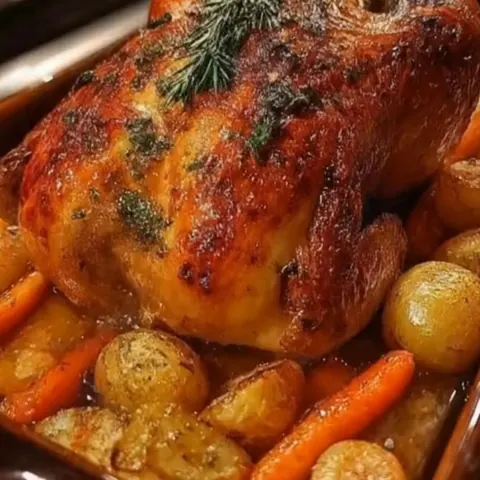
Juicy herb roasted chicken with baby potatoes and carrots, all cooked in one brown ceramic dish. Crisp golden skin, tender vegetables and a simple dinner the whole family will enjoy.
Published 11 min read
- Total time
- Prep
- Cook
- Rest
- Serves
- 4
- Makes one whole chicken, 4 servings
- Cuisine
- American
- Calories
- 640
- per serving, estimated

On this page16 sections
Golden skin, juicy meat and tender vegetables, all roasted together in one dish. This herb roasted chicken with baby potatoes and carrots gives you a complete dinner with almost no fuss. Pull the dish from the oven, carve the bird at the table and watch the pan juices shine over every serving.
Roast chicken is one of the most satisfying dinners you can make at home, and this version keeps the work simple. A whole chicken is rubbed with olive oil, salt, pepper and fresh herbs, then set in a brown ceramic dish alongside halved baby potatoes and chunks of carrot. The vegetables roast in the same juices as the bird, so each piece picks up the herb flavor and the drippings. Start with a dry chicken and well seasoned vegetables, and the result is a dinner with crisp skin, tender meat and a glossy finish. Expect about 75 minutes of oven time plus a short rest before carving. Serve it hot and with plenty of pan juices spooned over the plate.
The appeal
Why you’ll love it
Roasting at 425°F (220°C) browns the skin quickly while the inside cooks through, so the chicken keeps its moisture. The high heat also caramelizes the surface of the potatoes and carrots, giving them crisp edges and sweet centers. Because everything shares one dish, the vegetables absorb the fat and seasoning that drip from the bird, which means you get more flavor from fewer ingredients.
Drying the chicken before seasoning is what makes the skin turn golden instead of pale. Olive oil and salt help the skin brown and season the meat evenly. Garlic and herbs perfume the pan as they heat, and the smashed cloves soften into the juices. Resting the chicken after roasting lets the juices settle back into the meat, which is why the slices stay tender when you carve them.
What you need
Ingredients
Makes one whole chicken, 4 servings.
Tools
Equipment
- Large brown ceramic baking dish or roasting pan
- Instant-read meat thermometer
- Tongs
- Cutting board and carving knife
- Vegetable peeler
- Paper towels
Swaps
Substitutions
Instead ofBaby potatoes
UseYukon Gold potatoes cut into 1 1/2-inch pieces
Instead ofFresh mixed herbs
Use1 tbsp dried thyme and 1 tsp dried rosemary
Instead ofKosher salt
Use1 1/2 tsp fine sea salt
Good to know
Notes
Baby potatoes hold their shape well in the oven and have thin skins, so you can halve them without peeling. If you use larger potatoes, cut them into pieces of about 1 1/2 inches so they cook in the same time as the chicken. Choose carrots that are firm and straight, and cut them into chunks of similar size for even roasting.
A large brown ceramic baking dish works well because it holds the heat steadily and gives the vegetables room to brown. A heavy roasting pan or a rimmed sheet pan is an acceptable alternative, as long as the vegetables are spread in a single layer. Keep a meat thermometer nearby, since it is the only reliable way to confirm that the chicken is cooked through without drying the breast.
Prep
Before you start
Gather everything before you start, so the seasoning and arranging go quickly. Set the oven rack in the middle position and preheat the oven to 425°F (220°C). Remove the chicken giblets from the cavity, pat the bird dry inside and out, and let it sit on the counter for up to 30 minutes while you prepare the vegetables. Halve the baby potatoes, cut the carrots into 2-inch chunks and chop the herbs. Smash the garlic cloves with the flat side of a knife. Keep a meat thermometer, tongs and a carving knife within reach so the final steps move smoothly.
Step by step
Method
Phase 1
Seasoned and ready to roast
Step 1: Prepare the chicken and vegetables
Pat the chicken dry with paper towels. Rub it all over with 2 tbsp of the olive oil, 1 tsp of the salt and the pepper. Toss the potatoes and carrots with the remaining olive oil, the herbs and the remaining salt in the brown ceramic dish, then set the chicken on top.
You’ll need: whole chicken (about 4 lb) · baby potatoes, halved · carrots · olive oil · fresh mixed herbs · kosher salt · black pepper
Look for: The skin looks dry and the oil coats the vegetables evenly.
Tip: Dry skin browns faster, so pat the bird well before seasoning it.
Step 2: Add the garlic and herbs
Tuck the smashed garlic cloves and a few herb sprigs around the chicken and under the vegetables. Leave the chicken at room temperature for no more than 30 minutes while you preheat the oven, then return it to the refrigerator if you are not ready.
You’ll need: garlic, smashed · fresh mixed herbs · whole chicken (about 4 lb)
Look for: Garlic and herbs are spread around the dish, not piled up.
Tip: Smashed garlic releases more flavor into the pan juices than whole cloves.
Checkpoint
At the end of this phase, the chicken should look dry and evenly coated in olive oil, salt and pepper, with the potatoes and carrots scattered around it in a single layer. The herbs and garlic should be visible in the dish, not stacked on top of each other. Smell the dish: you should notice fresh rosemary and thyme and a little garlic. Before you put the dish in the oven, check that the oven has reached 425°F (220°C) and that the rack is in the middle. Turn the chicken once if it has rubbed off unevenly, then roast.
Phase 2
Golden and cooking through
Step 3: Roast until the chicken is cooked through
Heat the oven to 425°F (220°C) and place the dish on the middle rack. Roast for about 60 to 75 minutes, until the skin is deep golden and the juices run clear. Stir the vegetables once halfway through so they cook evenly.
You’ll need: whole chicken (about 4 lb) · baby potatoes, halved · carrots
Internal temperature 165°F (74°C)
Look for: The skin is deep golden and sizzling, and the kitchen smells of roasted herbs.
Tip: Check the thigh with a thermometer, since it cooks more slowly than the breast.
Step 4: Check the chicken temperature
Insert an instant-read thermometer into the thickest part of the thigh, without touching the bone. The chicken is ready when it reads 165°F (74°C). If it is still lower, roast for another 5 to 10 minutes and check again.
You’ll need: whole chicken (about 4 lb)
Internal temperature 165°F (74°C)
Look for: The thigh juices run clear and the meat pulls away from the bone.
Tip: Test in two places, the thigh and the breast, to be sure.
Checkpoint
At the end of this phase, the skin should be a deep, even golden brown and sizzling softly in the dish. The potatoes should look slightly crisp at the edges, and the carrots should be starting to soften. The kitchen should smell of roasted herbs and browned fat. Before going on, insert the thermometer into the thickest part of the thigh and check the reading. If the thigh is below 165°F (74°C), return the dish to the oven and check again every 5 minutes. Do not open the oven too often, since the heat drops each time the door is opened.
Phase 3
Rested, carved and served
Step 5: Rest and carve the chicken
Transfer the chicken to a cutting board and let it rest for 10 minutes so the juices settle. Carve the meat with tongs and a knife, then arrange the pieces with the roasted potatoes and carrots.
You’ll need: whole chicken (about 4 lb) · baby potatoes, halved · carrots
Look for: The meat is steaming gently and the skin is glossy and crisp.
Tip: Resting keeps the meat moist, so do not cut it straight from the oven.
Step 6: Serve with the pan juices
Spoon the pan juices over the carved chicken and vegetables. Season with more salt to taste and serve hot, straight from the dish or on warm plates.
You’ll need: kosher salt · whole chicken (about 4 lb) · baby potatoes, halved · carrots
Look for: The pan juices are glossy and the vegetables are tender when pierced.
Tip: Spoon the juices over the potatoes so they soak up the flavor.
Checkpoint
At the end of this phase, the chicken should have rested for 10 minutes on the board, and the juices should have settled into the meat. The carved pieces should look moist and glossy, with the skin still crisp where it was not covered by the juices. The vegetables should be tender when pierced with a fork and coated in pan juices. Before serving, check that each piece of chicken is hot all the way through, and add more salt to taste if the vegetables need it. Serve the chicken and vegetables while they are still hot.
Doneness
How to tell it’s done
The chicken is done when the thickest part of the thigh reads 165°F (74°C) on an instant-read thermometer, placed without touching the bone. At that temperature the poultry is safe to eat and the meat stays tender. The juices should run clear when you cut between the thigh and the body, and the leg should move easily at the joint. The skin should be deep golden and crisp, and the vegetables should be tender when pierced with a knife. If the thermometer reads below 165°F (74°C), roast for another 5 to 10 minutes and test again.
Avoid these
Common mistakes
The most common mistake is putting damp chicken into the oven, which steams the skin and keeps it pale instead of golden and crisp. Another frequent problem is crowding the vegetables under the bird, so they steam rather than roast; spread them in a single layer around the chicken. Cutting into the chicken straight from the oven is also a mistake, because the juices run out onto the board instead of staying in the meat. Finally, do not rely only on the color of the skin: a dark surface does not guarantee that the thigh has reached a safe temperature, so always check it with a thermometer.
Cook safely
Food safety
Safe internal temperatures
Cook to at least these temperatures, measured with an instant-read thermometer in the thickest part.
| Food | Minimum internal temperature |
|---|---|
| Poultry | 165°F (74°C) |
Better results
Tips
Tip 1
Dry the chicken well before seasoning it, and do not skip the resting period. A dry surface browns more evenly, and a short rest lets the juices settle so the slices stay moist when you carve them.
Tip 2
Keep the vegetables in a single layer around the chicken. This lets the potatoes and carrots roast and caramelize instead of steaming, and it lets the pan juices reach every piece so the flavor is even.
Make it yours
Variations
Lemon and garlic
Add the zest of one lemon to the herb mixture and tuck thin lemon slices under the chicken before roasting. The citrus perfumes the pan and brightens the potatoes and carrots without changing the basic method.
Paprika rub
Replace the fresh herbs with 1 teaspoon of smoked paprika and 1 teaspoon of garlic powder in the seasoning rub. The paprika gives the skin a deeper color and a gentle smoky flavor against the sweet carrots.
Extra vegetables
Add halved onions, red bell pepper strips or quartered fennel to the dish with the potatoes and carrots. Use vegetables that roast at a similar pace, and keep them in one layer so they brown evenly in the pan juices.
Dried herbs
Use 2 teaspoons of dried thyme and 1 teaspoon of dried oregano in place of the fresh herbs when fresh ones are not available. Stir the dried herbs into the oil first so they bloom and release their flavor evenly over the chicken.
On the table
Serving suggestions
Serve the carved chicken on warm plates with the roasted potatoes and carrots arranged beside it. Spoon the pan juices over the meat and vegetables so each bite carries the herb flavor. A simple green salad with a lemon dressing is a bright contrast to the rich skin and tender meat. Bread for soaking up the juices works well alongside the dish.
For a relaxed family dinner, bring the whole dish to the table and carve the chicken in front of everyone. Offer extra salt and cracked black pepper at the table so each person can season to taste. Pair the meal with a crisp white wine or a sparkling water with lemon, and let the chicken rest for a few minutes after carving so the slices stay juicy while you serve.
Leftovers
Storage & make-ahead
- Fridge
- Refrigerate cooked chicken and vegetables within 2 hours of cooking, in a sealed container. Use them within 3 to 4 days for the best flavor and texture.
- Freezer
- Freeze the cooked chicken in an airtight container for up to 2 months.
- Reheat
- Reheat the chicken and vegetables in a 350°F (175°C) oven, covered with foil, until hot all the way through, about 15 to 20 minutes.
Store leftover chicken and vegetables in an airtight container. Let the dish cool for no more than 2 hours at room temperature, then transfer the meat and vegetables to the refrigerator. Remove the meat from the bones before storing if you want to keep it for sandwiches or salads. Keep the pan juices in a separate container so the potatoes stay crisp. Eat the leftovers within 3 to 4 days for the best texture and flavor.
Make ahead
You can season the chicken and prepare the vegetables up to a day in advance. Rub the chicken with the olive oil, salt, pepper and herbs, then cover it and refrigerate it on a plate. Keep the halved potatoes and carrot chunks in a container of cold water, drain and dry them well before tossing them with oil and herbs. Bring the chicken out of the refrigerator about 30 minutes before roasting, but no longer, to keep it cold until it goes into the oven. Roast it as directed on the day you serve it.
Questions
Frequently asked questions
Can this chicken be made ahead of time?
Yes, you can season the chicken and prepare the vegetables up to a day in advance. Keep the chicken covered in the refrigerator, and bring it out about 30 minutes before roasting so it does not sit at room temperature for long. Roast the dish as directed on the day you serve it, and check the thigh with a thermometer before carving, since a chicken that has been seasoned in advance still needs to reach 165°F (74°C).
Why is your chicken skin pale instead of golden?
Pale skin usually means the chicken was damp or the oven was not hot enough when the dish went in. Pat the bird dry thoroughly before seasoning it, and preheat the oven fully to 425°F (220°C). Also avoid crowding the vegetables around the bird, since steam from them can keep the skin from browning. Finishing under the broiler for a minute or two can add color if needed.
How do you know the chicken is cooked through?
Use an instant-read thermometer in the thickest part of the thigh, without touching the bone. The chicken is cooked through when it reads 165°F (74°C). The juices should also run clear when you cut between the thigh and the body. Color alone is not a reliable sign, because the skin can look dark before the meat is fully cooked.
Can you use a different cut of chicken instead of a whole bird?
You can use bone-in chicken thighs or drumsticks in place of a whole chicken, but the cooking time will change. Bone-in pieces usually need about 40 to 50 minutes at 425°F (220°C), so check them with a thermometer from the 35-minute mark. Boneless pieces cook faster and should be checked earlier. Whatever cut you choose, the thickest part should reach 165°F (74°C) before serving.
What can you serve with herb roasted chicken and vegetables?
This dish is a complete meal on its own, since the potatoes and carrots are cooked in the same dish as the chicken. For a lighter side, serve a simple green salad with lemon vinaigrette. Crusty bread is useful for soaking up the pan juices. If you want something fresh and bright, add a squeeze of lemon over the carved meat just before serving.
Everything in one place: the recipe card below gathers the ingredients, steps and estimated nutrition, ready to print.
Recipe card
Herb Roasted Chicken with Potatoes and Carrots for an Easy Sheet Pan Dinner
Juicy herb roasted chicken with baby potatoes and carrots, all cooked in one brown ceramic dish. Crisp golden skin, tender vegetables and a simple dinner the whole family will enjoy.
- Prep
- Cook
- Rest
- Total
- Servings
- one whole chicken, 4 servings
Ingredients
- 1 whole chicken (about 4 lb), patted dry
- 1 lb baby potatoes, halved
- 3 carrots, peeled and cut into 2-inch chunks
- 3 tbsp olive oil
- 4 cloves garlic, smashed
- 2 tbsp fresh mixed herbs, chopped (rosemary and thyme)
- 2 tsp kosher salt, plus more to taste
- 1 tsp freshly ground black pepper
Instructions
Prepare the chicken and vegetables. Pat the chicken dry with paper towels. Rub it all over with 2 tbsp of the olive oil, 1 tsp of the salt and the pepper. Toss the potatoes and carrots with the remaining olive oil, the herbs and the remaining salt in the brown ceramic dish, then set the chicken on top.
Add the garlic and herbs. Tuck the smashed garlic cloves and a few herb sprigs around the chicken and under the vegetables. Leave the chicken at room temperature for no more than 30 minutes while you preheat the oven, then return it to the refrigerator if you are not ready.
Roast until the chicken is cooked through. Heat the oven to 425°F (220°C) and place the dish on the middle rack. Roast for about 60 to 75 minutes, until the skin is deep golden and the juices run clear. Stir the vegetables once halfway through so they cook evenly.
Check the chicken temperature. Insert an instant-read thermometer into the thickest part of the thigh, without touching the bone. The chicken is ready when it reads 165°F (74°C). If it is still lower, roast for another 5 to 10 minutes and check again.
Rest and carve the chicken. Transfer the chicken to a cutting board and let it rest for 10 minutes so the juices settle. Carve the meat with tongs and a knife, then arrange the pieces with the roasted potatoes and carrots.
Serve with the pan juices. Spoon the pan juices over the carved chicken and vegetables. Season with more salt to taste and serve hot, straight from the dish or on warm plates.
Nutrition (estimated, per serving)
- Calories
- 640 kcal
- Protein
- 46 g
- Carbs
- 38 g
- Fat
- 32 g
- Fiber
- 4 g
- Sugar
- 5 g
- Sodium
- 780 mg
Estimates only: values vary with brands, substitutions and portion sizes.
Recipe by EasyCooks Kitchen · easycooksrecipes.com
Share this recipe
Send it to someone who’d love it, or save it for later.
Spotted a mistake in this recipe? Let us know.
Keep cooking


