Honey Roasted Pork with Caramelized Onions and Baby Potatoes
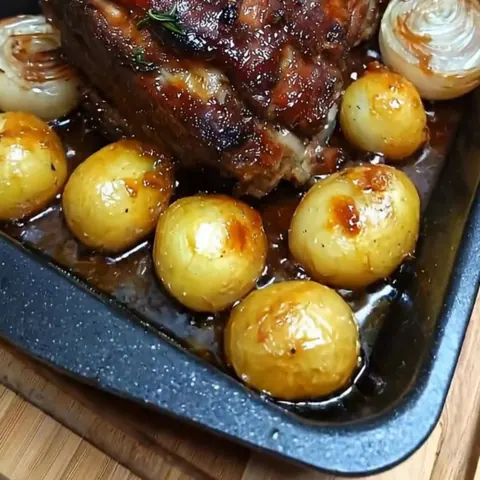
A juicy honey roasted pork roast with caramelized onions and golden baby potatoes, all cooked in one black roasting pan for an easy family dinner with a glossy, sticky glaze.
Published 11 min read
- Total time
- Prep
- Cook
- Rest
- Serves
- 6
- Makes One 3-lb pork roast, serves 6
- Cuisine
- American
- Calories
- 520
- per serving, estimated

On this page16 sections
Honey roasted pork is the kind of dinner that fills the kitchen with warm, sweet smoke. A glossy honey glaze turns sticky in the oven, while the pork stays juicy inside. Baby potatoes and caramelized onions roast in the same pan, so the whole meal comes together with very little effort and only one dish to clean afterward.
This honey roast pork with caramelized onions is a complete one-pan dinner built around a boneless pork shoulder roast. The honey, garlic and Dijon mustard glaze brushes onto the meat during roasting, creating a golden, sticky crust. Baby potatoes and thick onion wedges roast alongside the pork, soaking up the pan juices until they turn tender and deeply caramelized. Everything is carved and plated together, so the dinner looks as good as it tastes. The method is simple, the timing is forgiving, and the result is a centerpiece that works for a weeknight dinner or a relaxed weekend gathering with family.
The appeal
Why you’ll love it
Searing the pork first gives it a deep golden crust and a rich, savory flavor. The browned bits left in the roasting pan later melt into the broth and onions, creating a natural sauce without any extra steps. This is why the pan is so important to the method.
Roasting at a moderate oven temperature cooks the pork gently, so the meat stays moist and tender rather than drying out. Basting with the honey glaze every so often builds layers of sweetness and shine. The potatoes and onions cook slowly in the same juices, which lets their natural sugars caramelize and turn sweet, tender and golden.
What you need
Ingredients
Makes One 3-lb pork roast, serves 6.
Honey glaze
Contains:
- Milk
- Mustard
Tools
Equipment
- Black roasting pan with rack
- Instant-read meat thermometer
- Cutting board and sharp carving knife
- Small saucepan
- Mixing bowl
- Wooden spoon
Swaps
Substitutions
Instead ofBoneless pork shoulder roast
UseBoneless pork loin roast; reduce the roasting time and check the temperature early
Instead ofBaby potatoes
UseSmall Yukon Gold potatoes, cut into halves or quarters
Instead ofDijon mustard
UseWhole-grain mustard for a more rustic glaze
Instead ofLow-sodium chicken broth
UseWater with a pinch of salt
Good to know
Notes
Choose a boneless pork shoulder roast with some visible fat, because the fat keeps the meat juicy during the long roast. A boneless pork loin also works, but it is leaner, so check the internal temperature earlier and watch it closely to avoid overcooking. Pat the roast dry before seasoning so it browns well in the pan.
You need a black roasting pan that can go from the stovetop to the oven, since the browning and the roasting happen in the same dish. A rack is helpful but not required. Use an instant-read meat thermometer to confirm doneness, because the cooking time depends on the exact size and shape of the roast. Use a small saucepan to warm the glaze gently so the honey stays smooth and does not scorch.
Prep
Before you start
Gather all the ingredients and equipment before you start cooking, because the pork and the glaze move quickly once they are in the pan. Take the pork out of the refrigerator and leave it at room temperature for no more than 30 minutes before searing, and keep the rest of the meat chilled until then. Pat the roast completely dry with paper towels so it browns instead of steaming. Peel the onions and cut them into thick wedges that will hold their shape during roasting. Halve or quarter any large baby potatoes so they cook at the same pace as the pork. Mince the garlic, measure the honey and Dijon mustard, and set out the thyme and broth. Preheat the oven and set the roasting pan within easy reach of the stove and the oven rack.
Step by step
Method
Phase 1
Sear and glaze the pork
Step 1: Season and sear the pork
Heat the oven to 325°F (163°C). Pat the pork dry, then rub it all over with the kosher salt and black pepper. Heat the olive oil in the roasting pan over medium-high heat and sear the roast on all sides until deep golden brown.
You’ll need: boneless pork shoulder roast · kosher salt · black pepper · olive oil
Look for: The roast releases easily from the pan and every side is deep golden brown.
Tip: Dry the surface well so the pork browns instead of steaming in the pan.
Step 2: Prepare the honey glaze
In a small saucepan over low heat, warm the honey, minced garlic, Dijon mustard and butter until the butter melts and the mixture is smooth and fragrant. Remove the saucepan from the heat and set the glaze aside.
You’ll need: honey · garlic · Dijon mustard · unsalted butter
Look for: The honey is runny, smooth and smells of garlic.
Tip: Keep the heat low so the honey does not darken or scorch.
Checkpoint
After the first phase, the pork should have a deep golden crust on every side, and the roasting pan should be lightly browned with small bits stuck to the bottom. The honey glaze should be warm, smooth and fragrant with garlic, with the butter fully melted and no bits of sugar left on the bottom of the saucepan. Check that the pork has been seasoned evenly and that the glaze is ready to brush. Before going on, make sure the oven is fully preheated to 325°F (163°C), because the roast needs steady, even heat for the next phase to cook properly and stay juicy.
Phase 2
Roast the pork with vegetables
Step 3: Roast with onions and potatoes
Scatter the potatoes, onion wedges and thyme sprigs around the seared pork in the pan. Pour in the chicken broth, then brush the roast with half of the honey glaze. Roast for about 1 hour, basting with the pan juices every 20 minutes.
You’ll need: boneless pork shoulder roast · baby potatoes · yellow onions · fresh thyme · low-sodium chicken broth · honey · garlic · Dijon mustard · unsalted butter
Look for: The onions are soft and browning at the edges, and the potatoes are starting to turn golden.
Tip: Baste with the pan juices to build a glossy, sticky crust on the pork.
Step 4: Caramelize the onions and glaze
Brush the roast with the remaining honey glaze and continue roasting for 30 to 40 minutes, until the pork reaches an internal temperature of 145°F (63°C). Stir the onions and potatoes in the pan juices so they caramelize evenly. Let it rest for 3 minutes before slicing.
You’ll need: boneless pork shoulder roast · yellow onions · baby potatoes · honey · garlic · Dijon mustard · unsalted butter
Internal temperature 145°F (63°C)
Look for: The onions are deep golden and sticky, and the glaze has set into a shiny coating.
Tip: Check the internal temperature in the thickest part of the roast, away from the bone.
Checkpoint
At the end of the second phase, the potatoes should be golden and tender when pierced with a fork, and the onion wedges should have softened and begun to caramelize along their edges. The pork should have a sticky, shiny glaze, and the pan juices should be bubbling gently around the vegetables. Use an instant-read thermometer in the thickest part of the roast, away from any bone, and confirm that it reads 145°F (63°C). Before moving on to resting, check that the potatoes and onions have browned evenly and that the pan has enough juices to spoon over the pork later.
Phase 3
Rest and carve the pork
Step 5: Rest the pork before slicing
Transfer the roast to a cutting board, tent loosely with foil and let it rest for at least 15 minutes. Spoon the pan juices over the roast and keep the potatoes and onions warm in the pan.
You’ll need: boneless pork shoulder roast · baby potatoes · yellow onions · low-sodium chicken broth
Internal temperature 145°F (63°C)
Look for: The surface is glossy and the juices have settled inside the meat.
Tip: Resting keeps the slices juicy when you carve them.
Step 6: Carve and serve
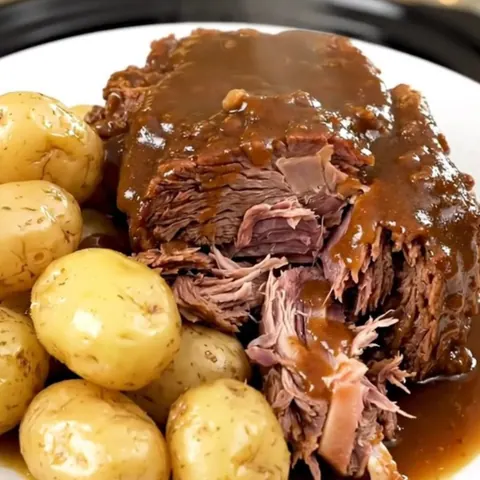
Slice the pork into thick pieces with a sharp carving knife. Plate the slices with the golden potatoes and caramelized onions, and spoon the pan juices over the top before serving hot.
You’ll need: boneless pork shoulder roast · baby potatoes · yellow onions · low-sodium chicken broth · fresh thyme
Look for: The slices are tender, moist and steaming, with the glaze on the outside.
Tip: Carve against the grain for the most tender slices.
Checkpoint
By the final phase, the pork should have rested for at least 15 minutes under loose foil, and the juices should have settled back into the meat. The slices should look moist and tender, with a glossy glaze on the outside and a pale pink or slightly juicy center when the meat is still warm. Carving should be easy with a sharp knife, and the potatoes and onions should be warm and sticky. Before serving, check that the pan juices are glossy and spoon them over the sliced pork, so that every serving has moisture and flavor.
Doneness
How to tell it’s done
The pork is done when an instant-read thermometer inserted into the thickest part of the roast, away from any bone, reads 145°F (63°C). Then let the roast rest for at least 15 minutes under loose foil, so the temperature stays steady and the juices redistribute through the meat. You should see a glossy, deep golden glaze on the outside, and the meat should look moist and tender when sliced. The potatoes should be fork-tender and the onions should be soft and caramelized with golden edges. If the pork is not yet at temperature, roast it for a few minutes more and check again, rather than cutting into it early.
Avoid these
Common mistakes
The most common mistake is slicing the pork straight from the oven. Without resting, the juices run out onto the board and the meat turns dry. Another mistake is cooking the honey glaze over high heat, which makes it darken, scorch and taste bitter. Overcrowding the pan also causes problems, because the vegetables steam instead of caramelizing. Use a roasting pan large enough for the roast and the potatoes to sit with some space between them. Finally, avoid relying only on the clock: pork cooks at different speeds depending on its size, shape and starting temperature, so the thermometer is the only reliable guide to a juicy, safe result.
Cook safely
Food safety
Safe internal temperatures
Cook to at least these temperatures, measured with an instant-read thermometer in the thickest part.
| Food | Minimum internal temperature |
|---|---|
| Whole cuts of meat | 145°F (63°C)Then rest at least 3 minutes |
Better results
Tips
Tip 1
Use the pan juices generously. Spooning them over the sliced pork and the potatoes adds moisture and a deeper flavor than the glaze alone. If the pan looks too dry before the roast is done, add a splash more broth so the onions and potatoes keep caramelizing without burning. Scrape up the browned bits from the bottom of the pan as you spoon, because they carry much of the flavor of the finished dish.
Tip 2
Plan the timing so the roast can rest comfortably. The fifteen-minute rest is not optional, because it keeps the slices tender and juicy. While the pork rests, keep the potatoes and onions warm in the pan, and finish the sauce from the pan juices. This gives you a reliable schedule for a dinner that is hot and ready at the same time, without rushing the last steps.
Make it yours
Variations
Fresh Herb Finish
Fold in finely chopped flat-leaf parsley, chives or cilantro right off the heat for a bright herbal finish on every serving.
Gentle Spice Kick
Add a pinch of crushed red pepper flakes or smoked paprika during the middle cooking stage for gentle warmth throughout the dish.
On the table
Serving suggestions
Serve the sliced pork hot on a warm platter with the golden baby potatoes and caramelized onions arranged around the meat. Spoon the glossy pan juices over the top just before serving, so each slice is coated in the glaze. A simple green salad with a sharp vinaigrette makes a refreshing contrast to the sweet, rich flavors of the meat and the caramelized vegetables.
For a relaxed family dinner, carve the pork at the table and let everyone take a slice that suits them. Warm dinner rolls or crusty bread are good for soaking up the extra pan juices. Serve with a bowl of steamed green beans or buttered carrots to round out the plate with fresh color and a lighter side, and keep extra glaze on hand in a small pitcher for anyone who wants more.
Leftovers
Storage & make-ahead
- Fridge
- Keep leftovers in airtight containers in the refrigerator for up to 3 to 4 days.
- Freezer
- Freeze sliced pork with some pan juices in a sealed container for up to 2 months, then thaw in the refrigerator overnight.
- Reheat
- Reheat slices gently in a covered dish with a splash of broth until steaming hot throughout.
Store leftover pork, potatoes and onions in separate airtight containers so the potatoes do not become soggy and the onions keep their texture. Let everything cool for no more than 2 hours at room temperature before you put it in the refrigerator, and keep the pork moist by storing it with a few spoonfuls of the pan juices. Use the leftovers within three to four days for the best flavor and texture. Always reheat the pork until it is steaming hot throughout before you serve it again.
Make ahead
You can season the pork a day ahead and keep it, covered, in the refrigerator. Do not leave raw pork at room temperature while you prepare the other ingredients. You can also make the honey glaze up to a day in advance and store it in a covered jar in the refrigerator, then warm it gently before brushing it onto the roast. Peel and cut the onions and halve the potatoes the morning of cooking, and keep them in cold water covered in the refrigerator so they stay crisp and fresh. On the day, sear, roast and rest the pork as directed, so the glaze and texture are at their best.
Questions
Frequently asked questions
Can the pork be made ahead of time?
Yes, you can season the pork a day ahead and keep it covered in the refrigerator. Make the honey glaze in advance and warm it gently before brushing it onto the roast. Roast and rest the pork on the day of serving, so the glaze stays glossy and the texture of the meat stays juicy. Keep raw pork refrigerated until it goes into the oven, and never leave it at room temperature for more than 30 minutes before cooking.
What internal temperature should the pork reach?
Pork roast is safe to eat at an internal temperature of 145°F (63°C), measured in the thickest part of the meat, away from any bone. Let the roast rest for at least 15 minutes under loose foil before slicing. The temperature may rise slightly during resting, which keeps the meat tender and juicy while it stays safe to eat.
Why does the honey glaze turn bitter?
Honey burns quickly at high heat, and the sugars darken and can taste bitter. Warm the glaze gently over low heat in a small saucepan, just until the butter melts and the mixture is smooth. Brush the glaze on during roasting rather than leaving it in direct high heat, and keep the oven at 325°F (163°C) for an even, steady caramelization.
Can the potatoes and onions be cooked in a separate pan?
Yes, but you will lose some of the flavor that comes from the pan juices and browned bits. If you cook them separately, toss the potatoes and onion wedges with olive oil, salt and pepper, then roast them on a sheet pan at the same temperature until tender and golden. Spoon some of the pork pan juices over them before serving to recover much of the flavor.
How do you keep the pork juicy when slicing?
Let the roast rest for at least 15 minutes under loose foil before carving, so the juices settle back into the meat. Use a sharp carving knife and cut the slices thick, across the grain of the meat. Spoon the warm pan juices over the slices just before serving, which keeps every piece moist, tender and full of flavor.
Everything in one place: the recipe card below gathers the ingredients, steps and estimated nutrition, ready to print.
Recipe card
Honey Roasted Pork with Caramelized Onions and Baby Potatoes
A juicy honey roasted pork roast with caramelized onions and golden baby potatoes, all cooked in one black roasting pan for an easy family dinner with a glossy, sticky glaze.
- Prep
- Cook
- Rest
- Total
- Servings
- One 3-lb pork roast, serves 6
Ingredients
- 3 lb boneless pork shoulder roast, patted dry
- 2 tsp kosher salt
- 1 tsp freshly ground black pepper
- 2 tbsp olive oil
- 1 lb baby potatoes, halved if large
- 2 yellow onions, cut into thick wedges
- 2 tbsp unsalted butter
- 1/2 cup low-sodium chicken broth
- 2 sprigs fresh thyme
Honey glaze
- 1/3 cup honey
- 3 cloves garlic, minced
- 1 tbsp Dijon mustard
Instructions
Season and sear the pork. Heat the oven to 325°F (163°C). Pat the pork dry, then rub it all over with the kosher salt and black pepper. Heat the olive oil in the roasting pan over medium-high heat and sear the roast on all sides until deep golden brown.
Prepare the honey glaze. In a small saucepan over low heat, warm the honey, minced garlic, Dijon mustard and butter until the butter melts and the mixture is smooth and fragrant. Remove the saucepan from the heat and set the glaze aside.
Roast with onions and potatoes. Scatter the potatoes, onion wedges and thyme sprigs around the seared pork in the pan. Pour in the chicken broth, then brush the roast with half of the honey glaze. Roast for about 1 hour, basting with the pan juices every 20 minutes.
Caramelize the onions and glaze. Brush the roast with the remaining honey glaze and continue roasting for 30 to 40 minutes, until the pork reaches an internal temperature of 145°F (63°C). Stir the onions and potatoes in the pan juices so they caramelize evenly. Let it rest for 3 minutes before slicing.
Rest the pork before slicing. Transfer the roast to a cutting board, tent loosely with foil and let it rest for at least 15 minutes. Spoon the pan juices over the roast and keep the potatoes and onions warm in the pan.
Carve and serve. Slice the pork into thick pieces with a sharp carving knife. Plate the slices with the golden potatoes and caramelized onions, and spoon the pan juices over the top before serving hot.
Allergens: Milk, Mustard
Nutrition (estimated, per serving)
- Calories
- 520 kcal
- Protein
- 38 g
- Carbs
- 28 g
- Fat
- 28 g
- Fiber
- 2 g
- Sugar
- 18 g
- Sodium
- 620 mg
Estimates only: values vary with brands, substitutions and portion sizes.
Recipe by EasyCooks Kitchen · easycooksrecipes.com
Share this recipe
Send it to someone who’d love it, or save it for later.
Spotted a mistake in this recipe? Let us know.
Keep cooking
More dinner recipes
Dinner
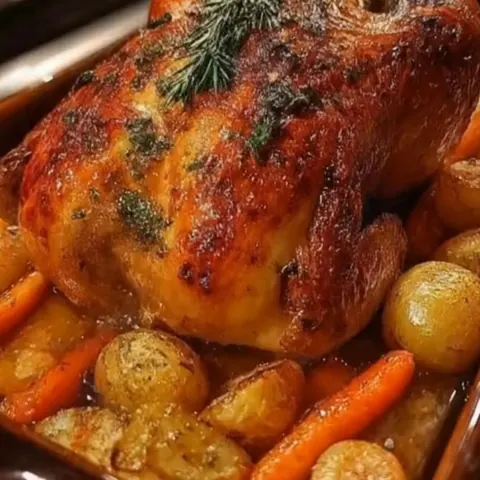
Herb Roasted Chicken with Potatoes and Carrots for an Easy Sheet Pan Dinner
Total time: 1 hr 45 mins