Pan-Seared Swordfish with Tomato-Caper Pan Sauce
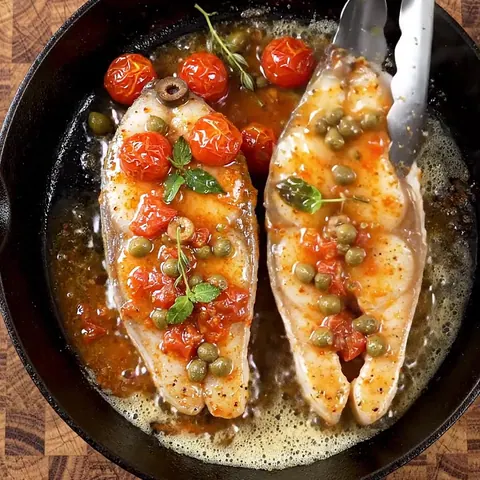
Thick swordfish steaks seared in a cast iron skillet, then finished in a butter and lemon pan sauce with cherry tomatoes, olives, capers, thyme and basil. One pan, one dinner.
Published 12 min read
- Total time
- Prep
- Cook
- Serves
- 2
- Makes 2 steaks, served in the skillet
- Cuisine
- Mediterranean-American
- Calories
- 480
- per serving, estimated

On this page16 sections
A swordfish steak is thick enough to stay juicy through a quick sear, and this dish lets it finish in its own butter. Cherry tomatoes and olives soften in the same skillet, while capers and lemon turn the pan juices into a bright, glossy sauce you can spoon over every bite at the table tonight.
This recipe takes two thick swordfish steaks through a simple sequence in one cast iron skillet. The fish is seasoned with salt and black pepper, seared in olive oil until golden on the edges, then basted with melted butter. Halved cherry tomatoes and mixed black and green olives go into the pan around the steaks, and lemon juice and capers finish the sauce. Fresh thyme and torn basil go in at the end, and the dish is served straight from the skillet. It is a dinner that feels composed without demanding much time at the stove, and every component depends on the pan juices that the swordfish leaves behind.
The appeal
Why you’ll love it
Searing the swordfish first builds a golden crust that holds the flesh together while the inside cooks gently. Thick steaks need that initial contact with hot iron, because the outside browns before the center overcooks. Once the heat is lowered, the butter can melt without burning, and the browned bits left on the bottom of the skillet become part of the sauce.
Adding the tomatoes and olives to the pan, instead of cooking them separately, lets their juices mix with the butter and lemon. The tomatoes blister and soften, releasing sweetness that thickens the sauce slightly. Spooning the pan juices over the steaks repeatedly bastes the fish evenly, so it turns opaque and flakes without drying out on the outside.
What you need
Ingredients
Makes 2 steaks, served in the skillet.
Contains:
- Milk
- Fish
Tools
Equipment
- 12-inch cast iron skillet
- Wooden cutting board
- Sharp knife
- Citrus juicer
- Fish spatula
- Grater
Swaps
Substitutions
Instead ofSwordfish steaks
UseHalibut or thick tuna steaks cut to a similar thickness, cooked the same way until opaque
Instead ofCast iron skillet
UseHeavy stainless steel skillet of similar size, preheated just as well
Instead ofHard cheese
UseAged pecorino or Parmesan, grated finely
Good to know
Notes
Swordfish is firm, meaty and mild, and it holds its shape in a hot pan better than most fish. Look for steaks about 1 inch thick, which is the thickness that makes basting practical. Buy steaks that are bright and moist, with no dry edges or strong fishy smell. Pat them dry before seasoning so the sear can start right away.
A 12-inch cast iron skillet is the right size for two steaks, because it gives the fish room to sit in one layer with the tomatoes and olives around it. Cast iron holds heat well and moves easily from the stove to the table. A fish spatula helps you lift the steaks cleanly. A grater is useful for the hard cheese, which should be finely grated just before serving. Capers are briny, so taste the sauce before adding extra salt.
Prep
Before you start
Set out the swordfish, cherry tomatoes, olives, capers, thyme, basil and the lemon before you start, so the pan never waits. Pat the swordfish steaks dry with paper towels and season both sides with salt and black pepper just before cooking. Keep the steaks in the refrigerator until the skillet is hot, and do not leave raw fish at room temperature for more than 30 minutes. Halve the cherry tomatoes and pit the olives. Juice the lemon and cut thin slices for garnish. Drain the capers. Grate the hard cheese on a board. Have the olive oil and butter measured, and place a fish spatula and a spoon next to the stove, because the basting goes quickly once the sauce is forming and needs your full attention.
Step by step
Method
Phase 1
Searing the Swordfish Steaks
Step 1: Season and sear the swordfish
Pat the swordfish steaks dry and season both sides generously with salt and black pepper. Heat the olive oil in a cast iron skillet over medium-high heat until it shimmers, then lay the steaks in the pan and sear until golden on the edges.
You’ll need: thick swordfish steaks · kosher salt · black pepper · olive oil
Look for: The edges turn golden and the fish releases easily from the pan.
Tip: Keep the steaks in the refrigerator until you are ready to cook them.
Checkpoint
After this phase, the swordfish edges should be golden and the steaks should release easily from the skillet when you nudge them with a spatula. The oil should look hot and smell lightly toasted, not smoky. Check that the steaks are browned on the underside before you turn them, and that the centers still look slightly translucent. If the steaks stick, leave them alone for another moment so the crust can form. Moving them too early tears the surface and leaves the sear uneven across the flesh. A clean sear at this point sets the foundation for the entire dish, because the browned bits that form on the pan will later dissolve into the butter and lemon sauce as the fish finishes cooking.
Phase 2
Building the Tomato-Caper Sauce
Step 2: Add butter, tomatoes and olives
Turn the steaks and let the butter melt over the fish in the pan. Scatter the halved cherry tomatoes and olives into the skillet around the steaks so they start to soften and blister.
You’ll need: unsalted butter · cherry tomatoes, halved · black and green olives · thick swordfish steaks
Look for: The butter foams and the tomatoes begin to blister at the skin.
Tip: Keep the heat steady so the butter browns lightly without burning.
Step 3: Add lemon and capers
Squeeze the lemon juice over the fish and scatter the capers into the pan. Stir the pan juices gently so the lemon, butter and caper brine combine into a loose sauce.
You’ll need: lemon · capers, drained · thick swordfish steaks
Look for: The pan juices turn glossy and smell bright with lemon.
Tip: Add the capers after the lemon so they keep their texture and bite.
Step 4: Spoon pan juices over the fish
Spoon the buttery pan juices over the steaks repeatedly, about every minute, for several minutes. Continue until the flesh turns opaque all the way through and flakes easily when pressed with a fork at the thickest point.
You’ll need: thick swordfish steaks · unsalted butter · capers, drained · lemon
Internal temperature 145°F (63°C)
Look for: The flesh is opaque and separates into flakes at the center.
Tip: Tilt the skillet slightly so the sauce pools for basting.
Checkpoint
At the end of this phase, the butter should be fully melted and lightly foamy, the tomatoes should show blistered skins, and the olives should look warmed through. The pan juices should be glossy and loose, coating the back of a spoon in a thin layer. Smell the sauce: it should be bright with lemon and savory from the butter and caper brine. Before moving on, check that the sauce is not browning too quickly. If it darkens fast, lower the heat slightly. The capers should be scattered in and stirred gently, not crushed, so they keep their texture and their briny bite throughout the final basting.
Phase 3
Basting to Opaque and Flaky
Step 5: Finish with thyme and basil
Add the fresh thyme sprigs and torn basil leaves to the pan at the end, letting them wilt in the hot sauce. Remove the skillet from the heat and let the fish rest for about 1 minute before serving.
You’ll need: fresh thyme · fresh basil
Look for: The herbs wilt and turn bright green in the glossy sauce.
Tip: Add the herbs off the heat so they keep their fresh flavor.
Step 6: Serve in the skillet
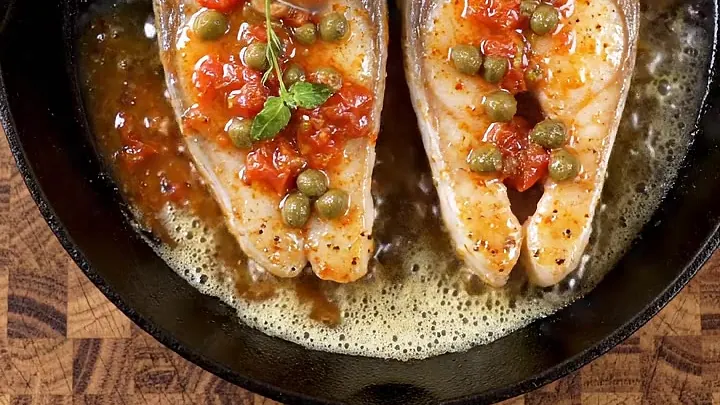
Serve the dish in the skillet, with each swordfish steak topped with blistered tomatoes, olives, capers and spooned pan sauce. Garnish with lemon slices and grate hard cheese over the top just before eating.
You’ll need: thick swordfish steaks · cherry tomatoes, halved · black and green olives · capers, drained · lemon · hard cheese
Look for: Blistered tomatoes and olives sit on top of the glossy sauce.
Tip: Grate the cheese just before serving so it stays fine and fresh.
Checkpoint
At the end of this phase, the swordfish should be opaque all the way through, with the flesh turning from translucent pink to pale, even color. Press the thickest part gently with a fork: it should separate into flakes without resistance. The internal temperature should read at least 145°F (63°C). Check the sauce as well; it should be glossy and slightly reduced, and the herbs should be ready to go in. If the flesh still looks glassy at the center, spoon more of the sauce over the steaks and wait another minute. Overcooking begins quickly with swordfish, so stop as soon as the flakes separate cleanly.
Doneness
How to tell it’s done
Swordfish is done when the flesh has turned opaque from the outside to the center and separates into flakes when pressed with a fork at the thickest point. The color should be pale and even, with no glassy or translucent area left in the middle. For food safety, the fish should reach 145°F (63°C) at its thickest part, measured with an instant-read thermometer inserted from the side. Swordfish is best served moist, so remove it from the skillet at that point, even if the center still looks a touch darker than you expected. The residual heat continues to cook the fish for a minute or so after it leaves the pan, so a short rest in the sauce keeps the texture tender rather than dry.
Avoid these
Common mistakes
The most common mistake is cooking swordfish too long. Thick steaks look fully cooked on the outside long before the center is ready, and continued heat dries the flesh quickly. Start checking early and remove the fish as soon as it flakes at the thickest point. Another mistake is crowding the pan. If the tomatoes and olives fill the skillet before the fish is seared, the steaks steam instead of browning. Keep the vegetables around the fish, not under it. A third error is adding the capers too early. They burn if they sit over high heat for a long time, which leaves a bitter taste in the sauce. Scatter them in after the lemon and stir gently. Finally, do not skip patting the fish dry. Surface moisture prevents the sear from forming and makes the seasoning slide off.
Cook safely
Food safety
Safe internal temperatures
Cook to at least these temperatures, measured with an instant-read thermometer in the thickest part.
| Food | Minimum internal temperature |
|---|---|
| Fish | 145°F (63°C) |
Better results
Tips
Tip 1
Start with the steaks cold from the refrigerator, straight from the package once patted dry. Cold fish holds its shape while the outside sears, and the center cooks more evenly. Keep the seasoned steaks covered in the refrigerator until the skillet is hot, and never leave them out for longer than 30 minutes before cooking.
Tip 2
Spoon the pan juices over the swordfish every minute or so rather than all at once. Small, repeated basting builds a glossy coating on the fish and keeps the sauce from reducing too far. If the sauce starts to look dry, add a splash of water or a little more lemon juice to loosen it, then continue spooning. Taste the sauce before serving and adjust the salt, because the capers and olives already add a good amount of saltiness.
Make it yours
Variations
Extra Lemon Zest
Finely grate the zest of the lemon over the swordfish just before serving. The zest adds a fragrant citrus aroma to the glossy sauce and sharpens the flavor without adding more juice or changing the texture of the dish.
Garlic Butter Finish
Add a thinly sliced garlic clove to the butter as it melts, stirring until it turns pale gold. This gives the tomato-caper sauce a deeper savory base while keeping the same ingredients and the same method throughout the cooking.
Halibut Version
Swap the swordfish for thick halibut steaks cut to the same thickness. Cook them in the same way, basting until the flesh turns opaque and flakes easily, adjusting the time slightly to match the lighter fish.
Crushed Red Pepper
Add a small pinch of crushed red pepper to the pan with the capers. The gentle heat pairs well with the blistered tomatoes and the buttery pan sauce, giving the finished dish a subtle warmth without overpowering the fish.
On the table
Serving suggestions
Serve the swordfish directly in the cast iron skillet, placed on a heatproof trivet in the center of the table. Each steak should be topped with blistered tomatoes, olives and capers, with plenty of the glossy pan sauce spooned over the fish. Arrange lemon slices around the edge of the skillet so guests can squeeze extra juice over their portion. Grate hard cheese over the top just before eating, and finish with a few torn basil leaves. The dish is generous enough to serve as a main course on its own, and it pairs well with crusty bread for mopping up the sauce, which is the best part of the meal.
A simple side keeps the focus on the fish. A green salad with a light vinaigrette, a plate of roasted or steamed green vegetables, or a bowl of plain boiled potatoes all complement the sharp flavors of the tomatoes, capers and lemon without competing with them. Choose a crisp, dry white wine or a light rosé to serve alongside, since acidity balances the buttery sauce well. Keep the table relaxed and let each guest serve themselves from the skillet, which is part of the appeal of cooking and serving in cast iron.
Leftovers
Storage & make-ahead
- Fridge
- Store leftover fish and sauce in an airtight container in the refrigerator for up to 2 days, after cooling for no more than 2 hours.
- Reheat
- Reheat gently in a covered skillet over low heat with a spoon of water, just until warmed through, to keep the fish moist.
Swordfish is best eaten the same day it is cooked. If you have leftovers, let the fish and sauce cool for no more than 2 hours at room temperature, then transfer them to a shallow airtight container. Keep the tomatoes, olives and sauce together with the fish so the flavors stay connected. Store the container in the refrigerator, where the leftovers keep for up to 2 days. Do not leave cooked fish out of the refrigerator for longer than that window, and do not reuse the container for raw fish without washing it first. Keep the grated cheese separate in its own container, because it dries out quickly once exposed to air. Herbs such as basil are best added fresh rather than stored in the pan sauce for long periods.
Make ahead
Several components of this dish can be prepared in advance, which makes the final cooking quicker. Halve the cherry tomatoes, pit the olives, drain the capers and juice the lemon up to a day ahead, keeping each in its own covered container in the refrigerator. Grate the hard cheese shortly before serving so it stays fine and fresh. Tear the basil just before cooking, because the leaves bruise and darken once cut. Season the swordfish steaks no more than 30 minutes before searing, keeping them cold until the skillet is ready. The actual cooking takes only about 15 minutes, so the dish is best assembled and finished just before serving. Avoid cooking the fish in advance, because swordfish dries out when reheated and loses its glossy texture.
Questions
Frequently asked questions
Can swordfish be cooked from frozen in this recipe?
It is better to thaw swordfish fully before cooking, so the steaks sear evenly and the center cooks at the same pace as the outside. Thaw the steaks in the refrigerator overnight, then pat them very dry before seasoning. Frozen fish releases extra moisture into the pan, which prevents a golden sear and dilutes the butter and lemon sauce. Once thawed, follow the steps as written, and keep the steaks cold until the skillet is hot.
How thick should the swordfish steaks be?
Choose steaks about 1 inch thick. Thinner pieces cook through before the outside develops a good sear, while very thick steaks take longer to reach a safe, moist center. A steady thickness also makes it easier to judge doneness by flakes at the thickest point. Ask the fishmonger to cut the steaks to a similar size so both fillets finish at the same time in the skillet.
Why do the capers go in after the lemon juice?
Adding the capers after the lemon keeps them from burning over high heat. Capers are small and contain little moisture, so they can scorch quickly on a hot skillet and turn bitter. Scattering them in once the lemon is in the pan lets them warm gently in the buttery sauce, where they keep their texture and their briny bite through the final basting.
Can you substitute the cherry tomatoes?
Yes, small grape tomatoes work well in the same way, because they blister quickly and release sweet juices into the pan. Halve them as you would the cherry tomatoes so they cook evenly. Avoid large tomatoes, which hold too much water and make the sauce thin. The tomatoes should soften and blister in the butter without collapsing completely, so a firm, ripe variety is the best choice.
What is the best way to tell when swordfish is done?
Swordfish is done when the flesh is opaque all the way through and separates into flakes when pressed with a fork at the thickest point. For food safety, the internal temperature should reach 145°F (63°C). Remove the fish from the heat at that point, because it continues to cook briefly as it rests. Overcooked swordfish turns dry and chalky, so check early and stop as soon as the flakes separate cleanly.
Everything in one place: the recipe card below gathers the ingredients, steps and estimated nutrition, ready to print.
Recipe card
Pan-Seared Swordfish with Tomato-Caper Pan Sauce
Thick swordfish steaks seared in a cast iron skillet, then finished in a butter and lemon pan sauce with cherry tomatoes, olives, capers, thyme and basil. One pan, one dinner.
- Prep
- Cook
- Total
- Servings
- 2 steaks, served in the skillet
Ingredients
- 2 thick swordfish steaks, about 1 inch thick
- kosher salt, to taste
- freshly ground black pepper, to taste
- 2 tbsp extra-virgin olive oil
- 2 tbsp unsalted butter
- 1 cup cherry tomatoes, halved
- 1/4 cup mixed black and green olives, pitted and halved
- 1 lemon, juiced, plus thin slices for serving
- 1 tbsp capers, drained
- 3 sprigs fresh thyme
- 6 leaves fresh basil, torn
- grated hard cheese, such as Parmesan, for serving
Instructions
Season and sear the swordfish. Pat the swordfish steaks dry and season both sides generously with salt and black pepper. Heat the olive oil in a cast iron skillet over medium-high heat until it shimmers, then lay the steaks in the pan and sear until golden on the edges.
Add butter, tomatoes and olives. Turn the steaks and let the butter melt over the fish in the pan. Scatter the halved cherry tomatoes and olives into the skillet around the steaks so they start to soften and blister.
Add lemon and capers. Squeeze the lemon juice over the fish and scatter the capers into the pan. Stir the pan juices gently so the lemon, butter and caper brine combine into a loose sauce.
Spoon pan juices over the fish. Spoon the buttery pan juices over the steaks repeatedly, about every minute, for several minutes. Continue until the flesh turns opaque all the way through and flakes easily when pressed with a fork at the thickest point.
Finish with thyme and basil. Add the fresh thyme sprigs and torn basil leaves to the pan at the end, letting them wilt in the hot sauce. Remove the skillet from the heat and let the fish rest for about 1 minute before serving.
Serve in the skillet. Serve the dish in the skillet, with each swordfish steak topped with blistered tomatoes, olives, capers and spooned pan sauce. Garnish with lemon slices and grate hard cheese over the top just before eating.
Allergens: Milk, Fish
Nutrition (estimated, per serving)
- Calories
- 480 kcal
- Protein
- 38 g
- Carbs
- 8 g
- Fat
- 32 g
- Fiber
- 2 g
- Sugar
- 4 g
- Sodium
- 820 mg
Estimates only: values vary with brands, substitutions and portion sizes.
Recipe by EasyCooks Kitchen · easycooksrecipes.com
Share this recipe
Send it to someone who’d love it, or save it for later.
Spotted a mistake in this recipe? Let us know.
Keep cooking