Slow Cooker Cola Ribs for Tender Falling-Off-the-Bone Meat
These slow-cooked cola ribs offer incredibly tender, melt-in-your-mouth meat with a rich, caramelized sauce. Perfect for a hassle-free dinner.
Published 7 min read
- Total time
- Prep
- Cook
- Rest
- Serves
- 4
- Cuisine
- American
- Calories
- 550
- per serving, estimated

On this page16 sections
Transform simple pork ribs into a restaurant-quality meal with the magic of a slow cooker. This recipe focuses on creating a sticky, caramelized glaze that perfectly complements the tender, slow-cooked meat. By using a classic soda base, you achieve a depth of flavor that is both sweet and savory, making this dish a guaranteed favorite for any weeknight dinner or casual weekend gathering at home.
Slow cooker cola ribs are the ultimate comfort food for those who appreciate tender, flavorful meat without the need for constant kitchen supervision. This recipe relies on the gentle, long-term heat of a slow cooker to break down the connective tissues in the ribs, resulting in meat that effortlessly falls off the bone. The combination of cola and your favorite barbecue sauce creates a sticky, glossy glaze that coats every single rib. It is a straightforward, reliable method that delivers consistent results every time, ensuring a delicious meal that feels special despite the minimal effort required.
The appeal
Why you’ll love it
The slow cooking method is ideal for ribs because it uses low, consistent heat over an extended period. This process gradually breaks down the collagen in the pork, transforming tough cuts into succulent, tender bites. The cola acts as a tenderizer, while its natural sugars contribute to a deep, caramelized flavor profile that traditional marinades often lack.
Using a slow cooker ensures that the meat remains moist throughout the cooking cycle. Because the cooker is sealed, the braising liquid is constantly recycled and concentrated, effectively basting the ribs in the flavorful cola and barbecue sauce mixture. This constant exposure to the cooking liquid ensures that every layer of the meat is deeply seasoned and perfectly cooked from start to finish.
What you need
Ingredients
Makes 4 servings.
Ribs
Sauce
Contains:
- Sulfites
Tools
Equipment
- Slow cooker
- Metal tongs
- Serving plate
- Fork
Swaps
Substitutions
Instead ofCola
UseUse root beer or ginger ale for a slightly different flavor profile in the braising liquid.
Instead ofPork ribs
UseBeef short ribs can be used, though cooking times may need adjustment for optimal tenderness.
Good to know
Notes
When selecting ribs, look for a rack with a good amount of meat on the bone. Baby back ribs are generally more tender, while spare ribs have a bit more fat and flavor. Ensure the ribs fit comfortably in the slow cooker; if they are too long, you can cut the rack into smaller sections to ensure they are fully submerged in the sauce.
The choice of barbecue sauce will significantly influence the final flavor of the dish. A smoky, thick sauce works exceptionally well with the sweetness of the cola, but you can also choose a spicy or tangy variety depending on personal preference. Always store the slow cooker basin in a cool, dry place and ensure the exterior is cleaned after every use to maintain its performance.
Prep
Before you start
Before starting, ensure the slow cooker is placed on a flat, stable surface away from any heat-sensitive materials. Clear enough space in your refrigerator if you plan to marinate the ribs beforehand, although this recipe works perfectly well without prior marination. Have your tongs and a serving platter ready, as the ribs will be very delicate once they are fully cooked and will require careful handling to keep them intact when transferring them from the cooker.
Step by step
Method
Phase 1
Rib preparation
Step 1: Prepare the ribs
Place the pork ribs into the slow cooker basin. Ensure they are arranged in an even layer to promote consistent cooking throughout the entire cooking process.
You’ll need: pork ribs
Look for: Ribs are settled at the bottom of the slow cooker.
Tip: Trim any excess fat from the ribs before placing them in the cooker for a cleaner final sauce.
Checkpoint
The ribs should be clean and trimmed of excess fat, arranged neatly in the slow cooker basin. Check that the basin is clean and the heating element is functioning correctly before adding the meat.
Phase 2
Adding the glaze
Step 2: Add the braising liquid
Pour the cola and the barbecue sauce over the ribs. Ensure the sauce covers the meat as much as possible to infuse the flavors during the long cooking time.
You’ll need: cola · barbecue sauce
Look for: Liquid covers the ribs completely.
Tip: Avoid using diet cola, as the artificial sweeteners do not caramelize the same way as sugar.
Checkpoint
The ribs should be fully coated with the mixture of cola and barbecue sauce. Ensure the liquid is distributed evenly, covering the meat so it braises effectively during the long cooking process.
Phase 3
Slow cooking
Step 3: Slow cook and serve
Cover the slow cooker and cook on low for 6 to 8 hours until the meat is tender. Once finished, use tongs to remove the ribs, ensuring the internal temperature reaches 145°F (63°C). Let the meat rest for at least 5 minutes before serving.
You’ll need: pork ribs
Internal temperature 145°F (63°C)
Look for: Meat pulls away easily from the bone.
Tip: If the sauce is too thin, simmer it in a saucepan on the stove after removing the ribs to thicken it up.
Checkpoint
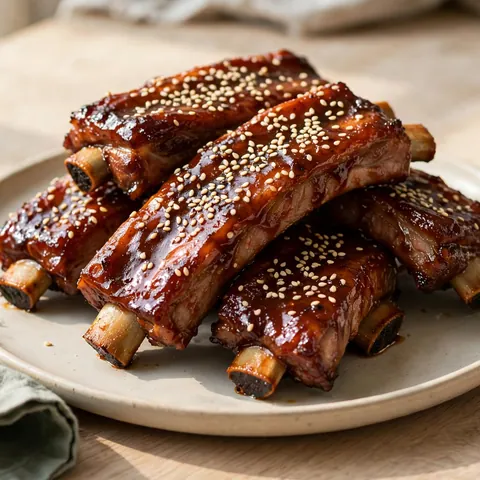
The ribs are ready when the meat is tender and easily flakes off the bone. The sauce should be dark, glossy, and slightly thickened, clinging perfectly to the ribs for a delicious, sticky finish.
Doneness
How to tell it’s done
The ribs are done when the meat is extremely tender and begins to pull away from the bone with minimal effort. You can test this by gently lifting a rib with tongs; if it bends easily or the meat starts to flake, it is ready. Ensure the internal temperature reaches at least 145°F (63°C) as measured by a meat thermometer. Always let the ribs rest for 5 minutes before serving to allow the juices to redistribute, ensuring the best texture.
Avoid these
Common mistakes
A common mistake is using high heat instead of low heat. Ribs benefit from a slow, steady cook; high heat can cause the exterior to dry out before the connective tissue has properly broken down. Another error is overcrowding the slow cooker. If the ribs are packed too tightly, the sauce cannot circulate properly, leading to uneven cooking. Avoid lifting the lid frequently, as each time you open it, heat escapes and increases the total cooking time significantly.
Cook safely
Food safety
Safe internal temperatures
Cook to at least these temperatures, measured with an instant-read thermometer in the thickest part.
| Food | Minimum internal temperature |
|---|---|
| Whole cuts of meat | 145°F (63°C)Then rest at least 3 minutes |
Better results
Tips
Tip 1
To achieve a more intense glaze, remove the ribs once they are tender and place them under the broiler for 3 to 5 minutes. This creates a slightly crispy, charred edge that adds a wonderful contrast to the tender meat inside. Watch them closely so the sugar in the sauce does not burn during this quick finishing step.
Tip 2
If you find the sauce is too thin after cooking, you can easily reduce it. Simply pour the cooking liquid into a saucepan and simmer it over medium-high heat until it reaches your desired consistency. This creates a concentrated, syrupy glaze that can be brushed over the ribs right before serving, providing an extra pop of flavor and a beautiful, glossy presentation.
Make it yours
Variations
Spicy Cola Ribs
Add two tablespoons of hot sauce or a teaspoon of cayenne pepper to the braising liquid for a spicy kick that balances the sweetness of the cola.
Garlic Herb Ribs
Stir in three cloves of minced garlic and a tablespoon of dried thyme into the sauce to add an aromatic, herbal dimension to the final dish.
On the table
Serving suggestions
Serve the ribs warm, accompanied by classic sides like creamy coleslaw, buttery cornbread, or oven-roasted potatoes. The sticky sauce pairs beautifully with crisp, fresh vegetables that provide a refreshing contrast to the rich, caramelized pork. Arrange the ribs on a large platter and drizzle any remaining sauce from the slow cooker over the top for an inviting, professional look.
For a casual presentation, serve the ribs directly from the platter with extra napkins on hand. Since the meat is tender and falls off the bone, it is perfect for sharing. Consider serving with a side of pickles or a light green salad to balance the savory notes of the barbecue sauce. The presentation should be simple and rustic, highlighting the quality of the slow-cooked meat.
Leftovers
Storage & make-ahead
- Fridge
- Store in an airtight container in the refrigerator for up to 3 days. Ensure the ribs are covered in sauce to maintain their quality.
- Freezer
- Freeze in a freezer-safe container for up to 2 months. Thaw in the refrigerator overnight before reheating.
- Reheat
- Reheat in a preheated oven at 325°F (163°C) until warmed through, or use the microwave on medium power for shorter intervals.
Allow any leftover ribs to cool for no more than 2 hours before transferring them to an airtight container. Keep the ribs submerged in a portion of the leftover sauce to prevent the meat from drying out while stored in the refrigerator. Proper storage maintains the moisture and flavor of the ribs for several days, making them an excellent option for quick future meals.
Make ahead
These ribs are perfect for making ahead of time as the flavors tend to deepen after resting in the refrigerator. You can cook them completely, let them cool, and store them in the fridge. When ready to eat, simply reheat them in the oven or on the stovetop. This makes them a convenient choice for busy weeks when you need a high-quality meal ready with minimal preparation time.
Questions
Frequently asked questions
Can diet cola be used for this recipe?
Diet cola is not recommended because the artificial sweeteners do not caramelize properly. The sugar in regular cola is essential for creating the signature thick, sticky glaze that coats the ribs during the slow cooking process.
How long should the ribs be cooked?
The ribs should be cooked on low for 6 to 8 hours. This slow, steady heat is necessary to break down the connective tissues, resulting in the desired tender, falling-off-the-bone texture that characterizes this dish.
Can this be made ahead of time?
Yes, these ribs are an excellent choice for making ahead. The flavors often improve after sitting in the refrigerator. Simply reheat them gently in the oven or on the stovetop until they are warmed through before serving.
Everything in one place: the recipe card below gathers the ingredients, steps and estimated nutrition, ready to print.
Recipe card
Slow Cooker Cola Ribs for Tender Falling-Off-the-Bone Meat
These slow-cooked cola ribs offer incredibly tender, melt-in-your-mouth meat with a rich, caramelized sauce. Perfect for a hassle-free dinner.
- Prep
- Cook
- Rest
- Total
- Servings
- 4 servings
Ingredients
Ribs
- 3 lb pork ribs
Sauce
- 12 oz cola
- 1 cup barbecue sauce
Instructions
Prepare the ribs. Place the pork ribs into the slow cooker basin. Ensure they are arranged in an even layer to promote consistent cooking throughout the entire cooking process.
Add the braising liquid. Pour the cola and the barbecue sauce over the ribs. Ensure the sauce covers the meat as much as possible to infuse the flavors during the long cooking time.
Slow cook and serve. Cover the slow cooker and cook on low for 6 to 8 hours until the meat is tender. Once finished, use tongs to remove the ribs, ensuring the internal temperature reaches 145°F (63°C). Let the meat rest for at least 5 minutes before serving.
Allergens: Sulfites
Nutrition (estimated, per serving)
- Calories
- 550 kcal
- Protein
- 35 g
- Carbs
- 25 g
- Fat
- 32 g
- Fiber
- 0.5 g
- Sugar
- 22 g
- Sodium
- 850 mg
Estimates only: values vary with brands, substitutions and portion sizes.
Recipe by EasyCooks Kitchen · easycooksrecipes.com
Share this recipe
Send it to someone who’d love it, or save it for later.
Spotted a mistake in this recipe? Let us know.
Keep cooking


