Kitchen Table StoriesRevengeFiction10 min read
Art Professor Destroys Student's Masterpiece, But Museum Curator's Arrival Changes Everything
A renowned art professor publicly humiliates her talented student by destroying her painting. But when esteemed art world figures intervene, the professor's cruel act unravels into a shocking revelation.
By EasyCooks KitchenPublished
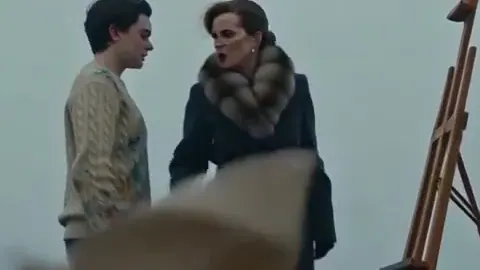
The Pier of Broken Dreams
The pre-dawn air hung heavy and cold over the isolated harbor, thick with a chilling mist that clung to everything like a shroud. The weathered planks of the pier groaned a mournful rhythm beneath my feet, slick with the salty spray of the dark, incoming tide. Rusted bollards stood like silent sentinels, draped in tangled fishing nets, catching only the faintest hint of the bruised, blue-grey light that heralded the approaching dawn. The world beyond this fog-bound sanctuary was swallowed whole, marked only by the distant, mournful moan of foghorns—a sound that echoed the growing dread in my own heart.
I stood rigid, a statue carved from ice and arrogance in my bespoke charcoal cashmere trench coat, the silver fox fur collar a stark contrast to the bleak surroundings. My gloved hands clenched, a familiar posture of disdain. Facing me was Noah, my prodigy. At 22, she possessed a talent that had once ignited a spark of hope in my jaded soul. Now, she looked small, fragile, shivering in an oversized, paint-splattered sweater, her damp auburn curls clinging to pale, wind-chilled cheeks. Her knuckles were raw, testament to hours spent wrestling with her craft.
Before us stood her easel, bearing a portrait that was supposed to be her magnum opus. A portrait of me. But as I stared, the initial flicker of pride I’d harbored curdled into a bitter, venomous contempt. It was a technical exercise, devoid of soul, a shallow imitation. It was an insult. With a surge of adrenaline-fueled disgust, I strode forward. My hand shot out, gripping the heavy linen canvas.
With a sharp, visceral rip, I tore it down the center, the sound echoing across the water. I hurled the shredded halves onto the wet planks. "You have zero talent, Noah," I spat, the words laced with venom. "This garbage belongs beneath my boots!" Her breath hitched, her eyes wide with a shock so profound it was almost paralyzing. Tears welled, her chin quivering uncontrollably.
I watched her crumble, and for a fleeting second, a pang of something—regret?—twisted in my gut. But I crushed it. I had spent twenty years building my reputation on ruthless discernment. I had mentored geniuses and dismissed frauds, and I had never been wrong. Not once. Noah’s work, this portrait of me, was a betrayal of everything I stood for. It was flat, lifeless, a hollow imitation of true artistic vision. She had fooled the faculty, the critics, even herself. But she couldn’t fool me.
I stepped closer, my stiletto heel clicking against the wet wood, each step a verdict. I stopped inches from the torn canvas, the painted face of my own likeness staring up at me from the grimy planks. I raised my foot, deliberately, slowly, and brought my heel down on the center of the portrait. The delicate impasto brushwork yielded with a sickening crunch. I ground my heel into it, the vibrant oils smearing into a muddy, unrecognizable mess. Salt water seeped into the fibers, staining the canvas with the pier’s grime. I looked up at Noah, my eyes blazing with triumphant malice.
"I am expelling you from the Academy," I declared, my voice resonating with a chilling finality that silenced even the cry of the gulls. "You will never show in a gallery as long as you live!" Her jaw clenched so tightly that the tendons in her neck strained against her pale skin. Drops of seawater clung to her lashes, but her fists, clenched at her sides, shook with a barely contained fury.
The raw emotion radiating from her was almost palpable, a dark energy that both repelled and, disturbingly, captivated me. I expected tears, pleas, a breakdown. Instead, she stood there, trembling, but her eyes—those wide, vulnerable eyes—held a fire I had never seen before.
"You can't do this," she whispered, her voice cracking. "You can't just—"
"I can," I cut her off, my tone like ice. "And I have. You are nothing, Noah. A footnote in my career. A cautionary tale for those who mistake ambition for talent." I turned away, dismissing her, already planning my report to the dean. But as I took a step toward the pier’s exit, the world shifted. The screech of tires shattered the silence, and high beams sliced through the fog like knives.
The Price of Arrogance
The raw sound of tearing canvas still hung in the air, mingling with the mournful foghorns. Noah stood before me, a fragile figure shattered by my words, tears tracing paths through the faint paint smudges on her cheeks. But beneath the shock, I saw a flicker of something else—defiance. It infuriated me. This girl, this supposed prodigy, dared to challenge my judgment? My authority? My entire career was built on discerning true talent, on nurturing genius and culling mediocrity. Noah, in that moment, represented the latter. She was a fraud, and I, Victoria Sterling, would not stand by and watch her deceive the art world.
With a cold, deliberate cruelty, I stepped forward. My Italian leather stiletto, sharp and unforgiving, found the painted face on the torn canvas. I ground my heel into it, the delicate impasto brushwork yielding beneath the pressure. Salt water and the grime of the pier smeared the image, mingling with the vibrant oils. I met Noah’s gaze, my eyes blazing with triumphant malice. "I am expelling you from the Academy,"
I declared, my voice resonating with a chilling finality that silenced even the cry of the gulls. "You will never show in a gallery as long as you live!" Her jaw clenched so tightly that the tendons in her neck strained against her pale skin. Drops of seawater clung to her lashes, but her fists, clenched at her sides, shook with a barely contained fury. The raw emotion radiating from her was almost palpable, a dark energy that both repelled and, disturbingly, captivated me.
Suddenly, the piercing shriek of tires cut through the fog. Two sleek black town cars screeched to an abrupt halt at the entrance to the pier, their high beams slicing through the dense grey like searching eyes. Figures emerged, dashing frantically down the slick timber walkway, their tailored coats flapping against the sea gale. Jean-Luc Moreau, the Senior Curator from the Louvre, and Eleanor Vance, the Global Director of Sotheby's.
My blood ran cold. What were they doing here? "Stop!" Jean-Luc’s voice boomed, laced with desperate urgency. "Don't touch another thread of that masterpiece!" I turned, my face a mask of bewildered outrage. Masterpiece? This was an abomination. But as I looked at Noah, her trembling subsiding, replaced by a steely resolve, a sliver of doubt, cold and sharp, began to pierce through my carefully constructed arrogance.
Jean-Luc reached us, his breath ragged, his eyes wild. He dropped to his knees without a word, his hands, surprisingly steady, hovering over the torn canvas. He didn’t touch it, not yet. He just stared, his gaze tracing every brushstroke, every smear of my heel, with an intensity that made my skin crawl. Eleanor followed, her heels clicking with authority. She held a leather portfolio, and her face was a mask of controlled fury. She looked at me, and I felt a chill that had nothing to do with the sea air. "Victoria," she said, her voice low and cold, "what have you done?"
"I have done my job," I replied, my voice steady despite the sudden tremor in my hands. "I have culled a fraud." Eleanor’s laugh was sharp, bitter. "Fraud?" she repeated, stepping closer. "You have no idea who you’re dealing with, do you?" She turned to Noah, her expression softening. "Noah, dear, we’ve been trying to reach you for weeks. Your work—the entire collection you submitted to our young artists’ program—it’s been vetted by three independent panels. The Louvre has already scheduled a solo exhibition for next spring." My world tilted. A solo exhibition at the Louvre? For Noah? It was impossible. It was a mistake.
"You’re lying," I spat, but my voice cracked. "She’s a student. A mediocre one at that." Jean-Luc finally looked up, his eyes blazing with a fury I had never seen in him. "Mediocre?" he whispered, his French accent thickening. "This is the most innovative use of chiaroscuro I have seen in a decade. The emotional depth, the raw vulnerability—this is not the work of a fraud. This is the work of a master in the making." He gestured to the torn canvas. "And you, in your arrogance, have destroyed a piece that could have been worth millions."
Millions. The word echoed in my skull. I looked at Noah, who was now standing taller, her chin lifted, her eyes glistening with unshed tears. She wasn’t looking at me. She was looking at Jean-Luc, at Eleanor, at the promise of a future I had tried to deny her. And then, Eleanor turned to me, her voice dropping to a whisper. "You have made a grave mistake, Victoria. And you will pay for it."
The Unraveling
The arrival of Jean-Luc Moreau and Eleanor Vance had thrown my meticulously orchestrated moment of brutal judgment into chaos. Their frantic sprint down the slick pier, their desperate pleas to halt my actions, felt like an assault on my very being. I, Victoria Sterling, arbiter of taste and talent, was being challenged. By them. By this *child*. I turned, my outrage a tangible force, ready to defend my position, my reputation.
But Jean-Luc was already kneeling on the brine-soaked planks, his hands, clad in white archival cotton gloves, trembling as he reverently lifted the torn canvas. It was then that Eleanor Vance moved, positioning herself squarely between me and Noah, her presence a formidable barrier.
She thrust forward a stamped acquisition contract, her voice commanding, leaving no room for argument. "Noah," she stated, her gaze sweeping over me with undisguised disapproval, "Sotheby's and the Louvre are placing an immediate joint escrow bid of ten million dollars for your entire private collection!" The words hit me like a physical blow. Ten million dollars. For *her* work? The color drained from my face, leaving my skin ashen. My chest heaved, my eyes wide, locked in a state of frozen, horrified disbelief. This couldn't be happening. My carefully constructed world, built on the premise of my superior judgment, was crumbling around me.
In the background, Noah slowly wiped a stray tear from her cheek. Her posture, which had been one of fragile shock, snapped straight, radiating a sovereign dignity I hadn't seen before. A slow, piercingly triumphant smile broke across her face as, impossibly, the first rays of golden dawn pierced the thick fog, illuminating her eyes. Behind her, I stood trembling, a figure of total ruin. "Professor," Noah's voice was calm, dangerously so, each word like a precisely aimed dart, "you just stepped on a five-million-dollar half."
My pupils contracted. Humiliation washed over me, a tidal wave of shame. In my arrogant pursuit of destroying a perceived rival, I had inadvertently validated her genius on a scale I could never have imagined. The sheer magnitude of my misjudgment was staggering. My legacy, my authority, my entire identity—shattered on a mist-shrouded pier by the very talent I had tried to extinguish. The lesson was brutal, and it was mine alone to bear: true art, like truth itself, cannot be contained or destroyed by petty malice; it finds its own light, its own value, often in the most unexpected and devastating ways.
I opened my mouth to speak, to defend myself, to salvage something from the wreckage. But no words came. What could I say? That I had been mistaken? That I had been too hasty? That I had let my pride blind me? It would have been a lie, and we all knew it. I had acted with malice, and I had been punished for it. The silence stretched, broken only by the lapping of the waves against the pier.
Jean-Luc carefully wrapped the torn canvas in a silk cloth, his movements reverent, as if handling a holy relic. Eleanor pulled out a pen, offering it to Noah. "Sign here," she said gently. "And we’ll take care of everything."
Noah took the pen, her fingers brushing against Eleanor’s. She signed her name with a flourish, her handwriting surprisingly elegant. Then she looked at me, her eyes holding no anger, only a profound, almost pitying understanding. "You know," she said softly, "I used to look up to you. I thought you were the greatest artist I had ever met. I wanted nothing more than to make you proud." She paused, her gaze dropping to the torn canvas in Jean-Luc’s hands.
"But you never saw me. You only saw a reflection of yourself, and when I didn’t match it, you tried to destroy me." She shook her head. "But you can’t destroy what’s real, Professor. You can only destroy yourself."
She turned away, walking toward the town cars with Eleanor and Jean-Luc flanking her. I stood alone on the pier, the fog closing in around me, the cold seeping into my bones. The dawn had fully broken, painting the sky in shades of gold and pink, but I felt only darkness. I had lost everything—my reputation, my authority, my identity. And in that moment, I knew that the world would remember this day not as the day Victoria Sterling destroyed a student’s career, but as the day she was destroyed by her own arrogance.
The irony was not lost on me. I had spent my life judging others, and now I had been judged—and found severely wanting.
Share this story
Send it to someone who would enjoy it.
From the EasyCooks kitchen
Cook something tonight
A good story deserves a good meal. Three recipes to try this week:
 Appetizers
Crispy Twice-Fried Green Plantain Cups with Jerk Chicken
Total time: 30 mins
 Desserts
Crispy Spiced Puff-Puff: Pillow-Soft Nigerian Doughnuts
Total time: 1 hr 30 mins
 Appetizers
Crispy Air-Fryer Bang Bang Cauliflower Bites
Total time: 24 mins
Keep reading
More stories
Revenge
Arrogant Billionaire Humiliates Watchmaker, Then His World Collapses.
A smug billionaire heir offers a pittance for a watchmaker's heirloom, only to be blindsided by a revelation that threatens to destroy his empire. The tables turn dramatically.
18 min readFiction
Revenge
Debtor's Revenge: Farmer Buys Back Bank That Foreclosed On His Family For Generations
A proud farmer confronts the arrogant banker who ruined his family, only to reveal a shocking secret that turns the tables and brings the corrupt institution to its knees.
17 min readFiction
Revenge
Billionaire Stole My Daughter, But A Teddy Bear Revenge Saved Her!
A cold confrontation on a rainy sidewalk turns into a desperate fight for a mother's child. Little did the ruthless billionaire know, a child's toy held the key to his downfall.
12 min readFiction