Cheesy Meat Lasagna With Stretchy Layers and Melted Mozzarella
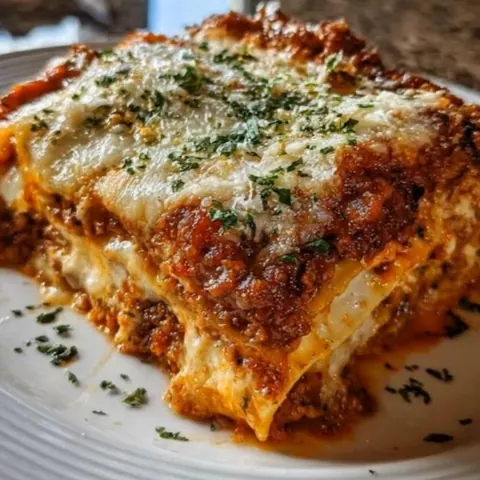
A layered Italian-American meat lasagna with a rich ground beef sauce, creamy ricotta and a golden cheese top that pulls in long, stretchy strands when you cut a square.
Published 8 min read
- Total time
- Prep
- Cook
- Rest
- Serves
- 8
- Makes one 9x13-inch baking dish
- Cuisine
- Italian-American
- Calories
- 480
- per serving, estimated

On this page16 sections
Cut into a square of cheesy meat lasagna and the cheese stretches in long, golden strands. Beneath the top you will find distinct layers of savory beef sauce, creamy ricotta and tender noodles, each one holding its place on the spatula.
This meat lasagna is built for a weeknight dinner that still feels like a proper family meal. A rich ground beef and tomato sauce is layered with noodles, a creamy ricotta filling and plenty of shredded mozzarella, then baked in a glass dish until the top turns golden and the edges bubble. The method is simple: brown the beef, simmer the sauce, cook the noodles, mix the filling, layer everything and bake. Each step is short, and none of them needs special skill, so the lasagna comes together with ordinary kitchen tools. The result is a sliceable, sturdy dish with clean layers and a cheese pull that holds up on the plate.
The appeal
Why you’ll love it
The meat sauce is simmered before it goes into the dish. Thickening it first means the layers stay firm when baked and the lasagna does not release excess liquid when you cut it. This is the main reason the slices hold their shape on the plate.
The ricotta filling is mixed with an egg and grated Parmesan. The egg helps the filling set as it bakes, so the creamy layer stays spoonable and tender instead of spreading out. The Parmesan adds a salty flavor that balances the mild cheeses.
What you need
Ingredients
Makes one 9x13-inch baking dish.
Meat sauce
Layers
Contains:
- Gluten
- Eggs
- Milk
Tools
Equipment
- 12-inch skillet
- Large pot
- 9x13-inch glass baking dish
- Box grater
- Mixing bowl
- Foil
Swaps
Substitutions
Instead ofGround beef
UseGround pork, or half beef and half Italian sausage removed from its casing
Instead ofWhole-milk ricotta cheese
UsePart-skim ricotta, drained for 20 minutes in a sieve to keep the filling firm
Instead ofLasagna noodles
UseNo-boil lasagna noodles, following the package for layering
Good to know
Notes
Ground beef gives the sauce its classic flavor and texture. Brown it in small crumbles so each layer has an even bite. Ground pork or a mix of beef and removed-casing Italian sausage also works well, and both keep the same structure in the dish.
A 9x13-inch glass baking dish is the right size for this amount of filling and sauce, and glass lets you see the layers as they bake. You will also need a large pot for the noodles, a skillet for the meat, and a box grater for the cheeses. If you use no-boil noodles, follow the package instructions for layering instead of pre-cooking them.
Prep
Before you start
Measure every ingredient into small prep bowls, pat proteins or vegetables dry with paper towels, and preheat your pan thoroughly before adding oil so browning starts cleanly without steaming. Take your time with each step, and the result will be worth every minute spent in the kitchen.
Step by step
Method
Phase 1
Prep and Aromatics
Step 1: Brown the beef and onion
Heat the olive oil in a large skillet over medium-high heat. Add the ground beef and onion, breaking the meat into small crumbles, and cook until no pink remains and the beef reaches 160°F (71°C). Drain the excess fat.
You’ll need: olive oil · ground beef · yellow onion, finely chopped · kosher salt
Internal temperature 160°F (71°C)
Look for: Beef is browned in small crumbles with no pink left and the onion is soft and translucent.
Tip: Crumble the beef finely so the layers stay even and the sauce coats each bite.
Step 2: Build the meat sauce
Stir the garlic and Italian seasoning into the beef for about 1 minute until fragrant. Pour in the marinara, add salt to taste, and simmer over low heat for 15 minutes, stirring now and then, until thickened.
You’ll need: garlic, minced · Italian seasoning · marinara or tomato pasta sauce · kosher salt
Look for: The sauce is thick enough to hold its shape on a spoon and no longer runs off quickly.
Tip: A thicker sauce keeps the lasagna from releasing liquid when you cut it.
Step 3: Cook the noodles
Bring a large pot of salted water to a boil. Cook the lasagna noodles until al dente, about 2 minutes less than the package time. Drain and lay them flat on a lightly oiled sheet of foil so they do not stick together.
You’ll need: lasagna noodles
Look for: Noodles are flexible and firm to the bite, not soft all the way through.
Tip: Rinse the noodles briefly under cold water so they are easy to handle.
Checkpoint
Every ingredient is evenly coated, fragrant and progressing at a steady gentle sizzle without sticking to the pan surface. Take a moment to check the color, texture and aroma before moving on to the next stage.
Phase 2
Main Cooking Stage
Step 4: Mix the ricotta filling
In a mixing bowl, stir together the ricotta, egg, half of the Parmesan, and the parsley until smooth and evenly combined. Season with a pinch of salt.
You’ll need: whole-milk ricotta cheese · large egg · grated Parmesan cheese · fresh parsley, chopped · kosher salt
Look for: The filling is smooth, creamy and holds its shape when spooned.
Tip: Use a whisk to break up any lumps in the ricotta before adding the other ingredients.
Step 5: Layer the lasagna
Preheat the oven to 375°F (190°C). Spread a thin layer of meat sauce in the glass baking dish. Add a layer of noodles, then ricotta filling, meat sauce and shredded mozzarella. Repeat the layers, finishing with noodles, meat sauce and the remaining mozzarella.
You’ll need: marinara or tomato pasta sauce · lasagna noodles · whole-milk ricotta cheese · low-moisture mozzarella cheese, shredded · ground beef
Look for: Each layer is visible in the dish, with noodles covered evenly by sauce and cheese.
Tip: Leave a little space at the edges so the sauce does not spill over during baking.
Checkpoint
Every ingredient is evenly coated, fragrant and progressing at a steady gentle sizzle without sticking to the pan surface. Take a moment to check the color, texture and aroma before moving on to the next stage.
Phase 3
Final Glaze and Plating
Step 6: Bake until bubbling
Cover the dish with foil and bake for 25 minutes. Remove the foil, sprinkle the remaining Parmesan over the top, and bake 15 to 20 minutes more, until the cheese is golden and the edges bubble.
You’ll need: grated Parmesan cheese · low-moisture mozzarella cheese, shredded
Look for: The top is golden in spots and the sauce bubbles at the edges of the dish.
Tip: Check the center with a knife to confirm the filling is hot all the way through.
Step 7: Rest and serve
Let the lasagna rest on the counter for 15 minutes so the layers set. Cut into squares with a sharp knife and lift each slice out with a spatula, stretching the cheese as you serve.
You’ll need: fresh parsley, chopped
Look for: The cheese has firmed slightly and the slices hold their shape when lifted.
Tip: Wipe the knife between cuts to keep the layers neat on each plate.
Checkpoint
Every ingredient is evenly coated, fragrant and progressing at a steady gentle sizzle without sticking to the pan surface. Take a moment to check the color, texture and aroma before moving on to the next stage.
Doneness
How to tell it’s done
The dish is ready when the exterior shows even golden color, the center feels tender when pressed gently with a fork, and the sauce coats the back of a spoon glossy and fragrant.
Avoid these
Common mistakes
Avoid crowding the pan or flipping too early before a crust forms, keep the burner at steady medium-high heat so aromatics never scorch, and season in balanced layers rather than only at the end.
Cook safely
Food safety
Safe internal temperatures
Cook to at least these temperatures, measured with an instant-read thermometer in the thickest part.
| Food | Minimum internal temperature |
|---|---|
| Ground meat | 160°F (71°C) |
Better results
Tips
Tip 1
Preheat the cooking surface thoroughly before adding the main ingredients so moisture evaporates quickly and browning develops cleanly. Avoid crowding the pan; working with enough breathing room keeps the temperature steady throughout cooking.
Tip 2
Taste a small spoonful right before the final minute and adjust salt, pepper or acidity in small pinches. Wiping the rim of the serving dish before bringing it to the table gives a neat, appetizing presentation.
Make it yours
Variations
Spinach lasagna
Stir a cup of chopped spinach into the ricotta filling before layering. Squeeze out any excess moisture first so the filling stays creamy and does not turn watery as it bakes.
Sausage lasagna
Replace the ground beef with mild Italian sausage removed from its casing. Brown it in the same way and drain the fat before adding the sauce for a richer, slightly sweeter flavor in each layer.
Extra cheese top
Add an extra handful of shredded mozzarella over the top during the last 10 minutes of baking. The added layer melts into a thicker, more stretchy cheese pull when the slices are lifted.
Mushroom lasagna
Sauté sliced mushrooms in olive oil until golden and add them to the meat sauce. The mushrooms add a meaty texture and deep flavor that works well with the ricotta and mozzarella layers.
On the table
Serving suggestions
Serve warm right from the kitchen alongside steamed rice, roasted potatoes, crisp salad greens or crusty artisan bread to soak up every drop of sauce. Fresh chopped herbs or a squeeze of citrus brighten the plate just before serving.
For drinks, pair each portion with sparkling water with lemon, iced unsweetened tea or a crisp chilled apple spritzer that refreshes the palate between bites. Set extra pepper and herbs at the center of the table.
Leftovers
Storage & make-ahead
- Fridge
- Store covered in an airtight container in the refrigerator for up to 3 days.
Let leftovers cool until no longer steaming, transfer them into a shallow airtight container so they chill evenly in the refrigerator, and reheat gently with a splash of water or broth to keep everything juicy.
Make ahead
You can chop the aromatics, measure the seasonings and portion the main ingredients up to twenty-four hours ahead in covered containers so active stove time stays quick and effortless on busy weeknights.
Questions
Frequently asked questions
Can this lasagna be made ahead?
Yes. Assemble the lasagna in the glass dish, cover it tightly and refrigerate it for up to a day before baking. The noodles absorb some of the sauce overnight, which helps the layers hold together. On baking day, let the dish sit out for about 30 minutes, then bake covered for an extra 10 to 15 minutes. Remove the foil for the final part of baking so the cheese turns golden and the sauce bubbles. Check that the center is hot before you cut and serve the lasagna.
Why does your lasagna slide apart when you cut it?
Lasagna slides apart when it is cut too soon or when the sauce is too thin. Let the dish rest for 15 minutes after baking so the layers set. Simmer the meat sauce until it clings to a spoon before layering. Draining the beef well also helps, because excess fat makes the layers greasy and loose. Use a sharp knife, wipe it between cuts, and lift each slice with a wide spatula for clean portions.
Can you use no-boil noodles instead?
Yes. No-boil lasagna noodles can go straight into the dish without pre-cooking. Follow the package directions for how much sauce to use, since these noodles need more liquid to soften fully as the dish bakes. Cover the dish tightly with foil during the first part of baking so the noodles cook through. Check that the noodles are tender in the center before you remove the foil and finish the top with cheese.
Can you substitute a different meat?
Ground pork works well in place of ground beef and gives the sauce a slightly sweeter, softer flavor. You can also use a mix of beef and mild Italian sausage removed from its casing. Whatever meat you choose, brown it in small crumbles, drain the fat and cook it until no pink remains and it reaches 160°F (71°C). The layers will bake the same way, so the same steps and timing apply.
How should leftover lasagna be stored?
Let leftovers cool for no more than 2 hours at room temperature, then cover them tightly or move the slices to an airtight container. Refrigerate promptly, where the lasagna keeps for up to 4 days. For longer storage, wrap portions tightly and freeze them for up to 2 months. Thaw frozen slices in the refrigerator overnight before reheating so they warm evenly and keep their texture.
Everything in one place: the recipe card below gathers the ingredients, steps and estimated nutrition, ready to print.
Recipe card
Cheesy Meat Lasagna With Stretchy Layers and Melted Mozzarella
A layered Italian-American meat lasagna with a rich ground beef sauce, creamy ricotta and a golden cheese top that pulls in long, stretchy strands when you cut a square.
- Prep
- Cook
- Rest
- Total
- Servings
- one 9x13-inch baking dish
Ingredients
Meat sauce
- 1 lb ground beef
- 1 yellow onion, finely chopped
- 3 cloves garlic, minced
- 24 oz marinara or tomato pasta sauce
- 1 tsp Italian seasoning
- 1 tsp kosher salt, plus more to taste
- 1 tbsp olive oil
Layers
- 12 lasagna noodles, cooked until al dente
- 15 oz whole-milk ricotta cheese
- 1 large egg
- 1/2 cup grated Parmesan cheese
- 16 oz low-moisture mozzarella cheese, shredded
- 2 tbsp fresh parsley, chopped
Instructions
Brown the beef and onion. Heat the olive oil in a large skillet over medium-high heat. Add the ground beef and onion, breaking the meat into small crumbles, and cook until no pink remains and the beef reaches 160°F (71°C). Drain the excess fat.
Build the meat sauce. Stir the garlic and Italian seasoning into the beef for about 1 minute until fragrant. Pour in the marinara, add salt to taste, and simmer over low heat for 15 minutes, stirring now and then, until thickened.
Cook the noodles. Bring a large pot of salted water to a boil. Cook the lasagna noodles until al dente, about 2 minutes less than the package time. Drain and lay them flat on a lightly oiled sheet of foil so they do not stick together.
Mix the ricotta filling. In a mixing bowl, stir together the ricotta, egg, half of the Parmesan, and the parsley until smooth and evenly combined. Season with a pinch of salt.
Layer the lasagna. Preheat the oven to 375°F (190°C). Spread a thin layer of meat sauce in the glass baking dish. Add a layer of noodles, then ricotta filling, meat sauce and shredded mozzarella. Repeat the layers, finishing with noodles, meat sauce and the remaining mozzarella.
Bake until bubbling. Cover the dish with foil and bake for 25 minutes. Remove the foil, sprinkle the remaining Parmesan over the top, and bake 15 to 20 minutes more, until the cheese is golden and the edges bubble.
Rest and serve. Let the lasagna rest on the counter for 15 minutes so the layers set. Cut into squares with a sharp knife and lift each slice out with a spatula, stretching the cheese as you serve.
Allergens: Gluten, Eggs, Milk
Nutrition (estimated, per serving)
- Calories
- 480 kcal
- Protein
- 30 g
- Carbs
- 36 g
- Fat
- 23 g
- Fiber
- 3 g
- Sugar
- 8 g
- Sodium
- 900 mg
Estimates only: values vary with brands, substitutions and portion sizes.
Recipe by EasyCooks Kitchen · easycooksrecipes.com
Share this recipe
Send it to someone who’d love it, or save it for later.
Spotted a mistake in this recipe? Let us know.
Keep cooking


