Korean Candied Sweet Potatoes (Goguma Mattang) Crispy and Glossy
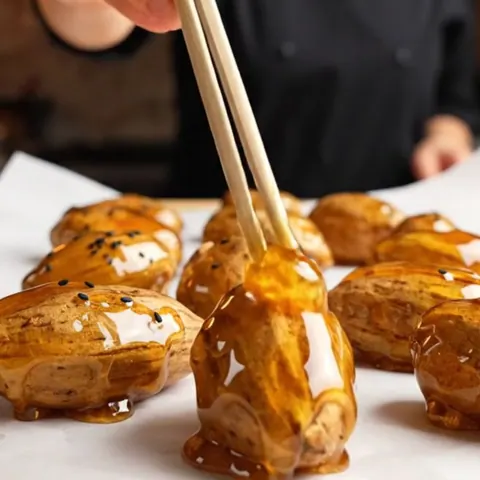
Crisp fried Korean sweet potato chunks coated in a clear, golden sugar glaze with black sesame seeds. A glass-like shell over soft, fluffy flesh, ready in under an hour.
Published 10 min read
- Total time
- Prep
- Cook
- Rest
- Serves
- 4
- Makes About 4 servings
- Cuisine
- Korean
- Calories
- 410
- per serving, estimated

On this page15 sections
Break through a glossy golden shell and you reach soft, fluffy sweet potato inside. Goguma mattang is a Korean street-style treat built on just a few pantry ingredients, a little patience, and a clear caramel. It is the kind of dessert you can make in one evening and serve the moment it sets.
Goguma mattang, sometimes called candied sweet potato, is a classic Korean dessert that lives in winter street stalls and cozy cafes. The method is straightforward: cut Korean sweet potatoes into irregular rolling wedges, soak them to clear away surface starch, fry them twice for a crisp exterior, then toss them in a sugar syrup that hardens as it cools. The result is a glass-like coating that crackles when you bite into it, over a tender, naturally sweet center. Use the ingredients listed here in the order shown, and keep your eyes on the syrup in the final stage. It moves from clear to golden in moments, so the timing of the last steps matters. Plan to serve the potatoes within an hour of coating them for the best snap.
The appeal
Why you’ll love it
Soaking the cut sweet potatoes in cold water pulls surface starch away from the flesh. Less starch on the outside means the wedges fry more evenly and brown without sticking together, and the crust stays light instead of gummy. Patting the pieces completely dry before they hit the oil prevents spattering and helps the first fry begin crisply.
The double fry is the key to the texture. The first, gentler fry at 170°F (77°C) cooks the inside through until tender without scorching the outside. The second fry at 190°F (88°C) drives off the remaining moisture and builds a crisp, golden exterior. Because the potatoes are already cooked through, they can take a glaze without losing their structure.
What you need
Ingredients
Makes About 4 servings.
Caramel
Contains:
- Sesame
Tools
Equipment
- Heavy-bottomed pot or deep fryer
- Thermometer
- Non-stick skillet
- Large bowl
- Small bowl of cold water
- Slotted spoon or spider
- Parchment paper
- Chopsticks
Swaps
Substitutions
Instead ofCorn syrup
UseHoney, which gives a slightly warmer, floral flavor and sets to a similar glossy shell
Instead ofKorean sweet potatoes
UseJapanese sweet potatoes or other firm, orange-fleshed sweet potatoes, cut the same way
Instead ofFrying oil
UsePeanut or canola oil, both with a high smoke point
Good to know
Notes
Korean sweet potatoes have a dense, moist, chestnut-like flesh and a thin, light skin. If you use a different variety, choose one with firm, orange or purple-tinged flesh; very watery, soft varieties will break apart in the oil. Cut the wedges at an angle with a rolling motion so each piece has a varied surface and a few sharp edges to catch the glaze.
You need a heavy pot or deep fryer, a thermometer, a non-stick skillet, and a bowl of cold water for testing the syrup. Corn syrup keeps the glaze glossy and resists crystallizing, which is why it is listed first; honey works as a substitute and adds a gentle floral sweetness. Black sesame seeds add a nutty finish and a dramatic contrast in color, so use them fresh and toast them lightly for more aroma.
Prep
Before you start
Gather everything before you turn on the heat, because the glaze comes together quickly and the potatoes must be coated while hot. Peel the sweet potatoes, cut them into irregular rolling wedges, and place them in a bowl of cold water for 10 minutes. Meanwhile, set a thermometer in a heavy pot with the frying oil, fill a small bowl with cold water for testing the syrup, and line a sheet pan or board with parchment paper. Measure the vegetable oil, sugar, and corn syrup or honey into a non-stick skillet, and set out the black sesame seeds within reach of the stove. Clear a space for the hot, coated potatoes to rest.
Step by step
Method
Phase 1
Fried and crisp potatoes
Step 1: Cut and soak the potatoes
Peel the sweet potatoes and cut them into irregular bite-sized wedges with rolling cuts, turning the potato a quarter turn after each slice. Soak the pieces in cold water for 10 minutes to remove surface starch, then pat them completely dry with clean towels.
You’ll need: Korean sweet potatoes (about 600 g), peeled · cold water
Look for: Pieces look clean and matte, with no milky film on the surface.
Tip: Dry the wedges thoroughly; any water will spatter hot oil.
Checkpoint
After the double fry, the wedges should look deep golden and feel firm and dry on the outside, with a crisp sound when tapped. Pierce one with a fork or chopstick; the center should give easily, with no resistance. Drain them on a rack and check that no surface looks pale or wet. If the centers are still firm, return them to the oil at 190°F (88°C) for another 30 seconds. Move on only when the exterior is dry and the inside is tender, because the glaze will not crisp over damp or undercooked pieces.
Phase 2
Clear golden caramel
Step 2: Fry the potatoes twice
Heat the frying oil to 170°F (77°C) in a heavy pot. Fry the sweet potato wedges for about 7 minutes until tender when pierced. Lift them out, raise the oil to 190°F (88°C), and fry again for about 2 minutes until the outside is crisp and golden.
You’ll need: Korean sweet potatoes (about 600 g), peeled · frying oil
Look for: Wedges turn deep golden and float steadily with a crisp sound.
Tip: Fry in small batches so the oil temperature does not drop.
Step 3: Make the caramel syrup
Combine the vegetable oil, sugar, and corn syrup or honey in a non-stick skillet over medium heat. Leave it undisturbed without stirring, swirling the pan gently only if needed, until the sugar melts into a clear, bubbling golden syrup.
You’ll need: vegetable oil · sugar · corn syrup or honey
Look for: Syrup bubbles evenly and turns clear golden, not amber.
Tip: Drop a little syrup into the cold water bowl; it should harden into a brittle thread.
Checkpoint
The syrup should be clear, bubbling steadily, and a light golden color. Lift a drop with a spoon and drop it into the cold water: it should harden quickly into a brittle thread. If it turns amber or smells sharply bitter, remove the pan from the heat immediately. Keep the pan warm while you work, but do not let it cool and thicken before the potatoes are added. The syrup should be fluid enough to coat each wedge in a thin, shiny layer when tossed.
Phase 3
Glossy, separated coating
Step 4: Coat, sesame, and set
Add the hot fried potatoes to the syrup and toss quickly with tongs until every piece is coated. Sprinkle the black sesame seeds over the top, toss once more, then spread the wedges on parchment paper to separate and cool until the glaze hardens.
You’ll need: Korean sweet potatoes (about 600 g), peeled · vegetable oil · sugar · corn syrup or honey · black sesame seeds
Look for: Glaze clings in a glossy coat and hardens into a crackling shell.
Tip: Work fast while the syrup is hot; separate pieces right away.
Checkpoint
Finished wedges should be evenly coated in a glassy, glossy shell with black sesame seeds dotted across the surface. The glaze should harden into a crackling layer within a few minutes on parchment. Check that pieces have separated and are not clumped together; if any cluster, gently pull them apart while the sugar is still warm. Serve once the coating is fully set and dry to the touch, and avoid stacking the pieces until they cool completely.
Doneness
How to tell it’s done
The potatoes are done when the sweet potato center is fully tender and the glaze has set into a clear, glossy, crackling shell. Pierce the thickest wedge with a chopstick: it should slide in without resistance and the flesh should look moist and creamy. The glaze is ready when it no longer feels tacky and makes a light tapping sound when touched. Sweet potatoes do not require a safe internal temperature, so judge them by texture and appearance. If the coating is still soft and sticky after several minutes, the syrup was likely undercooked; it will not harden further in the refrigerator, so serve it promptly or re-glaze in a fresh batch of syrup.
Avoid these
Common mistakes
The most common problem is a glaze that turns grainy or bitter. This usually happens when the syrup is stirred during melting, which encourages sugar crystals to form, or when the heat runs too high and the sugar burns before it becomes clear. Keep the flame at medium, avoid stirring, and watch the color closely. Another frequent mistake is coating wet potatoes: any surface water will make the syrup spatter and keep the glaze from setting smooth. Dry each wedge well after soaking, and fry them in small batches so the oil temperature stays steady and the potatoes do not steam. Finally, do not let the coated potatoes sit in a heap; they will fuse together as the sugar cools. Separate them on parchment while still warm.
Better results
Tips
Tip 1
Keep a small bowl of cold water nearby at all times. Drop a spoonful of the hot syrup into it to check the texture, and use this test to decide the moment to add the potatoes. A brittle thread means the caramel is ready; a soft, sticky drop means it needs a little more time.
Tip 2
Warm the mixing bowl or work surface slightly before tossing, if your kitchen is cold. This keeps the syrup fluid for longer. Work with long chopsticks or tongs so you can lift and turn each wedge quickly, and separate them the moment they are coated so the glaze does not fuse them together.
Make it yours
Variations
Sesame Honey Glaze
Replace the corn syrup with honey and add a pinch of toasted white sesame seeds alongside the black ones. The honey gives a warmer, floral sweetness and a slightly deeper gold color on the finished glaze.
Purple Sweet Potato
Use purple Korean sweet potatoes for a striking violet interior. Keep the same cutting and double-frying steps, and expect a slightly denser bite with a sweet, earthy flavor.
Cinnamon Dusted
Dust the glazed potatoes with a light sprinkle of ground cinnamon right after tossing, before the sesame seeds. The spice complements the caramel and adds warmth without changing the core method.
Nut-Free Crunch
Skip any nut topping and keep the classic black sesame finish. The recipe stays nut-free as written, and the sesame seeds provide the aroma and crunch that make the dish recognizable.
On the table
Serving suggestions
Serve the candied sweet potatoes warm or at room temperature on a flat plate or a sheet of parchment, so the glaze stays visible and crisp. They make a satisfying dessert after a savory Korean meal, and their sweetness pairs well with plain green tea or barley tea. Offer the pieces with toothpicks or chopsticks so guests can lift them without touching the shell. Place a small cup of cold water nearby for dipping fingers between bites, since the sugar can be sticky.
For a casual gathering, arrange the wedges on a wooden board with a small dish of extra black sesame seeds for sprinkling at the table. The contrast of dark sesame against golden glaze is striking. Pair them with a simple cold drink, such as chilled barley tea or sparkling water, to balance the sugar. Keep the platter in a dry place and serve it quickly, while the shell still crackles.
Leftovers
Storage & make-ahead
- Fridge
- Do not refrigerate goguma mattang; cold humidity softens the glaze. Keep it airtight at room temperature and eat within one day.
- Reheat
- Reheating is not recommended, because heat will melt the glaze and make it sticky.
Goguma mattang tastes best on the day it is made, while the glaze still has its clear crackle. Store any leftovers in a single layer in an airtight container at room temperature, with parchment between layers if you stack them. Keep the container away from humidity, because moisture will soften the shell and turn it sticky. Do not refrigerate the potatoes, since the cold air draws moisture to the glaze and makes it weep. Eat leftovers within a day for the best texture, and cool them completely before sealing the container.
Make ahead
You can fry the sweet potatoes up to several hours ahead. Cool them on a rack, not in a container, so steam does not soften the outside. Store the fried wedges uncovered at room temperature until you are ready to make the glaze. Prepare the syrup just before serving, because it hardens as it cools and cannot be held warm for long. Once the potatoes are coated, serve them within an hour for the crispest shell. Avoid assembling the whole batch far in advance, as the glaze loses its snap over time.
Questions
Frequently asked questions
Why does the sugar glaze turn grainy?
Grainy glaze usually comes from stirring the sugar while it melts, which encourages crystals to form. Let the syrup melt over medium heat without stirring, and swirl the pan gently only if one area is browning faster. Corn syrup or honey helps resist crystallization, so keep it in the recipe. If the syrup has already turned cloudy, discard it and start again with fresh sugar, since grainy caramel cannot be fully repaired.
Can the sweet potatoes be fried ahead of time?
Yes. Fry the wedges, drain them, and cool them uncovered on a rack until ready to use. Keep them at room temperature rather than in a sealed container, which would trap steam and soften the crust. Make the syrup only when you are ready to coat them, because the glaze hardens as it cools and cannot be held for long. Coat the potatoes within a short time of serving to keep the shell crisp.
How do you know the caramel is ready?
The syrup should melt into a clear, bubbling golden liquid with no visible sugar grains. Use the cold water test: drop a little into the bowl, and if it hardens quickly into a brittle thread, it is ready. A soft or sticky drop needs more time, while an amber or bitter smell means the syrup has gone too far and should be discarded. Work quickly once it reaches this stage, since it cools and thickens fast.
Can you use a different type of sweet potato?
Korean sweet potatoes give the dense, moist, chestnut-like texture this dish is known for. Japanese sweet potatoes or other firm, orange-fleshed varieties work well as substitutes. Avoid very watery or soft types, because they break apart during frying and the wedges will not hold a glossy coating. Cut all pieces to a similar size so they cook evenly in each fry.
Why must the potatoes be dry before frying?
Water on the surface of the sweet potato turns to steam the instant it touches hot oil, which causes violent spattering and can splash burns. Moisture also makes the crust soggy and prevents the glaze from adhering. After soaking in cold water, pat each wedge thoroughly with clean towels and let any remaining surface water evaporate briefly before frying. Fry in small batches to keep the oil temperature stable.
Everything in one place: the recipe card below gathers the ingredients, steps and estimated nutrition, ready to print.
Recipe card
Korean Candied Sweet Potatoes (Goguma Mattang) Crispy and Glossy
Crisp fried Korean sweet potato chunks coated in a clear, golden sugar glaze with black sesame seeds. A glass-like shell over soft, fluffy flesh, ready in under an hour.
- Prep
- Cook
- Rest
- Total
- Servings
- About 4 servings
Ingredients
- 2 large Korean sweet potatoes (about 600 g), peeled and cut into irregular wedges
- 500 ml frying oil, for deep frying
- 1 tbsp black sesame seeds
- cold water, for soaking, plus a small bowl for testing the caramel, to taste
Caramel
- 3 tbsp vegetable oil
- 4 tbsp sugar
- 2 tbsp corn syrup or honey
Instructions
Cut and soak the potatoes. Peel the sweet potatoes and cut them into irregular bite-sized wedges with rolling cuts, turning the potato a quarter turn after each slice. Soak the pieces in cold water for 10 minutes to remove surface starch, then pat them completely dry with clean towels.
Fry the potatoes twice. Heat the frying oil to 170°F (77°C) in a heavy pot. Fry the sweet potato wedges for about 7 minutes until tender when pierced. Lift them out, raise the oil to 190°F (88°C), and fry again for about 2 minutes until the outside is crisp and golden.
Make the caramel syrup. Combine the vegetable oil, sugar, and corn syrup or honey in a non-stick skillet over medium heat. Leave it undisturbed without stirring, swirling the pan gently only if needed, until the sugar melts into a clear, bubbling golden syrup.
Coat, sesame, and set. Add the hot fried potatoes to the syrup and toss quickly with tongs until every piece is coated. Sprinkle the black sesame seeds over the top, toss once more, then spread the wedges on parchment paper to separate and cool until the glaze hardens.
Allergens: Sesame
Nutrition (estimated, per serving)
- Calories
- 410 kcal
- Protein
- 4 g
- Carbs
- 68 g
- Fat
- 14 g
- Fiber
- 4 g
- Sugar
- 36 g
- Sodium
- 60 mg
Estimates only: values vary with brands, substitutions and portion sizes.
Recipe by EasyCooks Kitchen · easycooksrecipes.com
Share this recipe
Send it to someone who’d love it, or save it for later.
Spotted a mistake in this recipe? Let us know.
Keep cooking


