Slow Cooker Texas-Style Pulled Pork
This effortless dump-and-go Texas-style pulled pork delivers tender, smoky, and savory results every time. It is the perfect set-it-and-forget-it dinner for any busy weeknight.
Published 8 min read
- Total time
- Prep
- Cook
- Rest
- Serves
- 8
- Cuisine
- Southern
- Calories
- 450
- per serving, estimated

On this page16 sections
Master the art of hands-off cooking with this foolproof Texas-style pulled pork. By combining a simple rub with a tangy barbecue sauce, you create a deep, complex flavor profile that transforms an inexpensive cut of meat into a succulent, restaurant-quality meal. This recipe is designed for those who appreciate minimal preparation but demand maximum flavor, making it an essential addition to any busy cook's rotation. Enjoy the convenience of a meal that practically cooks itself while you focus on other tasks.
Pulled pork is a staple of Southern comfort food, and this version simplifies the process without sacrificing the classic taste that makes it so popular. Using a slow cooker allows the pork shoulder to break down slowly, resulting in meat that is incredibly tender and infused with a smoky, slightly sweet, and tangy sauce. This recipe is straightforward, relying on the natural juices of the pork and the acidity of the barbecue sauce to create a balanced, savory dish that is perfect for sandwiches, tacos, or simply served alongside your favorite sides. Whether hosting a casual gathering or simply feeding the family, this dish is always a welcome sight on the table.
The appeal
Why you’ll love it
The slow cooking method is ideal for pork shoulder, a cut that contains connective tissue that requires low and slow heat to break down effectively. As the pork cooks, this tissue melts into gelatin, which keeps the meat moist and tender while creating a rich, savory sauce in the base of the slow cooker. This transformation is what gives the dish its signature melt-in-your-mouth texture.
The combination of dry spices and a wet barbecue sauce creates a dual-layer flavor profile. The chili powder and brown sugar form a subtle crust on the outside of the meat, while the cider vinegar in the sauce cuts through the natural fattiness of the pork, balancing the sweetness of the barbecue sauce. This layering technique ensures that every bite is seasoned perfectly from the inside out.
What you need
Ingredients
Makes 8 servings.
Main
Rub
Sauce
Tools
Equipment
- Slow cooker
- Sharp knife
- Cutting board
- Two forks for shredding
- Serving platter
Swaps
Substitutions
Instead ofYellow onion
UseWhite onion or red onion for a slightly sharper flavor profile
Instead ofCider vinegar
UseWhite wine vinegar or red wine vinegar
Good to know
Notes
When selecting a pork shoulder, look for a roast that has some visible marbling. This intramuscular fat is crucial for keeping the meat moist during the long cooking time. If the roast is too lean, it may turn out dry or stringy. If you prefer a less fatty final dish, you can easily remove the larger pieces of fat after the meat has finished cooking and has been shredded.
The choice of barbecue sauce significantly impacts the final flavor. A classic, smoky, or slightly spicy sauce works best for Texas-style preparations. Because the sauce will be diluted by the juices released from the pork as it cooks, using a thicker, higher-quality sauce is recommended. Always check the ingredients on your sauce label to ensure it matches your dietary preferences or spice tolerances before adding it to the slow cooker.
Prep
Before you start
Ensure the slow cooker is clean and placed on a stable, heat-resistant surface. Have all ingredients measured and ready to go. If the pork shoulder is very large, cut it into two or three smaller, uniform chunks to help it fit comfortably into the slow cooker and ensure it cooks evenly throughout. Ensure the onions are sliced consistently so they soften at the same rate. Having a clean workspace makes the assembly process fast and efficient, allowing the meal to start cooking without any delay.
Step by step
Method
Phase 1
Assembly and seasoning
Step 1: Prepare the ingredients
Place the boneless pork shoulder roast into the base of the slow cooker. Arrange the sliced yellow onions around the meat. In a small bowl, mix the chili powder and brown sugar, then sprinkle the mixture evenly over the pork. Combine the barbecue sauce and cider vinegar in a separate container, then pour the sauce mixture over the pork and onions, ensuring everything is well coated.
You’ll need: boneless pork shoulder roast · yellow onion · chili powder · brown sugar · barbecue sauce · cider vinegar
Look for: The pork should be nestled firmly in the slow cooker with the onions distributed around the edges for even cooking.
Tip: Ensure the pork roast is trimmed of excessive fat if preferred, though leaving some fat helps maintain moisture during the long cooking process.
Checkpoint
The pork is positioned in the slow cooker with the seasonings and sauce distributed evenly. Everything should look well-prepared and ready for the long, slow heat. Ensure the ingredients are not piled too high so the lid can seal correctly, maintaining the necessary pressure and moisture for the cooking process to occur efficiently.
Phase 2
The slow cooking process
Step 2: Slow cook the pork
Cover the slow cooker with the lid. Set the device to the low heat setting and cook for 8 hours. Avoid lifting the lid during the cooking process to maintain a consistent internal temperature. The pork is ready when it is fork-tender and reaches an internal temperature of 145°F (63°C) at its thickest part. Once finished, let the meat rest for at least 3 minutes.
You’ll need: boneless pork shoulder roast
Internal temperature 145°F (63°C)
Look for: The meat should be very tender and pull apart easily with a fork when touched.
Tip: If the pork is not yet shredding easily, continue cooking for another 30 to 60 minutes as slow cookers vary in heating intensity.
Checkpoint
The slow cooker is operating on the low setting, and the pork is steadily breaking down. The house should begin to smell savory and slightly smoky as the onions and spices meld with the pork juices. If you notice any liquid bubbling around the edges, this is normal and indicates the process is working as intended.
Phase 3
Shredding and final mix
Step 3: Shred and serve
Carefully remove the pork roast from the slow cooker and place it onto a large platter or cutting board. Use two forks to shred the meat into bite-sized pieces, removing any large chunks of fat if desired. Return the shredded meat to the slow cooker to toss with the remaining juices and sauce.
You’ll need: boneless pork shoulder roast
Look for: The meat should be fully shredded and coated in the thickened, flavorful sauce from the bottom of the slow cooker.
Tip: If the sauce seems too thin after shredding, you can cook it on high for 10 minutes uncovered to help it thicken slightly before serving.
Checkpoint
The pork is now fully cooked, tender, and ready to be shredded. The meat should pull apart effortlessly, revealing a moist interior. Once shredded and tossed with the juices, the mixture should look glossy and cohesive, with the sauce clinging to every strand of the meat, indicating it is ready to be served.
Doneness
How to tell it’s done
The pork is done when it is extremely tender and shreds easily with the gentle pressure of two forks. The internal temperature must reach at least 145°F (63°C) at the thickest part. After reaching this temperature, allow the meat to rest for at least 3 minutes to ensure the juices settle, resulting in a more succulent final product. If the meat offers resistance when pulling, it needs more time in the heat.
Avoid these
Common mistakes
A common mistake is lifting the lid of the slow cooker during the cooking process. Every time the lid is removed, heat escapes, which significantly increases the cooking time and can lead to uneven results. Another error is neglecting to trim the excess fat from the pork before cooking; while some fat is good, too much can make the final sauce greasy. Finally, failing to let the meat rest after cooking can lead to a loss of moisture, making the pork feel less tender.
Cook safely
Food safety
Safe internal temperatures
Cook to at least these temperatures, measured with an instant-read thermometer in the thickest part.
| Food | Minimum internal temperature |
|---|---|
| Whole cuts of meat | 145°F (63°C)Then rest at least 3 minutes |
Better results
Tips
Tip 1
For a deeper smoky flavor, consider adding a small amount of liquid smoke to the barbecue sauce before pouring it over the pork. This can replicate the flavor of a traditional pit-smoked barbecue without needing a smoker. Start with just a few drops, as the flavor is very concentrated and can quickly overpower the other ingredients if too much is used.
Tip 2
If you find the sauce is too sweet, add an extra splash of cider vinegar or even a squeeze of fresh lime juice after shredding. The acidity helps brighten the heavy, sweet flavors of the barbecue sauce and balances the richness of the pork. Adjusting the seasoning at the very end is a great way to personalize the final dish to your specific taste preferences.
Make it yours
Variations
Spicy Texas Pulled Pork
Add two chopped chipotle peppers in adobo sauce to the slow cooker before starting. This adds a nice smoky heat that pairs perfectly with the sweetness of the barbecue sauce.
Root Beer Pulled Pork
Substitute half of the barbecue sauce with a cup of root beer. The soda adds a unique sweetness and helps tenderize the meat further during the long cooking time.
On the table
Serving suggestions
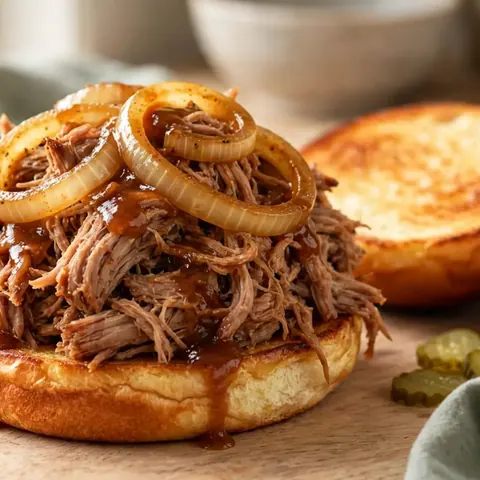
Serve the pulled pork piled high on toasted brioche buns for a classic sandwich experience. Add a side of creamy coleslaw to provide a crunchy, cool contrast to the hot, savory pork. The combination of the soft bun, tender meat, and crisp slaw is a timeless way to enjoy this dish, and it is always a hit at casual gatherings or family dinners.
For a more versatile meal, serve the shredded pork over a bed of fluffy white rice, creamy mashed potatoes, or alongside roasted vegetables. You can also use the pork as a filling for tacos, topping it with fresh cilantro, diced onions, and a squeeze of lime. The mild flavor of the pork makes it an excellent base for a variety of toppings and sides, allowing for endless creative serving possibilities.
Leftovers
Storage & make-ahead
- Fridge
- Keep refrigerated in an airtight container for up to 3 days.
- Freezer
- Freeze in a freezer-safe bag or container for up to 3 months.
- Reheat
- Thaw in the refrigerator, then reheat in a covered skillet over low heat or in the microwave until heated through, adding a splash of water if needed.
Store any leftovers in an airtight container in the refrigerator. Ensure the pork has cooled to room temperature, but do not leave it out for more than 2 hours to maintain food safety. Properly stored, the pulled pork will remain delicious for up to 3 days. When reheating, add a small splash of water or extra barbecue sauce to prevent the meat from drying out during the process.
Make ahead
This recipe is excellent for making ahead of time. In fact, the flavors often deepen and improve after sitting in the refrigerator overnight. You can cook the pork completely, shred it, and then store it in the fridge. When ready to serve, simply reheat the desired portion in a pan or the microwave. This makes it a perfect option for meal prep or for feeding a crowd on a busy weekend.
Questions
Frequently asked questions
Can this be made with a different cut of meat?
Pork shoulder is the best choice for this recipe due to its high fat and connective tissue content, which are essential for the slow-cooking process. Other lean cuts of pork may dry out and become tough when cooked for 8 hours in a slow cooker.
Why is it important to use the low heat setting?
The low setting is crucial for the slow, gradual breakdown of the tough connective tissues in the pork shoulder. Cooking on high heat can cause the exterior of the meat to toughen before the interior has had a chance to become tender, resulting in a less desirable texture.
Is it necessary to sear the meat before putting it in the slow cooker?
While searing can add an extra layer of flavor, it is not strictly necessary for this dump-and-go method. The long cooking time and the flavorful sauce provide enough depth that searing is not required to achieve a delicious result. This keeps the recipe as simple and quick as possible.
Everything in one place: the recipe card below gathers the ingredients, steps and estimated nutrition, ready to print.
Recipe card
Slow Cooker Texas-Style Pulled Pork
This effortless dump-and-go Texas-style pulled pork delivers tender, smoky, and savory results every time. It is the perfect set-it-and-forget-it dinner for any busy weeknight.
- Prep
- Cook
- Rest
- Total
- Servings
- 8 servings
Ingredients
Main
- 4 lb boneless pork shoulder roast
- 1 large yellow onion, sliced into half-moons
Rub
- 2 tbsp chili powder
- 2 tbsp brown sugar
Sauce
- 1 1/2 cups barbecue sauce
- 2 tbsp cider vinegar
Instructions
Prepare the ingredients. Place the boneless pork shoulder roast into the base of the slow cooker. Arrange the sliced yellow onions around the meat. In a small bowl, mix the chili powder and brown sugar, then sprinkle the mixture evenly over the pork. Combine the barbecue sauce and cider vinegar in a separate container, then pour the sauce mixture over the pork and onions, ensuring everything is well coated.
Slow cook the pork. Cover the slow cooker with the lid. Set the device to the low heat setting and cook for 8 hours. Avoid lifting the lid during the cooking process to maintain a consistent internal temperature. The pork is ready when it is fork-tender and reaches an internal temperature of 145°F (63°C) at its thickest part. Once finished, let the meat rest for at least 3 minutes.
Shred and serve. Carefully remove the pork roast from the slow cooker and place it onto a large platter or cutting board. Use two forks to shred the meat into bite-sized pieces, removing any large chunks of fat if desired. Return the shredded meat to the slow cooker to toss with the remaining juices and sauce.
Nutrition (estimated, per serving)
- Calories
- 450 kcal
- Protein
- 35 g
- Carbs
- 18 g
- Fat
- 26 g
- Fiber
- 1 g
- Sugar
- 15 g
- Sodium
- 650 mg
Estimates only: values vary with brands, substitutions and portion sizes.
Recipe by EasyCooks Kitchen · easycooksrecipes.com
Share this recipe
Send it to someone who’d love it, or save it for later.
Spotted a mistake in this recipe? Let us know.
Keep cooking


