Viral Crispy Rice Paper Beef Dumplings with Spicy Soy Dip
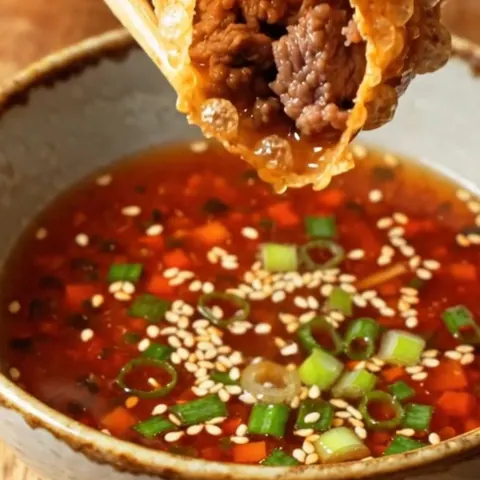
Crackling rice paper parcels filled with savory ground beef, cabbage, scallions and ginger, pan-fried until blistered and golden, then dipped in a spicy chili soy sauce. Gluten-free-style crunch in one skillet.
Published 13 min read
- Total time
- Prep
- Cook
- Serves
- 4
- Makes 20 dumplings
- Cuisine
- Vietnamese-inspired
- Calories
- 240
- per serving, estimated

On this page16 sections
Crackling rice paper parcels hit the pan and turn blistered, golden and glassy within minutes. Inside, savory beef, shredded cabbage and fresh ginger stay juicy. Dip each one in spicy chili soy sauce and listen for the crunch. This recipe comes together in one skillet, with no deep fryer and no dough to roll, so it works for a weeknight starter or a casual party tray.
These beef dumplings wrap a seasoned filling in rice paper, which turns crisp when fried in a little oil. The filling is quick to mix: ground beef, finely shredded cabbage, scallions, grated ginger, soy sauce and toasted sesame oil combine into a sticky, fragrant mixture in a few minutes. Each parcel gets a second sheet of rice paper for extra crunch, then goes into a shallow layer of hot oil. Four minutes per side gives blistered, deeply golden wrappers. A simple dip of soy sauce, chili sauce, sugar and warm water finishes the plate. Plan for about 25 minutes of hands-on prep and 16 minutes at the stove.
The appeal
Why you’ll love it
Rice paper is mostly starch with very little fat, so when it meets hot oil the surface dehydrates quickly and forms a thin, brittle shell. Wrapping a second sheet around the first doubles that shell, which is why the bite cracks instead of chewing. Frying at medium heat gives the paper time to blister and turn amber before the beef inside is fully cooked, so the edges stay crisp rather than scorched.
The filling works because it balances moisture and flavor. Cabbage releases a little water as it sits with the beef, and soy sauce and ginger season the meat through. The sesame oil adds a toasted aroma that carries through the crisp wrapper. Mixing the filling by hand until it turns sticky helps the beef hold together, so the parcels stay compact and do not split in the pan.
What you need
Ingredients
Makes 20 dumplings.
Filling
Spicy soy dip
Contains:
- Soy
- Sesame
Tools
Equipment
- Large mixing bowl
- Shallow dish for warm water
- Large nonstick skillet
- Fish spatula
- Small bowl for the dip
- Cutting board and chef's knife
Swaps
Substitutions
Instead ofVietnamese rice paper
UseRice paper sold as spring roll wrappers, labeled rice flour only, to keep the dish gluten-free
Instead ofGround beef
UseGround pork or ground chicken thigh, cooked through to 160°F (71°C) or 165°F (74°C)
Instead ofChili garlic sauce
UseSriracha or any hot sauce, adjusted to your heat preference
Good to know
Notes
Choose round Vietnamese rice paper labeled as rice paper or banh trang. Some packages are sold as spring roll wrappers, and those work well as long as the ingredients list only rice flour and salt. Check the label if you need a gluten-free result, because some brands add wheat starch. Ground beef at 85 percent lean keeps the filling juicy without greasing the pan too much. Ground pork or ground chicken thigh are reasonable swaps if you prefer them.
A large nonstick skillet holds several parcels at once and makes turning them easier, which protects the blistered surface. A fish spatula slides under the wrappers without tearing them. A shallow dish of warm water lets you soften each sheet quickly. Toasted sesame oil is strongly flavored, so use a light hand, and choose a neutral frying oil with a high smoke point, such as canola or vegetable oil, for the pan. Chili garlic sauce adds heat and garlic, and sriracha works in the same way.
Prep
Before you start
Gather everything before you start, because the wrapping goes quickly once the rice paper is soft. Keep the raw ground beef in the refrigerator until you are ready to fill the parcels, and never leave it out at room temperature for more than 30 minutes. Shred the cabbage finely and slice the scallions thinly so they fit easily inside the wrapper. Grate the ginger on a fine grater. Set out a shallow dish of warm tap water, a clean plate for the finished parcels and a board to work on. Make the spicy soy dip at the start, so the sugar has time to dissolve. Put the neutral oil and sesame oil close to the stove. Have the skillet ready at medium heat when the first parcel is wrapped.
Step by step
Method
Phase 1
Filling and dip are ready
Step 1: Mix the beef filling
Combine the ground beef, shredded cabbage, scallions, grated ginger, soy sauce and sesame oil in a large bowl. Mix with your hands or a spoon until the filling turns sticky and fragrant, then set it aside.
You’ll need: ground beef · shredded cabbage · scallions · fresh ginger · soy sauce · toasted sesame oil
Look for: The filling clings together in a sticky mass and smells of ginger and sesame.
Tip: Keep the raw beef refrigerated until you start wrapping, and wash your hands well afterwards.
Step 2: Make the spicy soy dip
Stir the soy sauce, chili sauce, sugar and warm water together in a small bowl until the sugar dissolves. Taste it and add more chili sauce if you want more heat, then set the dip aside for serving.
You’ll need: soy sauce · chili sauce · sugar · warm water
Look for: The sugar has dissolved and the dip looks smooth and reddish brown.
Tip: Make the dip while the filling rests so it is ready when the dumplings come out of the pan.
Checkpoint
The filling is sticky and smells of ginger and toasted sesame. The beef, cabbage and scallions are evenly distributed through the bowl without clumps of raw meat. The spicy soy dip is smooth, the sugar has dissolved and the chili level tastes right to you. Rice paper sheets are stacked on the board, and the warm water dish is within reach. Check that you have a clean area for the wrapped parcels before you move on. A bowl and a plate are enough. Wash your hands thoroughly after handling the raw beef, and keep the filling covered in the refrigerator if the wrapping takes longer than planned. This step sets up the rest of the cooking without any last-minute scrambling for ingredients or equipment in the kitchen.
Phase 2
Parcels wrapped and oil hot
Step 3: Wrap the rice paper parcels
Dip one rice paper sheet in warm water for a few seconds until pliable. Place a spoonful of filling in the center, fold the sides in, and roll it into a square parcel. Wrap it in a second sheet for extra crunch.
You’ll need: Vietnamese rice paper · ground beef · shredded cabbage · scallions
Look for: The rice paper turns flexible and the parcel holds its shape without tearing.
Tip: Work with one sheet at a time so the softened paper does not dry out or stick.
Step 4: Heat the oil in the skillet
Warm the neutral oil in a large nonstick skillet over medium heat until it shimmers. Lay the parcels in the pan with their seams facing down, leaving a little room between them so they brown evenly.
You’ll need: neutral oil
Look for: The oil shimmers and a small piece of rice paper sizzles when touched to it.
Tip: Medium heat keeps the wrappers from scorching before the filling cooks through.
Checkpoint
Each parcel is folded into a neat square with a second sheet wrapped around it, and the seams sit underneath. The rice paper feels flexible and has no tears or dry patches. The oil in the skillet shimmers evenly across the surface, and a small piece of rice paper sizzles right away when touched to it. Lay the parcels in the pan with a little space between them. The filling should be centered and compact, with no loose bits of beef escaping the wrapper. If the paper cracks while folding, use a fresh sheet and keep the softened paper covered under a damp towel so the next parcel wraps cleanly without splitting.
Phase 3
Blistered and golden dumplings
Step 5: Pan-fry until blistered
Fry the parcels for about 4 minutes on the first side until blistered and golden amber. Turn them carefully with a fish spatula and cook another 4 minutes until the second side is deeply golden and crisp. Check that the beef reaches 160°F (71°C) in the thickest part.
You’ll need: ground beef · neutral oil · Vietnamese rice paper
Internal temperature 160°F (71°C)
Look for: The wrappers turn blistered, amber and crackle loudly in the pan.
Tip: Cut one parcel open to check that the beef is no longer pink in the center.
Step 6: Drain and serve with the dip
Transfer the dumplings to a rack or paper towel for a minute to drain excess oil. Serve them hot with the spicy soy dip on the side for dipping.
You’ll need: soy sauce · chili sauce · sugar · warm water
Look for: The surface looks glossy and the crust stays crisp when lifted.
Tip: Serve within 10 minutes of frying for the loudest crunch.
Checkpoint
The parcels have turned blistered and amber on both sides and crackle loudly in the pan. The wrappers look translucent at the edges and deeply golden where they touch the oil. Cut one parcel open to check that the beef is no longer pink in the center and has reached 160°F (71°C) with an instant-read thermometer. The steam smells savory and toasty. Drain the parcels on a rack or paper towel for a minute before serving, so the crust stays crisp and not greasy. If any wrapper looks pale, return it to the pan for another minute, keeping the heat at medium so the paper browns without burning.
Doneness
How to tell it’s done
A finished dumpling has a deep golden amber surface covered in blisters, a glassy, crisp shell that cracks audibly when bitten, and no soft or sticky patches on the underside. The filling should be fully cooked through, with no pink in the center of the beef. Check with an instant-read thermometer inserted into the thickest part of one parcel: the ground beef must reach at least 160°F (71°C) before you serve. Steam should rise from the filling when you cut the first dumpling open, and the beef should look moist and tender, not dry or crumbly. If the wrapper is pale or the center is still pink, cook the remaining parcels a little longer on medium heat, then check again before serving.
Avoid these
Common mistakes
The most common problem is over-soaking the rice paper. A sheet left in warm water too long turns gummy and tears when folded, and it fries into a chewy skin instead of a crisp shell. Dip each sheet for only a few seconds, until it becomes flexible, then lift it out and let the excess water drip. Another mistake is overfilling. A heaped spoonful stretches the wrapper and causes splits in the pan, and the beef may not cook through before the paper burns. Use a modest portion and fold snugly. Frying at high heat is also a trap, since the outside colors fast while the center stays underdone. Keep the skillet at medium and give each parcel the full four minutes per side.
Cook safely
Food safety
Safe internal temperatures
Cook to at least these temperatures, measured with an instant-read thermometer in the thickest part.
| Food | Minimum internal temperature |
|---|---|
| Ground meat | 160°F (71°C) |
Better results
Tips
Tip 1
Keep the rice paper covered with a slightly damp towel while you work through the batch. This stops the sheets from drying and cracking before you wrap them. Soften only the sheet you are about to use, and dip it in warm water for just a few seconds. The paper keeps softening as you fold, so it is easier to handle when it is pliable but not wet. Work in small batches to keep the rhythm steady.
Tip 2
Use a fine grater for the ginger so it blends evenly into the filling, and squeeze out the excess liquid from the shredded cabbage with a clean towel if it looks wet. A drier filling makes tidier parcels and crisper wrappers. Taste a small bit of raw filling before you wrap if you want to adjust the soy sauce, but do not taste it after the beef has been handled for long. Serve the dumplings hot and dip them just before eating.
Make it yours
Variations
Pork and cabbage
Swap the ground beef for ground pork and keep the cabbage, scallions and ginger. Cook the parcels to 160°F (71°C) in the center before serving, then serve with the same spicy dip for a mellow, savory version.
Chicken thigh filling
Use ground chicken thigh in place of beef and cook the parcels until the center reaches 165°F (74°C). A little extra ginger brightens the lighter meat and keeps the filling lively, which suits a weeknight menu.
Extra-crunchy double wrap
Wrap each parcel in two sheets of rice paper, then fry the parcels in a little more oil for an additional minute on each side. The thicker shell stays crisp longer on the plate, which helps when you serve them to a group.
Sweet and sour dip
Replace the chili sauce with a squeeze of lime juice and add a little more sugar to the soy dip. The sharper, sweeter sauce pairs well with the rich beef and gives a fresh contrast to the blistered crust.
On the table
Serving suggestions
Serve the dumplings hot on a warm platter, with the spicy soy dip in a small bowl beside them. Add a few extra scallion slices on top for color and a fresh bite. The dumplings work well as a starter for a casual dinner, alongside a simple cucumber salad or steamed rice. Because they are gluten-free when made with rice-only paper and tamari instead of soy sauce, they suit guests who avoid wheat. Check the labels of your rice paper and sauces before you serve anyone with a gluten allergy. Set the platter in the center of the table so everyone can reach it quickly while the crust is still crisp.
For a relaxed party, fry the dumplings in batches and keep the finished ones on a rack in a 200°F (95°C) oven for a short time, so they stay warm without steaming. Serve them within 10 minutes of cooking for the loudest crunch. Offer napkins, because the dip is glossy and the crust sheds a little when you bite. Pair them with a light drink, such as sparkling water with lime or a cold lager, and let guests dip and crunch together while the parcels are still crackling.
Leftovers
Storage & make-ahead
- Fridge
- Store leftover dumplings in an airtight container lined with paper towel for up to 1 day, and keep the dip in a separate sealed container.
- Reheat
- Reheat leftover dumplings in a dry nonstick skillet over medium heat for 2 to 3 minutes per side until crisp and hot throughout.
Leftover cooked dumplings keep best refrigerated in an airtight container lined with paper towel, so the excess moisture is absorbed and the wrappers do not turn soggy. Cool them for no more than 2 hours at room temperature before they go into the refrigerator. Store the spicy soy dip separately in its own small container. Used within one day, the dumplings still have a pleasant bite, though the crunch fades. Wrap any unused rice paper sheets tightly in their original packaging and keep them in a dry cupboard, away from humidity, so they stay flexible when you need them.
Make ahead
You can mix the beef filling up to 12 hours in advance and keep it covered in the refrigerator, but wrap and fry the dumplings just before serving for the best crunch. Make the spicy soy dip a day ahead, cover it and refrigerate it, then bring it back to room temperature before serving. Wrapped but unfried parcels can rest on a lightly oiled tray, covered loosely, in the refrigerator for up to 2 hours. Do not leave raw beef out of the refrigerator for longer than 30 minutes at a time, and keep the uncooked parcels chilled until they reach the hot skillet. Frying them fresh gives the crispest result.
Questions
Frequently asked questions
Are these rice paper dumplings gluten-free?
They are gluten-free when you use rice paper that lists only rice flour, water and salt on the label. Standard soy sauce contains wheat, so use tamari labeled gluten-free instead to keep the whole dish free of gluten. Check every package, because some rice papers add wheat starch to change the texture. Read the label on your chili sauce as well, since some contain wheat-based thickeners. When you cook for someone with celiac disease, confirm each ingredient before you start the recipe.
Why do the rice paper wrappers sometimes tear?
Tears usually come from over-soaking the sheet or from an overfilled parcel. Dip each sheet in warm water for only a few seconds until it turns flexible, then drain it well before wrapping. Keep the paper covered with a damp towel between uses so it does not dry out. Use a modest spoonful of filling and fold snugly, and wrap a second sheet around the first to add strength. A tear in the outer sheet is often covered by the second layer.
Can the dumplings be made ahead and frozen?
Freezing is not recommended for this recipe, because the rice paper softens and loses its crisp texture after thawing, and the filling releases moisture as it defrosts. For the best result, mix the beef filling and make the dip ahead, then wrap and fry the parcels just before serving. Uncooked parcels can rest covered in the refrigerator for up to 2 hours before frying. Cooked leftovers keep for one day in the refrigerator and reheat well in a dry skillet.
How do you know the beef is fully cooked?
Cut one parcel open and look at the filling. The beef should be browned and no longer pink in the center. For a reliable check, insert an instant-read thermometer into the thickest part of the filling. Ground beef is safe at 160°F (71°C), and the parcels should stay in the skillet until that temperature is reached. Let the parcels drain on a rack for a minute before serving, so the crust remains crisp and the filling stays moist.
What can you use instead of chili garlic sauce in the dip?
Sriracha works well as a direct swap, since it has a similar chili and garlic flavor. Any hot sauce adds heat and vinegar, which brightens the soy sauce. Start with about half a teaspoon and taste before adding more, because some hot sauces are much sharper than others. A small amount of chili flakes stirred into the soy sauce also works if you prefer a rougher texture. Adjust the sugar lightly so the dip stays balanced.
Everything in one place: the recipe card below gathers the ingredients, steps and estimated nutrition, ready to print.
Recipe card
Viral Crispy Rice Paper Beef Dumplings with Spicy Soy Dip
Crackling rice paper parcels filled with savory ground beef, cabbage, scallions and ginger, pan-fried until blistered and golden, then dipped in a spicy chili soy sauce. Gluten-free-style crunch in one skillet.
- Prep
- Cook
- Total
- Servings
- 20 dumplings
Ingredients
- 10 sheets Vietnamese rice paper, 8.5-inch rounds
- 2 tbsp neutral oil, such as canola or vegetable oil
Filling
- 8 oz (250 g) ground beef, 85% lean
- 1 cup shredded cabbage
- 2 scallions, thinly sliced
- 1 tsp fresh ginger, finely grated
- 1 tbsp soy sauce
- 1 tsp toasted sesame oil
Spicy soy dip
- 3 tbsp soy sauce
- 1 tbsp chili sauce
- 1 tsp sugar
- 1 tbsp warm water
Instructions
Mix the beef filling. Combine the ground beef, shredded cabbage, scallions, grated ginger, soy sauce and sesame oil in a large bowl. Mix with your hands or a spoon until the filling turns sticky and fragrant, then set it aside.
Make the spicy soy dip. Stir the soy sauce, chili sauce, sugar and warm water together in a small bowl until the sugar dissolves. Taste it and add more chili sauce if you want more heat, then set the dip aside for serving.
Wrap the rice paper parcels. Dip one rice paper sheet in warm water for a few seconds until pliable. Place a spoonful of filling in the center, fold the sides in, and roll it into a square parcel. Wrap it in a second sheet for extra crunch.
Heat the oil in the skillet. Warm the neutral oil in a large nonstick skillet over medium heat until it shimmers. Lay the parcels in the pan with their seams facing down, leaving a little room between them so they brown evenly.
Pan-fry until blistered. Fry the parcels for about 4 minutes on the first side until blistered and golden amber. Turn them carefully with a fish spatula and cook another 4 minutes until the second side is deeply golden and crisp. Check that the beef reaches 160°F (71°C) in the thickest part.
Drain and serve with the dip. Transfer the dumplings to a rack or paper towel for a minute to drain excess oil. Serve them hot with the spicy soy dip on the side for dipping.
Allergens: Soy, Sesame
Nutrition (estimated, per serving)
- Calories
- 240 kcal
- Protein
- 12 g
- Carbs
- 24 g
- Fat
- 10 g
- Fiber
- 1 g
- Sugar
- 2 g
- Sodium
- 780 mg
Estimates only: values vary with brands, substitutions and portion sizes.
Recipe by EasyCooks Kitchen · easycooksrecipes.com
Share this recipe
Send it to someone who’d love it, or save it for later.
Spotted a mistake in this recipe? Let us know.
Keep cooking


