Crispy Pan-Fried Rice Paper Tofu Dumplings
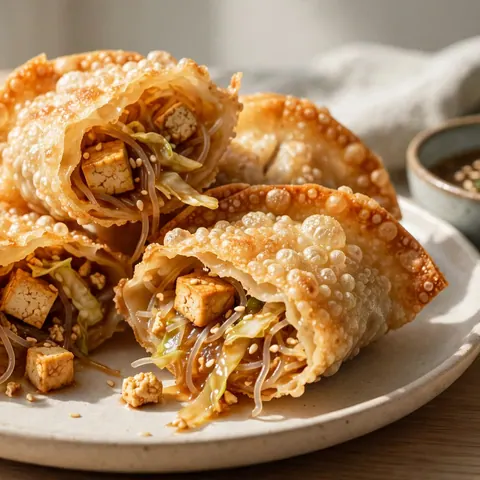
Experience the ultimate crunch with these pan-fried rice paper dumplings. Stuffed with smoky tofu, vermicelli, and charred cabbage, these parcels offer a satisfying texture that shatters on every bite.
Published 13 min read
- Total time
- Prep
- Cook
- Serves
- 4
- Makes 12 dumplings
- Cuisine
- Asian-Fusion
- Calories
- 180
- per serving, estimated

On this page15 sections
Discover the secret to achieving a perfect ten-out-of-ten crunch with these crispy pan-fried rice paper tofu dumplings. By utilizing a double-wrapping technique, you can create a sturdy, golden exterior that shatters beautifully upon the first bite. These parcels are filled with a savory blend of crumbled firm tofu, shredded cabbage, and delicate vermicelli noodles, making them a standout appetizer. Follow this simple guide to master the art of frying rice paper for an impressive, restaurant-quality result at home.
Rice paper is a versatile ingredient that transforms significantly when exposed to high heat in a pan. While often associated with fresh spring rolls, frying it creates a unique texture that is both light and exceptionally crisp. This recipe focuses on that transformation, using a simple seasoned filling to complement the delicate wrapper. Whether you are looking for a quick snack or an impressive starter for a gathering, these dumplings offer a satisfying balance of flavor and texture that will keep everyone coming back for more. Every component is designed to work in harmony, from the smoky tofu filling to the vibrant dipping sauce.
The appeal
Why you’ll love it
The method of double-wrapping the rice paper is critical for structural integrity during the high-heat frying process. By layering two sheets, you create a barrier that holds the savory tofu and noodle filling securely without allowing the wrapper to tear or become too fragile under the heat. This technique ensures that the parcels remain intact throughout the frying stage, allowing the exterior to blister and puff up properly. The result is a resilient, crispy shell that provides a substantial crunch while protecting the moist interior, ensuring a professional finish every time you prepare this dish.
Pan-frying at a precise temperature of 365°F (185°C) is the key to achieving the signature texture of these dumplings. This temperature allows the rice paper to undergo a rapid transformation, creating thousands of tiny air bubbles that result in the desired blistered and golden-crisp surface. By maintaining this heat, you avoid greasy results while ensuring that the exterior fries quickly before the interior moisture can soften the wrapper. This consistent heat management is the secret to achieving that hollow, echoing crunch that defines a perfectly executed fried rice paper parcel in any culinary setting.
What you need
Ingredients
Makes 12 dumplings.
Filling
Wrapping
Cooking
Dipping Sauce
Contains:
- Gluten
- Soy
- Sesame
- Mollusks
Tools
Equipment
- Large mixing bowl
- Non-stick skillet
- Tongs
- Cutting board
- Soaking tray
Swaps
Substitutions
Instead ofAvocado oil
UseUse any neutral high-smoke point oil such as grapeseed or refined coconut oil for consistent frying results.
Instead ofOyster-soy sauce
UseCombine vegetarian stir-fry sauce with light soy sauce to achieve a similar depth of flavor without animal products.
Instead ofFirm tofu
UseExtra-firm tofu works best, but you can press it thoroughly to ensure the filling remains dry and firm during cooking.
Instead ofVermicelli noodles
UseBean thread noodles provide the best texture, but rice vermicelli is a reliable substitute that holds up well during frying.
Good to know
Notes
Selecting the right ingredients for the filling is essential for a balanced final product. Use firm or extra-firm tofu, as it holds its shape best when crumbled and combined with the other ingredients. The vermicelli noodles should be soaked just until tender to ensure they do not become mushy during the frying stage. Shred the cabbage finely to allow it to integrate seamlessly with the tofu and noodles, creating a uniform filling that is easy to portion into each rice paper wrapper without creating large, uneven gaps.
Equipment choice plays a significant role in the success of this recipe. A high-quality non-stick skillet is highly recommended to ensure the rice paper does not adhere to the pan surface during the frying process. Using tongs allows for precise control when flipping the parcels, preventing damage to the delicate outer layer. Additionally, having a wire rack available for cooling is a smart choice, as it allows air to circulate around the finished dumplings, preventing the bottoms from becoming damp or losing their crispness while you finish frying the remaining batches.
Prep
Before you start
Before you begin cooking, ensure all your ingredients are prepped and ready to go. Crumble the tofu, shred the cabbage, and soak the vermicelli noodles until they are pliable. Have a clean work surface available for assembling the parcels and keep a bowl of warm water nearby for dipping the rice paper. Measuring your oil and preparing the dipping sauce in advance will streamline the process, allowing you to focus entirely on the assembly and frying stages. Being organized prevents stress and ensures that each dumpling is constructed with care and consistency.
Step by step
Method
Phase 1
Filling and assembly
Step 1: Prepare the filling
Combine the crumbled firm tofu, shredded cabbage, soaked vermicelli noodles, and oyster-soy sauce in a large mixing bowl. Mix the ingredients thoroughly until well incorporated, ensuring the seasoning is evenly distributed throughout the mixture. This step ensures that every bite of the dumpling contains a balanced blend of flavors and textures, which is essential for the final quality of the appetizer.
You’ll need: firm tofu · cabbage · vermicelli noodles · oyster-soy sauce
Look for: The filling should appear uniform and moist with the seasonings evenly distributed throughout the tofu and noodle mixture.
Tip: Ensure the vermicelli noodles are drained very well after soaking to prevent excess moisture from compromising the crispness of the rice paper.
Step 2: Assemble the parcels
Dip one sheet of rice paper into warm water for a few seconds until pliable, then place it on a clean work surface. Repeat with a second sheet, layering it to create a double-wrapped structure. Place a generous spoonful of the tofu filling in the center of the rice paper, fold the edges inward, and roll tightly into a neat rectangular parcel. Repeat this process until all filling is used.
You’ll need: rice paper
Look for: The rice paper should be soft and pliable but not overly saturated, allowing for easy folding without tearing or sticking to the surface.
Tip: Double-wrapping is the secret to a sturdy parcel that does not burst when it hits the hot oil in the pan.
Checkpoint
At the end of this phase, you should have uniform, tightly rolled parcels ready for the pan. Each dumpling should feel compact and secure, with no filling leaking out from the edges. The rice paper should look smooth and well-sealed. Check that the parcels are consistent in size to ensure they cook at the same rate. Having a clean, organized workspace at this stage is essential for a smooth transition to the frying phase, where speed and precision are required for the best results.
Phase 2
Pan-frying the parcels
Step 3: Heat the oil
Place a large non-stick skillet over medium-high heat and add the avocado oil. Allow the oil to reach a temperature of 365°F (185°C), which is the ideal heat for achieving a blistered and golden-crisp exterior on the rice paper parcels. Ensure the oil coats the entire bottom of the pan to promote even browning across the surface of each dumpling during the frying process.
You’ll need: avocado oil
Look for: The oil should shimmer and move easily across the pan surface, indicating it is hot enough for immediate searing upon contact.
Tip: Use a kitchen thermometer to verify the oil temperature, as maintaining 365°F is crucial for the perfect blistered texture on the rice paper.
Step 4: Pan-fry the dumplings
Gently place the prepared rice paper parcels into the hot oil, ensuring they are not overcrowded in the skillet. Fry for 3 minutes per side until the surface is blistered, puffed, and golden-crisp. Watch the dumplings closely as they cook to ensure they achieve an even color throughout. Once done, remove them from the pan and transfer to a wire rack or paper towel to drain any excess oil.
You’ll need: avocado oil
Look for: The rice paper will puff up and take on a deep golden color with crispy, blistered edges that sound hollow when tapped.
Tip: Do not rush the frying time; allowing the full 3 minutes per side ensures the interior warms through while the exterior achieves maximum crunch.
Checkpoint
The dumplings should emerge from the skillet with a vibrant, golden-brown color and a visibly blistered, crispy surface. The rice paper should have puffed up, showing a network of small bubbles that indicate a light and crunchy texture. Check that the oil has not darkened excessively; if it has, wipe the pan clean between batches. The dumplings should smell toasted and savory, with no signs of burnt edges, ensuring the flavor profile remains clean and vibrant for serving.
Phase 3
Serving the dumplings
Step 5: Serve the dumplings
Arrange the freshly fried rice paper dumplings on a serving platter alongside the sesame-scallion dipping sauce. Serve the dish immediately while the parcels are at their peak crispness and temperature. The combination of the hot, crunchy exterior and the savory, seasoned interior makes these an ideal appetizer to share. Keep the dipping sauce in a small bowl for easy access while eating.
You’ll need: sesame-scallion sauce
Look for: The dumplings should be served while still hot and crisp, with the dipping sauce providing a cool, aromatic contrast to the fried exterior.
Tip: If the dumplings sit for too long, they may lose their signature crunch; serve them immediately to guarantee the best possible eating experience.
Checkpoint
The final dumplings should be arranged neatly on a platter, looking crisp and inviting. They should maintain their shape and structural integrity, with the filling securely held inside. The dipping sauce should be ready, providing a flavorful accompaniment that highlights the crunch of the parcels. Ensure the serving area is ready so that you can enjoy the dumplings while they are at their absolute peak of crispness, providing that signature satisfying shatter with every single bite you take.
Doneness
How to tell it’s done
The dumplings are finished when the exterior is uniformly golden-brown, blistered, and puffed. You should notice a distinct, hollow sound when the parcels are tapped with tongs, indicating that the rice paper has achieved the perfect crispness. The filling should be hot and savory throughout. If you notice any soft or pale spots on the surface, return the parcel to the pan for an additional few seconds to ensure an even, crunchy texture across the entire exterior of the dumpling before serving.
Avoid these
Common mistakes
A common mistake is using rice paper that is too wet, which can lead to tearing during assembly or sticking in the pan. Ensure you dip the sheets only until they are pliable, not fully saturated. Another error is overcrowding the skillet, which lowers the oil temperature and results in soggy, oily dumplings rather than crisp ones. Fry in smaller batches to maintain the heat. Finally, avoid using excess oil, as it is unnecessary and can make the parcels overly heavy rather than achieving a light, airy crunch.
Better results
Tips
Tip 1
To maximize the crunch, let the fried dumplings rest on a wire rack for at least one minute before serving. This brief rest period allows any residual surface oil to drain away and lets the steam escape, which prevents the rice paper from softening prematurely. If you are serving a larger crowd, you can keep the finished dumplings warm in a low-temperature oven set to 200°F (95°C) on a sheet pan, though serving them as soon as possible is always the best way to ensure the most satisfying texture.
Tip 2
For a more intense flavor profile, consider adding a dash of toasted sesame oil to your filling mixture. This provides a deep, nutty aroma that pairs perfectly with the savory notes of the oyster-soy sauce. Ensure that you do not add too much liquid to the filling, as excess moisture is the enemy of a crispy dumpling. If the mixture appears too wet, strain it slightly before assembly to keep the filling dry and compact, which results in a much better overall texture when the dumplings are fried.
Make it yours
Variations
Spicy Tofu Dumplings
Incorporate a teaspoon of chili crisp or sriracha into the filling mixture for a subtle heat that cuts through the richness of the fried wrapper. This addition adds depth without altering the structural integrity of the parcels, making it a perfect choice for those who enjoy a bit of spice in their appetizers.
Mushroom and Tofu Blend
Replace half of the cabbage with finely minced shiitake mushrooms to introduce an earthy, umami-rich flavor profile to the filling. Sauté the mushrooms briefly before mixing them with the tofu to remove excess moisture, ensuring the dumplings remain crisp during the frying process for the best possible results.
Herb-Infused Filling
Add a tablespoon of finely chopped fresh cilantro and Thai basil to the filling mixture for a vibrant, aromatic twist. These fresh herbs provide a bright contrast to the savory soy-based seasoning, elevating the overall flavor profile and making the dumplings feel even more refreshing when served with a tangy dipping sauce.
Vegetable Medley
Include finely shredded carrots alongside the cabbage for added color and a hint of natural sweetness. Ensure the carrots are grated very finely to maintain the uniform texture of the filling, which is crucial for achieving a balanced bite in every dumpling you assemble and fry for your guests.
On the table
Serving suggestions
Serve these dumplings as a vibrant appetizer at your next gathering, arranged beautifully on a platter with the dipping sauce in the center. The contrast between the golden, blistered exterior and the savory tofu filling makes them a visually appealing and delicious addition to any menu. Consider garnishing the platter with a few fresh scallions or sesame seeds to add a touch of color and brightness that complements the toasted flavors of the fried rice paper and the savory dipping sauce.
For a complete dining experience, pair these dumplings with a side of steamed vegetables or a light slaw to provide a fresh contrast to the fried parcels. The dipping sauce is essential, so provide plenty for each guest. Because the dumplings are best when hot, plan to fry them just as your guests arrive. This timing ensures that the first bite is just as crisp and satisfying as the last, highlighting the unique texture that makes this recipe a true standout for any occasion.
Leftovers
Storage & make-ahead
- Fridge
- Keep leftovers in an airtight container for up to 2 days; the texture will soften over time, so reheating is necessary to restore the crispness.
- Reheat
- Reheat in a preheated oven at 375°F (190°C) for 5-8 minutes until the exterior is crisp again, or use an air fryer for 3-4 minutes.
Store any leftover dumplings in an airtight container in the refrigerator for up to 2 days. While they are best enjoyed immediately, keeping them in a single layer with parchment paper between them can help maintain their shape. Note that the rice paper will lose its crispness during storage, so they will need to be reheated to restore the desired texture. Avoid storing them with the dipping sauce to prevent sogginess.
Make ahead
You can prepare the filling up to one day in advance and keep it refrigerated in a sealed container. However, it is best to assemble and fry the dumplings just before serving to guarantee the signature crunch. If you must assemble them ahead of time, keep the rolled parcels on a tray covered with a slightly damp cloth, but avoid refrigerating them for more than an hour, as the rice paper may become too soft or stick together.
Questions
Frequently asked questions
Can the dumplings be fried in an air fryer instead of a pan?
Yes, the dumplings can be air fried. Preheat the air fryer to 375°F (190°C) and lightly brush each parcel with avocado oil. Place them in a single layer in the basket and cook for 8 to 10 minutes, flipping halfway through, until they are golden and crispy. This method uses less oil while still achieving a very satisfying crunch, making it a convenient alternative to traditional pan-frying for busy days.
Why does the rice paper tear during the folding process?
Tearing usually occurs if the rice paper is soaked for too long or if the filling is too heavy or wet. Use warm water and dip the sheet for only a few seconds until it just begins to soften; it will continue to soften as you work. Additionally, ensure the filling is well-drained and not overly packed into the center of the wrapper. Using two sheets as a double-wrap provides extra strength to prevent tearing during the rolling process.
Can the filling be made entirely vegan?
The recipe as written is vegan, provided the oyster-soy sauce used is a vegetarian-friendly version made with mushroom extract rather than real oysters. Always check the label on your sauce to ensure it meets your dietary requirements. The remaining ingredients, including tofu, cabbage, vermicelli, and rice paper, are naturally plant-based, making this a great appetizer option for everyone to enjoy regardless of their dietary preferences or restrictions regarding animal products.
How can the signature crunch be maintained for longer?
Maintaining the crunch requires proper cooling and storage. Always place the fried dumplings on a wire rack immediately after cooking to allow air to circulate underneath, which prevents moisture buildup. If serving for a crowd, keep them in a warm oven on a rack. If they do lose their crispness, a quick reheat in a hot oven or air fryer will effectively restore the texture, ensuring that every bite remains as satisfying as it was when first fried.
Is it necessary to use vermicelli noodles in the filling?
Vermicelli noodles are highly recommended because they provide a unique, chewy texture that contrasts beautifully with the firm tofu and crispy rice paper. They also help bind the filling together. While you could omit them, the dumplings may lack the desired complexity in texture. If you choose to substitute them, ensure the replacement ingredient is similarly neutral in flavor and capable of holding moisture without becoming mushy, as the balance of textures is key to this dish.
Everything in one place: the recipe card below gathers the ingredients, steps and estimated nutrition, ready to print.
Recipe card
Crispy Pan-Fried Rice Paper Tofu Dumplings
Experience the ultimate crunch with these pan-fried rice paper dumplings. Stuffed with smoky tofu, vermicelli, and charred cabbage, these parcels offer a satisfying texture that shatters on every bite.
- Prep
- Cook
- Total
- Servings
- 12 dumplings
Ingredients
Filling
- 150 g firm tofu, crumbled
- 100 g cabbage, shredded
- 80 g vermicelli noodles, soaked
- 20 ml oyster-soy sauce
Wrapping
- 24 sheets rice paper
Cooking
- 3 tbsp avocado oil
Dipping Sauce
- sesame-scallion sauce, for serving
Instructions
Prepare the filling. Combine the crumbled firm tofu, shredded cabbage, soaked vermicelli noodles, and oyster-soy sauce in a large mixing bowl. Mix the ingredients thoroughly until well incorporated, ensuring the seasoning is evenly distributed throughout the mixture. This step ensures that every bite of the dumpling contains a balanced blend of flavors and textures, which is essential for the final quality of the appetizer.
Assemble the parcels. Dip one sheet of rice paper into warm water for a few seconds until pliable, then place it on a clean work surface. Repeat with a second sheet, layering it to create a double-wrapped structure. Place a generous spoonful of the tofu filling in the center of the rice paper, fold the edges inward, and roll tightly into a neat rectangular parcel. Repeat this process until all filling is used.
Heat the oil. Place a large non-stick skillet over medium-high heat and add the avocado oil. Allow the oil to reach a temperature of 365°F (185°C), which is the ideal heat for achieving a blistered and golden-crisp exterior on the rice paper parcels. Ensure the oil coats the entire bottom of the pan to promote even browning across the surface of each dumpling during the frying process.
Pan-fry the dumplings. Gently place the prepared rice paper parcels into the hot oil, ensuring they are not overcrowded in the skillet. Fry for 3 minutes per side until the surface is blistered, puffed, and golden-crisp. Watch the dumplings closely as they cook to ensure they achieve an even color throughout. Once done, remove them from the pan and transfer to a wire rack or paper towel to drain any excess oil.
Serve the dumplings. Arrange the freshly fried rice paper dumplings on a serving platter alongside the sesame-scallion dipping sauce. Serve the dish immediately while the parcels are at their peak crispness and temperature. The combination of the hot, crunchy exterior and the savory, seasoned interior makes these an ideal appetizer to share. Keep the dipping sauce in a small bowl for easy access while eating.
Allergens: Gluten, Soy, Sesame, Mollusks
Nutrition (estimated, per serving)
- Calories
- 180 kcal
- Protein
- 8.5 g
- Carbs
- 22 g
- Fat
- 7.5 g
- Fiber
- 1.5 g
- Sugar
- 1 g
- Sodium
- 450 mg
Estimates only: values vary with brands, substitutions and portion sizes.
Recipe by EasyCooks Kitchen · easycooksrecipes.com
Share this recipe
Send it to someone who’d love it, or save it for later.
Spotted a mistake in this recipe? Let us know.
Keep cooking


