Clay-Cup Molded Meat and Cheese Poğaça: Crispy Golden Pastry Bowls
Soft yeast dough draped over an inverted clay bowl, filled with spiced ground beef and melted mozzarella and kaşar, then baked until the pastry puffs tall and golden. A striking Turkish-style savory bake for sharing.
Published 12 min read
- Total time
- Prep
- Cook
- Rest
- Serves
- 6
- Makes 6 pastry cups
- Cuisine
- Turkish-inspired
- Calories
- 520
- per serving, estimated

On this page16 sections
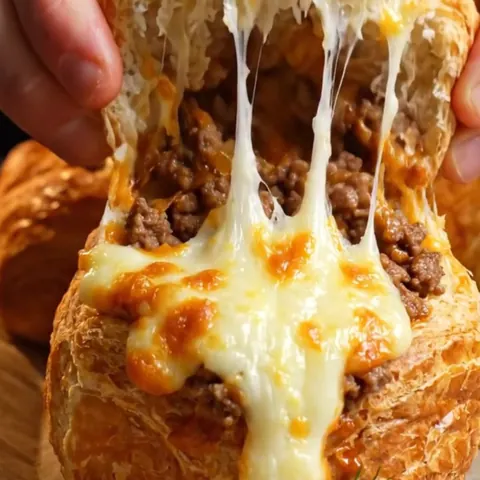
Stop scrolling for a moment. This clay-cup poğaça comes out of the oven puffed tall, golden on top, and bursting with spiced beef and melted cheese. The dough is shaped right over the bowl, so each pastry holds its filling in a neat, crusted cup. It looks impressive on the table and it is simpler to make than it appears, which makes it a strong choice for guests.
Poğaça are soft, enriched Turkish-style bread rolls, often filled with cheese, potato or minced meat. This version skips the usual shaping by moulding the dough around inverted clay güveç bowls, which gives the bread a bowl-like shape and a deep golden crust. Inside, the filling is simple: onion and ground beef seasoned with paprika and cumin, then covered with mozzarella and kaşar. Everything bakes together in one hot oven, so the cheese melts into the meat and browns on top. Plan on about two hours from start to finish, because most of that time is the dough rising. The hands-on work is short, and the result feeds a crowd with minimal fuss.
The appeal
Why you’ll love it
Enriched dough is the key to this recipe. Milk, egg and butter give the bread a tender crumb and a rich, golden colour, and they keep it soft even after it cools a little. Kneading develops the gluten so the walls can rise tall in the oven without collapsing. A full first rise doubles the dough, which builds the airy structure that makes each cup feel light rather than dense.
Draping the dough over an inverted clay bowl shapes it while it bakes. The clay holds heat and gently sets the base, so the bottom of each pastry stays crisp and the sides puff upward. Because the filling sits inside the dough rather than on top, the meat stays juicy and the cheese melts into it instead of drying out in the open air. This is why the cup shape bakes evenly and why the pastry walls rise around the filling.
What you need
Ingredients
Makes 6 pastry cups.
Dough
Filling
Contains:
- Gluten
- Eggs
- Milk
Tools
Equipment
- Terracotta clay güveç bowls (6 small, oven-safe, greased)
- Baking sheet lined with parchment
- Large mixing bowl
- Large skillet
- Pastry brush
- Instant-read thermometer
Swaps
Substitutions
Instead ofKaşar cheese
UseShredded sharp cheddar or Monterey Jack, or more mozzarella
Instead ofClay güveç bowls
UseOven-safe ramekins or small ovenproof bowls, greased well and set on a baking sheet
Instead ofGround beef
UseGround lamb or ground turkey, cooked the same way to 165°F (74°C)
Good to know
Notes
Choose ground beef with a moderate fat content, around 80 to 85 percent lean. Enough fat keeps the filling moist and flavourful, and it adds richness to the crust as it bakes. Draining away the excess fat after browning keeps the bottoms of the pastry from turning soggy. Kaşar is a firm, mildly salty Turkish cheese with excellent melting qualities. If you cannot find it, sharp cheddar or Monterey Jack works well alongside the mozzarella.
You need six small terracotta güveç bowls that are oven-safe. Grease the outside well so the dough releases easily after baking. If you do not have clay bowls, use oven-safe ramekins or small ovenproof bowls, greased thoroughly and set on the baking sheet. Lift the cups out only after they have rested for a few minutes, so the structure is set and the pastry holds its shape. A baking sheet lined with parchment catches any drips and makes the tray easy to handle.
Prep
Before you start
Gather everything before you start, because the dough needs time to rise and the filling should be ready to spoon while still warm. Warm the milk until it feels comfortably warm to the touch, not hot, so the yeast stays alive. Set out the softened butter and the beaten egg, and grease the outside of the six clay bowls with a little butter or oil. Chop the onion finely so it cooks evenly and blends into the meat. Grate or shred the mozzarella and kaşar in advance, and keep them chilled until you need them. Preheat the oven only when the shaped cups are ready to go in, so the pastry does not sit too long. Have a pastry brush, a baking sheet lined with parchment and a thermometer within reach.
Step by step
Method
Phase 1
Dough, filling and shaping
Step 1: Make the soft yeast dough
Whisk the flour, yeast, sugar and salt in a large bowl. Add the warm milk, beaten egg and softened butter, then knead for about 8 minutes until the dough is smooth and elastic. Cover and let it rise in a warm place for about 60 minutes until doubled.
You’ll need: all-purpose flour · active dry yeast · sugar · kosher salt · warm whole milk · large egg · unsalted butter, softened
Look for: Dough is smooth, springs back when pressed, and has doubled in size.
Tip: Warm the milk until it feels comfortably warm on your wrist, not hot, so the yeast stays active.
Step 2: Cook the spiced beef filling
Heat the olive oil in a large skillet over medium heat. Cook the chopped onion for 4 minutes until soft, then add the ground beef. Break it up and cook until browned, about 8 minutes. Season with paprika, cumin, black pepper and salt to taste, then cool the filling until just warm.
You’ll need: olive oil · small yellow onion, finely chopped · ground beef · paprika · ground cumin · black pepper · kosher salt
Look for: Beef is browned, crumbly and fragrant, with no pink left.
Tip: Drain off excess fat so the filling does not make the dough soggy.
Checkpoint
The dough should be smooth, elastic and doubled after its first rise, and the beef should be fully browned, crumbly and cooled until only warm. When you press the dough, it should spring back slowly. Before moving on, check that the filling is no longer pink, that the fat has been drained, and that the dough rounds are even in size. Each round should drape over its bowl without tearing, and the filling should sit in a generous mound. If the dough is sticky, dust it lightly with flour rather than adding more liquid. A little patience at this stage keeps the shaping clean and the bake even.
Phase 2
Topping and setting the cups
Step 3: Shape the dough over clay cups
Divide the dough into 6 equal pieces. Roll each into a round about 7 inches wide. Grease the outside of each inverted clay bowl, drape a dough round over it, and press it smooth. Spoon the warm beef filling into each pastry cup until generously mounded.
You’ll need: all-purpose flour · ground beef
Look for: Dough drapes smoothly over the bowl with no tears, and the filling mounds above the rim.
Tip: Lightly dust your hands with flour so the dough does not stick while you shape it.
Step 4: Top with cheese and set the cups
Scatter the shredded mozzarella and kaşar cheese over the meat in each cup. Brush the outside edges of the dough with the remaining beaten egg. Set the cups on the parchment-lined baking sheet, leaving space between them.
You’ll need: shredded mozzarella cheese · shredded kaşar cheese · large egg
Look for: Cheese covers the meat fully and the dough edges shine with egg wash.
Tip: Keep the cheese off the rim so the edges seal and puff evenly.
Checkpoint
Each cup should now have its filling covered completely by mozzarella and kaşar, with the dough edges brushed with egg so they seal and turn golden. The cheese should not sit on the rim, since that stops the edges from joining and puffing evenly. Space the cups well on the tray so heat reaches every side. Before baking, confirm the oven is fully preheated to 190°C (375°F) and that the tray sits on the middle rack. The cups should look full, smooth and evenly covered, ready to rise.
Phase 3
Baking and resting
Step 5: Bake until puffed and golden
Heat the oven to 190°C (375°F). Slide the tray into the oven and bake for 20 minutes until the pastry is puffed tall, deep golden and the cheese is bubbling and browned at the edges. Cool for 5 minutes before serving.
You’ll need: shredded mozzarella cheese · shredded kaşar cheese · large egg · ground beef
Internal temperature 160°F (71°C)
Look for: Pastry walls are puffed, golden brown and the cheese is bubbling with browned spots.
Tip: Check at 18 minutes, since ovens vary and the cheese browns quickly.
Step 6: Rest and serve warm
Let the pastry cups rest on the tray for 5 minutes so the cheese sets slightly. Loosen the edges with a knife, lift each cup out carefully, and serve while warm. Tear the pastry open at the table so the filling can stretch out.
You’ll need: all-purpose flour · ground beef
Look for: Bread feels soft and springy, and the cheese holds its stretch when torn.
Tip: Serve within 1 hour for the best texture and warmth.
Checkpoint
After 20 minutes the pastry should be puffed tall, deep golden on top and firm to the touch, and the cheese should be bubbling with browned spots at the edges. The filling should be hot all the way through, with the ground beef reaching 160°F (71°C). The bread should smell toasty and savoury, not burnt. Let the cups rest for 5 minutes before lifting them out, so the cheese sets slightly and the bases hold their shape. Check the inside of one cup first if you are unsure, and bake a few minutes longer if needed.
Doneness
How to tell it’s done
The cups are done when the pastry is puffed, golden brown on top and firm when you press the crust gently. The cheese should be melted, bubbling and lightly browned at the edges. Insert an instant-read thermometer into the centre of the filling through the side of a cup. The ground beef must reach at least 160°F (71°C) to be safe to eat. The bread inside should feel soft and set rather than wet. If the top is browning too fast before the centre is hot, move the tray down one rack and cover the tops loosely with foil for the last few minutes.
Avoid these
Common mistakes
The most common problem is a dough that has not risen enough, which gives dense, flat cups instead of tall, airy walls. Make sure the dough doubles fully before you shape it, and keep it in a warm, draft-free place. Another mistake is filling the cups with hot or greasy meat, which can make the dough soft and heavy. Cool the beef until only warm and drain off excess fat. Overfilling also causes problems: if the filling spills over the rim, the edges do not seal and the cheese can burn on the tray. Finally, do not skip greasing the clay bowls, because the pastry can stick and tear when you lift the cups.
Cook safely
Food safety
Safe internal temperatures
Cook to at least these temperatures, measured with an instant-read thermometer in the thickest part.
| Food | Minimum internal temperature |
|---|---|
| Ground meat | 160°F (71°C) |
Better results
Tips
Tip 1
Use room-temperature ingredients where the recipe says softened, especially the butter and egg, so the dough mixes smoothly and rises evenly. A cool dough rises slowly, and it can take longer to puff in the oven. Keep the dough covered with a clean towel while it rests, so the surface does not dry out and form a crust that tears when you shape it.
Tip 2
Serve the cups straight from the tray after a short rest. Tear them open at the table so the cheese stretches and the steam rises. A bowl of plain yogurt or a simple tomato and cucumber salad on the side balances the richness, and the leftover cheese and juices make a good spoon sauce for dipping the pieces.
Make it yours
Variations
Potato and Cheese
Replace the beef with mashed potatoes seasoned with butter, salt and black pepper. Fill the cups with the potato and the same mozzarella and kaşar mix, then bake as directed for a vegetarian version.
Spicy Beef
Add a pinch of red pepper flakes and a teaspoon of tomato paste to the beef while it cooks. This gives the filling more depth and a gentle warmth that pairs well with the melted cheese.
Herb Dough
Stir finely chopped fresh parsley or dill into the dough after the first rise. The herbs add a bright, green note to the golden crust and suit a spring gathering.
Cheese Only
Skip the beef entirely and fill the cups with a blend of mozzarella, kaşar and crumbled feta. This version bakes quickly and suits guests who prefer a simple, rich bite.
On the table
Serving suggestions
Serve the poğaça warm, right after they have rested for about 5 minutes. The contrast between the golden, puffed crust and the molten, spiced filling is what makes this dish memorable, so keep the cups on the table while the cheese is still stretching. Offer a plate for the clay bowls so guests can lift the pastry away and tear it open. Small napkins are useful, since the cheese runs quickly.
A light side dish keeps the spread balanced. Cool sliced cucumber, a simple tomato salad with parsley, or a bowl of plain yogurt all pair well with the rich beef and melted cheese. Set out a pitcher of ayran, a chilled salted yogurt drink, or plain iced tea for drinks. Arrange everything on a large board so people can help themselves while the pastry is warm.
Leftovers
Storage & make-ahead
- Fridge
- Store cooled leftovers in an airtight container in the refrigerator for up to 3 days, and reheat only until steaming hot throughout.
- Freezer
- Freeze cooled, baked cups wrapped tightly in foil or in a sealed freezer bag for up to 2 months. Thaw in the refrigerator overnight before reheating.
- Reheat
- Reheat in a 350°F (175°C) oven for about 10 minutes until the cheese is melted and the centre is hot, then serve right away.
Keep leftover poğaça cups in an airtight container once they have cooled completely, and cool them for no more than 2 hours at room temperature before storing. The pastry is best eaten within the first day, when the crust is still tender and the cheese has a pleasant texture. Store the cups in the refrigerator, and keep them separated from raw meat on the shelf. Return them to room temperature before reheating for the most even warmth.
Make ahead
You can make the dough a day ahead. After the first knead, cover it tightly and refrigerate it overnight. Bring it back to room temperature for about 1 hour before dividing, shaping and filling, then allow a second rise until puffy. The beef filling can be cooked a day in advance, cooled quickly and kept in the refrigerator in a covered container. Warm it gently before spooning it into the dough, and add the cheese just before baking so it melts and browns properly.
Questions
Frequently asked questions
Can the clay bowls be used in the oven?
Yes, but only if they are made for oven use and are labelled as safe for the oven. Terracotta güveç bowls are designed for heat, but they should be greased well before use and should not be placed on a very hot surface. Start them in a cold oven or at a moderate temperature if you are unsure. If you have any doubt about the bowls, use oven-safe ramekins or small ovenproof bowls instead, and grease them thoroughly so the pastry releases cleanly after baking.
Why did the dough not puff tall?
The most likely cause is that the dough did not rise fully before shaping. Check that it doubled in size during the first rise, and keep it in a warm, draft-free place. Yeast that is old or too hot can also weaken the rise, so make sure the milk is only warm and the yeast is fresh. Overfilling the cups can also restrict the rise, so keep the filling mounded but not piled above the rim.
Can you use a different cheese?
Yes. Kaşar is firm and melts well, but sharp cheddar or Monterey Jack gives a similar result. Mozzarella provides the stretch, so keep it in the blend even if you change the other cheese. Avoid very soft or crumbly cheeses, since they can release too much moisture and make the pastry soggy. Shred cheeses before adding them so they melt evenly across the filling.
How do you know the filling is cooked?
Cook the ground beef until it is browned, crumbly and no longer pink, then drain the excess fat. Once the cups are baked, insert an instant-read thermometer into the centre of the filling through the side of a cup. The beef should reach at least 160°F (71°C). Cooking the filling fully before shaping ensures the meat is safe, and it also prevents the pastry from getting greasy as it bakes.
Can this be made in a regular muffin tin?
Yes, a greased standard muffin tin works well as a substitute for the clay bowls. The shape will be more like a traditional cup than a molded bowl, so the dough may puff slightly less dramatically. Press each round gently into the cup so it covers the sides, then fill and bake as directed. Check the cups at 18 minutes, since muffin tins can bake a little faster than clay.
Everything in one place: the recipe card below gathers the ingredients, steps and estimated nutrition, ready to print.
Recipe card
Clay-Cup Molded Meat and Cheese Poğaça: Crispy Golden Pastry Bowls
Soft yeast dough draped over an inverted clay bowl, filled with spiced ground beef and melted mozzarella and kaşar, then baked until the pastry puffs tall and golden. A striking Turkish-style savory bake for sharing.
- Prep
- Cook
- Rest
- Total
- Servings
- 6 pastry cups
Ingredients
Dough
- 3 cups all-purpose flour, plus extra for dusting
- 2 1/4 tsp active dry yeast
- 1 tsp sugar
- 1 tsp kosher salt
- 3/4 cup warm whole milk
- 1 large egg, beaten, plus 1 more for egg wash
- 4 tbsp unsalted butter, softened
Filling
- 1 tbsp olive oil
- 1 small yellow onion, finely chopped
- 12 oz ground beef
- 1 tsp paprika
- 1/2 tsp ground cumin
- 1/2 tsp black pepper
- 1 cup shredded mozzarella cheese
- 1/2 cup shredded kaşar cheese
Instructions
Make the soft yeast dough. Whisk the flour, yeast, sugar and salt in a large bowl. Add the warm milk, beaten egg and softened butter, then knead for about 8 minutes until the dough is smooth and elastic. Cover and let it rise in a warm place for about 60 minutes until doubled.
Cook the spiced beef filling. Heat the olive oil in a large skillet over medium heat. Cook the chopped onion for 4 minutes until soft, then add the ground beef. Break it up and cook until browned, about 8 minutes. Season with paprika, cumin, black pepper and salt to taste, then cool the filling until just warm.
Shape the dough over clay cups. Divide the dough into 6 equal pieces. Roll each into a round about 7 inches wide. Grease the outside of each inverted clay bowl, drape a dough round over it, and press it smooth. Spoon the warm beef filling into each pastry cup until generously mounded.
Top with cheese and set the cups. Scatter the shredded mozzarella and kaşar cheese over the meat in each cup. Brush the outside edges of the dough with the remaining beaten egg. Set the cups on the parchment-lined baking sheet, leaving space between them.
Bake until puffed and golden. Heat the oven to 190°C (375°F). Slide the tray into the oven and bake for 20 minutes until the pastry is puffed tall, deep golden and the cheese is bubbling and browned at the edges. Cool for 5 minutes before serving.
Rest and serve warm. Let the pastry cups rest on the tray for 5 minutes so the cheese sets slightly. Loosen the edges with a knife, lift each cup out carefully, and serve while warm. Tear the pastry open at the table so the filling can stretch out.
Allergens: Gluten, Eggs, Milk
Nutrition (estimated, per serving)
- Calories
- 520 kcal
- Protein
- 26 g
- Carbs
- 44 g
- Fat
- 26 g
- Fiber
- 2 g
- Sodium
- 780 mg
Estimates only: values vary with brands, substitutions and portion sizes.
Recipe by EasyCooks Kitchen · easycooksrecipes.com
Share this recipe
Send it to someone who’d love it, or save it for later.
Spotted a mistake in this recipe? Let us know.
Keep cooking


