Authentic Antakya Kaytaz Borek with Flaky Pastry and Spiced Meat
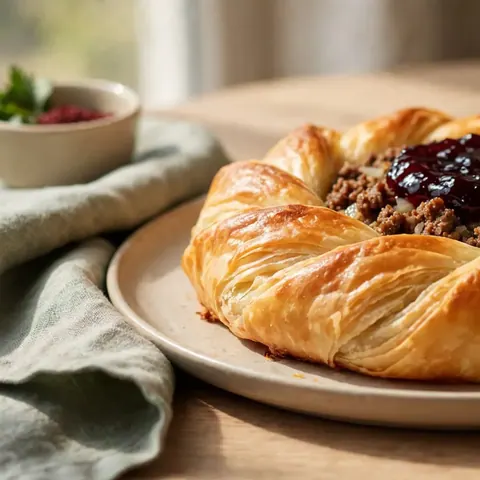
Experience the authentic taste of Antakya with these traditional Kaytaz borek. Featuring a shatteringly crisp, buttery laminated pastry base and a savory spiced beef topping, this recipe brings a piece of Turkish bakery culture into your home kitchen.
Published 8 min read
- Total time
- Prep
- Cook
- Rest
- Serves
- 8
- Makes 8 pastries
- Cuisine
- Turkish
- Calories
- 380
- per serving, estimated

On this page16 sections
Discover the art of Turkish baking with this authentic Antakya Kaytaz borek recipe. These savory pastries are beloved for their unique, butter-laminated pastry base that offers a satisfying crunch in every bite, perfectly complemented by a rich, spiced meat topping.
The Kaytaz borek is a traditional specialty from the Antakya region of Turkey, known for its distinct shape and texture. Unlike standard borek, these are small, individual portions that feature a hand-stretched dough, which is folded and coiled to create hundreds of ultra-thin, buttery layers. The topping is a savory, rustic mixture of ground beef, aromatics, and the essential sweet-tart punch of pomegranate molasses. This recipe guides you through the traditional technique of stretching dough in butter, resulting in an exceptionally flaky, golden pastry that is best enjoyed fresh from the oven, perhaps with a glass of traditional black tea.
The appeal
Why you’ll love it
The method of submerging the dough balls in melted butter is the secret to achieving the signature flaky texture. As the dough rests in the fat, the gluten relaxes significantly, allowing it to be stretched paper-thin without breaking. This creates a multi-layered structure that expands and crisps up beautifully in the oven, providing a contrast to the juicy meat filling.
Using a combination of grated onion, tomato paste, and pomegranate molasses creates a concentrated flavor profile that stands up well to the rich, buttery pastry. The pomegranate molasses provides an essential acidity that cuts through the richness of the beef and butter, balancing the overall flavor. This traditional technique ensures the filling remains moist and flavorful during the high-heat baking process.
What you need
Ingredients
Makes 8 pastries.
Dough
Topping
Contains:
- Gluten
- Milk
Tools
Equipment
- Large mixing bowl
- Baking sheet
- Box grater
- Fork
- Clean kitchen towel
Swaps
Substitutions
Instead ofPomegranate molasses
UseA mixture of 1 tablespoon balsamic glaze mixed with a pinch of sugar can provide a similar sweet-tart profile if needed.
Good to know
Notes
For the best results, use a high-quality, full-fat ground beef. The fat content is crucial for keeping the filling juicy throughout the baking process. If the meat is too lean, the filling may become dry. Ensure the onions are finely grated to release their juice, which helps season the meat thoroughly without leaving large chunks in the final product.
A standard baking sheet is sufficient, but ensure it is not overcrowded to allow proper heat circulation, which is vital for achieving a crisp crust. If you do not have a dedicated pastry brush, your hands are perfectly fine for applying the butter. The key equipment is a flat, clean surface for stretching the dough, ensuring you have enough room to work with each piece comfortably.
Prep
Before you start
Before beginning, ensure your workspace is clean and spacious. Grate the onions and mix the meat filling in a separate bowl so it is ready to go once the dough is shaped. Have your baking sheet ready and lightly greased if necessary. Ensure the butter is melted but not boiling hot, as you will be handling the dough balls directly in it. Having all ingredients measured and organized will make the dough-stretching process much smoother and more efficient, as the dough is best handled when it is at room temperature.
Step by step
Method
Phase 1
Dough preparation
Step 1: Prepare the dough
Combine the flour, warm water, dry yeast, and salt in a large bowl. Knead the mixture until it forms a soft, smooth dough. Divide the dough into equal balls and submerge them in a bowl of melted butter. Allow the dough to rest for at least 30 minutes to ensure it becomes pliable enough to stretch thin without tearing.
You’ll need: all-purpose flour · warm water · dry yeast · kosher salt · melted butter
Look for: The dough should be soft and elastic to the touch after resting in the butter.
Tip: Ensure the water is lukewarm, not hot, to avoid killing the yeast.
Checkpoint
The dough should be smooth, elastic, and well-coated in the melted butter. It must be soft and pliable, indicating that the gluten has relaxed properly during the rest period. If the dough feels firm or resists stretching, allow it to rest for a few more minutes before proceeding to the next stage.
Phase 2
Shaping the pastry
Step 2: Form the pastry bases
Take each butter-coated dough ball and gently stretch it paper-thin with your hands. Fold the stretched dough into layered ribbons, then coil each ribbon into a round, flat disc. Place the discs on a baking sheet and use your fingers to press down in the center of each, creating a small well or nest for the filling.
You’ll need: melted butter
Look for: The dough should be translucent when stretched thin, creating many layers when coiled.
Tip: Keep your hands lightly greased with the melted butter to prevent sticking during the stretching process.
Checkpoint
Each dough disc should be shaped into a neat coil with a clear indentation in the center. The layers of the dough should be visible, and the nests should be uniform in size. Ensure the edges of the coils are tucked in securely to maintain the circular shape of the borek throughout the final baking stage.
Phase 3
Baking to perfection
Step 3: Fill and bake the borek
In a bowl, mix the ground beef, grated onion, tomato paste, black pepper, and pomegranate molasses until well combined. Spoon the mixture into the center of each prepared dough nest. Bake at 390°F (199°C) for 25 minutes, or until the pastry is golden brown and the ground beef is fully cooked to an internal temperature of 160°F (71°C).
You’ll need: ground beef · grated onion · tomato paste · black pepper · pomegranate molasses
Internal temperature 160°F (71°C)
Look for: The crust should be blistered and golden, while the meat filling should appear juicy and cooked through.
Tip: Ensure the meat is spread evenly within the hollow center to allow for uniform cooking.
Checkpoint
The final borek should be golden brown and crisp, with the meat filling fully cooked and aromatic. The pomegranate molasses will create a slightly caramelized surface on the meat. If the pastry is pale, continue baking for a few more minutes, keeping a close eye on the edges to ensure they do not burn.
Doneness
How to tell it’s done
The Kaytaz borek is finished when the pastry is deeply golden brown and shows distinct, blistered layers that shatter when tapped with a fork. The meat filling should look slightly darkened and cooked through, with no pink remaining. Use a meat thermometer to ensure the beef has reached an internal temperature of 160°F (71°C) at the center of the meat mound. The overall texture should be crisp on the edges with a tender, moist center where the meat juices have melded with the pastry base.
Avoid these
Common mistakes
A common mistake is using water that is too hot for the dough, which can deactivate the yeast or cause the dough to become tough. Another error is not allowing the dough to rest long enough in the butter; if the gluten has not relaxed, the dough will snap back and be difficult to stretch thin. Additionally, failing to create a deep enough well in the center of the dough coil can result in the meat filling spilling over the sides during the baking process.
Cook safely
Food safety
Safe internal temperatures
Cook to at least these temperatures, measured with an instant-read thermometer in the thickest part.
| Food | Minimum internal temperature |
|---|---|
| Ground meat | 160°F (71°C) |
Better results
Tips
Tip 1
To achieve the most authentic flavor, look for high-quality pomegranate molasses, which should be thick and dark. Avoid thin, syrup-like versions that are predominantly sugar, as they will not provide the necessary tartness. The molasses acts as both a seasoning and a glaze, giving the meat a beautiful sheen and a depth of flavor that is characteristic of Antakya cuisine.
Tip 2
If you find that the dough is tearing while stretching, it usually means the dough needs more time to rest in the butter. Patience is key when working with this type of pastry. Do not force the stretch; instead, move to another piece of dough and let the resistant one rest for a few extra minutes. This allows the gluten to relax further, making it much easier to work with.
Make it yours
Variations
Spicy Lamb Borek
Substitute the ground beef with ground lamb for a richer, more traditional flavor profile. Add a teaspoon of red pepper flakes to the meat mixture for a spicy kick that complements the tart pomegranate molasses.
Vegetarian Borek
Replace the ground beef with a mixture of finely chopped walnuts, sautéed spinach, and crumbled feta cheese. This version offers a delightful crunch from the nuts and a tangy, salty finish from the cheese.
On the table
Serving suggestions
Serve the Kaytaz borek warm, straight from the oven, for the ultimate flaky experience. They are traditionally served alongside a cup of strong Turkish black tea, which provides a refreshing contrast to the richness of the pastry. You may also offer a side of fresh vegetables, such as sliced cucumbers, tomatoes, and fresh parsley, to add a bright, crisp element to the meal.
These pastries are best enjoyed with your hands, which allows you to appreciate the texture of the crust. If serving as part of a larger spread, place them on a platter with a garnish of fresh herbs. The combination of the warm, savory meat and the crisp, buttery dough makes them a standout dish that is sure to be appreciated by guests at any time of day.
Leftovers
Storage & make-ahead
- Fridge
- Keep in an airtight container for up to 3 days. Ensure they are fully cooled before storage.
- Freezer
- Freeze in a single layer on a baking sheet, then transfer to a freezer-safe bag for up to 1 month.
- Reheat
- Reheat in a preheated oven at 350°F (175°C) for 10-15 minutes until crispy and hot throughout.
Store any leftover borek in an airtight container in the refrigerator for up to 3 days. To maintain the best texture, keep them separated with parchment paper. Because of the butter content and meat filling, they are best consumed within this timeframe. Ensure they are completely cool before covering them to prevent condensation from making the pastry soggy.
Make ahead
You can prepare the dough and the meat filling a day in advance. Keep the dough balls submerged in butter in the refrigerator overnight, and store the meat mixture in a separate container. When ready to bake, bring the dough to room temperature for about 30 minutes before stretching and assembling. This method saves significant time if you are planning to serve these for a weekend brunch or gathering.
Questions
Frequently asked questions
Can these be made ahead of time?
Yes, the dough can be prepared and kept in the butter in the refrigerator overnight. The meat filling can also be mixed in advance. Simply bring the dough to room temperature before stretching and assembling to ensure it remains pliable and easy to work with.
Why is the pastry not flaky?
The flakiness comes from the lamination process and the resting time in the butter. If the dough is not stretched thin enough, or if it does not rest long enough to relax the gluten, the layers will not form correctly. Ensure the dough is translucent when stretched to get the best results.
Is it possible to use a different oil instead of butter?
While butter is traditional and provides the best flavor and flakiness, a high-quality vegetable oil or ghee can be used if preferred. Butter is recommended for the authentic taste, but ghee works well because it has a high smoke point and provides a similar richness to the pastry.
Everything in one place: the recipe card below gathers the ingredients, steps and estimated nutrition, ready to print.
Recipe card
Authentic Antakya Kaytaz Borek with Flaky Pastry and Spiced Meat
Experience the authentic taste of Antakya with these traditional Kaytaz borek. Featuring a shatteringly crisp, buttery laminated pastry base and a savory spiced beef topping, this recipe brings a piece of Turkish bakery culture into your home kitchen.
- Prep
- Cook
- Rest
- Total
- Servings
- 8 pastries
Ingredients
Dough
- 4 cups all-purpose flour
- 1 1/2 cups warm water
- 1 tsp dry yeast
- 1 tsp kosher salt
- 1 cup melted butter
Topping
- 1 lb ground beef
- 1 cup grated onion
- 2 tbsp tomato paste
- 1 tbsp pomegranate molasses
- 1/4 tsp black pepper
Instructions
Prepare the dough. Combine the flour, warm water, dry yeast, and salt in a large bowl. Knead the mixture until it forms a soft, smooth dough. Divide the dough into equal balls and submerge them in a bowl of melted butter. Allow the dough to rest for at least 30 minutes to ensure it becomes pliable enough to stretch thin without tearing.
Form the pastry bases. Take each butter-coated dough ball and gently stretch it paper-thin with your hands. Fold the stretched dough into layered ribbons, then coil each ribbon into a round, flat disc. Place the discs on a baking sheet and use your fingers to press down in the center of each, creating a small well or nest for the filling.
Fill and bake the borek. In a bowl, mix the ground beef, grated onion, tomato paste, black pepper, and pomegranate molasses until well combined. Spoon the mixture into the center of each prepared dough nest. Bake at 390°F (199°C) for 25 minutes, or until the pastry is golden brown and the ground beef is fully cooked to an internal temperature of 160°F (71°C).
Allergens: Gluten, Milk
Nutrition (estimated, per serving)
- Calories
- 380 kcal
- Protein
- 14.5 g
- Carbs
- 32 g
- Fat
- 22 g
- Fiber
- 1.5 g
- Sugar
- 2 g
- Sodium
- 450 mg
Estimates only: values vary with brands, substitutions and portion sizes.
Recipe by EasyCooks Kitchen · easycooksrecipes.com
Share this recipe
Send it to someone who’d love it, or save it for later.
Spotted a mistake in this recipe? Let us know.
Keep cooking


