Authentic Xiao Long Bao Soup Dumplings
Learn how to craft traditional 18-pleat Xiao Long Bao with a savory heritage pork filling and rich, gelatinous broth that melts into a liquid gold center.
Published 8 min read
- Total time
- Prep
- Cook
- Rest
- Serves
- 4
- Makes 12 dumplings
- Cuisine
- Chinese
- Calories
- 320
- per serving, estimated

On this page16 sections
Experience the ultimate culinary delight of authentic Xiao Long Bao, where a delicate, hand-pleated dough skin hides a treasure trove of savory, piping-hot pork broth and tender meat. This guide demystifies the process of creating these iconic soup dumplings, ensuring a professional result that captures the traditional Jiangnan teahouse experience. With precise techniques for pleating and the perfect balance of gelatinous aspic and seasoned pork, these dumplings are destined to become a standout dish for any special gathering or weekend cooking project.
Xiao Long Bao, often referred to as soup dumplings, are a marvel of culinary engineering. The secret lies in the inclusion of pork-skin aspic, which remains solid during the assembly phase but transforms into a rich, flavorful broth upon exposure to the intense heat of the steamer. Achieving the perfect balance requires attention to detail, particularly in the thinness of the dough and the speed of the pleating. This recipe focuses on traditional methods, guiding you through the assembly and steaming process to achieve that signature burst of soup with every bite. Serve them hot, paired simply with ginger and vinegar, to fully appreciate the complex flavors of the heritage pork and the silky texture of the hand-rolled wrapper.
The appeal
Why you’ll love it
The method relies on the physics of heat transfer to create the soup center. By incorporating gelatinous pork-skin aspic into the filling, the dumplings remain easy to handle during assembly. As the steamer basket is filled with ambient steam at 212°F, the aspic undergoes a phase change from solid to liquid, resulting in the characteristic pocket of hot, savory broth that defines a true Xiao Long Bao.
The 18-pleat technique serves both an aesthetic and functional purpose. The pleats provide structural integrity to the paper-thin dough, allowing the dumpling to hold the weight of the soup without tearing. Furthermore, the uniform pleating ensures that the dough cooks evenly, resulting in a consistent, delicate texture that is neither gummy nor tough, providing the perfect vessel for the flavorful pork filling and liquid gold center.
What you need
Ingredients
Makes 12 dumplings.
Filling
Wrapper
Serving
Contains:
- Gluten
- Soy
Tools
Equipment
- Bamboo steamer basket
- Wok or large pot
- Mixing bowl
- Rolling pin
- Chopsticks
- Steamer parchment paper
Swaps
Substitutions
Instead ofHeritage pork
UseGround pork shoulder with 20 percent fat content
Instead ofBlack Chinkiang vinegar
UseBalsamic vinegar mixed with a splash of soy sauce
Good to know
Notes
For the best results, use high-quality heritage pork with a balanced fat-to-meat ratio. The fat is crucial for the flavor of the broth. If heritage pork is unavailable, standard ground pork shoulder with approximately 20 percent fat content is an excellent alternative. Ensure the aspic is prepared ahead of time to allow it to set firmly, which makes the filling much easier to manage when adding it to the delicate dough wrappers.
A bamboo steamer is highly recommended for this recipe, as it allows for proper air circulation and prevents excess moisture from accumulating on the dumplings, which could make the skins soggy. If you do not have a bamboo steamer, a metal steamer with a tight-fitting lid can be used, provided you line the surface well with parchment paper to prevent sticking. Always keep the dough circles covered with a damp towel to maintain their elasticity.
Prep
Before you start
Before beginning the assembly, ensure your workspace is clean, organized, and free of drafts, which can dry out the dough quickly. Have all your ingredients, including the chilled pork mixture and the dough circles, pre-measured and ready for rapid assembly. Prepare the bamboo steamer by lining it with parchment paper to ensure the dumplings do not stick. A pair of chopsticks is essential for handling the finished dumplings with care, as they are fragile and the hot broth inside can cause them to burst if handled roughly or with improper tools.
Step by step
Method
Phase 1
Filling Preparation
Step 1: Prepare the Dumpling Filling
In a chilled mixing bowl, combine the seasoned heritage pork with the pork-skin aspic cubes. Mix gently until the ingredients are well incorporated, ensuring the aspic remains in distinct, small cubes for even distribution. Keep this mixture cold until the moment of assembly to maintain the integrity of the aspic, which is essential for creating the signature soup center during the steaming process.
You’ll need: heritage pork, seasoned · pork-skin aspic cubes
Look for: The mixture should be cohesive and cold to the touch.
Tip: Work in small batches to keep the aspic from melting before it hits the steamer.
Checkpoint
The pork and aspic mixture should be well-combined and kept cold. The aspic should be visible as small, firm cubes throughout the seasoned pork, ensuring a consistent distribution of flavor and liquid potential in every single dumpling.
Phase 2
Dumpling Assembly
Step 2: Assemble the Dumplings
Take one paper-thin dough circle and place a small portion of the pork and aspic mixture in the center. Use your fingers to create rapid, precise pleats around the edges, sealing the dumpling tightly at the top to prevent any leakage. Aim for at least 18 pleats, which provides the necessary structural support for the delicate skin while allowing it to hold the hot broth inside during steaming.
You’ll need: dough circles
Look for: The dumpling should be securely sealed with a visible, intricate pleat pattern at the top.
Tip: Keep the dough covered with a damp cloth while assembling to prevent it from drying out.
Checkpoint
Each dumpling should feature at least 18 neat, tight pleats around the top. The dough should be thin enough to be slightly translucent, and the seal at the top must be secure to hold the filling and future broth inside.
Phase 3
Steaming and Resting
Step 3: Steam, Rest, and Serve
Place the assembled dumplings into a bamboo steamer lined with parchment paper. Steam over a pot of roaring boiling water for exactly 6 minutes, ensuring the internal temperature reaches at least 145°F (63°C). Remove the steamer from heat and let the meat rest for at least 3 minutes before serving. Top with julienned fresh ginger and a drizzle of black Chinkiang vinegar, and serve while still pleasantly hot.
You’ll need: fresh ginger, julienned · black Chinkiang vinegar
Internal temperature 145°F (63°C)
Look for: The dumpling skin should appear translucent and slightly puffed with liquid.
Tip: Handle with care as the broth inside will be extremely hot.
Checkpoint
The dumplings should be steamed until the wrappers are soft and translucent, indicating the filling is fully cooked. Allow the dumplings to complete their 3-minute rest, then serve immediately with fresh ginger and black vinegar to balance the richness of the pork.
Doneness
How to tell it’s done
The dumplings are done when the skin is translucent and appears to be filled with liquid. The pork filling must reach an internal temperature of at least 145°F (63°C) to ensure it is thoroughly cooked, followed by a mandatory rest of at least 3 minutes to settle the juices. Because the dumplings are steamed for a short, intense period, checking that the dough is tender and the filling is fully heated through is essential. Use a food thermometer if you are unsure, and be mindful that the steam trapped inside is extremely hot.
Avoid these
Common mistakes
A common mistake is rolling the dough too thick, which results in a heavy, doughy texture that masks the delicate flavor of the pork and broth. Another error is overfilling the dumplings, which makes them difficult to pleat and increases the risk of them bursting during the steaming process. Finally, failing to seal the top tightly can lead to the loss of the precious soup, so take your time during the pleating phase to ensure each dumpling is properly secured and ready for the steamer.
Cook safely
Food safety
Safe internal temperatures
Cook to at least these temperatures, measured with an instant-read thermometer in the thickest part.
| Food | Minimum internal temperature |
|---|---|
| Whole cuts of meat | 145°F (63°C)Then rest at least 3 minutes |
Better results
Tips
Tip 1
When pleating the dumplings, start by holding the edge of the dough circle with your non-dominant hand and using your dominant thumb and index finger to create small, overlapping folds. Rotate the dumpling as you go, keeping the pleats uniform and tight. The goal is to gather the dough toward the center, creating a small, sturdy knot at the very top. Practice makes perfect, so do not be discouraged if your first few attempts are not perfectly uniform.
Tip 2
The temperature of your steaming water is critical. Use a large pot or wok and ensure the water is at a rolling boil before placing the steamer basket on top. The steam needs to be constant and vigorous to melt the aspic into broth without overcooking the delicate dough. If the heat is too low, the dough will become rubbery before the aspic melts, compromising the texture and the essential soup element of the dish.
Make it yours
Variations
Crab and Pork Filling
Add 50g of fresh, cooked crab meat to the pork mixture for a luxurious seafood twist. The sweetness of the crab complements the rich pork broth perfectly, creating a refined and elegant flavor profile that is highly prized in traditional Chinese cuisine.
Spicy Chili Oil Finish
For those who prefer a bit of heat, drizzle the finished dumplings with a small amount of homemade chili oil. The spicy, aromatic notes add a bold contrast to the delicate soup, making for an exciting variation on the classic preparation.
On the table
Serving suggestions
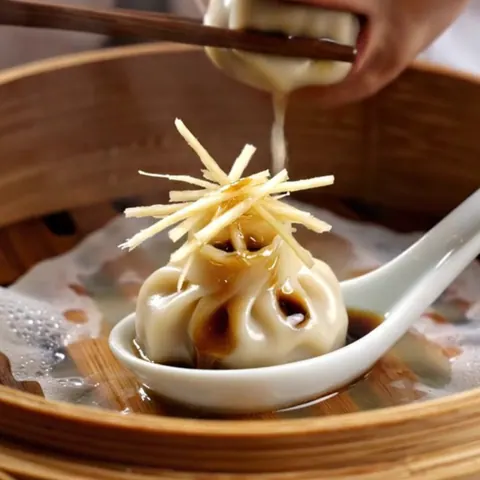
Serve the Xiao Long Bao immediately after their brief rest while they are still hot. Place them on a shallow spoon to catch any broth that might escape when you take the first bite. The traditional way to enjoy them is to dip the dumpling into a mixture of julienned fresh ginger and black Chinkiang vinegar, which provides a bright, acidic contrast to the savory, fatty pork broth inside.
When eating, carefully lift the dumpling by the pleated top with your chopsticks and place it onto a soup spoon. Take a small nibble of the side to release a bit of the steam, then slurp the hot broth before eating the rest of the dumpling. This method ensures you do not burn your mouth and allows you to enjoy the full flavor profile of the soup and the tender pork filling.
Leftovers
Storage & make-ahead
- Fridge
- Store in an airtight container for up to 2 days.
- Freezer
- Freeze uncooked dumplings on a tray, then transfer to a bag for up to 1 month.
- Reheat
- Steam refrigerated or frozen dumplings until heated through, about 8 to 10 minutes for frozen.
If you have leftovers, allow them to cool to room temperature for no more than 2 hours before transferring them to an airtight container. Keep the container in the refrigerator to maintain freshness. Note that the texture of the dough may change slightly upon refrigeration, so consume within 1 to 2 days for the best experience. Reheat thoroughly before serving to ensure the internal filling is hot and safe to eat.
Make ahead
You can prepare the pork filling and the aspic separately a day in advance. Keep them in the refrigerator until you are ready to assemble. The dough circles can also be made ahead of time, but keep them well-covered in the refrigerator to prevent drying. Assembly is best done just before steaming, as the raw dumplings can become sticky or lose their shape if left sitting for too long before they are cooked.
Questions
Frequently asked questions
Why is the aspic necessary for soup dumplings?
The aspic is the secret to the liquid center. It is made from a rich, collagen-heavy pork skin stock that is chilled until it turns into a firm jelly. When the dumpling is steamed, the heat melts the jelly back into a flavorful, aromatic soup, which is trapped inside the thin dough wrapper.
Can the pleating be simplified?
While the traditional 18-pleat method is recommended for structural integrity and aesthetics, a simpler pleating technique can be used. Just ensure the seal at the top is completely airtight, as any gaps will allow the precious broth to leak out during the steaming process, leaving you with a dry dumpling.
How can the dumplings be prevented from sticking to the steamer?
Lining your bamboo steamer with parchment paper is the most effective way to prevent sticking. Alternatively, use large, fresh cabbage leaves or carrot slices under each dumpling. This not only prevents sticking but also imparts a subtle, fresh flavor to the base of the dumpling.
Everything in one place: the recipe card below gathers the ingredients, steps and estimated nutrition, ready to print.
Recipe card
Authentic Xiao Long Bao Soup Dumplings
Learn how to craft traditional 18-pleat Xiao Long Bao with a savory heritage pork filling and rich, gelatinous broth that melts into a liquid gold center.
- Prep
- Cook
- Rest
- Total
- Servings
- 12 dumplings
Ingredients
Filling
- 180 g heritage pork, seasoned
- 120 g pork-skin aspic cubes
Wrapper
- 120 g dough circles, rolled thin
Serving
- Fresh ginger, julienned, for serving
- Black Chinkiang vinegar, for serving
Instructions
Prepare the Dumpling Filling. In a chilled mixing bowl, combine the seasoned heritage pork with the pork-skin aspic cubes. Mix gently until the ingredients are well incorporated, ensuring the aspic remains in distinct, small cubes for even distribution. Keep this mixture cold until the moment of assembly to maintain the integrity of the aspic, which is essential for creating the signature soup center during the steaming process.
Assemble the Dumplings. Take one paper-thin dough circle and place a small portion of the pork and aspic mixture in the center. Use your fingers to create rapid, precise pleats around the edges, sealing the dumpling tightly at the top to prevent any leakage. Aim for at least 18 pleats, which provides the necessary structural support for the delicate skin while allowing it to hold the hot broth inside during steaming.
Steam, Rest, and Serve. Place the assembled dumplings into a bamboo steamer lined with parchment paper. Steam over a pot of roaring boiling water for exactly 6 minutes, ensuring the internal temperature reaches at least 145°F (63°C). Remove the steamer from heat and let the meat rest for at least 3 minutes before serving. Top with julienned fresh ginger and a drizzle of black Chinkiang vinegar, and serve while still pleasantly hot.
Allergens: Gluten, Soy
Nutrition (estimated, per serving)
- Calories
- 320 kcal
- Protein
- 14.5 g
- Carbs
- 22 g
- Fat
- 18 g
- Fiber
- 1 g
- Sugar
- 0.5 g
- Sodium
- 450 mg
Estimates only: values vary with brands, substitutions and portion sizes.
Recipe by EasyCooks Kitchen · easycooksrecipes.com
Share this recipe
Send it to someone who’d love it, or save it for later.
Spotted a mistake in this recipe? Let us know.
Keep cooking


