Crispy Rosemary Focaccia Breakfast Panini with Burrata and Prosciutto
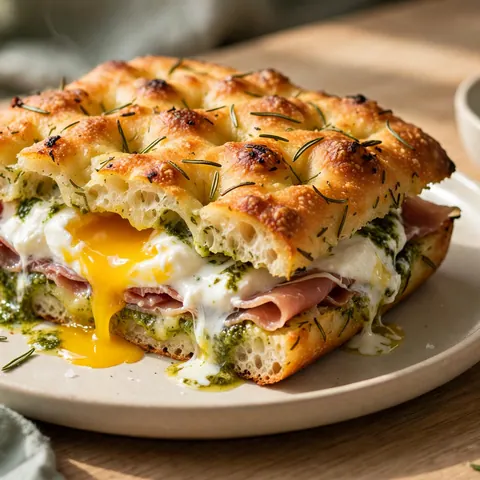
Experience the ultimate breakfast sandwich featuring crisp rosemary focaccia, creamy burrata, savory prosciutto, and a perfectly cooked egg. This quick Italian-inspired panini brings bakery-quality flavors to your home kitchen in just minutes.
Published 12 min read
- Total time
- Prep
- Cook
- Serves
- 1
- Makes 1 sandwich
- Cuisine
- Italian-American
- Calories
- 480
- per serving, estimated

On this page16 sections
Discover the secret to the ultimate morning meal with this crispy rosemary focaccia breakfast panini. This recipe transforms simple, high-quality ingredients into a gourmet sandwich that brings the warmth of an Italian bakery straight to your table. With the perfect balance of herbaceous bread, creamy burrata, salty prosciutto, and a rich, golden egg, this dish is designed to impress. Learn the simple techniques required to achieve that elusive, crackling crust and perfectly melted, luxurious interior every single time.
There is something undeniably special about a well-crafted breakfast sandwich. By using high-quality rosemary focaccia as your canvas, you elevate the entire experience beyond standard fare. This recipe focuses on layering textures—the crunch of the olive oil-infused crust, the silkiness of the burrata, and the savory snap of the prosciutto—to create a balanced, satisfying meal. Whether you are preparing a weekend brunch or seeking a quick, indulgent start to your day, this panini delivers consistent, professional results. Follow these steps to master the art of the perfect Italian-inspired breakfast.
The appeal
Why you’ll love it
The method of using a hot skillet to render the prosciutto fat provides a dual advantage: you create perfectly crispy meat while simultaneously seasoning the pan for the egg. This technique ensures that every component of the sandwich is infused with deep, savory flavor. By frying the egg in the rendered fat, you eliminate the need for extra butter or oil, maintaining the integrity of the sandwich ingredients while achieving a crisp, golden edge that contrasts beautifully with the creamy interior of the burrata.
Pressing the sandwich is a critical step that unifies the disparate textures. This action compresses the layers, allowing the heat to penetrate the burrata so it becomes warm and velvety without melting away completely. This process also toasts the focaccia, creating a crackling, golden-brown crust that holds up against the moisture of the cheese and the richness of the egg yolk. The result is a robust, structural integrity that makes the panini easy to eat while maximizing the interplay of textures.
What you need
Ingredients
Makes 1 sandwich.
Contains:
- Gluten
- Eggs
- Milk
- Tree nuts
Tools
Equipment
- Skillet
- Bread knife
- Panini press or heavy skillet
- Spatula
- Cutting board
Swaps
Substitutions
Instead ofBurrata
UseFresh mozzarella di bufala or creamy goat cheese can be used for a similar texture.
Instead ofProsciutto
UseThinly sliced crispy bacon or pancetta provides a comparable salty crunch.
Instead ofBasil pesto
UseSun-dried tomato pesto or a simple olive oil and balsamic glaze drizzle.
Good to know
Notes
The quality of your focaccia is paramount. Look for a loaf with a distinct, airy crumb and a generous amount of rosemary and sea salt on the surface. If you are using a store-bought version, ensure it is fresh; a slightly stale loaf will not achieve the desired crispness when pressed. The burrata should be at room temperature before you begin assembly, as this allows it to soften more effectively during the final pressing stage, resulting in a more luxurious, creamy mouthfeel.
Regarding equipment, a dedicated panini press is convenient, but a heavy cast-iron skillet combined with a weight works just as effectively. If you opt for the skillet method, use a heavy pot or a bacon press to apply consistent, even pressure across the surface of the sandwich. Ensure your prosciutto is sliced thin for the best texture; thicker slices may become chewy rather than crispy. If you prefer a different flavor profile, sun-dried tomatoes make an excellent addition to the pesto layer.
Prep
Before you start
Before you start, ensure all your ingredients are prepared and within reach. Slice the focaccia into a uniform square to ensure it fits perfectly in your pan or press. Have the burrata out of the refrigerator for at least twenty minutes so it reaches room temperature, which helps it soften quickly during the heating phase. Keep your spatula, knife, and skillet ready to go, as the cooking process moves rapidly once the heat is applied to the pan. Preparing your workspace in advance is key to maintaining focus.
Step by step
Method
Phase 1
Assembling the base
Step 1: Prepare the bread and base
Using a serrated bread knife, carefully slice the rosemary focaccia square horizontally to create two even layers. Spread the basil pesto evenly over the bottom slice, ensuring it reaches the edges for maximum flavor. Tear the fresh burrata into smaller, manageable pieces and arrange them carefully over the pesto layer, covering the surface completely to ensure a creamy, uniform bite in every single mouthful of this sandwich.
You’ll need: rosemary focaccia, 12cm square · basil pesto · fresh burrata
Look for: The pesto should be spread in a thin, even layer, and the burrata pieces should be distributed uniformly across the entire surface of the bread.
Tip: Avoid over-saturating the bread with too much pesto to maintain the structural integrity of the focaccia during the final pressing stage of the cooking process.
Checkpoint
At the end of this phase, the pesto should be spread in a thin, even layer across the bread, and the burrata should be distributed in small, uniform pieces. The bread should look fresh and ready for the heat. Ensure that the burrata is not piled too high in the center, which could cause it to spill out during the pressing process. The preparation should feel organized and deliberate, setting a solid foundation for the subsequent cooking steps of the panini.
Phase 2
Crisping and frying
Step 2: Crisp the prosciutto and cook the egg
Place a skillet over medium-high heat and add the prosciutto slices. Crisp the meat for 90 seconds until it reaches a deep golden color and a brittle texture. Remove the prosciutto, leaving the rendered fat in the pan. Crack the egg directly into the hot fat and fry until the whites are fully set and the edges are crispy, ensuring the yolk remains creamy and intact for the final assembly.
You’ll need: Parma prosciutto · large egg
Internal temperature 160°F (71°C)
Look for: The prosciutto should be dark and brittle, and the egg whites should be completely opaque and firm, while the yolk remains glossy and vibrant in color.
Tip: Keep a close watch on the prosciutto as it can transition from perfectly crisp to burnt in a matter of seconds due to its high fat content.
Checkpoint
The prosciutto should be dark, brittle, and fragrant, having rendered its fat into the pan. The egg should be fried until the whites are fully opaque and set, with a glossy, intact yolk. The kitchen should smell of savory, rendered pork and toasted rosemary. Check that the egg is cooked through at the edges and that the prosciutto has achieved a uniform crispness across all three slices before moving to the final assembly of the sandwich.
Phase 3
Pressing the panini
Step 3: Assemble and press the panini
Layer the crispy prosciutto and the fried egg over the burrata-topped focaccia base. Place the top half of the bread over the fillings. Heat a panini press or a clean skillet to medium heat and place the sandwich inside. Press the panini firmly for 2 minutes, allowing the heat to warm the burrata until it becomes silky and the focaccia crust achieves a deep, crackling golden-brown finish before serving immediately.
You’ll need: rosemary focaccia, 12cm square · basil pesto · fresh burrata · Parma prosciutto · large egg
Look for: The focaccia crust should be deeply toasted and crackling, and the burrata should be warm and creamy, oozing slightly from the edges of the bread.
Tip: If using a skillet to press the sandwich, place a heavy pot or a weighted press on top of the sandwich to ensure even heat distribution.
Checkpoint
The final panini should look robust, with a deeply toasted, crackling crust on both sides. When you press the sandwich, it should feel firm and compact. The burrata should be warm, creamy, and slightly oozing from the edges, while the egg yolk remains rich and moist. The entire sandwich should feel warm to the touch, and the focaccia should have a uniform golden-brown color. It is now ready to be sliced and served, providing a perfect balance of textures.
Doneness
How to tell it’s done
The panini is ready when the focaccia crust is deeply golden-brown and crackling to the touch, indicating it has toasted sufficiently. The burrata should be warm and creamy, showing signs of melting at the edges. The egg must be cooked until the white is completely set and opaque, reaching at least 160°F (71°C) to ensure safety. The prosciutto should be brittle and dark, providing a sharp contrast to the soft cheese. When you slice through the sandwich, the yolk should remain moist and rich, ready to coat the other ingredients.
Avoid these
Common mistakes
A common mistake is using a heat that is too high, which will char the rosemary on the focaccia before the interior has a chance to warm through. Another frequent error is overcrowding the pan, which prevents the prosciutto from crisping properly. Avoid adding too much pesto, as the moisture can make the center of the bread soggy, compromising the final texture. Finally, do not skip the pressing step, as this is essential for merging the flavors and achieving that signature, compact Italian panini texture that defines this dish.
Cook safely
Food safety
Safe internal temperatures
Cook to at least these temperatures, measured with an instant-read thermometer in the thickest part.
| Food | Minimum internal temperature |
|---|---|
| Egg dishes | 160°F (71°C) |
| Whole cuts of meat | 145°F (63°C)Then rest at least 3 minutes |
Better results
Tips
Tip 1
To achieve the most professional result, ensure your skillet is preheated before adding the prosciutto. This immediate contact with the heat is what triggers the Maillard reaction, resulting in the deep, savory flavor and brittle texture that makes this sandwich stand out. If you find the focaccia is browning too quickly, lower the heat slightly and continue pressing. The goal is a steady, controlled heat that toasts the bread without burning the delicate rosemary needles on the surface.
Tip 2
For a more concentrated flavor, you can toast the interior of the focaccia slices in the skillet for thirty seconds before adding the pesto and burrata. This small step creates a moisture barrier that keeps the bread crisp even after the sandwich is fully assembled. When tearing the burrata, use your fingers to create small, bite-sized pieces rather than large chunks; this ensures that you get a portion of cheese in every single bite, rather than having it all concentrated in one spot.
Make it yours
Variations
Spicy Calabrian Focaccia
Add a teaspoon of finely chopped Calabrian chili paste to the basil pesto layer before spreading. This adds a vibrant, spicy kick that cuts through the creaminess of the burrata and balances the saltiness of the crispy prosciutto, creating a bold, sophisticated flavor profile for those who enjoy a bit of heat in their breakfast.
Vegetarian Focaccia Panini
Omit the prosciutto and replace it with thick slices of grilled, balsamic-marinated portobello mushrooms. The mushrooms provide a meaty, savory texture that stands up well to the burrata and egg. This version is equally satisfying and highlights the earthy notes of the rosemary focaccia, making it a perfect choice for a hearty, meat-free morning meal.
Sweet and Savory Fig
Spread a thin layer of fig jam on the top slice of focaccia before pressing. The sweetness of the figs pairs beautifully with the salty prosciutto and the creamy, mild burrata. This variation creates a complex, gourmet flavor experience that elevates the sandwich to something truly special, perfect for a slow, weekend brunch.
Smoked Salmon Variation
Replace the prosciutto with high-quality smoked salmon and add a small sprinkle of fresh capers over the burrata. The smoky, delicate flavor of the salmon works harmoniously with the creamy burrata and the herbaceous focaccia. This lighter variation is a sophisticated alternative that feels elegant and refreshing for a sunny morning breakfast.
On the table
Serving suggestions
Serve the panini immediately while it is still warm and the crust is at its most crackling. A sharp, serrated knife is essential for slicing through the toasted focaccia without squashing the delicate, creamy interior. Place the sandwich on a warm plate to help maintain its temperature while you enjoy it. The contrast between the hot, crisp bread and the cool, creamy burrata is the highlight of this dish, so serving it without delay is the best way to experience the intended flavor profile.
This sandwich is substantial enough to be served on its own as a complete meal. However, if you wish to round out the breakfast, a side of fresh, peppery arugula tossed with a light lemon vinaigrette provides a bright, acidic contrast to the richness of the burrata and egg yolk. The bitterness of the greens complements the salty prosciutto perfectly. Keep the sides simple to ensure they do not distract from the main event, which is the interplay of textures within the panini itself.
Leftovers
Storage & make-ahead
- Fridge
- Store in an airtight container for up to 24 hours. Note that the focaccia will lose its crispness and soften significantly over time.
- Reheat
- Reheat in a preheated oven at 350°F (175°C) for 5-7 minutes until the bread is warm and the cheese begins to soften again.
Store any leftovers in an airtight container in the refrigerator for up to one day. While this sandwich is best enjoyed immediately to preserve the crispness of the focaccia, it can be kept cool. Be aware that the bread will soften over time due to the moisture from the burrata, so expect a different texture if you choose to store it. For the best quality, try to consume the sandwich within a few hours of preparation to maintain its intended integrity.
Make ahead
You can prepare the components in advance to save time. Slice the focaccia and keep it in a sealed bag. Measure the pesto and tear the burrata, storing them separately in the refrigerator. However, the prosciutto should be crisped and the egg fried right before assembly to ensure they retain their texture and temperature. By having your ingredients prepped and ready, you can assemble and press the panini in under five minutes, making this an ideal choice for a quick, high-quality breakfast.
Questions
Frequently asked questions
Can this sandwich be prepared ahead of time?
While you can prep the ingredients like tearing the burrata and measuring the pesto, the sandwich itself is best assembled and cooked immediately before serving. The focaccia will soften if it sits for too long with the fillings inside, losing that essential crackling crust. For the best experience, keep your components ready in the refrigerator and reserve the final assembly and pressing steps for when you are ready to eat, ensuring every bite remains fresh, crisp, and warm.
Is it possible to use a different type of cheese if burrata is unavailable?
Yes, if you cannot find fresh burrata, high-quality fresh mozzarella di bufala is the best substitute. It offers a similar mild, milky flavor and a creamy texture that works perfectly in this panini. You can also use a combination of fresh mozzarella and a small amount of heavy cream or ricotta to mimic the luxurious, oozing center of the burrata. While the experience will be slightly different, these alternatives will still provide a delicious and satisfying result for your breakfast panini.
How can the egg be cooked through properly?
To ensure the egg is cooked safely, fry it in the rendered prosciutto fat over medium heat until the whites are completely opaque and firm. The yolk should reach a creamy, set consistency. If a more well-done yolk is preferred, carefully flip the egg once the whites have set and cook for an additional thirty seconds. Always aim for an internal temperature of at least 160°F (71°C) to ensure the egg is fully cooked through and safe for all to enjoy.
What is the best way to get the focaccia perfectly crispy?
The key to a perfectly crispy focaccia is using a preheated surface, whether it is a panini press or a heavy skillet. Applying firm, consistent pressure is essential, as this ensures that the entire surface of the bread makes contact with the heat. Do not rush this process; allow the bread to toast slowly until it reaches a deep, golden-brown color. If using a skillet, a heavy weight on top of the sandwich will help achieve that professional, compressed texture and crackling finish.
Can this recipe be scaled up for a larger group?
This recipe is easily scaled for a group by preparing multiple sandwiches simultaneously. If you have a large flat-top griddle or a large skillet, you can cook several paninis at once. Simply ensure you have enough space to press them evenly. You can also toast the bread in the oven beforehand to save time. Keep the assembled sandwiches warm in a low-temperature oven until you are ready to serve everyone at the same time, ensuring a consistent and enjoyable dining experience for all your guests.
Everything in one place: the recipe card below gathers the ingredients, steps and estimated nutrition, ready to print.
Recipe card
Crispy Rosemary Focaccia Breakfast Panini with Burrata and Prosciutto
Experience the ultimate breakfast sandwich featuring crisp rosemary focaccia, creamy burrata, savory prosciutto, and a perfectly cooked egg. This quick Italian-inspired panini brings bakery-quality flavors to your home kitchen in just minutes.
- Prep
- Cook
- Total
- Servings
- 1 sandwich
Ingredients
- 1 piece rosemary focaccia, 12cm square
- 30 grams basil pesto
- 80 grams fresh burrata
- 3 slices Parma prosciutto
- 1 large egg
Instructions
Prepare the bread and base. Using a serrated bread knife, carefully slice the rosemary focaccia square horizontally to create two even layers. Spread the basil pesto evenly over the bottom slice, ensuring it reaches the edges for maximum flavor. Tear the fresh burrata into smaller, manageable pieces and arrange them carefully over the pesto layer, covering the surface completely to ensure a creamy, uniform bite in every single mouthful of this sandwich.
Crisp the prosciutto and cook the egg. Place a skillet over medium-high heat and add the prosciutto slices. Crisp the meat for 90 seconds until it reaches a deep golden color and a brittle texture. Remove the prosciutto, leaving the rendered fat in the pan. Crack the egg directly into the hot fat and fry until the whites are fully set and the edges are crispy, ensuring the yolk remains creamy and intact for the final assembly.
Assemble and press the panini. Layer the crispy prosciutto and the fried egg over the burrata-topped focaccia base. Place the top half of the bread over the fillings. Heat a panini press or a clean skillet to medium heat and place the sandwich inside. Press the panini firmly for 2 minutes, allowing the heat to warm the burrata until it becomes silky and the focaccia crust achieves a deep, crackling golden-brown finish before serving immediately.
Allergens: Gluten, Eggs, Milk, Tree nuts
Nutrition (estimated, per serving)
- Calories
- 480 kcal
- Protein
- 22.5 g
- Carbs
- 35 g
- Fat
- 28 g
- Fiber
- 2 g
- Sugar
- 2.5 g
- Sodium
- 850 mg
Estimates only: values vary with brands, substitutions and portion sizes.
Recipe by EasyCooks Kitchen · easycooksrecipes.com
Share this recipe
Send it to someone who’d love it, or save it for later.
Spotted a mistake in this recipe? Let us know.
Keep cooking


