Crockpot Maple Dijon Apple Cider Pork Tenderloin
Transform your weeknight dinner with this succulent slow-cooked pork tenderloin, glazed in a rich, tangy maple-Dijon cider reduction.
Published 6 min read
- Total time
- Prep
- Cook
- Rest
- Serves
- 6
- Cuisine
- American
- Calories
- 320
- per serving, estimated

On this page16 sections
Master the art of the perfect slow-cooked roast with this maple-Dijon pork tenderloin. By combining the sweetness of maple syrup with the sharp bite of Dijon mustard and the acidity of fresh apple cider, this recipe creates a complex, restaurant-quality glaze that keeps the pork incredibly moist throughout the long cooking process. It is the ultimate solution for anyone tired of dry, tough weeknight pork dinners.
This recipe relies on the gentle, consistent heat of a slow cooker to transform lean pork tenderloin into a succulent, melt-in-your-mouth meal. The combination of ingredients works in harmony: the cider breaks down the fibers, the mustard provides a savory depth, and the maple syrup reduces into a glossy, caramelized coating. Preparing this dish is straightforward, requiring minimal active time, yet it delivers impressive results that are sure to become a staple in any home kitchen rotation.
The appeal
Why you’ll love it
The slow cooker method provides a controlled environment that maintains a steady, low temperature. This prevents the lean pork tenderloin from overcooking and becoming tough, which often happens with high-heat cooking methods. The moisture trapped inside the ceramic vessel creates a self-basting effect that keeps the meat succulent.
The combination of acidic apple cider and tangy Dijon mustard serves as a natural tenderizer for the pork. As the meat cooks, these ingredients infuse deep flavor into the loin while simultaneously creating a rich, syrupy reduction that coats the final slices. This layering of flavors ensures that every bite is balanced and savory.
What you need
Ingredients
Makes 6 servings.
Main
Base
Glaze
Contains:
- Mustard
- Sulfites
Tools
Equipment
- Slow cooker
- Carving knife
- Cutting board
- Serving platter
Swaps
Substitutions
Instead ofShallots
UseUse one small yellow onion, thinly sliced, as a direct substitute.
Instead ofApple cider
UseUnfiltered apple juice can be used if apple cider is unavailable.
Good to know
Notes
When selecting a pork tenderloin, look for meat that is firm and pinkish-red in color. Avoid packages with excessive liquid, as this can indicate poor handling. If the tenderloin has a silver skin membrane, trim it off before cooking to ensure the meat is tender and pleasant to eat once sliced into medallions.
The choice of apples matters for the base. A firm, tart variety like Granny Smith holds its structure better during the long cooking time compared to softer varieties. If a sweeter profile is preferred, Gala or Fuji apples are excellent alternatives that complement the maple syrup and Dijon mustard glaze perfectly.
Prep
Before you start
Ensure the pork tenderloin is removed from the refrigerator about 20 minutes before cooking to take the chill off. Thinly slice the shallots and apples into uniform pieces to ensure they cook at the same rate and provide a stable base for the meat. Have the measuring tools ready for the glaze components to ensure the balance of sweetness and acidity is accurate.
Step by step
Method
Phase 1
Layering the base
Step 1: Prepare the base
Arrange the sliced shallots and apple slices in an even layer at the bottom of the slow cooker ceramic insert to create a flavorful bed for the meat.
You’ll need: shallots · apples
Look for: A uniform layer of fruit and aromatics covering the bottom.
Tip: Ensure the slices are roughly the same thickness to cook evenly.
Checkpoint
The shallots and apples should be evenly distributed at the bottom of the slow cooker. They form a protective barrier between the heating element and the pork, preventing the meat from burning or sticking to the ceramic insert during the long cooking duration.
Phase 2
Infusing the glaze
Step 2: Assemble the tenderloins
Place the pork tenderloins on top of the apple and shallot base. Pour the mixture of maple syrup, Dijon mustard, and apple cider over the meat, then nestle the fresh thyme sprigs around the pork.
You’ll need: pork tenderloin · pure maple syrup · Dijon mustard · apple cider · fresh thyme
Look for: The pork is fully coated in the liquid mixture.
Tip: Do not skip the thyme as it provides an essential earthy note.
Checkpoint
The pork sits comfortably on the bed of fruit, fully exposed to the maple, Dijon, and cider mixture. As the slow cooker heats up, the liquid will begin to bubble, and the aromatic scent of thyme and cider should fill the kitchen.
Phase 3
Final reduction
Step 3: Cook and serve
Cook on low for 3.5 hours until the pork reaches an internal temperature of 145°F (63°C). Baste the meat with the pan juices periodically. Once cooked, remove from the slow cooker, let rest for 5 minutes, and slice into medallions.
You’ll need: pork tenderloin
Internal temperature 145°F (63°C)
Look for: The pork is tender and registers 145°F on a meat thermometer.
Tip: Basting helps build a sticky, flavorful glaze on the surface of the meat.
Checkpoint
The pan juices should be slightly thickened and deep in color. The pork looks glistening and dark from the caramelization of the maple syrup. Before slicing, ensure the internal temperature has reached the safe threshold for whole-cut meat.
Doneness
How to tell it’s done
The pork is perfectly cooked when it reaches an internal temperature of 145°F (63°C) at the thickest part of the loin. Use a digital meat thermometer to verify this. The meat should be tender enough to shred slightly with a knife but firm enough to hold its shape when sliced into clean, beautiful medallions.
Avoid these
Common mistakes
A common mistake is overcooking the tenderloin. Because it is a lean cut, even an extra hour in the slow cooker can lead to dryness. Always use a thermometer to check for doneness rather than relying solely on the clock. Another error is failing to let the meat rest; resting for at least five minutes is crucial for keeping the juices inside the meat.
Cook safely
Food safety
Safe internal temperatures
Cook to at least these temperatures, measured with an instant-read thermometer in the thickest part.
| Food | Minimum internal temperature |
|---|---|
| Whole cuts of meat | 145°F (63°C)Then rest at least 3 minutes |
Better results
Tips
Tip 1
For a deeper flavor, you can sear the pork tenderloins in a hot skillet with a small amount of oil for two minutes per side before placing them into the slow cooker. This adds a layer of Maillard reaction, which enhances the complexity of the final sauce and provides a beautiful browned crust on the exterior of the meat.
Tip 2
If you find the sauce is too thin at the end of the cooking process, you can carefully remove the tenderloins, transfer the liquid to a small saucepan, and simmer it over medium-high heat for a few minutes. This will reduce the liquid further into a thicker, more concentrated glaze that can be drizzled over the sliced medallions before serving.
Make it yours
Variations
Spicy Maple Dijon
Add one tablespoon of crushed red pepper flakes or a dash of hot sauce to the glaze mixture for a subtle heat that cuts through the sweetness.
Herb-Crusted Variation
Rub the raw pork tenderloins with a mixture of dried sage, rosemary, and black pepper before placing them in the slow cooker for an extra herbal depth.
On the table
Serving suggestions
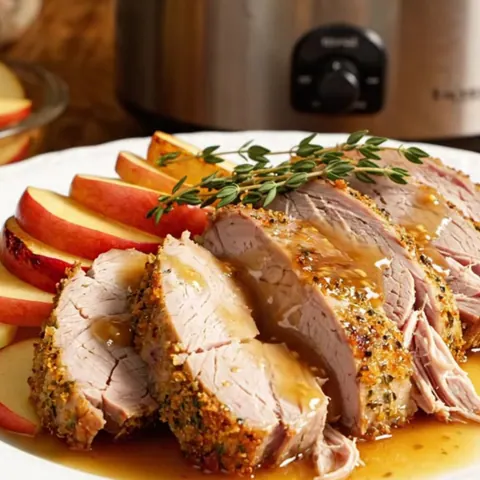
Serve the sliced medallions on a warmed platter, fanning them out to showcase the tender center. Spoon the thickened pan juices and the softened apples from the bottom of the slow cooker over the top of the meat. This adds both visual appeal and extra flavor to the final presentation, making it perfect for a dinner table.
Pair this dish with a side of roasted root vegetables, mashed potatoes, or a simple green salad to balance the richness of the maple-Dijon glaze. The acidity in the glaze cuts through heavier sides, while the sweetness pairs beautifully with earthy vegetables like roasted carrots or parsnips, creating a well-rounded and satisfying meal.
Leftovers
Storage & make-ahead
- Fridge
- Keep in an airtight container for up to 3 days in the refrigerator.
- Freezer
- Store in a freezer-safe bag or container for up to 2 months.
- Reheat
- Gently reheat in a covered skillet with a splash of water or cider over low heat until warmed through, ensuring the meat does not dry out.
Store any leftovers in an airtight container to prevent the meat from drying out. Place the container in the refrigerator as soon as it has cooled to room temperature, but no later than two hours after cooking. Proper storage ensures the pork remains safe and retains as much moisture as possible for the next meal.
Make ahead
You can prepare the apple and shallot base and mix the glaze ingredients in a jar ahead of time. When ready to cook, simply assemble the layers in the slow cooker insert. This makes for an incredibly quick assembly on busy mornings, allowing you to have a gourmet meal ready by dinner time with almost no effort.
Questions
Frequently asked questions
Can a different cut of meat be used for this recipe?
While pork tenderloin is the intended cut for its lean texture, pork loin roast can also be used. Note that a larger roast will require a longer cooking time to reach the safe internal temperature of 145°F (63°C), so adjust your cooking schedule accordingly.
Why does the apple cider need to be included?
Apple cider provides the necessary acidity to balance the intense sweetness of the maple syrup and the pungent strength of the Dijon mustard. It also helps to tenderize the pork during the slow cooking process, ensuring the final result is succulent rather than tough or dry.
Is it necessary to use fresh thyme?
Fresh thyme provides a bright, earthy aroma that dried herbs cannot replicate in this specific glaze. If fresh thyme is not available, you can use a smaller amount of dried thyme, but fresh sprigs are highly recommended to achieve the best flavor profile for the maple-Dijon combination.
Everything in one place: the recipe card below gathers the ingredients, steps and estimated nutrition, ready to print.
Recipe card
Crockpot Maple Dijon Apple Cider Pork Tenderloin
Transform your weeknight dinner with this succulent slow-cooked pork tenderloin, glazed in a rich, tangy maple-Dijon cider reduction.
- Prep
- Cook
- Rest
- Total
- Servings
- 6 servings
Ingredients
Main
- 3 lb pork tenderloin (two 1.5-lb tenderloins)
Base
- 2 medium shallots, thinly sliced
- 2 large apples, sliced
Glaze
- 1/2 cup pure maple syrup
- 1/3 cup Dijon mustard
- 1/2 cup apple cider
- 4 sprigs fresh thyme
Instructions
Prepare the base. Arrange the sliced shallots and apple slices in an even layer at the bottom of the slow cooker ceramic insert to create a flavorful bed for the meat.
Assemble the tenderloins. Place the pork tenderloins on top of the apple and shallot base. Pour the mixture of maple syrup, Dijon mustard, and apple cider over the meat, then nestle the fresh thyme sprigs around the pork.
Cook and serve. Cook on low for 3.5 hours until the pork reaches an internal temperature of 145°F (63°C). Baste the meat with the pan juices periodically. Once cooked, remove from the slow cooker, let rest for 5 minutes, and slice into medallions.
Allergens: Mustard, Sulfites
Nutrition (estimated, per serving)
- Calories
- 320 kcal
- Protein
- 35 g
- Carbs
- 22 g
- Fat
- 9 g
- Fiber
- 1.5 g
- Sugar
- 18 g
- Sodium
- 450 mg
Estimates only: values vary with brands, substitutions and portion sizes.
Recipe by EasyCooks Kitchen · easycooksrecipes.com
Share this recipe
Send it to someone who’d love it, or save it for later.
Spotted a mistake in this recipe? Let us know.
Keep cooking


