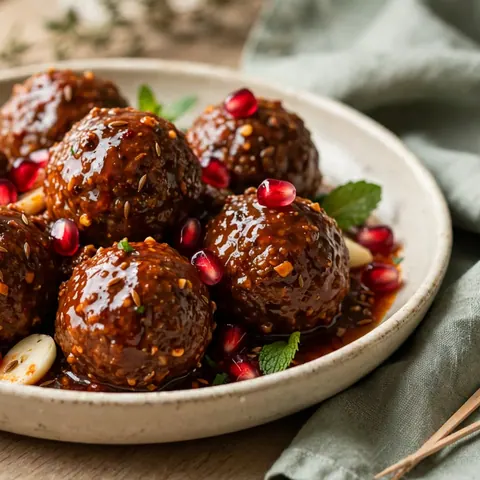
Slow-Cooker Pomegranate and Harissa Glazed Lamb Meatballs
Experience the vibrant fusion of Middle Eastern flavors with these succulent lamb meatballs, slow-cooked in a rich, tangy pomegranate and spicy harissa glaze until perfectly tender.
Published 13 min read
- Total time
- Prep
- Cook
- Rest
- Serves
- 6
- Makes 24 meatballs
- Cuisine
- Middle Eastern
- Calories
- 380
- per serving, estimated

On this page16 sections
Elevate your next gathering with these slow-cooker pomegranate and harissa glazed lamb meatballs. This dish combines the deep, earthy spice of cumin-rubbed lamb with a complex, tangy glaze that balances the sweetness of honey against the sharp acidity of pomegranate molasses and the lingering heat of rose harissa. It is a sophisticated, crowd-pleasing option that relies on the magic of slow cooking to transform simple ingredients into a gourmet experience that looks stunning when served directly from the ceramic pot.
The beauty of this recipe lies in its simplicity and the depth of flavor achieved through the slow-cooking method. By allowing the lamb meatballs to simmer in the pomegranate and harissa sauce, the meat becomes incredibly tender while absorbing the bold, concentrated flavors of the glaze. It is an ideal dish for busy hosts who want to provide a memorable, restaurant-quality meal without spending hours in the kitchen. The final garnish of fresh pomegranate arils and mint adds a bright, jewel-toned finish that makes this dish look as impressive as it tastes, ensuring it stands out as the centerpiece of any table.
The appeal
Why you’ll love it
The slow-cooking method is essential for this recipe because it allows the tough fibers of the lamb to break down slowly, resulting in a remarkably tender texture that is difficult to achieve with high-heat cooking methods. Furthermore, the low and steady heat ensures that the pomegranate molasses, honey, and harissa have sufficient time to reduce and emulsify, creating a thick, glossy glaze that adheres perfectly to the surface of each meatball, ensuring every bite is packed with intense flavor and a beautiful, glistening finish.
Using a slow cooker also offers practical benefits for hosting, as it maintains the temperature of the dish throughout the service period without the need for constant monitoring. The controlled environment prevents the sauce from scorching, which is a common risk when reducing sugary glazes on a stovetop. This method ensures consistent results every time, allowing the cook to focus on other preparations while the meatballs achieve their optimal state of doneness and the sauce reaches its perfect, syrupy consistency for a truly gourmet result.
What you need
Ingredients
Makes 24 meatballs.
Meatballs
Glaze
Garnish
Tools
Equipment
- Slow cooker
- Measuring cups
- Measuring spoons
- Chef knife
- Cutting board
- Serving spoon
Swaps
Substitutions
Instead ofLamb meatballs
UseGround beef or ground turkey meatballs can be used as a direct replacement for the lamb.
Instead ofPomegranate molasses
UseBalsamic glaze or a reduction of balsamic vinegar mixed with a little sugar can mimic the acidity.
Instead ofRose harissa
UseAny standard spicy harissa paste or a blend of smoked paprika and chili flakes will provide heat.
Instead ofChicken stock
UseVegetable stock or beef broth works perfectly well to provide the necessary liquid base for the sauce.
Good to know
Notes
When selecting ingredients for this recipe, the quality of the pomegranate molasses is paramount. Ensure you are using a pure, concentrated version without added sugars or fillers to achieve the authentic tartness that defines the glaze. The rose harissa provides a unique floral note, but if you cannot find it, a standard high-quality harissa will work well; just be mindful of the heat level, as some varieties can be quite potent, so adjust the quantity to suit your preference for spice while maintaining the balance with the honey.
Equipment-wise, any standard slow cooker will work, but a ceramic insert is preferred for its ability to retain heat evenly, which is crucial for the reduction of the glaze. If you are using a very large slow cooker for a smaller batch, keep a close watch on the sauce during the final thirty minutes of cooking, as the increased surface area might cause the glaze to reduce faster than expected. Always have a meat thermometer on hand to verify the internal temperature of the meatballs, ensuring they reach the safe threshold of 160°F (71°C) before serving.
Prep
Before you start
Before you begin, ensure you have all your ingredients measured and ready, especially the pomegranate molasses and honey, which can be sticky and difficult to manage once you start cooking. Mince your garlic finely so it integrates seamlessly into the sauce rather than leaving large, pungent chunks. If you are preparing your own meatballs, ensure they are uniform in size to promote even cooking throughout the process. Clear your workspace and ensure your slow cooker is clean and positioned near an outlet, away from any clutter that might interfere with the cooking process or the final presentation of the dish on your table.
Step by step
Method
Phase 1
Phase 1: Glaze Preparation
Step 1: Prepare the glaze base
In the ceramic insert of your slow cooker, whisk together the pomegranate molasses, wildflower honey, rose harissa paste, minced garlic, and chicken stock until the mixture is completely uniform and combined. Ensure the garlic is evenly distributed throughout the liquid to allow its aromatic qualities to infuse the entire dish during the long cooking process.
You’ll need: pomegranate molasses · wildflower honey · rose harissa paste · garlic, minced · chicken stock
Look for: The mixture should look like a smooth, dark crimson sauce that is consistent in color and texture throughout the base of the slow cooker.
Tip: Use a small whisk or a fork to ensure the thick pomegranate molasses and honey are fully incorporated into the thinner chicken stock base without clumps.
Step 2: Add the meatballs
Gently place the ground lamb cumin-spiced meatballs into the slow cooker, arranging them in a single layer if possible to ensure they are all well-coated by the sauce. If they must be stacked, ensure you spoon some of the glaze over the top layers to ensure they remain moist and flavorful throughout the duration of the cooking time.
You’ll need: ground lamb cumin-spiced meatballs
Look for: The meatballs should be nestled into the sauce, with the glaze partially covering them to ensure they cook evenly and absorb the complex, spicy-sweet flavors.
Tip: Handle the meatballs carefully to maintain their shape, as they will become very tender and delicate during the slow-cooking process in the acidic pomegranate glaze.
Checkpoint
At the end of this phase, the glaze should be a smooth, uniform liquid that coats the bottom of the slow cooker ceramic insert. You should be able to see the specks of minced garlic distributed throughout the mixture. The consistency should be thin, as the thickening happens during the long simmer. Ensure that the pomegranate molasses and honey are fully integrated, as these thick ingredients can sometimes settle at the bottom if not whisked thoroughly. This foundation is critical for the final flavor profile, so take a moment to ensure everything is perfectly combined before adding the lamb meatballs to the pot.
Phase 2
Phase 2: Slow-Cook Simmer
Step 3: Slow cook until tender
Cover the slow cooker and set it to low heat. Allow the meatballs to simmer gently for two and a half hours. During this time, the sauce will reduce into a glossy, thick garnet-red glaze that clings perfectly to the meat, while the internal temperature of the meatballs must reach at least 160°F (71°C) to ensure they are fully cooked.
You’ll need: ground lamb cumin-spiced meatballs
Internal temperature 160°F (71°C)
Look for: The sauce will transform from a thin liquid into a dark, thick, and glistening glaze that bubbles around the tender, fully cooked lamb meatballs.
Tip: Avoid lifting the lid frequently during the cooking process, as this releases heat and moisture, which can significantly increase the total time required for the sauce to thicken.
Checkpoint
By the end of this phase, you should notice that the liquid level has decreased significantly, and the sauce has transformed into a thick, glossy, and dark garnet-red glaze. The meatballs should be tender and cooked through, with a firm yet moist texture. If you notice the sauce is still too thin, you can continue to cook for an additional fifteen minutes, but monitor it closely to prevent the sugars from scorching. The kitchen should smell deeply aromatic, with the spicy harissa and sweet pomegranate notes becoming prominent. This is the stage where the magic of the slow-cooker truly shines, creating a complex and rich flavor profile.
Phase 3
Phase 3: Final Garnish and Service
Step 4: Garnish and serve
Once the cooking cycle is complete and the meatballs have reached the required temperature, carefully remove the lid. Scatter the fresh pomegranate arils and torn mint leaves generously over the top of the glazed meatballs. Serve immediately while hot, ensuring each portion is drizzled with the remaining glossy sauce from the bottom of the ceramic insert.
You’ll need: fresh pomegranate arils · fresh mint leaves
Look for: The dish is ready when the garnish provides a bright, crisp contrast to the deep, dark, and sticky glaze covering the perfectly tender, cooked lamb meatballs.
Tip: Add the fresh mint just before serving to ensure the leaves remain vibrant, aromatic, and firm, providing the necessary freshness to balance the intense flavors of the glaze.
Checkpoint
The dish is complete when the meatballs are glistening under a thick layer of the reduced glaze and the garnish has been added. The pomegranate arils should look like bright, glistening jewels against the dark, rich sauce, and the mint leaves should be fresh, vibrant, and fragrant. The final visual check should reveal a cohesive, professional-looking dish that is ready to be served directly from the pot. Ensure that the meatballs are hot throughout and that the sauce is clinging to them, creating a mouth-watering presentation that is sure to impress your guests. Once the garnish is applied, the dish is ready for immediate service.
Doneness
How to tell it’s done
The meatballs are considered done when they have reached an internal temperature of at least 160°F (71°C). At this point, the meat should be exceptionally tender, yielding easily to a fork, and the sauce should have reduced into a thick, syrupy consistency that coats the back of a spoon. If you test a meatball with a probe thermometer, ensure it is inserted into the center of the meatball to get an accurate reading. The glaze should be a deep, dark garnet color, reflecting light, and it should smell fragrant with the spicy notes of the harissa and the sweet, tangy aroma of the pomegranate.
Avoid these
Common mistakes
A common mistake is overcrowding the slow cooker if you are doubling the recipe; ensure there is enough space for the sauce to circulate around the meatballs, or they may steam rather than glaze. Another frequent error is using a high heat setting, which can cause the sugars in the honey and molasses to burn or caramelize too quickly, leading to a bitter taste and a scorched bottom. Additionally, adding the fresh garnishes too early will cause them to wilt and lose their vibrant color; always wait until the very last moment before serving to sprinkle the pomegranate arils and mint.
Cook safely
Food safety
Safe internal temperatures
Cook to at least these temperatures, measured with an instant-read thermometer in the thickest part.
| Food | Minimum internal temperature |
|---|---|
| Ground meat | 160°F (71°C) |
Better results
Tips
Tip 1
To maximize the flavor of the glaze, try to sear the meatballs in a hot pan before placing them in the slow cooker. This extra step adds a layer of Maillard reaction, which contributes a deeper, more savory dimension to the meat that complements the sweet and tangy glaze perfectly. If you do this, ensure the meatballs are only browned on the outside and not cooked through, as they will finish cooking in the slow cooker. This simple addition can elevate the dish significantly, providing a more complex texture and a richer flavor profile that balances the acidity of the pomegranate molasses.
Tip 2
When serving, consider providing a side of fluffy couscous or warm pita bread to soak up the excess glaze. The sauce is the highlight of the dish, and having a starch to capture every drop ensures that nothing goes to waste. If you are hosting a larger party, you can keep the slow cooker on the 'warm' setting for an extended period, which keeps the meatballs at an ideal serving temperature without further cooking the meat or reducing the sauce to an overly thick or sticky consistency that might be difficult to portion.
Make it yours
Variations
Apricot Glazed Lamb
Replace the pomegranate molasses with apricot preserves and add a teaspoon of ground cinnamon. This variation provides a sweeter, more mellow flavor profile that pairs wonderfully with the cumin-spiced lamb, creating a more traditional, fruit-forward Mediterranean dish that is perfect for those who prefer a less acidic glaze.
Spicy Harissa Chicken
Substitute the lamb meatballs with chicken meatballs made from ground chicken thighs. The chicken absorbs the pomegranate and harissa glaze beautifully, resulting in a lighter version that remains incredibly flavorful and tender, making it an excellent alternative for those who prefer poultry over red meat for their main course.
Honey-Garlic Glazed Meatballs
Omit the harissa and pomegranate molasses, replacing them with a mixture of honey, soy sauce, and extra garlic. This creates a more savory, sweet-and-salty glaze that is universally appealing and provides a different, more familiar flavor profile that works well with a variety of side dishes like steamed rice or noodles.
Citrus-Herb Lamb Meatballs
Add the zest of two lemons and a tablespoon of chopped fresh parsley to the meatball mixture before cooking. The bright citrus notes cut through the richness of the lamb, providing a refreshing contrast that works perfectly with the pomegranate glaze, adding a layer of complexity and aroma to the final dish.
On the table
Serving suggestions
For a sophisticated presentation, serve these meatballs directly from the warm ceramic Crockpot, placing it on a heat-proof trivet in the center of your table. Surround the pot with small bowls of additional pomegranate arils and fresh mint, allowing guests to customize their servings. Providing small, decorative appetizer picks or skewers makes it easy for guests to enjoy the meatballs as a finger food, which is perfect for cocktail parties or casual gatherings where guests are mingling and socializing throughout the evening.
Pair these meatballs with a refreshing side dish to balance the intensity of the harissa and pomegranate. A crisp cucumber and yogurt salad, or a simple tabbouleh with plenty of parsley and lemon, provides a cool, herbaceous contrast to the warm, spicy lamb. The combination of textures and temperatures creates a well-rounded dining experience. If you are serving this as a main course, a side of roasted root vegetables or a light pearl couscous salad works beautifully to complement the richness of the lamb and the depth of the glaze.
Leftovers
Storage & make-ahead
- Fridge
- Store in an airtight container for up to 3 days. Ensure the meatballs are completely cooled before refrigerating to maintain the best quality.
- Freezer
- Freezing is not recommended as the texture of the meatballs and the delicate balance of the pomegranate glaze do not hold up well to thawing.
- Reheat
- Reheat gently in a saucepan over low heat, adding a splash of water or stock to loosen the glaze until the meatballs are heated through.
Store any leftovers in an airtight container in the refrigerator for up to three days. Ensure the meatballs are completely cooled before sealing them to prevent condensation, which can affect the texture of the glaze. When storing, keep the meatballs and the sauce together so they remain moist and continue to marinate, enhancing the flavor even after the initial cooking. Avoid freezing this dish, as the texture of the meatballs and the delicate balance of the pomegranate glaze do not hold up well to the freezing and thawing process.
Make ahead
You can prepare the glaze base and even brown the meatballs a day in advance, storing them separately in the refrigerator. When you are ready to cook, simply combine them in the slow cooker and proceed with the recipe as instructed. This method allows you to save significant time on the day of your event, ensuring you can focus on other aspects of your party while the slow cooker does the heavy lifting. The flavors will also benefit from an overnight rest, allowing the spices in the meatballs to meld further with the sauce base.
Questions
Frequently asked questions
Can the meatballs be made ahead of time?
Yes, you can prepare the meatballs and the glaze base separately a day in advance. Store them in the refrigerator until you are ready to cook. This is an excellent way to save time on the day of your party. When you are ready, simply combine everything in the slow cooker and follow the cooking instructions as written. The flavors will have more time to meld, which can lead to an even better result when they are finally slow-cooked together.
What is the best way to serve these meatballs?
These meatballs are best served directly from the slow cooker to keep them warm and moist. Provide small skewers or toothpicks for guests to easily pick them up, making them an ideal appetizer. For a more substantial main course, serve them alongside fluffy couscous, warm pita bread, or a fresh herb salad. The goal is to provide a way for guests to enjoy the meatballs while also having something to capture the delicious, reduced pomegranate and harissa glaze that accumulates at the bottom of the pot.
Can a different type of meat be used?
Absolutely, ground beef or ground turkey can be used as a direct replacement for the lamb in this recipe. While lamb provides a distinct, rich flavor that pairs exceptionally well with pomegranate and harissa, other ground meats will yield a delicious result with a slightly milder taste. Ensure that whatever meat you choose is cooked to the safe internal temperature of 160°F (71°C) to guarantee it is fully cooked and safe to consume, maintaining the same tenderness and quality you would expect from the lamb.
What if the sauce is too thin after cooking?
If the sauce has not reduced to your desired consistency after the two and a half hours of slow cooking, you can remove the lid and continue to cook on the high setting for an additional fifteen to twenty minutes. Monitor the sauce closely during this time, as the sugars in the honey and pomegranate molasses can caramelize and burn quickly once the liquid volume decreases. Stir occasionally to ensure even reduction and to prevent the sauce from sticking to the bottom of the ceramic insert, resulting in a perfectly thick and glossy glaze.
Is it possible to cook this on high heat?
While the slow-cooker method is designed for low heat to ensure the most tender results, you can cook on high if you are short on time. However, be aware that high heat can cause the meatballs to firm up more quickly and the glaze may reduce unevenly or potentially scorch. If you choose this method, reduce the cooking time to about one and a half hours and check the meatballs frequently to ensure they reach the safe internal temperature of 160°F (71°C) without becoming dry. Low and slow is always recommended for the best texture.
Everything in one place: the recipe card below gathers the ingredients, steps and estimated nutrition, ready to print.
Recipe card
Slow-Cooker Pomegranate and Harissa Glazed Lamb Meatballs
Experience the vibrant fusion of Middle Eastern flavors with these succulent lamb meatballs, slow-cooked in a rich, tangy pomegranate and spicy harissa glaze until perfectly tender.
- Prep
- Cook
- Rest
- Total
- Servings
- 24 meatballs
Ingredients
Meatballs
- 2 lb ground lamb cumin-spiced meatballs
Glaze
- 1/2 cup pomegranate molasses
- 1/2 cup wildflower honey
- 3 tbsp rose harissa paste
- 4 cloves garlic, minced
- 1/2 cup chicken stock
Garnish
- 1/2 cup fresh pomegranate arils for serving
- 1/4 cup fresh mint leaves, torn, for serving
Instructions
Prepare the glaze base. In the ceramic insert of your slow cooker, whisk together the pomegranate molasses, wildflower honey, rose harissa paste, minced garlic, and chicken stock until the mixture is completely uniform and combined. Ensure the garlic is evenly distributed throughout the liquid to allow its aromatic qualities to infuse the entire dish during the long cooking process.
Add the meatballs. Gently place the ground lamb cumin-spiced meatballs into the slow cooker, arranging them in a single layer if possible to ensure they are all well-coated by the sauce. If they must be stacked, ensure you spoon some of the glaze over the top layers to ensure they remain moist and flavorful throughout the duration of the cooking time.
Slow cook until tender. Cover the slow cooker and set it to low heat. Allow the meatballs to simmer gently for two and a half hours. During this time, the sauce will reduce into a glossy, thick garnet-red glaze that clings perfectly to the meat, while the internal temperature of the meatballs must reach at least 160°F (71°C) to ensure they are fully cooked.
Garnish and serve. Once the cooking cycle is complete and the meatballs have reached the required temperature, carefully remove the lid. Scatter the fresh pomegranate arils and torn mint leaves generously over the top of the glazed meatballs. Serve immediately while hot, ensuring each portion is drizzled with the remaining glossy sauce from the bottom of the ceramic insert.
Nutrition (estimated, per serving)
- Calories
- 380 kcal
- Protein
- 22.5 g
- Carbs
- 28 g
- Fat
- 20 g
- Fiber
- 1.5 g
- Sugar
- 24 g
- Sodium
- 650 mg
Estimates only: values vary with brands, substitutions and portion sizes.
Recipe by EasyCooks Kitchen · easycooksrecipes.com
Share this recipe
Send it to someone who’d love it, or save it for later.
Spotted a mistake in this recipe? Let us know.
Keep cooking