Kitchen Table StoriesSecond ChancesFiction11 min readPart 1 of 5
She Begged Her Town to Save Five Dying Houses—Then the Last One Gave Up a Secret
A desperate plea to save five Victorian homes turns into a shocking discovery when the last house reveals a hidden deed—and a betrayal that changes everything for one woman.
By EasyCooks KitchenPublished
The story continues
Already saw Part 1 in the video?
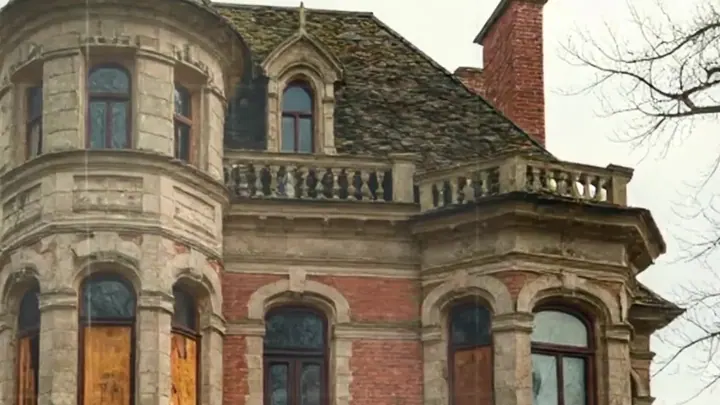
The camera catches the light wrong—too much orange, too much dust—but that’s how it always feels at the end of Maple Street. Five Victorian houses stand shoulder to shoulder like tired old women, their porch railings sagging, their window glass cracked and gray. The wind smells like rain and rot, and the leaves underfoot are dry as paper.
I hold the clipboard against my chest like a shield, but my voice shakes when I speak. “Hey everyone, these five old Victorian homes are about to be demolished unless someone steps up to restore them.”
I’m not looking at a crowd. I’m looking at a phone camera propped on a stack of bricks, my only audience the empty street and the few curious faces peeking from behind curtains. But I keep going, because if I stop, the silence will swallow me.
“Each one has history, families, stories, generations, all fading away.” I point to number 12, where my great-grandmother’s lace curtains still hang, yellowed but intact. “My family lived in that one for sixty years. I learned to walk on that porch.”
The wind kicks up, rattling the dead leaves, and I pull my denim jacket tighter. My fingers are cold, but I don’t put on gloves—I need to hold the clipboard, to feel the weight of the petition with two hundred signatures, most of them from people who don’t even live here anymore.
“If your town gave you the power to save one of them, which would you choose?” I ask, and I let the question hang.
I’m not just asking the camera. I’m asking the ghosts of the families who laughed on these porches, who argued in the kitchens, who buried their dead in the backyard plots that are now overgrown with thistle.
Number 7 has a collapsed roof. Number 9 has a hole in the floor big enough to fall through. Number 11 has a chimney that leans like a drunk man. And number 13—the last one, the one everyone calls the Weeping House—has a door that’s been nailed shut since 1987.
I walk past them all, touching the railings, feeling the splinters. The sun is setting behind the houses, painting the sky in bruised purples and reds, and for a moment I feel like I’m standing in a graveyard.
“I’m not giving up,” I say, my voice breaking. “I’ll stand here every day until someone listens.”
I’m not a hero. I’m a woman who works at the local library, who lives in a rented apartment above the bakery, who has no money and no power. But I have a memory of my mother telling me stories about this street, about the summer nights when all the families would sit on their porches and share ice cream and gossip.
“My mother used to say this street was the heart of the town,” I tell the camera. “And now it’s being torn out.”
Share this story
Send it to someone who would enjoy it.
Keep reading
More stories

Second Chances
The Comatose Stranger Opened His Eyes the Second She Kissed His Lips
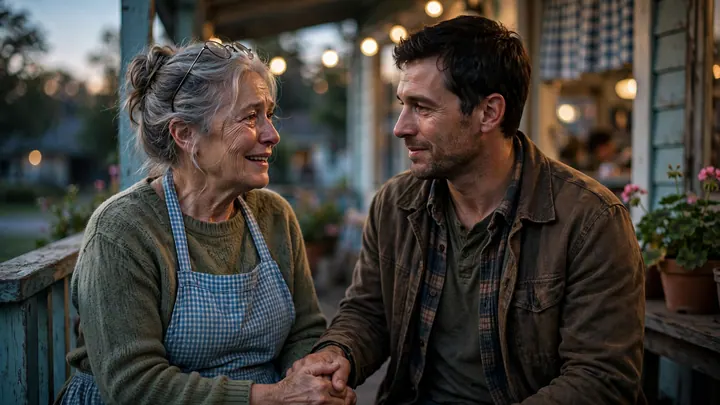
When nurse Clara leaned in to kiss her comatose patient goodbye, she never expected him to suddenly grab her hand. The truth behind his accident would change both of their lives forever.
7 min readFiction
Second Chances
She Fed Four Hungry Boys For Free, Years Later They Returned With A Miracle
When diner owner Beatrice fed four struggling brothers for free, she never expected anything in return. Years later, those same boys returned to her porch with a life-changing surprise.
9 min readFiction
Second Chances
A Mother Split Her Only Burger for Her Kids, Unaware a Stranger Was Watching
When a struggling mother divided a single hamburger between her two children on a birthday, a quiet businessman in the corner booth noticed her empty plate—and decided to act.
11 min readFiction
Second Chances
A Billionaire Bought My Son's Toy Car and Discovered Our Forgotten Past
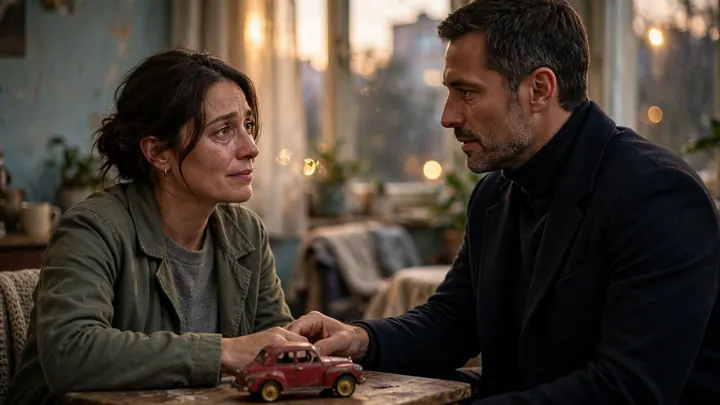
When my young boys tried to sell their favorite toy to buy my medicine, a wealthy stranger stopped to help—only to realize we shared a heartbreaking past.
8 min readFiction
Second Chances
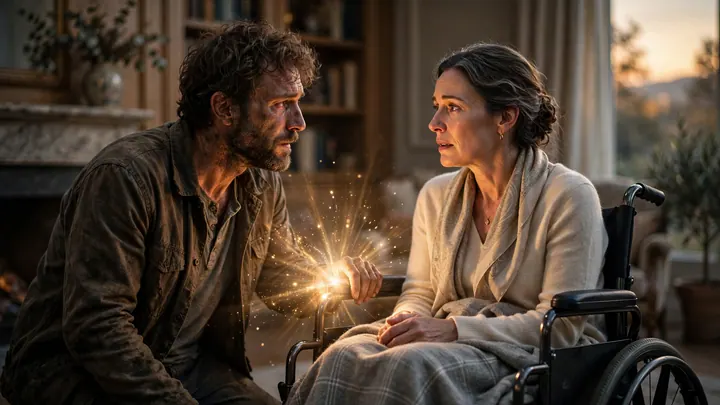
The Disheveled Stranger Who Healed My Paralysis Left Me With One Haunting Question
When a dirty, disheveled stranger touches a wealthy paralyzed woman's wheelchair, a miraculous light changes her life forever—and unlocks a heartbreaking secret from her forgotten past.
7 min readFiction
Second Chances
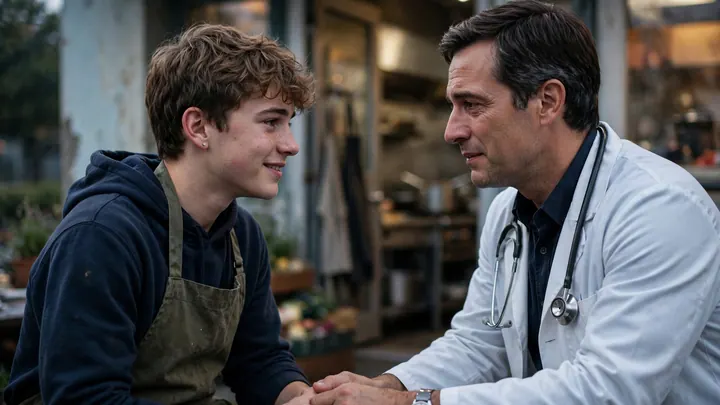
Manager Fires Teen Who Saved Choking Boy, But the Father Has a Life-Changing Surprise
When a heartless manager fires teenage kitchen worker Toby for saving a choking little boy, he has no idea that the boy's father is a powerful doctor ready to change Toby's life forever.
8 min readFiction