Vintage Impossible Coconut Custard Pie with Toasted Coconut Top
A classic impossible coconut custard pie that makes its own crust as it bakes. Shredded coconut settles on the bottom, custard batter poured over, then a dusting of nutmeg before baking into a creamy, golden square.
Published 12 min read
- Total time
- Prep
- Cook
- Rest
- Serves
- 12
- Makes one 9x13-inch pie
- Cuisine
- American
- Calories
- 310
- per serving, estimated

On this page16 sections
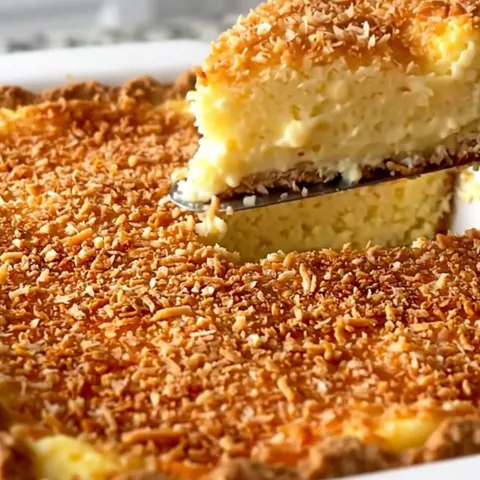
Few desserts come together this easily. Shredded coconut goes straight into the dish, a simple custard batter is poured over it, and the oven does the rest. As it bakes, the flour and eggs set into a tender custard while the coconut rises to the top and turns golden, giving you a dessert with almost no hands-on work and a flavor that tastes like a classic family pie.
This impossible coconut custard pie is a vintage American dessert that has been passed around church cookbooks and kitchen recipe cards for decades. The name comes from how it works: a thin, pourable batter bakes into its own soft layer of custard with no separate pie crust to roll out. The coconut sits on the bottom of the dish, rises as the batter flows around it, and toasts on top as the custard sets. The result is a sliceable, creamy pie with a golden, chewy coconut surface and a delicate, lightly spiced flavor from the nutmeg. It is easy to make in a single baking dish, which keeps the cleanup simple and suits a potluck, a weeknight treat or a holiday table. Serve it at room temperature or chilled for the cleanest slices.
The appeal
Why you’ll love it
The batter has enough flour and eggs to set into a custard as it bakes, so the pie forms its own base without any crust. The flour thickens the milk and eggs gently, which gives a smooth, sliceable texture that holds together once cooled.
Coconut is placed in the dish before the batter, so it floats up to the surface as the liquid rises. Because the coconut is exposed to the oven heat on top, it toasts into a golden layer, while the custard underneath remains creamy. This layering is what gives the pie its distinctive texture and look.
What you need
Ingredients
Makes one 9x13-inch pie.
Custard batter
Contains:
- Gluten
- Eggs
- Milk
Tools
Equipment
- 13x9-inch rectangular ceramic baking dish
- Large mixing bowl
- Whisk
- Measuring cups and spoons
- Small pitcher for pouring
- Small ramekin for nutmeg
Swaps
Substitutions
Instead ofWhole milk
Use2% milk, for a lighter custard with a slightly softer set
Instead ofAll-purpose flour
UseGluten-free all-purpose flour blend, measured cup for cup
Instead ofSweetened shredded coconut
UseUnsweetened shredded coconut, adding 2 to 3 tbsp sugar to the batter
Good to know
Notes
Use whole milk for the richest, most tender custard. Lower-fat milk works, though the set will be slightly softer and the flavor a bit lighter. Sweetened shredded coconut gives the traditional flavor and golden color on top; if you use unsweetened coconut, add a few tablespoons of sugar to the batter so the pie stays balanced.
A 13x9-inch ceramic or glass baking dish is the right size for this batter, and its even heat helps the custard set evenly from edge to center. Use a whisk for the batter, a small pitcher to pour, and a small ramekin for the nutmeg. Substitute gluten-free flour blend cup for cup if needed, and keep the batter smooth so the custard bakes evenly.
Prep
Before you start
Set the oven rack to the middle position and preheat the oven to 350°F (175°C) before you start, so the oven is steady when the pie goes in. Lightly grease a 13x9-inch ceramic baking dish with butter or nonstick spray so the custard releases cleanly when sliced. Measure the shredded coconut, milk, sugar, flour, butter, vanilla, salt and nutmeg and set them out where you can reach them easily. Melt the butter and let it cool slightly so it does not scramble the eggs when you whisk the batter. Crack the eggs into a separate bowl first and check each one before adding it, so no shell gets into the custard. Keep a whisk and a small pitcher ready for pouring.
Step by step
Method
Phase 1
Spread coconut and pour batter
Step 1: Spread the shredded coconut
Preheat the oven to 350°F (175°C) and grease the 13x9-inch baking dish lightly. Scatter the shredded coconut evenly over the bottom of the dish, spreading it into a single layer with your fingers so no bare patches remain.
You’ll need: sweetened shredded coconut
Look for: Coconut covers the bottom of the dish in an even, unbroken layer.
Tip: Spread the coconut right to the corners so every square has coconut in the bottom.
Step 2: Whisk the custard batter
In a large bowl, whisk the milk, sugar, eggs, flour, melted butter, vanilla and salt until the batter is smooth, glossy and free of lumps, with no streaks of flour left at the bottom of the bowl.
You’ll need: whole milk · granulated sugar · large eggs · all-purpose flour · unsalted butter, melted · vanilla extract · kosher salt
Look for: The batter looks smooth and pale yellow with no lumps of flour.
Tip: Whisk the sugar into the eggs first to avoid flour lumps.
Checkpoint
The coconut should cover the bottom of the dish in a single, even layer, reaching all four corners. Once the batter is whisked smooth, pour it slowly and evenly so the coconut floats up through the liquid rather than being pushed to one side. Check that the batter sits level and the coconut is fully covered on the surface before sprinkling the nutmeg. If coconut is clumped or bare spots remain, lift and spread it with your fingers before baking. The batter should look pale yellow and smooth with no lumps, and the top should appear evenly covered without any dry patches of coconut showing. Take a moment to level the dish gently on the oven rack so the custard sets evenly from edge to center during the bake.
Phase 2
Dust with nutmeg and bake
Step 3: Pour the batter over coconut
Pour the custard batter slowly and evenly over the coconut in the dish, letting the coconut float up as the liquid rises. Keep pouring until the batter reaches the top of the coconut layer without spilling over the rim.
You’ll need: sweetened shredded coconut · whole milk · granulated sugar · large eggs · all-purpose flour · unsalted butter, melted · vanilla extract · kosher salt
Look for: Coconut floats on top of the pale yellow custard batter.
Tip: Pour in a slow stream so the coconut does not get pushed to one side.
Step 4: Dust with nutmeg
Sprinkle the ground nutmeg evenly over the surface of the batter and coconut from a small ramekin, covering the top with a light, even dusting of warm spice.
You’ll need: ground nutmeg
Look for: The surface shows an even, light dusting of brown specks.
Tip: Use a light hand; nutmeg is strong and a little goes a long way.
Step 5: Bake until set and golden
Bake the pie on the middle rack for about 45 to 50 minutes, until the coconut on top is toasted golden and the custard is set in the center when the dish is gently shaken. Check for doneness from 40 minutes onward.
You’ll need: sweetened shredded coconut · whole milk · large eggs · ground nutmeg
Internal temperature 160°F (71°C)
Look for: Coconut turns golden brown while the center is set and no longer wobbles.
Tip: Cover loosely with foil if the coconut darkens before the custard sets.
Checkpoint
Before the dish goes into the oven, the surface should show a light, even dusting of nutmeg with no heavy clumps. Place the dish on the middle rack and bake for about 45 to 50 minutes. The coconut should be turning golden brown across the top, and the edges of the custard should look set and matte. Check the center by gently shaking the dish: it should jiggle only slightly and feel firm to a light touch, not wet or loose. If the coconut is browning faster than the custard sets, loosely cover the dish with foil and continue baking. The pie is ready when the top is evenly golden and the custard has set through, with a clean, moist texture showing when you test with a thin knife near the center.
Phase 3
Cool fully before slicing
Step 6: Cool before slicing
Transfer the baking dish to a wire rack and let the pie cool for at least 1 hour, so the custard firms into clean, creamy squares that hold their shape when cut.
You’ll need: sweetened shredded coconut
Look for: The surface feels firm and the custard holds its shape when pressed gently.
Tip: Slice with a thin knife dipped in warm water between cuts.
Step 7: Cut and serve the squares
Cut the pie into 12 even squares, lifting each one out with a thin spatula so the coconut layer stays intact on top of the custard.
You’ll need: sweetened shredded coconut
Look for: Each square shows a golden coconut top above a creamy custard layer.
Tip: Wipe the knife between cuts for neat, clean edges.
Checkpoint
Once out of the oven, the pie should look golden on top with a creamy, set custard beneath. Leave it on a wire rack to cool for at least 1 hour. As it cools, the custard firms and becomes easier to cut cleanly. Before slicing, press the top very gently: the surface should feel firm and the coconut should look dry and golden. Cutting too early can make the squares soft and difficult to lift, so wait until the dish has cooled to room temperature. The pie is ready to slice when the custard holds its shape and the coconut layer stays intact on top of each square.
Doneness
How to tell it’s done
The pie is done when the coconut on top is evenly golden brown and the custard is set through, which takes about 45 to 50 minutes at 350°F (175°C). Gently shake the dish: the center should move only slightly and look firm rather than wet. For a precise check, insert an instant-read thermometer into the center of the custard; it should register 160°F (71°C), the temperature at which the eggs are fully cooked. Remove the pie from the oven right away once it reaches this temperature, because the custard keeps firming as it cools. A knife inserted near the center should come out clean, with no liquid batter clinging to it.
Avoid these
Common mistakes
The most common problem is overbaking. The custard can turn grainy or dry if the pie stays in the oven too long, so check it from about 40 minutes and remove it as soon as the center is set. Another frequent issue is pouring the batter too fast, which can push the coconut into a single corner and leave other areas bare. Pour slowly and let the coconut float evenly across the surface. Using cold, lumpy batter can also lead to uneven texture; whisk the eggs and sugar first, then add the flour and melted butter gradually. Slicing while the pie is still warm will make the squares soft and crumbly. Let it cool fully on a rack before cutting, and use a thin spatula to lift each square cleanly.
Cook safely
Food safety
Safe internal temperatures
Cook to at least these temperatures, measured with an instant-read thermometer in the thickest part.
| Food | Minimum internal temperature |
|---|---|
| Egg dishes | 160°F (71°C) |
Better results
Tips
Tip 1
Warm the milk slightly before whisking it into the batter if your kitchen is cool, because a little warmth helps the flour dissolve more evenly. Keep the batter moving with the whisk until no flour streaks remain, and pour it through a fine strainer if you see any small lumps. A smooth batter gives a silky custard and an even, golden coconut layer on top.
Tip 2
Toast your own nutmeg fresh if you can, grating it just before sprinkling for the warmest aroma. Use a light hand, since a small amount adds gentle spice without overpowering the coconut. If the coconut browns too quickly near the end of the bake, cover the dish loosely with foil and keep baking until the custard has set through.
Make it yours
Variations
Toasted pecan top
Scatter a handful of chopped toasted pecans over the coconut before pouring the batter. The nuts sit among the coconut and toast in the oven, adding a crunchy, buttery note to the custard.
Vanilla bean custard
Split a vanilla bean and scrape the seeds into the milk before whisking. Use the pod in the batter as well, removing it before pouring. The custard gains a deeper, floral vanilla flavor that suits the coconut well.
Unsweetened coconut version
Replace the sweetened shredded coconut with unsweetened coconut and add 3 tablespoons of sugar to the batter. The pie becomes less sweet and more tropical, with a clean coconut flavor.
Spiced cinnamon top
Replace the nutmeg with an equal amount of ground cinnamon, or mix both together. The warm spice pairs beautifully with the coconut and gives the pie a cozy, autumn-leaning character.
On the table
Serving suggestions
Serve the squares chilled or at room temperature with a cup of coffee or tea. The golden coconut top adds texture and toasty flavor, while the custard underneath is soft and delicate. Cut into 12 even pieces and lift each one out with a thin spatula so the layers stay intact. Arrange the squares on a platter for a simple, classic presentation that suits family dinners and gatherings alike.
For a relaxed dessert table, pair the pie with fresh fruit such as sliced strawberries or a bowl of mixed berries for a bright contrast. A small pot of lightly whipped cream on the side adds richness without overwhelming the nutmeg. The pie also travels well for a potluck, since it holds its shape in the dish and can be sliced directly from the baking pan at the table.
Leftovers
Storage & make-ahead
- Fridge
- Keep covered in the refrigerator up to 4 days, in a single layer, and serve chilled or at room temperature.
- Reheat
- This pie is served cold or at room temperature and does not need reheating.
Once the pie has cooled completely, cover the dish tightly with plastic wrap or a lid and keep it in the refrigerator. Store the squares in a single layer, separated with parchment if you stack them, so the coconut stays dry and the custard keeps its shape. The coconut will soften slightly over time, but the flavor stays fresh. Serve chilled or let the pie sit at room temperature for about 15 minutes before cutting to soften the custard slightly. Discard any pie left out at room temperature for more than 2 hours.
Make ahead
This pie can be made a day ahead. Bake it, let it cool fully on a rack, cover it and refrigerate overnight; the custard firms beautifully as it chills and slices more neatly the next day. Do not cut the squares until shortly before serving so the coconut remains crisp on top. If you want to prepare the batter in advance, whisk it up to a day ahead and keep it covered in the refrigerator; whisk again briefly before pouring over the coconut so the flour is evenly distributed and the batter is smooth.
Questions
Frequently asked questions
Why is this pie called impossible?
The name refers to the way the pie forms its own base. The batter contains enough flour and eggs to set into a custard layer as it bakes, so no separate pie crust is needed. The coconut floats to the top and toasts while the custard firms underneath, which is why the dessert seems to make its own crust. The method is simple, and it depends on whisking the batter smooth and baking until the center is set, not on any special technique.
Can this pie be made ahead of time?
Yes. The pie can be baked a day in advance, cooled completely and refrigerated overnight. The custard firms as it chills and slices more neatly the next day. Keep it covered and cut the squares just before serving so the coconut stays fresh on top. Once cut, store leftover squares in a covered container in the refrigerator for up to 4 days.
Why does the custard look grainy or dry?
Overbaking is the usual cause. Eggs set quickly, and leaving the pie in the oven past the point where the center is firm can make the texture grainy and dry. Check the pie from about 40 minutes and remove it once the center is set and the coconut is golden. Lumpy batter can also cause uneven texture, so whisk the eggs and sugar first and add the flour gradually.
How do you keep the coconut from browning too fast?
If the coconut turns deep golden before the custard has set, loosely cover the dish with a sheet of aluminum foil and continue baking. The foil shields the top from direct heat while the center finishes setting. Remove the foil for the last few minutes if you want more color on the coconut. Keeping the oven at 350°F (175°C) instead of higher also helps the top brown evenly.
Can you use a different baking dish?
A 13x9-inch ceramic or glass dish is the best choice because the batter fills it to the right depth and bakes evenly. A smaller dish will make the pie deeper and may need more time to set in the center, while a larger dish will make a thinner pie that bakes faster. Adjust the bake time by checking the center early and watching the coconut for color rather than relying only on the clock.
Everything in one place: the recipe card below gathers the ingredients, steps and estimated nutrition, ready to print.
Recipe card
Vintage Impossible Coconut Custard Pie with Toasted Coconut Top
A classic impossible coconut custard pie that makes its own crust as it bakes. Shredded coconut settles on the bottom, custard batter poured over, then a dusting of nutmeg before baking into a creamy, golden square.
- Prep
- Cook
- Rest
- Total
- Servings
- one 9x13-inch pie
Ingredients
- 1 1/2 cups sweetened shredded coconut
- ground nutmeg, for topping, to taste
Custard batter
- 2 cups whole milk
- 1 cup granulated sugar
- 4 large eggs
- 1/2 cup all-purpose flour
- 1/4 cup unsalted butter, melted
- 2 tsp vanilla extract
- 1/4 tsp kosher salt
Instructions
Spread the shredded coconut. Preheat the oven to 350°F (175°C) and grease the 13x9-inch baking dish lightly. Scatter the shredded coconut evenly over the bottom of the dish, spreading it into a single layer with your fingers so no bare patches remain.
Whisk the custard batter. In a large bowl, whisk the milk, sugar, eggs, flour, melted butter, vanilla and salt until the batter is smooth, glossy and free of lumps, with no streaks of flour left at the bottom of the bowl.
Pour the batter over coconut. Pour the custard batter slowly and evenly over the coconut in the dish, letting the coconut float up as the liquid rises. Keep pouring until the batter reaches the top of the coconut layer without spilling over the rim.
Dust with nutmeg. Sprinkle the ground nutmeg evenly over the surface of the batter and coconut from a small ramekin, covering the top with a light, even dusting of warm spice.
Bake until set and golden. Bake the pie on the middle rack for about 45 to 50 minutes, until the coconut on top is toasted golden and the custard is set in the center when the dish is gently shaken. Check for doneness from 40 minutes onward.
Cool before slicing. Transfer the baking dish to a wire rack and let the pie cool for at least 1 hour, so the custard firms into clean, creamy squares that hold their shape when cut.
Cut and serve the squares. Cut the pie into 12 even squares, lifting each one out with a thin spatula so the coconut layer stays intact on top of the custard.
Allergens: Gluten, Eggs, Milk
Nutrition (estimated, per serving)
- Calories
- 310 kcal
- Protein
- 6.5 g
- Carbs
- 38 g
- Fat
- 14 g
- Fiber
- 1 g
- Sugar
- 30 g
- Sodium
- 180 mg
Estimates only: values vary with brands, substitutions and portion sizes.
Recipe by EasyCooks Kitchen · easycooksrecipes.com
Share this recipe
Send it to someone who’d love it, or save it for later.
Spotted a mistake in this recipe? Let us know.
Keep cooking
More dessert recipes
Desserts
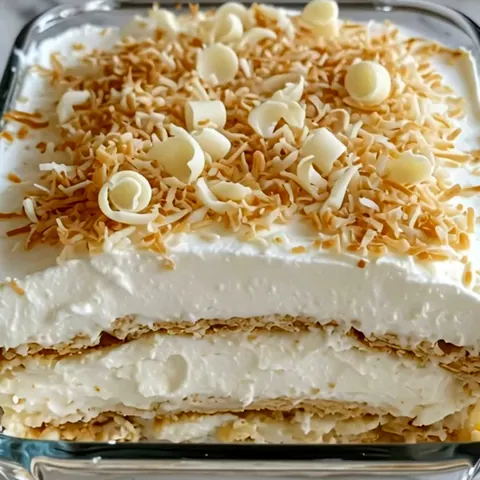
No-Bake Coconut Cream Icebox Cake with Graham Wafers and White Chocolate
Total time: 4 hrs 30 mins
Desserts
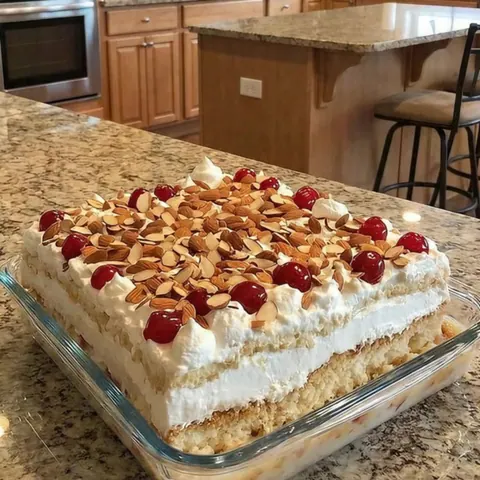
Heaven on Earth Cake: No-Bake Angel Food Layers with Whipped Cream and Cherries
Total time: 4 hrs 30 mins


