Classic Pecan Pie Bread Pudding for Comforting Dessert
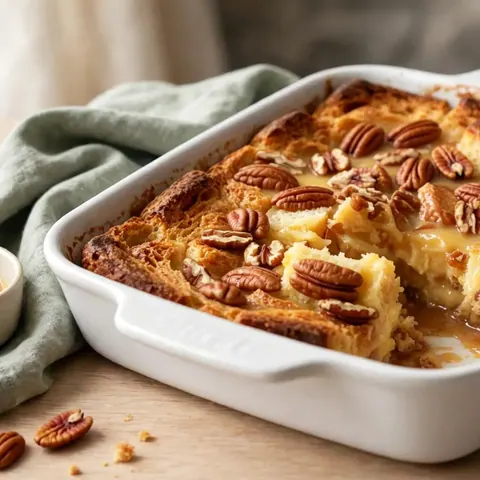
Transform crusty French bread into a decadent, golden dessert with this simple pecan pie bread pudding. This classic recipe combines a rich brown sugar custard with toasted pecans for a comforting treat that is perfect for any occasion.
Published Updated 13 min read
- Total time
- Prep
- Cook
- Rest
- Serves
- 8
- Makes one 9x13-inch baking dish
- Cuisine
- Southern
- Calories
- 420
- per serving, estimated

On this page16 sections
Elevate your dessert game with this irresistible pecan pie bread pudding, a dish that masterfully combines the crunch of toasted pecans with a velvety, custard-soaked bread base. Perfect for gatherings or a cozy weekend treat, this recipe turns simple pantry staples into a sophisticated, crowd-pleasing delight. With its golden, bubbling edges and comforting aroma, it is the ultimate way to satisfy your sweet cravings while impressing everyone at the table with minimal effort and maximum flavor impact.
Bread pudding is a timeless classic that showcases the beauty of transforming humble ingredients into something truly spectacular. This specific version takes inspiration from the beloved pecan pie, infusing the custard with deep brown sugar notes and finishing with a generous layer of toasted pecans. The result is a textural masterpiece where every spoonful offers a perfect balance of soft, creamy bread and the satisfying crunch of nuts. It is an ideal recipe for those who appreciate simple, honest cooking that relies on quality ingredients and reliable techniques to deliver exceptional results every single time.
The appeal
Why you’ll love it
The method relies on the natural absorption properties of crusty French bread, which acts as a sponge for the rich brown sugar custard. By cutting the bread into uniform cubes, you ensure that every piece is saturated evenly, preventing dry spots and creating a consistent, creamy texture throughout the entire dish. This soaking process is the foundation of a successful bread pudding, allowing the bread to soften while maintaining its structural integrity during the baking process, resulting in a dish that is both comforting and technically sound.
Baking the dish at a moderate temperature allows the custard to set gently, ensuring the eggs reach the required safe temperature without curdling or becoming grainy. The addition of pecan halves on top serves a dual purpose: they provide a necessary textural contrast to the soft bread and toast beautifully in the oven's heat, releasing essential oils that enhance the overall flavor profile. This balance of heat and timing creates a golden, bubbling surface that protects the moist interior, ensuring a professional finish that looks as good as it tastes.
What you need
Ingredients
Makes one 9x13-inch baking dish.
Pudding Base
Custard
Topping
Contains:
- Gluten
- Eggs
- Milk
- Tree nuts
Served raw or lightly cooked
This dish contains custard that may not be fully set. Use pasteurised eggs for pregnant women, young children, older adults, and anyone with a weakened immune system.
Tools
Equipment
- 9x13-inch ceramic baking dish
- Large mixing bowl
- Whisk
- Serrated bread knife
Swaps
Substitutions
Instead ofFrench bread
UseUse day-old brioche or challah for a richer, more buttery texture that absorbs the custard beautifully while maintaining its structure during the baking process.
Instead ofBrown sugar custard
UsePrepare a mixture of eggs, milk, brown sugar, and vanilla extract to create the custard base if not using a pre-made version.
Instead ofPecan halves
UseWalnuts can be used as a direct replacement, offering a slightly earthier flavor profile that pairs equally well with the deep molasses notes of brown sugar.
Good to know
Notes
Choosing the right bread is critical for this recipe; a crusty French loaf is ideal because it has enough structure to absorb the custard without disintegrating. If the bread is too soft, the pudding will become mushy. Always aim for a loaf with a good, chewy crust that provides a nice textural contrast once baked. If you find your bread is too fresh, simply slice and leave it out on a wire rack for a few hours or toast it in a low oven to remove excess moisture before you begin.
Regarding equipment, a heavy-duty ceramic baking dish is preferred because it retains heat well and promotes even cooking, which is vital for custards. If using a glass dish, you may need to adjust your baking time slightly as glass conducts heat differently. Always ensure your whisk is sturdy enough to handle the thickness of the brown sugar custard, and consider using a large mixing bowl to give yourself plenty of room to combine all the ingredients thoroughly without splashing or making a mess during the mixing process.
Prep
Before you start
Before you start, ensure all your ingredients are measured and ready to go. Having the bread cubed and the custard components prepped allows the process to flow seamlessly. Preheat your oven to the correct temperature early to ensure the baking environment is stable. Clear a workspace on your counter to accommodate the baking dish and the mixing bowl, ensuring you have enough room to whisk the custard without restriction. This preparation ensures that the bread doesn't sit for too long once it has been combined with the liquid, keeping the texture perfect.
Step by step
Method
Phase 1
Preparation and Mixing
Step 1: Prepare the Bread
Begin by preheating your oven to 350°F (175°C). Take your crusty French bread and slice it into uniform one-inch cubes using a serrated knife. Arrange these bread cubes evenly across the bottom of a large ceramic baking dish, ensuring they are distributed to create a solid foundation that will soak up the custard base efficiently without leaving large gaps in the final dish.
You’ll need: crusty French bread
Look for: The bread should be cut into roughly equal bite-sized pieces to ensure consistent absorption of the custard mixture during the soaking phase.
Tip: If the bread is very fresh, toast the cubes in the oven for about ten minutes to dry them out slightly, which helps them hold their shape better.
Step 2: Pour the Custard
Pour the amber brown sugar custard slowly and evenly over the French bread cubes in the baking dish. Use a spatula to gently press down on the bread cubes to ensure each piece is fully saturated with the liquid. Allow the mixture to sit for at least ten minutes, which allows the bread to soak up the custard, resulting in a creamy texture throughout.
You’ll need: brown sugar custard
Look for: The bread cubes should look thoroughly dampened and heavy with liquid, having absorbed most of the custard mixture poured over them.
Tip: Gently turning the bread with a spatula ensures the bottom layers are just as moist as the top layers before you add the nuts.
Checkpoint
At the end of this phase, your bread cubes should be evenly distributed in the baking dish, and your custard should be a smooth, uniform liquid with the brown sugar fully dissolved. Check that your oven has reached the target temperature and that your workspace is organized. The custard should be free of any large clumps of egg or sugar, ensuring that when you pour it, it will distribute evenly across all the bread pieces to create a consistent base for the final dessert.
Phase 2
Soaking and Topping
Step 3: Add Pecan Topping
Evenly scatter the pecan halves over the surface of the soaked bread cubes. Distribute them so that every serving will have a generous amount of crunchy topping. The pecans will toast in the oven while the pudding bakes, adding a deep, nutty flavor that contrasts perfectly with the soft, sweet bread and the rich custard base beneath the surface.
You’ll need: pecan halves
Look for: The pecans should be spread in a single layer across the top, covering most of the bread surface without being overcrowded in one area.
Tip: Press the pecans slightly into the custard so they stay in place and become lightly toasted without burning during the baking time.
Checkpoint
By the end of this phase, the bread should have absorbed the majority of the custard, appearing heavy and saturated. The pecan halves should be arranged in a single, even layer across the top, ready for the oven. Check that there are no dry bread cubes visible on the surface. The dish should look ready for the oven, with the custard reaching about halfway up the sides of the bread cubes, ensuring a moist and creamy final texture after the baking process is complete.
Phase 3
Baking and Resting
Step 4: Bake the Pudding
Place the baking dish into the preheated oven and bake for approximately 45 minutes. The dish is ready when the pudding has puffed up, the edges are bubbling, and the top is golden brown. To ensure the eggs are fully cooked, the center must reach an internal temperature of 160°F (71°C).
You’ll need: crusty French bread · brown sugar custard · pecan halves
Internal temperature 160°F (71°C)
Look for: The edges should be bubbling vigorously and the surface should appear puffed and golden brown, indicating the custard has set correctly.
Tip: If the pecans start to darken too quickly, loosely tent the dish with aluminum foil for the final ten minutes of baking.
Step 5: Rest and Serve
Once removed from the oven, allow the bread pudding to rest on a wire rack for at least ten minutes before serving. This rest period is essential as it allows the custard to firm up, making it easier to scoop and serve. The heat will dissipate slightly, allowing the flavors to meld and creating the perfect warm, creamy consistency for your guests to enjoy.
You’ll need: crusty French bread · brown sugar custard · pecan halves
Look for: The pudding should have settled slightly from its puffed state and be cool enough to hold its shape when lifted with a large spoon.
Tip: Serve warm to fully appreciate the contrast between the crispy toasted pecans and the creamy, soft bread pudding interior for the best experience.
Checkpoint
The pudding is finished when it is puffed, golden, and the edges are bubbling. The pecans should be toasted to a deep brown, and the center should be set and firm. After resting for ten minutes, the pudding should have settled slightly, making it easy to scoop. Check that the internal temperature is 160°F (71°C). The aroma should be rich and nutty, signaling that the custard has cooked through and the flavors have perfectly melded together for serving.
Doneness
How to tell it’s done
The bread pudding is done when it has puffed up significantly and the edges appear golden brown and bubbling. The center should feel firm when gently pressed with a spoon, and it must reach an internal temperature of 160°F (71°C) to ensure the egg custard is fully set. If the top is browning too quickly, you can tent it with foil, but do not remove it from the oven until the internal temperature is reached to ensure safety and the correct consistency.
Avoid these
Common mistakes
A common mistake is using bread that is too fresh, which can lead to a soggy pudding that fails to hold its shape. Always use day-old bread or dry your cubes out before soaking. Another error is failing to let the bread soak sufficiently; if the custard does not penetrate the center of the bread cubes, the pudding will be uneven. Finally, do not rush the baking process; if the oven temperature is too high, the outside will burn before the center reaches the required temperature for the eggs.
Cook safely
Food safety
Safe internal temperatures
Cook to at least these temperatures, measured with an instant-read thermometer in the thickest part.
| Food | Minimum internal temperature |
|---|---|
| Egg dishes | 160°F (71°C) |
Raw or lightly cooked ingredients
This dish contains custard that may not be fully set. Use pasteurised eggs for pregnant women, young children, older adults, and anyone with a weakened immune system.
Better results
Tips
Tip 1
To ensure the best flavor, lightly toast your pecans in a dry pan before adding them to the top of the pudding. This releases their natural oils and deepens their flavor, ensuring they remain crunchy even after being baked in the custard. If you prefer a more intense flavor, you can also add a pinch of cinnamon or nutmeg to the custard base, which complements the brown sugar and pecans beautifully, adding depth to the overall profile of the dish without overpowering the other ingredients.
Tip 2
The rest period after baking is non-negotiable for achieving the correct texture. During this time, the custard continues to set as it cools, and the bread absorbs any remaining surface moisture. Cutting into the pudding too early can result in a loose, creamy consistency that lacks the professional finish you want. By waiting, you allow the pudding to firm up, ensuring that every serving maintains its structure on the plate while still being wonderfully warm, creamy, and satisfying for everyone who enjoys this comforting dessert.
Make it yours
Variations
Spiced Apple Variation
Fold in one cup of peeled, diced Granny Smith apples along with the bread cubes. The tartness of the apples cuts through the sweetness of the brown sugar custard, while the added fruit texture pairs perfectly with the crunchy pecans on top for a seasonal twist.
Chocolate Pecan Version
Stir in one-half cup of high-quality dark chocolate chips into the bread mixture before pouring over the custard. The melted chocolate creates pockets of intense flavor that contrast beautifully with the nutty pecans and the creamy, soft bread pudding base, creating a decadent, rich dessert.
Bourbon-Infused Custard
Add two tablespoons of bourbon to your custard mixture before whisking. The oaky notes of the bourbon enhance the depth of the brown sugar and bring out the natural nuttiness of the pecans, providing a sophisticated, complex flavor profile that elevates the classic bread pudding recipe.
Maple Pecan Twist
Replace half of the brown sugar with pure maple syrup to provide a distinct, woodsy sweetness. The maple flavor pairs exceptionally well with the pecans and adds a unique aroma to the dish, making it a perfect option for a special brunch or a cozy evening dessert.
On the table
Serving suggestions
Serve this bread pudding warm, directly from the baking dish, to highlight the contrast between the toasted pecan topping and the creamy, custard-soaked interior. A large spoon is the best tool for serving, as it allows you to scoop through the layers easily without breaking the bread cubes apart. The warmth of the dish makes it particularly inviting, and it pairs exceptionally well with a simple dollop of freshly whipped cream or a scoop of high-quality vanilla bean ice cream to balance the deep brown sugar flavors.
For a more formal presentation, you can portion the pudding into individual ramekins before baking, though you will need to reduce the baking time accordingly. Regardless of the vessel, ensure that each portion includes a generous amount of the toasted pecans from the top. If you have extra pecans on hand, a light sprinkling of toasted nuts or a small drizzle of warm caramel sauce can be added just before serving to enhance the visual appeal and provide an extra layer of decadence to this classic, comforting dessert.
Leftovers
Storage & make-ahead
- Fridge
- Store in an airtight container for up to 3 days in the refrigerator.
- Freezer
- Freeze in a freezer-safe container for up to 1 month; thaw overnight in the fridge before reheating.
- Reheat
- Reheat individual portions in a microwave or the entire dish in a 300°F oven until warmed through and the center is hot.
Cover any leftovers tightly with plastic wrap or transfer them to an airtight container to maintain moisture and prevent the pudding from drying out in the refrigerator. Proper storage is essential to keep the texture creamy and the flavor fresh. Consume within three days for the best quality, as the bread will continue to absorb moisture over time, which can eventually change the texture significantly. Always ensure the pudding has cooled completely to room temperature before placing it into the refrigerator to prevent condensation buildup.
Make ahead
You can assemble the bread pudding up to four hours before baking, keeping it covered in the refrigerator. This allows the bread to soak up the custard thoroughly, which can lead to a more flavorful and cohesive dish. Simply prepare the base, pour the custard over, and add the pecans just before placing the dish into the preheated oven. If you choose to refrigerate it longer than four hours, the bread may become too soft, so adjust your timing accordingly for the best results.
Questions
Frequently asked questions
Can this bread pudding be made ahead of time?
Yes, you can assemble the bread pudding up to four hours before baking. Keep it covered in the refrigerator to allow the bread to soak up the custard thoroughly. If you leave it longer than four hours, the bread may become too soft, so plan your timing carefully. Once ready, simply place the dish into the preheated oven as directed. This method is excellent for gatherings as it saves time while ensuring the flavors are fully developed and the texture remains perfect.
What is the best way to tell if the bread pudding is done?
The bread pudding is done when it has puffed up and the edges are bubbling. The top should be a deep golden brown, and the center should be firm to the touch. For safety, ensure an internal temperature of 160°F (71°C) is reached, confirming the egg custard is fully set. If you are unsure, insert a knife into the center; it should come out mostly clean, indicating that the custard has solidified and the dish is ready to be removed from the oven.
Can other types of bread be used for this recipe?
While crusty French bread is ideal for its structural integrity, you can use other sturdy breads like brioche, challah, or even day-old Italian bread. The key is to choose a bread that can soak up the custard without turning into a mushy paste. Avoid using very soft, white sandwich bread, as it lacks the necessary texture to hold the custard. Whatever bread you choose, ensure it is slightly dried out or day-old to achieve the best possible consistency for your final pudding.
Why is it important to let the pudding rest before serving?
Resting the bread pudding for at least ten minutes after baking allows the custard to firm up and the heat to distribute evenly. This step is crucial for achieving the correct, creamy consistency and makes serving much easier, as the pudding will hold its shape on the plate. Cutting into it too soon will result in a loose, creamy texture. The rest period also lets the flavors meld, ensuring that every bite is as delicious as possible when it is finally served.
How should leftovers be stored and reheated?
Store any leftovers in an airtight container in the refrigerator for up to three days. To reheat, you can use a microwave for individual portions, heating in short bursts until warm, or place the entire dish in a 300°F oven until it is heated through and the center is hot. Avoid overheating, which can cause the custard to become tough. Proper storage and gentle reheating will ensure that your bread pudding remains moist, creamy, and enjoyable even after the day it was baked.
Everything in one place: the recipe card below gathers the ingredients, steps and estimated nutrition, ready to print.
Recipe card
Classic Pecan Pie Bread Pudding for Comforting Dessert
Transform crusty French bread into a decadent, golden dessert with this simple pecan pie bread pudding. This classic recipe combines a rich brown sugar custard with toasted pecans for a comforting treat that is perfect for any occasion.
- Prep
- Cook
- Rest
- Total
- Servings
- one 9x13-inch baking dish
Ingredients
Pudding Base
- 1 loaf crusty French bread, cut into 1-inch cubes
Custard
- 2 cups brown sugar custard
Topping
- 1 cup pecan halves
Instructions
Prepare the Bread. Begin by preheating your oven to 350°F (175°C). Take your crusty French bread and slice it into uniform one-inch cubes using a serrated knife. Arrange these bread cubes evenly across the bottom of a large ceramic baking dish, ensuring they are distributed to create a solid foundation that will soak up the custard base efficiently without leaving large gaps in the final dish.
Pour the Custard. Pour the amber brown sugar custard slowly and evenly over the French bread cubes in the baking dish. Use a spatula to gently press down on the bread cubes to ensure each piece is fully saturated with the liquid. Allow the mixture to sit for at least ten minutes, which allows the bread to soak up the custard, resulting in a creamy texture throughout.
Add Pecan Topping. Evenly scatter the pecan halves over the surface of the soaked bread cubes. Distribute them so that every serving will have a generous amount of crunchy topping. The pecans will toast in the oven while the pudding bakes, adding a deep, nutty flavor that contrasts perfectly with the soft, sweet bread and the rich custard base beneath the surface.
Bake the Pudding. Place the baking dish into the preheated oven and bake for approximately 45 minutes. The dish is ready when the pudding has puffed up, the edges are bubbling, and the top is golden brown. To ensure the eggs are fully cooked, the center must reach an internal temperature of 160°F (71°C).
Rest and Serve. Once removed from the oven, allow the bread pudding to rest on a wire rack for at least ten minutes before serving. This rest period is essential as it allows the custard to firm up, making it easier to scoop and serve. The heat will dissipate slightly, allowing the flavors to meld and creating the perfect warm, creamy consistency for your guests to enjoy.
Allergens: Gluten, Eggs, Milk, Tree nuts
Nutrition (estimated, per serving)
- Calories
- 420 kcal
- Protein
- 12 g
- Carbs
- 52 g
- Fat
- 19 g
- Fiber
- 2.5 g
- Sugar
- 28 g
- Sodium
- 380 mg
Estimates only: values vary with brands, substitutions and portion sizes.
Recipe by EasyCooks Kitchen · easycooksrecipes.com
Share this recipe
Send it to someone who’d love it, or save it for later.
Spotted a mistake in this recipe? Let us know.
Keep cooking


