Authentic Roman Carbonara with Crispy Guanciale
Silky, glossy spaghetti alla carbonara made the authentic Roman way—no cream, just egg yolks, Pecorino Romano, crispy guanciale, and black pepper.
Published Updated 12 min read
- Total time
- Prep
- Cook
- Serves
- 4
- Cuisine
- Italian
- Calories
- 610
- per serving, estimated

On this page16 sections
This is the carbonara of Rome: no cream, no garlic, no parsley—just four golden egg yolks, salty Pecorino Romano, crispy guanciale, and a generous crack of black pepper. The magic happens off the heat, when the starchy pasta water and warm rendered fat transform the egg paste into a silky, glossy sauce that clings to every strand. It's a dish that asks for patience and precision, but rewards with the kind of creamy, savory perfection that makes you close your eyes on the first bite.
Carbonara is one of Italy's most beloved pastas, and for good reason: it's simple, fast, and deeply satisfying. But simplicity demands technique. The secret lies in the emulsion—a careful balance of hot pasta, warm guanciale fat, starchy water, and a thick paste of egg yolks and Pecorino. Done right, the sauce turns into a velvety coating that's rich without being heavy, and savory with a sharp kick from the cheese and pepper. This recipe follows the authentic Roman method, skipping cream entirely, so every bite tastes of pure, honest ingredients. With a few key steps and a little attention to temperature, anyone can make carbonara that rivals the best trattorias.
The appeal
Why you’ll love it
The egg and cheese paste is whisked into a thick, glossy base before it ever meets the pasta. This ensures the Pecorino is fully dissolved into the yolks, so the sauce won't turn grainy or separate. The black pepper is cracked fresh, releasing its essential oils and adding a warm, floral heat that cuts through the richness. Working the paste thoroughly means the sauce will emulsify instantly when it hits the hot pasta, creating a creamy texture without any cream.
The pan is taken off the heat before the eggs go in, and the pasta is tossed with the rendered guanciale fat and starchy water first. This builds a stable emulsion—the fat and water combine with the starch from the pasta water to create a glossy base. Then the egg paste is added, and the residual heat of the pasta and pan gently cooks the eggs to a safe temperature, around 160°F (71°C), while keeping them silky. The result is a sauce that clings to the pasta, never scrambles, and tastes like it came from a Roman kitchen.
What you need
Ingredients
Makes 4 servings.
Contains:
- Gluten
- Eggs
- Milk
Tools
Equipment
- Large pot for pasta
- Large skillet
- Mixing bowl
- Whisk
- Tongs
- Chef's knife
- Cutting board
- Measuring spoons
Swaps
Substitutions
Instead ofGuanciale
UsePancetta or thick-cut bacon, diced (renders similarly, though flavor will be less intensely porky).
Instead ofPecorino Romano
UseParmigiano-Reggiano or a blend of both, finely grated (slightly less salty, so season carefully).
Instead ofSpaghetti alla chitarra
UseRegular spaghetti or bucatini (cook to al dente).
Instead ofTellicherry black pepper
UseAny freshly cracked black peppercorns (pre-ground pepper won't pop the same way).
Good to know
Notes
Guanciale is the traditional cut—pork jowl cured with salt, pepper, and sometimes herbs. It renders slowly and yields a deep, porky flavor that pancetta or bacon can't quite match. If guanciale isn't available, pancetta is the closest substitute, though bacon works in a pinch (just blanch it first to remove any smoky flavor if you want a more authentic profile). Pecorino Romano is salty and sharp; use a good-quality block and grate it yourself for the best texture and flavor.
Spaghetti alla chitarra—square-cut spaghetti—is the classic shape, but regular spaghetti or bucatini work beautifully. The key is to cook the pasta al dente, because it will continue to cook slightly in the sauce. Use the freshest eggs you can find, and keep everything at room temperature before assembling. Don't skip the starchy pasta water; it's the glue that holds the sauce together. If the sauce ever looks too thick, a splash more water will bring it back to silky.
Prep
Before you start
Before you start, make sure all your ingredients are ready: dice the guanciale, grate the Pecorino Romano, and crack the black pepper. Bring a large pot of salted water to a boil. Whisk the egg yolks, cheese, and pepper together in a bowl until thick and uniform. Have your tongs and a measuring cup for the pasta water nearby. The entire process moves quickly once the pasta is cooked, so having everything within reach prevents scrambling or overcooking. If using a new skillet, make sure it's large enough to hold the pasta comfortably for tossing.
Step by step
Method
Phase 1
Prepare the Egg and Cheese Paste
Step 1: Whisk the Egg and Cheese Paste
In a medium bowl, whisk the egg yolks with the finely grated Pecorino Romano and the freshly cracked black pepper until a thick, golden paste forms. The mixture will be stiff and glossy; set it aside at room temperature while the pasta cooks.
You’ll need: large egg yolks · Pecorino Romano, finely grated · freshly cracked Tellicherry black pepper
Look for: The paste is thick and creamy, with no streaks of yolk or cheese.
Tip: Whisk vigorously for a full minute to make sure the cheese is fully incorporated.
Step 2: Bring the Pasta Water to a Boil
Fill a large pot with water and bring it to a rolling boil over high heat. Season generously with kosher salt—the water should taste like the sea. Add the spaghetti and cook until al dente, about 8 to 10 minutes, stirring occasionally.
You’ll need: kosher salt, for pasta water · spaghetti alla chitarra or spaghetti
Look for: The pasta is tender but still has a slight bite in the center.
Tip: Reserve at least 1 cup of pasta water before draining.
Checkpoint
The egg and cheese paste should be thick, glossy, and a deep golden yellow. It should hold its shape when lifted with a whisk, and the black pepper should be visibly speckled throughout. The Pecorino should be completely incorporated, with no dry bits. This paste is the heart of the sauce—if it looks thin or watery, add a little more grated cheese. The pasta water should be boiling and well salted, ready for the spaghetti.
Phase 2
Render the Guanciale and Cook the Pasta
Step 3: Render the Guanciale Until Crispy
While the pasta cooks, place the diced guanciale in a large skillet over medium heat. Cook, stirring often, until the fat renders and the pieces turn glass-crisp, about 6 to 8 minutes. Do not let the guanciale burn—it should be golden and crunchy, not dark brown.
You’ll need: guanciale, diced
Look for: The guanciale is crisp and deeply golden, with rendered fat pooling in the pan.
Tip: If the guanciale browns too quickly, lower the heat to medium-low.
Step 4: Remove the Pan from Heat
Once the guanciale is perfectly crisp, remove the skillet from the heat. Let it cool for about 30 seconds—this is critical so the eggs don't scramble when they hit the pan. The residual heat from the pan and the guanciale will be enough to create the sauce.
You’ll need: guanciale, diced
Look for: The pan is off the heat and the sizzling has subsided slightly.
Tip: If the pan is too hot, the eggs will curdle; if too cool, the sauce will be thin.
Step 5: Toss Pasta with Guanciale and Water
Using tongs, transfer the drained spaghetti directly into the skillet with the guanciale. Add 6 tablespoons of the reserved starchy pasta water. Toss everything together quickly to coat the pasta in the rendered fat and create a glossy base.
You’ll need: spaghetti alla chitarra or spaghetti · guanciale, diced · starchy pasta water
Look for: The pasta is slick with fat and the water has formed a light emulsion.
Tip: Keep the heat off during this step to avoid scrambling the eggs later.
Checkpoint
The guanciale should be golden-brown and crisp, with rendered fat pooling in the skillet. The pasta should be al dente—tender but with a slight bite. The kitchen should smell rich and porky, with a hint of toasted pepper. The pan is off the heat, and the pasta water is reserved. The guanciale fat and starchy water are ready to create the emulsion base. This is the moment to move quickly, so keep the egg paste within reach.
Phase 3
Emulsify the Sauce and Serve
Step 6: Add the Egg Paste Off the Heat
Pour the egg and cheese paste over the pasta. Toss quickly and continuously, using tongs or a wooden spoon, until the sauce turns silky and clings to every strand. The residual heat of the pasta and pan will cook the eggs to a safe 160°F (71°C) without scrambling.
You’ll need: large egg yolks · Pecorino Romano, finely grated · freshly cracked Tellicherry black pepper · spaghetti alla chitarra or spaghetti
Internal temperature 160°F (71°C)
Look for: The sauce is glossy, creamy, and coats the pasta without clumping.
Tip: If the sauce seems too thick, add a splash more pasta water to loosen it.
Step 7: Serve Immediately with Extra Guanciale and Cheese
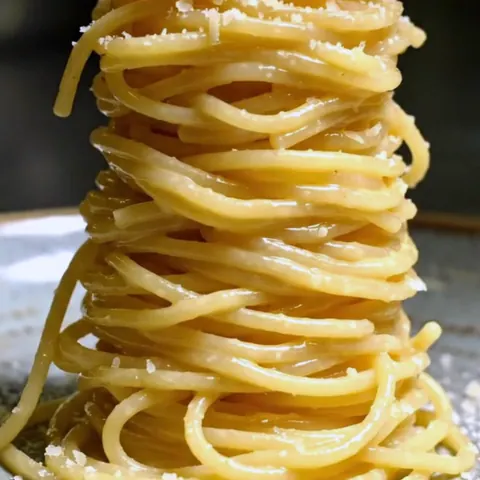
Twirl the carbonara into shallow bowls or onto plates. Top each portion with the extra crispy guanciale shards and a dusting of Pecorino Romano and cracked black pepper. Serve right away, while the sauce is still silky and warm.
You’ll need: guanciale, diced · Pecorino Romano, finely grated · freshly cracked Tellicherry black pepper
Look for: The pasta is twirled into neat nests, shiny with sauce and topped with crispy bits.
Tip: Carbonara waits for no one—serve as soon as it's plated.
Checkpoint
The carbonara should look glossy and creamy, with the sauce clinging to every strand of pasta. The guanciale bits are distributed throughout, and the pepper adds a warm aroma. The sauce should not be runny or clumpy—it should coat the pasta like a silky blanket. The internal temperature of the egg mixture has reached 160°F (71°C), ensuring safety without sacrificing texture. Plate immediately, topped with extra guanciale and cheese.
Doneness
How to tell it’s done
The carbonara is done when the sauce is glossy, creamy, and coats the back of a spoon without running off. The pasta should be al dente, and the guanciale crisp. The egg mixture must reach 160°F (71°C) to be safe—use an instant-read thermometer if you're unsure. The sauce should not be watery or curdled; it should cling to the pasta in a smooth, velvety layer. Taste a strand: it should be rich, savory, and slightly peppery, with the saltiness of the cheese balanced by the fat of the guanciale. Serve immediately, as the sauce will thicken as it cools.
Avoid these
Common mistakes
One of the most common mistakes is adding the egg mixture to a pan that's too hot, which causes the eggs to scramble into curds. Always remove the pan from the heat and let it cool for a few seconds before adding the eggs. Another pitfall is using too little pasta water—the starch is essential for a silky emulsion. If the sauce looks thin, add more water; if it's clumpy, you may have added the eggs too quickly or the pan was too hot. Don't rinse the pasta after draining; the starch helps the sauce adhere. And never add cream—it dilutes the flavor and is not authentic.
Cook safely
Food safety
Safe internal temperatures
Cook to at least these temperatures, measured with an instant-read thermometer in the thickest part.
| Food | Minimum internal temperature |
|---|---|
| Egg dishes | 160°F (71°C) |
Better results
Tips
Tip 1
The key to a silky carbonara is temperature control. When you add the egg paste, the pan must be off the heat, but the pasta should still be steaming hot. Toss quickly and constantly to distribute the heat evenly. If you're nervous, you can use a warm bowl instead of the skillet—just combine the pasta, guanciale, and a little water in the bowl, then add the egg paste. This gives you more control and reduces the risk of scrambling.
Tip 2
Use high-quality ingredients: fresh eggs, a good Pecorino Romano, and real guanciale. The dish is simple, so every ingredient shines. Grate the cheese finely so it melts easily into the sauce. Crack the pepper fresh for the best aroma. And don't be shy with the pasta water—it's the secret to a glossy, emulsified sauce. If the sauce ever looks too thick, add a splash of water; if it's too thin, keep tossing over very low heat (off the heat is best) to let it thicken slightly.
Make it yours
Variations
Pepper-Heavy Carbonara
Double the black pepper to 4 teaspoons for a bold, spicy kick. The pepper's heat cuts through the richness and adds a fragrant, almost floral note. Use a mix of Tellicherry and a milder pepper like Sarawak for complexity.
Pancetta Swap
If guanciale is hard to find, use pancetta—it's milder and less fatty, but still delivers that porky depth. Cut it into small dice and render until crisp. The flavor will be slightly cleaner, but the texture and richness remain satisfying.
Pecorino and Parmigiano Blend
Use half Pecorino Romano and half Parmigiano-Reggiano for a more rounded, nutty flavor. The Pecorino provides saltiness, while the Parmigiano adds sweetness and a finer texture. Grate both finely to ensure they melt smoothly into the egg paste.
Bucatini Carbonara
Swap the spaghetti for bucatini—thick, hollow noodles that capture the sauce in their centers. The chewiness of bucatini pairs beautifully with the crispy guanciale and silky sauce. Cook it a minute longer than spaghetti for the perfect al dente bite.
On the table
Serving suggestions
Serve carbonara in warm shallow bowls, twirling the pasta into neat nests with tongs or a fork. Top each portion with extra crispy guanciale shards and a generous dusting of Pecorino Romano and cracked black pepper. The contrast of textures—crispy pork, tender pasta, silky sauce—is part of the magic. Pair with a simple green salad and a glass of dry white wine or light red, like a Frascati or Chianti.
Carbonara is a complete meal on its own, but it also works as a luxurious side for grilled meats or roasted vegetables. For a more substantial spread, serve it alongside a bitter greens salad with lemon vinaigrette to cut through the richness. The dish is best enjoyed hot, so have everyone at the table before you toss the pasta. Leftovers, if any, are a rare treat—but the sauce will never be quite as silky as the first serving.
Leftovers
Storage & make-ahead
- Fridge
- Store leftover carbonara in an airtight container in the refrigerator for up to 2 days. Reheat gently with a splash of water to restore some creaminess.
- Freezer
- Freezing is not recommended, as the egg-based sauce will separate and become grainy upon thawing.
- Reheat
- To reheat, place the pasta in a skillet over low heat with 1-2 tablespoons of water, tossing gently until warmed through.
Carbonara is best enjoyed immediately, but leftovers can be stored in an airtight container in the refrigerator for up to 2 days. The sauce may thicken and lose its silkiness upon reheating, so add a splash of water when warming. To reheat, place the pasta in a skillet over low heat with a tablespoon of water, tossing gently until warmed through. Avoid microwaving, as it can make the eggs rubbery. For food safety, cool leftovers within 2 hours and refrigerate promptly.
Make ahead
You can prepare the egg and cheese paste up to a day in advance—store it in a covered bowl in the refrigerator, and bring it to room temperature before using. The guanciale can also be rendered ahead and refrigerated; reheat it gently in a skillet before adding the pasta. However, the final tossing and saucing should be done just before serving to ensure the silkiest texture. Cooked pasta does not hold well, so plan to cook it fresh.
Questions
Frequently asked questions
Why does the carbonara sauce sometimes turn out scrambled?
Scrambling happens when the egg mixture hits a pan that's too hot. Always remove the skillet from the heat before adding the egg paste, and let it cool for about 30 seconds. Toss the pasta quickly and constantly to distribute the heat evenly. The residual heat of the pasta and pan will cook the eggs gently to a safe 160°F (71°C) without curdling. If the pan is too hot, the eggs coagulate instantly and form curds.
Can this recipe be made without guanciale?
Yes, pancetta or even thick-cut bacon can substitute. Pancetta is the closest in flavor, though slightly less fatty and less intensely porky. If using bacon, blanch it in boiling water for 1 minute to remove some of the smoky flavor and excess salt, then pat dry and render as directed. The texture and richness will still be satisfying, but the authentic Roman character is best with guanciale.
Is it necessary to use pasta water in the sauce?
Absolutely. The starchy pasta water is essential for creating a silky, emulsified sauce. The starch acts as a binder, helping the fat and water combine into a glossy coating that clings to the pasta. Without it, the sauce can turn greasy or clumpy. Always reserve at least a cup before draining, and add it gradually until the sauce reaches the desired consistency.
Can the egg and cheese mixture be prepared ahead of time?
Yes, you can whisk the egg yolks, Pecorino, and pepper together up to a day in advance. Store it in a covered bowl in the refrigerator, and bring it to room temperature before using. This can save time during the final assembly, but be aware that the cheese may settle slightly, so give it a quick whisk before adding it to the pasta.
What is the best way to reheat leftover carbonara?
Reheat carbonara gently to avoid scrambling the eggs. Place the pasta in a skillet over low heat with a tablespoon or two of water, and toss until warmed through. The water helps restore some of the sauce's silkiness. Avoid microwaving, as it can make the eggs rubbery. Leftovers are best within 2 days, and the texture will never be as perfect as fresh, but it's still delicious.
Everything in one place: the recipe card below gathers the ingredients, steps and estimated nutrition, ready to print.
Recipe card
Authentic Roman Carbonara with Crispy Guanciale
Silky, glossy spaghetti alla carbonara made the authentic Roman way—no cream, just egg yolks, Pecorino Romano, crispy guanciale, and black pepper.
- Prep
- Cook
- Total
- Servings
- 4 servings
Ingredients
- 12 oz spaghetti alla chitarra or spaghetti
- 5 1/2 oz guanciale, diced
- 4 large egg yolks
- 3 oz Pecorino Romano, finely grated
- 2 tsp freshly cracked Tellicherry black pepper
- 6 tbsp starchy pasta water
- Kosher salt, for pasta water, to taste
Instructions
Whisk the Egg and Cheese Paste. In a medium bowl, whisk the egg yolks with the finely grated Pecorino Romano and the freshly cracked black pepper until a thick, golden paste forms. The mixture will be stiff and glossy; set it aside at room temperature while the pasta cooks.
Bring the Pasta Water to a Boil. Fill a large pot with water and bring it to a rolling boil over high heat. Season generously with kosher salt—the water should taste like the sea. Add the spaghetti and cook until al dente, about 8 to 10 minutes, stirring occasionally.
Render the Guanciale Until Crispy. While the pasta cooks, place the diced guanciale in a large skillet over medium heat. Cook, stirring often, until the fat renders and the pieces turn glass-crisp, about 6 to 8 minutes. Do not let the guanciale burn—it should be golden and crunchy, not dark brown.
Remove the Pan from Heat. Once the guanciale is perfectly crisp, remove the skillet from the heat. Let it cool for about 30 seconds—this is critical so the eggs don't scramble when they hit the pan. The residual heat from the pan and the guanciale will be enough to create the sauce.
Toss Pasta with Guanciale and Water. Using tongs, transfer the drained spaghetti directly into the skillet with the guanciale. Add 6 tablespoons of the reserved starchy pasta water. Toss everything together quickly to coat the pasta in the rendered fat and create a glossy base.
Add the Egg Paste Off the Heat. Pour the egg and cheese paste over the pasta. Toss quickly and continuously, using tongs or a wooden spoon, until the sauce turns silky and clings to every strand. The residual heat of the pasta and pan will cook the eggs to a safe 160°F (71°C) without scrambling.
Serve Immediately with Extra Guanciale and Cheese. Twirl the carbonara into shallow bowls or onto plates. Top each portion with the extra crispy guanciale shards and a dusting of Pecorino Romano and cracked black pepper. Serve right away, while the sauce is still silky and warm.
Allergens: Gluten, Eggs, Milk
Nutrition (estimated, per serving)
- Calories
- 610 kcal
- Protein
- 24 g
- Carbs
- 62 g
- Fat
- 30 g
Estimates only: values vary with brands, substitutions and portion sizes.
Recipe by EasyCooks Kitchen · easycooksrecipes.com
Share this recipe
Send it to someone who’d love it, or save it for later.
Spotted a mistake in this recipe? Let us know.
Keep cooking


