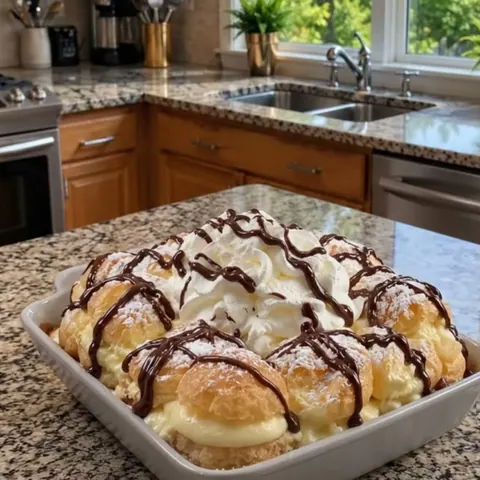
Creamy Baked Cornmeal Custard Cake for an Easy One-Pan Dessert
A golden baked cornmeal cake with a soft, creamy custard center. Bake it in one aluminum pan, cool it briefly, and cut clean squares for an easy homestyle dessert.
Published 11 min read
- Total time
- Prep
- Cook
- Rest
- Serves
- 9
- Makes one 8-inch square cake, 9 squares
- Cuisine
- Southern American
- Calories
- 260
- per serving, estimated

On this page16 sections
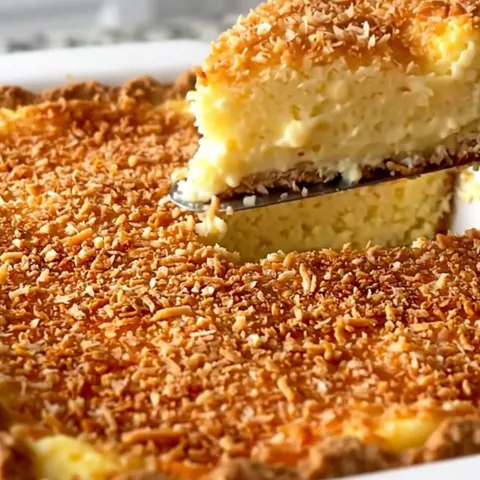
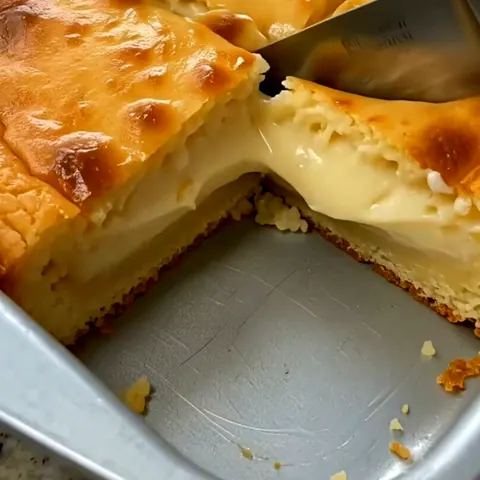
A square of this baked cornmeal cake lifts from the pan with a golden, lightly crisp top and a center that stays soft, rich and custardy. It is the kind of simple dessert you can bake in one pan, cut into clean squares and serve warm. Start with a bowl, a whisk and a square aluminum pan, and the rest comes together quickly.
This creamy baked cornmeal custard cake is built on a simple batter of cornmeal, flour, sugar, milk and eggs. The cornmeal gives the crust a gentle, toasty corn flavor and a slightly grainy bite at the edges, while the milk and eggs bake into a smooth, tender custard in the middle. You do not need a stand mixer or any special technique: whisk the dry ingredients, whisk the wet ingredients, combine them gently and bake. The result is a homestyle dessert with two textures in every square, a golden crust on the outside and a silky, creamy center. Because it is baked in a single aluminum pan, cleanup stays simple and the cake stays easy to portion for a family table or a small gathering.
The appeal
Why you’ll love it
The method works because the batter is mixed in two stages. Whisking the dry ingredients first distributes the baking powder evenly, so the cake rises gently and holds an even structure. Adding the wet ingredients last and stirring only until the streaks disappear keeps the flour from overworking, which is what keeps the crumb tender rather than tough.
The custard center forms because the eggs and milk bake more slowly than the cornmeal crust around them. At the edges, the heat sets the batter quickly, turning it golden and firm. In the middle, the eggs and milk gently thicken into a creamy custard. Resting the cake on a wire rack lets that center finish setting as it cools, which is why the squares hold their shape when cut rather than spilling across the plate.
What you need
Ingredients
Makes one 8-inch square cake, 9 squares.
Contains:
- Gluten
- Milk
- Eggs
Served raw or lightly cooked
The eggs in the custard center are not cooked through when the cake is served soft and creamy.
Tools
Equipment
- 8-inch square aluminum baking pan
- Mixing bowl
- Whisk
- Rubber spatula
- Offset spatula
- Sharp knife
Swaps
Substitutions
Instead ofWhole milk
Use2% milk, for a slightly lighter custard with a little less richness
Instead ofYellow cornmeal
UseWhite cornmeal, for a milder corn flavor and a paler crust
Instead ofAll-purpose flour
UseCake flour, for a more tender crumb
Good to know
Notes
Yellow cornmeal gives the cake its classic color and sweet corn flavor. Medium or fine grind works best here, because very coarse cornmeal can leave a gritty texture in a cake this soft. White cornmeal is a valid swap if you want a paler crust and a more delicate corn taste, and the bake time stays the same.
Use an 8-inch square aluminum pan for the cake. Metal conducts heat quickly and browns the edges well, which helps create the golden crust that contrasts with the custard center. A glass dish will bake a little more slowly and may need a few extra minutes. Lining the bottom with parchment makes it easy to lift the cake out for clean squares, and room-temperature eggs blend more smoothly into the batter than cold ones straight from the refrigerator.
Prep
Before you start
Gather everything before you start, so the batter comes together smoothly and the oven is ready when the pan is filled. Set the oven rack to the middle position and heat the oven to 350°F (175°C). Measure the cornmeal, flour, sugar, baking powder and kosher salt into one bowl, and measure the milk, eggs and vanilla extract into another. Melt the butter and let it cool slightly so it does not scramble the eggs when added. Take the eggs out of the refrigerator about 30 minutes ahead, because room-temperature eggs blend into the milk more evenly and produce a smoother custard. Brush an 8-inch square aluminum pan with melted butter and line the bottom with parchment, leaving a little overhang on two sides to act as handles.
Step by step
Method
Phase 1
Mix and pour the batter
Step 1: Prepare the pan and oven
Heat the oven to 350°F (175°C). Brush an 8-inch square aluminum pan with melted butter, then line the bottom with a sheet of parchment so the cake lifts out cleanly once cooled.
You’ll need: unsalted butter, melted
Look for: The pan is evenly coated and the oven light shows the oven is heating.
Tip: Grease the parchment as well so the edges release without tearing.
Step 2: Whisk the dry ingredients
In a large bowl, whisk the cornmeal, flour, sugar, baking powder and kosher salt until evenly combined and free of lumps. Breaking up clumps now keeps the batter smooth later.
You’ll need: yellow cornmeal · all-purpose flour · granulated sugar · baking powder · kosher salt
Look for: The mixture looks uniform with no visible clumps of flour or baking powder.
Tip: Whisk for about 30 seconds to fully distribute the leavening.
Checkpoint
The dry ingredients are evenly whisked and the wet mixture is smooth and pourable. Once the two are combined, the batter should look uniform, slightly thick and free of dry streaks. It should smell lightly of vanilla and warm cornmeal. Before you move on, scrape the bowl with a spatula to catch any flour hiding at the bottom, then spread the batter evenly into the prepared pan so it bakes at the same rate across the whole square. Smooth the top gently, and check that no batter has crept up the sides of the pan where it could stick or burn.
Phase 2
Bake until golden and set
Step 3: Make the custard batter
In a second bowl, whisk the milk, eggs and vanilla extract together until smooth. Add the melted butter and whisk again, then pour the wet mixture into the dry ingredients and stir just until no dry streaks remain.
You’ll need: whole milk · large eggs · vanilla extract · unsalted butter, melted · yellow cornmeal · all-purpose flour · granulated sugar · baking powder · kosher salt
Look for: The batter is smooth, pourable and slightly thick, with no dry streaks.
Tip: Stop stirring as soon as the streaks are gone to keep the cake tender.
Step 4: Pour and bake
Scrape the batter into the prepared pan and smooth the top with a spatula. Bake on the middle rack for about 40 to 45 minutes, until the edges are golden and the top is set, with only a slight wobble in the very center.
You’ll need: unsalted butter, melted · yellow cornmeal · all-purpose flour · whole milk · large eggs
Internal temperature 160°F (71°C)
Look for: The top turns golden at the edges and the center looks set but still slightly soft.
Tip: Rotate the pan halfway through baking for even color.
Checkpoint
The cake is ready to move on when the edges have turned a rich golden brown and the top looks firm, with only a very slight wobble in the very center when the pan is nudged. A toothpick inserted about two inches from the edge should come out clean, while the middle stays creamy rather than fully firm. The kitchen should smell of toasted cornmeal and butter. If the top is browning faster than the edges, tent it loosely with foil for the last few minutes so the custard center can finish gently without the crust darkening further.
Phase 3
Cool and cut the squares
Step 5: Rest and cool the cake
Transfer the pan to a wire rack and let the cake rest for about 15 minutes. The custard center continues to set as it cools, so the squares hold together when cut.
You’ll need: unsalted butter, melted
Look for: The cake is firm at the edges and no longer steaming heavily from the top.
Tip: Resting longer firms the center further, which makes cleaner squares.
Step 6: Cut and serve the squares
Run a thin offset spatula around the edges, lift the cake out using the parchment, and cut it into nine even squares with a sharp knife dipped in warm water. Lift each square onto a plate with the spatula and serve while still warm.
You’ll need: unsalted butter, melted
Look for: The squares lift cleanly and show a creamy, tender custard center.
Tip: Wipe the knife between cuts for neat edges.
Checkpoint
The cake is ready to cut once the edges feel firm and the surface has stopped steaming heavily, usually after about fifteen minutes on the rack. The custard center should look glossy and tender rather than runny. Run a thin spatula around the edges to loosen the cake, lift it out with the parchment, and check that the bottom is set and golden. Before cutting, wipe the knife clean and warm it briefly in hot water, because a clean, warm blade gives neat squares that show the creamy center without tearing the crust.
Doneness
How to tell it’s done
The dish is ready when the exterior shows even golden color, the center feels tender when pressed gently with a fork, and the sauce coats the back of a spoon glossy and fragrant.
Avoid these
Common mistakes
Avoid crowding the pan or flipping too early before a crust forms, keep the burner at steady medium-high heat so aromatics never scorch, and season in balanced layers rather than only at the end.
Cook safely
Food safety
Safe internal temperatures
Cook to at least these temperatures, measured with an instant-read thermometer in the thickest part.
| Food | Minimum internal temperature |
|---|---|
| Egg dishes | 160°F (71°C) |
Raw or lightly cooked ingredients
The eggs in the custard center are not cooked through when the cake is served soft and creamy.
Better results
Tips
Tip 1
Measure the cornmeal by spooning it into the cup and leveling the top rather than scooping directly from the bag, since packed cornmeal adds extra weight and can make the cake dense. Bring the eggs to room temperature before whisking them into the milk, because a smooth, evenly blended custard depends on the ingredients starting at a similar temperature. Keep the batter gentle once the wet and dry ingredients meet, and stop stirring as soon as no dry streaks remain.
Tip 2
Serve the cake warm for the most pronounced custard center, cutting squares just after the rest so they hold their shape. Warm squares pair nicely with a spoonful of softly whipped cream or a dusting of confectioners' sugar, and the cake keeps its character well when served at room temperature later in the day. Cover any leftover squares loosely so the crust stays tender and the center stays moist rather than drying at the edges during storage.
Make it yours
Variations
Lemon zest
Add the finely grated zest of one lemon to the sugar and rub it in with your fingers before whisking the dry ingredients. The citrus oil brightens the corn flavor and gives the golden crust a fresh, fragrant lift without changing the method.
Brown butter
Cook the butter in a small saucepan until it turns golden and smells nutty, then let it cool slightly before adding it to the wet ingredients. The toasted flavor deepens the crust and pairs well with the mellow sweetness of the cornmeal.
Cinnamon sugar top
Mix one teaspoon of ground cinnamon with one tablespoon of sugar and sprinkle the mixture over the batter just before it goes into the oven. The cinnamon forms a light, fragrant crust on top as the cake bakes.
Half milk, half cream
Replace half of the whole milk with heavy cream for a richer, more luxurious custard center. The cake bakes the same way and slices just as cleanly, with a softer and more indulgent texture throughout.
On the table
Serving suggestions
Serve the squares warm or at room temperature on a small plate, with the crisp golden edge facing up so the creamy custard center is visible. A light dusting of confectioners' sugar adds a touch of sweetness without masking the corn flavor, and a spoonful of softly whipped cream gives a cool contrast to the warm cake. Cut the squares with a warm, clean knife and lift each one with a spatula so the custard stays intact as you transfer it.
For an easy dessert table, arrange the squares on a flat platter and serve them with coffee, tea or a glass of cold milk. The cake pairs well with fresh berries or a few sliced peaches in season, which add brightness to the rich custard. Because it is simple and portable, the cake also works well for casual get-togethers, where guests can help themselves directly from the pan or from a platter set beside a stack of napkins.
Leftovers
Storage & make-ahead
- Fridge
- Refrigerate covered for up to four days, and bring squares back toward room temperature before serving.
- Freezer
- Wrap individual squares tightly in plastic wrap and foil, then freeze for up to two months. Thaw overnight in the refrigerator before serving.
- Reheat
- Warm squares briefly in a 300°F (150°C) oven for 8 to 10 minutes, until the center is warm and the crust crisps slightly again.
Store leftover cake in an airtight container at room temperature for up to one day, or in the refrigerator for up to four days. Cool the cake for no more than two hours before storing it, then cover the pan or transfer the squares to a sealed container once they have reached room temperature. Refrigerated squares keep their creamy center best when stored in a single layer, and should be brought back toward room temperature for about 20 minutes before serving so the texture softens again. Keep the cake away from strong-smelling foods, since the custard center can absorb odors in the fridge.
Make ahead
You can bake the cake a day in advance and keep it covered at room temperature, then cut and serve it the next day. The custard center firms slightly overnight, which makes the squares easier to lift and portion cleanly. Mix the batter just before baking rather than leaving it to stand, because the baking powder begins working as soon as it meets the liquid and the cake will rise less evenly if the batter waits. If you want to plan ahead for a gathering, bake in the morning, let the cake cool completely on the rack, and cover the pan loosely until serving time.
Questions
Frequently asked questions
Can this cornmeal custard cake be made ahead?
Yes. Bake the cake a day in advance and keep it covered at room temperature. The custard center firms slightly overnight, which makes the squares easier to cut and lift neatly. Mix the batter just before baking, because the baking powder starts working as soon as it meets the liquid, and a batter left standing can rise less evenly in the pan.
Why does the center of the cake stay so creamy?
The milk and eggs in the batter bake more slowly than the cornmeal crust around them. The edges set and turn golden first, while the center thickens gently into a smooth custard. Resting the cake on a wire rack lets that center finish setting as it cools, which is why the squares hold their shape when cut and keep a tender, creamy texture.
Can you use a different pan size for this cake?
An 8-inch square pan is the best choice for this batter, because the depth and surface area give the right balance of golden crust and creamy center. A glass or ceramic dish of similar size works too, but it bakes more slowly and may need a few extra minutes. A much larger or shallower pan will bake the cake too quickly and dry out the custard center.
What is the best cornmeal to use for this cake?
Use fine or medium yellow cornmeal for the most even texture and the classic golden color. Very coarse cornmeal, often sold as polenta, can leave a gritty bite in a cake this soft. White cornmeal is a good alternative if you prefer a paler crust and a more delicate corn flavor, and the bake time stays the same.
How can you cut clean squares without the custard breaking apart?
Let the cake rest on a wire rack for about fifteen minutes so the center can set. Run a thin offset spatula around the edges, lift the cake out using the parchment, and cut with a sharp knife that has been wiped clean and warmed briefly in hot water. Wiping the blade between cuts keeps the edges neat and shows the creamy center clearly.
Everything in one place: the recipe card below gathers the ingredients, steps and estimated nutrition, ready to print.
Recipe card
Creamy Baked Cornmeal Custard Cake for an Easy One-Pan Dessert
A golden baked cornmeal cake with a soft, creamy custard center. Bake it in one aluminum pan, cool it briefly, and cut clean squares for an easy homestyle dessert.
- Prep
- Cook
- Rest
- Total
- Servings
- one 8-inch square cake, 9 squares
Ingredients
- 4 tbsp unsalted butter, melted, plus more for the pan
- 3/4 cup yellow cornmeal
- 1/2 cup all-purpose flour
- 1/2 cup granulated sugar
- 2 tsp baking powder
- 1/2 tsp kosher salt
- 1 cup whole milk
- 2 large eggs, at room temperature
- 1 tsp vanilla extract
Instructions
Prepare the pan and oven. Heat the oven to 350°F (175°C). Brush an 8-inch square aluminum pan with melted butter, then line the bottom with a sheet of parchment so the cake lifts out cleanly once cooled.
Whisk the dry ingredients. In a large bowl, whisk the cornmeal, flour, sugar, baking powder and kosher salt until evenly combined and free of lumps. Breaking up clumps now keeps the batter smooth later.
Make the custard batter. In a second bowl, whisk the milk, eggs and vanilla extract together until smooth. Add the melted butter and whisk again, then pour the wet mixture into the dry ingredients and stir just until no dry streaks remain.
Pour and bake. Scrape the batter into the prepared pan and smooth the top with a spatula. Bake on the middle rack for about 40 to 45 minutes, until the edges are golden and the top is set, with only a slight wobble in the very center.
Rest and cool the cake. Transfer the pan to a wire rack and let the cake rest for about 15 minutes. The custard center continues to set as it cools, so the squares hold together when cut.
Cut and serve the squares. Run a thin offset spatula around the edges, lift the cake out using the parchment, and cut it into nine even squares with a sharp knife dipped in warm water. Lift each square onto a plate with the spatula and serve while still warm.
Allergens: Gluten, Milk, Eggs
Nutrition (estimated, per serving)
- Calories
- 260 kcal
- Protein
- 5 g
- Carbs
- 38 g
- Fat
- 10 g
- Fiber
- 1 g
- Sugar
- 20 g
- Sodium
- 180 mg
Estimates only: values vary with brands, substitutions and portion sizes.
Recipe by EasyCooks Kitchen · easycooksrecipes.com
Share this recipe
Send it to someone who’d love it, or save it for later.
Spotted a mistake in this recipe? Let us know.
Keep cooking
More dessert recipes
Desserts
Cream Puff Cake with Vanilla Filling: Creamy, Light and Easy to Scoop
Total time: 5 hrs 15 mins