Lemon Blueberry Cream Cheese French Toast Bake
This effortless French toast bake combines cubed brioche with pockets of creamy lemon cream cheese and bursts of blueberries for a perfect brunch. Note: This recipe features a soft custard center; use pasteurized eggs for vulnerable individuals.
Published 12 min read
- Total time
- Prep
- Cook
- Rest
- Serves
- 8
- Makes one 9x13 inch casserole
- Cuisine
- American
- Calories
- 420
- per serving, estimated

On this page16 sections
Transform your brunch routine with this lemon blueberry cream cheese French toast bake, a dish that balances crispy golden bread with a rich, creamy interior. This recipe is designed to be prepared ahead, making your morning stress-free and delicious. By combining buttery brioche, tangy lemon, and fresh blueberries, you create a breakfast that feels truly special. Whether you are hosting guests or just treating your family, this casserole delivers consistent, comforting results that everyone will enjoy without any last-minute fuss.
The magic of this French toast bake lies in the texture and the timing. By using brioche, you ensure a rich, tender base that soaks up the custard perfectly, while the cubes of cream cheese melt into pockets of decadence during the bake. The lemon zest cuts through the richness, providing a bright, aromatic lift that balances the sweetness of the blueberries. This is the ultimate make-ahead recipe, allowing the bread to absorb the custard overnight, resulting in a perfectly set, flavorful casserole that bakes to golden perfection every single time.
The appeal
Why you’ll love it
The method of soaking the bread overnight allows the custard to penetrate deep into the brioche, ensuring that every bite is moist and flavorful rather than dry. As the casserole bakes, the egg proteins set, creating a stable, creamy structure that holds the components together while keeping the texture light. This process also softens the bread just enough so that it maintains its shape under the custard, preventing a mushy final result.
Using a high-fat bread like brioche is essential because the butter content provides a superior flavor and a richer crumb that stands up to the liquid custard. The cream cheese, when cubed and distributed, creates distinct pockets of tanginess that contrast with the sweet, jammy blueberries. This layering technique ensures that you get a variety of textures and flavors in every spoonful, making the dish complex and satisfying without requiring any complicated techniques or extra equipment.
What you need
Ingredients
Makes one 9x13 inch casserole.
Casserole
Custard
Glaze
Contains:
- Gluten
- Eggs
- Milk
Served raw or lightly cooked
This recipe features a creamy custard center. Use pasteurized eggs for pregnant women, young children, older adults, and anyone with a weakened immune system.
Tools
Equipment
- 9x13 inch baking dish
- Mixing bowl
- Whisk
- Serrated bread knife
- Zester
- Measuring cups and spoons
Swaps
Substitutions
Instead ofBrioche
UseChallah or thick-cut white bread
Instead ofMeyer lemon juice
UseRegular lemon juice mixed with a splash of orange juice
Instead ofWhole milk
UseHalf-and-half for a richer custard base
Good to know
Notes
Brioche is the preferred choice for this recipe due to its high butter content and soft crumb, which are ideal for absorbing custard. If you cannot find brioche, challah is a fantastic alternative because it shares a similar richness and texture. Avoid using standard sandwich bread, as it tends to become overly soft and lacks the structural integrity required to hold up during the soaking and baking process. Always cut your bread into uniform, one-inch cubes to ensure they cook at the same rate.
When selecting equipment, a standard 9x13 inch ceramic or glass baking dish works best for even heat distribution. If you prefer a deeper, more individual-style casserole, you can use smaller ramekins, though you will need to adjust the baking time downward accordingly. Always whisk the custard base thoroughly in a wide bowl to ensure the lemon zest is evenly dispersed; this prevents clumps of zest from concentrating in one area, which can lead to an overpowering citrus flavor in certain bites.
Prep
Before you start
Before you begin, ensure your workspace is clean and organized. Have your baking dish ready and pre-buttered to save time. If you are using fresh blueberries, wash and dry them thoroughly to prevent excess water from diluting the custard. Ensure your cream cheese is cold enough to cube cleanly; if it is too soft, it will smear instead of creating those beautiful pockets. Having all your ingredients measured and ready to go will make the assembly process seamless and efficient, allowing you to focus on the final assembly.
Step by step
Method
Phase 1
Assembling the casserole base
Step 1: Prepare the casserole base
Butter a 9x13 inch baking dish thoroughly to prevent sticking. Add the cubed brioche, cubed cream cheese, and fresh blueberries to the dish. Toss the ingredients gently to ensure an even distribution of the cream cheese and fruit throughout the bread cubes.
You’ll need: cubed brioche · cubed cream cheese · fresh blueberries
Look for: Ensure the cream cheese and blueberries are distributed evenly between the brioche cubes to avoid clumping in one corner of the dish.
Tip: If the cream cheese is very soft, place it in the freezer for ten minutes before cubing to help it maintain its shape while tossing.
Step 2: Whisk the custard
In a separate medium mixing bowl, combine the eggs, milk, and lemon zest. Whisk the mixture vigorously until the eggs are fully incorporated into the milk and the lemon zest is well distributed throughout the yellow liquid base.
You’ll need: large eggs · whole milk · lemon zest
Look for: Whisk until no streaks of egg white remain and the mixture is uniform in color and texture.
Tip: Use a balloon whisk to incorporate as much air as possible, which helps the custard puff up slightly during the baking process.
Checkpoint
At the end of this phase, the baking dish should be filled with an even mixture of brioche, cream cheese, and blueberries. The ingredients should look vibrant and well-distributed, with the cream cheese cubes clearly visible among the bread. Ensure that the butter coating on the dish is complete to prevent sticking. Everything should be arranged neatly, setting the stage for the custard to be poured. Check that no large clusters of fruit are sitting in one spot, as this could lead to uneven baking and pockets of excess moisture.
Phase 2
Soaking and baking the dish
Step 3: Pour and soak
Pour the custard mixture evenly over the brioche, cream cheese, and blueberries in the baking dish. Press down gently on the bread cubes with a spatula to ensure every piece is thoroughly soaked with the custard. Cover the dish and allow it to rest in the refrigerator if preparing ahead.
You’ll need: cubed brioche · cubed cream cheese · fresh blueberries · large eggs · whole milk · lemon zest
Look for: The bread should look saturated but not completely submerged in a pool of liquid; it should appear damp and heavy.
Tip: Allowing the casserole to soak for at least thirty minutes before baking ensures the bread absorbs the custard for a creamy interior.
Step 4: Bake the casserole
Preheat your oven to 350°F (180°C). Place the baking dish in the center of the oven and bake for 35 minutes. To ensure the eggs are cooked through, the internal temperature of the custard must reach 160°F (71°C). The top cubes should be toasted to a golden brown.
You’ll need: cubed brioche · cubed cream cheese · fresh blueberries · large eggs · whole milk · lemon zest
Internal temperature 160°F (71°C)
Look for: Look for crunchy golden peaks on the bread cubes and bubbling fruit juices around the edges of the baking dish.
Tip: Rotate the baking dish halfway through the cooking time to ensure even browning across the entire surface of the casserole.
Checkpoint
The casserole is ready for the oven once the custard has been poured and the bread has been gently pressed down. After baking, the dish should look transformed: the top should be crisp and golden brown, and the custard should be fully set with no signs of raw liquid. The blueberries should appear jammy and concentrated, with their vibrant purple juices visible around the edges. When you check the center, it should feel firm to the touch, and the internal temperature should reach the required safe level for egg-based dishes.
Phase 3
Glazing and final service
Step 5: Prepare the glaze
While the casserole rests, mix the confectioners' sugar and Meyer lemon juice in a small bowl. Stir until the mixture is smooth and reaches a pourable consistency. If the glaze is too thick, add a few drops of water; if too thin, add more sugar.
You’ll need: confectioners' sugar · Meyer lemon juice
Look for: The glaze should be opaque and thick enough to drizzle in a steady, slow stream without running off the spoon instantly.
Tip: Sift the confectioners' sugar before mixing to ensure the glaze is perfectly smooth and free of any lumps.
Step 6: Drizzle and serve
Drizzle the prepared lemon glaze over the warm, steaming casserole. Use a large spoon to lift a portion, ensuring each serving includes plenty of the creamy custard, toasted brioche, and jammy blueberries from the bottom of the dish.
You’ll need: confectioners' sugar · Meyer lemon juice
Look for: The glaze should set slightly as it hits the warm surface, creating a beautiful white contrast against the golden-brown bread peaks.
Tip: Serve immediately while the casserole is still warm to enjoy the contrast between the crispy top and the creamy, custard-soaked interior.
Checkpoint
The final phase concludes with the addition of the lemon glaze, which should provide a bright, glossy finish to the hot casserole. The glaze should be thick enough to coat the top cubes evenly while allowing the golden brown colors to peek through. The dish should smell fragrant with lemon and toasted bread, with a warm, inviting aroma. Verify that the glaze is consistent in texture before drizzling, and ensure that the serving spoon cuts cleanly through the crust to reveal the creamy, jammy interior for a perfect portion.
Doneness
How to tell it’s done
The casserole is perfectly done when the top cubes are toasted to a deep, golden brown and the custard has set firmly throughout the dish. A digital thermometer inserted into the center should read 160°F (71°C) to ensure the eggs are fully cooked. The fruit should be bubbling and jammy, with the juices slightly thickened. Let the casserole rest for at least five minutes after removing it from the oven; this allows the custard to firm up further, making it easier to serve without it falling apart on the plate.
Avoid these
Common mistakes
A common mistake is using bread that is too fresh, which can lead to a mushy texture. Use day-old or slightly stale bread, as it is much better at absorbing the custard without breaking down. Another error is failing to press the bread down into the custard; if the top pieces stay completely dry, they will not toast properly. Finally, avoid over-mixing the glaze; if you stir it too vigorously or add too much liquid, it will become transparent and lose its ability to coat the casserole effectively.
Cook safely
Food safety
Safe internal temperatures
Cook to at least these temperatures, measured with an instant-read thermometer in the thickest part.
| Food | Minimum internal temperature |
|---|---|
| Egg dishes | 160°F (71°C) |
Raw or lightly cooked ingredients
This recipe features a creamy custard center. Use pasteurized eggs for pregnant women, young children, older adults, and anyone with a weakened immune system.
Better results
Tips
Tip 1
To achieve the best texture, use bread that is slightly dry. If your brioche is very fresh, you can cube it and leave it out on a baking sheet for an hour to stale slightly before beginning the assembly. This helps the bread absorb the custard more effectively without becoming overly soft. Additionally, ensure your oven is fully preheated before placing the casserole inside; a stable, hot environment is crucial for creating those crunchy golden peaks on the bread cubes while keeping the custard interior moist and perfectly set.
Tip 2
For a more intense lemon flavor, you can add a teaspoon of fresh lemon juice directly into the custard base along with the zest. This enhances the citrus profile throughout the entire dish, not just in the glaze. When serving, consider providing extra lemon wedges on the side for guests who prefer a more acidic touch. If you want to add an extra layer of texture, you can sprinkle a tablespoon of coarse sugar over the top of the casserole just before putting it into the oven for an even crunchier crust.
Make it yours
Variations
Mixed Berry Version
Substitute the blueberries with a mix of fresh raspberries, blackberries, and sliced strawberries. The combination of different berry juices creates a vibrant, multi-flavored custard that pairs beautifully with the lemon zest and cream cheese, offering a more complex fruit profile in every bite.
Orange Vanilla Version
Replace the lemon zest and Meyer lemon juice with orange zest and a splash of vanilla extract in both the custard and the glaze. This swap creates a warmer, more aromatic flavor profile that feels comforting and pairs perfectly with the buttery notes of the brioche bread.
Nutty Crunch Version
Sprinkle a quarter cup of toasted, chopped pecans or almonds over the top of the casserole before baking. The nuts add a significant crunch and a nutty depth that complements the creaminess of the cheese and the sweetness of the blueberries, providing a sophisticated texture contrast.
Spiced Apple Version
Swap the blueberries for thinly sliced apples tossed in cinnamon and brown sugar. This variation turns the dish into a dessert-like breakfast that tastes similar to apple pie, with the cream cheese providing a tart, creamy balance to the warm, spiced fruit and brioche.
On the table
Serving suggestions
Serve this casserole warm, directly from the baking dish, to highlight the contrast between the crispy top and the creamy, custard-soaked interior. A large serving spoon is best for scooping, as it allows you to get a good portion of the jammy blueberries from the bottom of the dish. Because the dish is quite rich and flavorful on its own, it pairs beautifully with a simple side of fresh fruit or a light, unsweetened yogurt to balance the sweetness of the lemon glaze and the buttery brioche.
The presentation is key, so consider placing the baking dish on a heat-safe trivet in the center of the table, allowing guests to serve themselves. If you are serving this for a brunch party, you can garnish the platter with a few fresh blueberries and thin lemon slices to echo the flavors inside. Since the dish is quite substantial, it serves well as a standalone main course, though it also complements savory items like crispy bacon or mild breakfast sausages if you want to provide a balanced spread for your guests.
Leftovers
Storage & make-ahead
- Fridge
- Cover tightly and store in the refrigerator for up to 3 days. Ensure the casserole has fully cooled before placing it in the fridge to prevent sogginess.
- Freezer
- Freeze individual portions in airtight containers for up to 1 month. Thaw overnight in the refrigerator before reheating to maintain the best quality.
- Reheat
- Reheat in a 350°F oven for 10-15 minutes until warmed through and the top is crisp. Avoid the microwave, as it will soften the crust of the brioche.
Store any leftover casserole in an airtight container in the refrigerator for up to three days. Ensure the dish has cooled completely to room temperature before covering it, as this prevents condensation from making the crispy top soggy. If you have extra glaze, store it in a separate small container and drizzle it over the reheated leftovers just before serving to maintain the best flavor and texture. Do not store the casserole at room temperature for longer than two hours to ensure food safety.
Make ahead
This recipe is perfect for making ahead. Assemble the entire casserole, cover it tightly with plastic wrap, and refrigerate it for up to 12 hours before baking. This overnight soak allows the bread to fully absorb the custard, resulting in a more uniform and flavorful bake. When ready to cook, remove the dish from the refrigerator and let it sit on the counter for 15 minutes while the oven preheats, ensuring the baking dish doesn't crack from a sudden temperature change when placed in the hot oven.
Questions
Frequently asked questions
Can this be prepared and baked immediately?
Yes, you can bake it immediately, but allowing the casserole to soak for at least thirty minutes is recommended. This resting time ensures the brioche absorbs enough custard to become tender throughout, rather than remaining dry in the center. If you are in a rush, simply ensure you press the bread cubes down firmly into the custard to speed up the absorption process before putting the dish into the oven.
What is the best way to tell if the custard is set?
The custard is properly set when the center of the casserole feels firm and springy to the touch, not soft or wobbly. Using a digital thermometer is the most reliable method; insert it into the center of the dish, and it should register 160°F (71°C). Additionally, the edges of the casserole should be bubbling, and the top bread cubes should be toasted to a deep golden brown, indicating that the heat has penetrated thoroughly.
Why does the top of the casserole get too dark?
If the top browns too quickly before the center is cooked, simply tent the baking dish loosely with a piece of aluminum foil for the remainder of the baking time. This technique protects the surface from direct heat while allowing the interior of the casserole to finish cooking safely. Ensure the foil does not touch the surface of the casserole directly to avoid sticking, and monitor the dish closely during the final ten minutes of the baking process.
Can whole milk be substituted with other types?
While other milk varieties can be used, whole milk is recommended for this recipe. The higher fat content in whole milk contributes significantly to the richness and creaminess of the custard, which is essential for a high-quality French toast bake. Using milk with less fat may result in a thinner, less decadent custard that lacks the luxurious mouthfeel that characterizes a successful, well-executed brunch casserole, so stick with whole milk if possible for the best results.
How can the cream cheese be kept from melting away?
To keep the cream cheese in distinct pockets, ensure it is very cold when you cube it and toss it with the bread. Avoid over-mixing the ingredients after adding the cream cheese to the dish. By placing the cubes carefully and ensuring they are tucked between the bread, you minimize the chance of them breaking down completely. The goal is to have small, creamy bites of cheese throughout the finished dish, which provides a wonderful textural contrast to the custard-soaked brioche.
Everything in one place: the recipe card below gathers the ingredients, steps and estimated nutrition, ready to print.
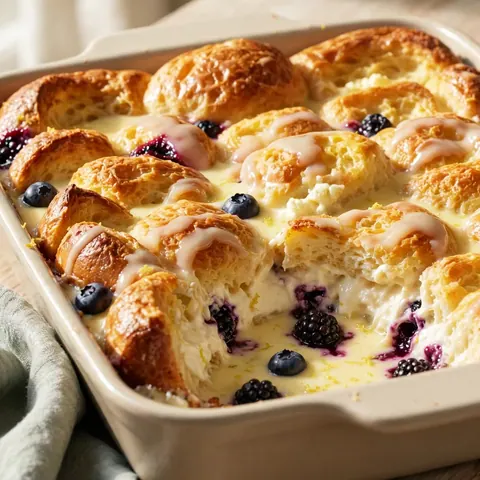
Recipe card
Lemon Blueberry Cream Cheese French Toast Bake
This effortless French toast bake combines cubed brioche with pockets of creamy lemon cream cheese and bursts of blueberries for a perfect brunch. Note: This recipe features a soft custard center; use pasteurized eggs for vulnerable individuals.
- Prep
- Cook
- Rest
- Total
- Servings
- one 9x13 inch casserole
Ingredients
Casserole
- 400 grams cubed brioche
- 150 grams cubed cream cheese
- 150 grams fresh blueberries
Custard
- 5 large eggs
- 250 milliliters whole milk
- 1 tbsp lemon zest
Glaze
- 1/2 cup confectioners' sugar
- 1 tbsp Meyer lemon juice
Instructions
Prepare the casserole base. Butter a 9x13 inch baking dish thoroughly to prevent sticking. Add the cubed brioche, cubed cream cheese, and fresh blueberries to the dish. Toss the ingredients gently to ensure an even distribution of the cream cheese and fruit throughout the bread cubes.
Whisk the custard. In a separate medium mixing bowl, combine the eggs, milk, and lemon zest. Whisk the mixture vigorously until the eggs are fully incorporated into the milk and the lemon zest is well distributed throughout the yellow liquid base.
Pour and soak. Pour the custard mixture evenly over the brioche, cream cheese, and blueberries in the baking dish. Press down gently on the bread cubes with a spatula to ensure every piece is thoroughly soaked with the custard. Cover the dish and allow it to rest in the refrigerator if preparing ahead.
Bake the casserole. Preheat your oven to 350°F (180°C). Place the baking dish in the center of the oven and bake for 35 minutes. To ensure the eggs are cooked through, the internal temperature of the custard must reach 160°F (71°C). The top cubes should be toasted to a golden brown.
Prepare the glaze. While the casserole rests, mix the confectioners' sugar and Meyer lemon juice in a small bowl. Stir until the mixture is smooth and reaches a pourable consistency. If the glaze is too thick, add a few drops of water; if too thin, add more sugar.
Drizzle and serve. Drizzle the prepared lemon glaze over the warm, steaming casserole. Use a large spoon to lift a portion, ensuring each serving includes plenty of the creamy custard, toasted brioche, and jammy blueberries from the bottom of the dish.
Allergens: Gluten, Eggs, Milk
Nutrition (estimated, per serving)
- Calories
- 420 kcal
- Protein
- 12.5 g
- Carbs
- 45 g
- Fat
- 21 g
- Fiber
- 1.5 g
- Sugar
- 18 g
- Sodium
- 380 mg
Estimates only: values vary with brands, substitutions and portion sizes.
Recipe by EasyCooks Kitchen · easycooksrecipes.com
Share this recipe
Send it to someone who’d love it, or save it for later.
Spotted a mistake in this recipe? Let us know.
Keep cooking


