Decadent Crème Brûlée French Toast with a Glassy Caramel Crust
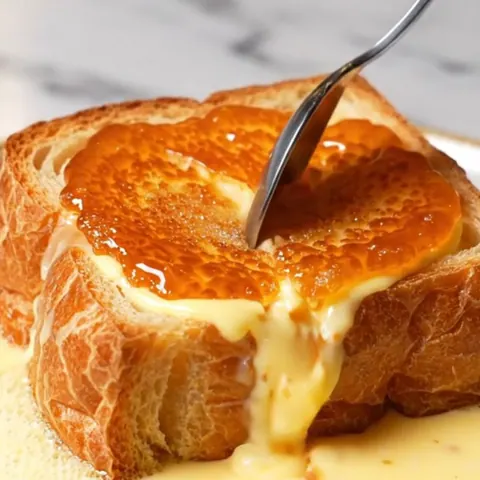
Experience the ultimate breakfast indulgence with this crème brûlée French toast. Thick brioche soaks in rich vanilla custard before searing to a golden brown, finished with a shatteringly crisp, caramelized sugar crust.
Published 8 min read
- Total time
- Prep
- Cook
- Serves
- 1
- Makes 1 thick slice
- Cuisine
- French-inspired
- Calories
- 580
- per serving, estimated

On this page16 sections
Transform your morning routine into a culinary event with this decadent crème brûlée French toast. By combining the rich, creamy interior of a classic French custard with the dramatic, shatter-crisp finish of a blowtorched sugar crust, this dish elevates the humble slice of brioche into something truly extraordinary. It is the perfect balance of textures and flavors for anyone seeking a sophisticated breakfast that feels like a special occasion served right in the comfort of a home kitchen.
The magic of this recipe lies in the contrast between the molten, vanilla-infused center and the glassy, caramelized exterior. Using thick-cut brioche allows the bread to soak up the luxurious egg yolk and heavy cream mixture without losing its structural integrity. The addition of a Tahitian vanilla bean provides an aromatic depth that elevates the custard, while the final torching step creates that iconic, loud crack when you break through the surface with a spoon. This is not just toast; it is a meticulously crafted breakfast masterpiece.
The appeal
Why you’ll love it
The method of soaking day-old brioche in a rich, yolk-heavy custard allows for maximum moisture absorption. By using day-old bread, the toast maintains a sturdy crumb that resists falling apart during the cooking process. The high ratio of egg yolks to heavy cream ensures a decadent, velvety mouthfeel that defines the authentic crème brûlée experience, creating a base that is both stable and incredibly flavorful.
Searing in clarified butter at a controlled temperature of 175°C (347°F) allows the exterior to develop a deep, golden crust while ensuring the custard center reaches a safe, fully cooked state. The final application of heat via a blowtorch caramelizes the sugar instantly, creating that signature glassy layer that provides the essential sensory contrast to the soft, warm bread underneath, ensuring every bite is perfectly balanced.
What you need
Ingredients
Makes 1 thick slice.
Custard
Toast
Cooking
Topping
Contains:
- Gluten
- Eggs
- Milk
Tools
Equipment
- Whisk
- Mixing bowl
- Shallow dish
- Non-stick skillet
- Kitchen blowtorch
Swaps
Substitutions
Instead ofTahitian vanilla bean
Use1 teaspoon high-quality vanilla bean paste or pure vanilla extract
Instead ofClarified butter
UseUnsalted butter or ghee
Good to know
Notes
Choosing the right brioche is critical for this recipe. Look for a loaf that is dense and slightly stale, as it will hold the custard better than fresh, airy bread. If the bread is too fresh, toast it lightly in a low-temperature oven for a few minutes before soaking to dry out the crumb slightly. Tahitian vanilla bean is preferred for its floral, fruity notes, but any high-quality vanilla bean will provide excellent results.
A kitchen blowtorch is the only tool that will achieve the authentic, glass-like crust required for this dish. If you do not have one, the broiler can be used as a last resort, though it will not provide the same precision and may soften the bread. Always use a non-stick skillet to ensure the delicate, custard-soaked bread does not adhere to the surface during the searing process, maintaining the integrity of the soufflé-like puff.
Prep
Before you start
Before beginning, ensure your brioche is sliced to a uniform 4-centimeter thickness. If the bread is fresh, place it on a wire rack for an hour to dry out. Prepare your custard base by whisking the ingredients until completely emulsified. Have your blowtorch ready, filled, and tested. Clear your workspace to allow for the quick transition from the skillet to the plate, as the caramelization step requires your full attention to achieve the perfect, even finish without burning the sugar.
Step by step
Method
Phase 1
Custard Preparation and Soaking
Step 1: Prepare the Custard
In a mixing bowl, combine the egg yolks, heavy cream, sugar, and the seeds from the scraped Tahitian vanilla bean pod. Whisk the mixture thoroughly until the ingredients are fully incorporated and the custard is smooth and uniform in texture.
You’ll need: egg yolks · heavy cream · sugar · scraped Tahitian vanilla bean pod
Look for: The mixture should be perfectly smooth and pale yellow with visible specks of vanilla bean.
Tip: Ensure the eggs are at room temperature to help the custard emulsify more effectively.
Step 2: Soak the Brioche
Place the 4-centimeter thick slice of day-old brioche into a shallow dish. Pour the prepared custard over the bread and let it soak for exactly two minutes. Carefully flip the bread halfway through the soaking process to ensure the custard penetrates deeply into the center.
You’ll need: thick slice of day-old brioche
Look for: The bread should feel heavy and saturated but still hold its structure without falling apart.
Tip: Using day-old bread is essential as it absorbs the custard without turning into mush.
Checkpoint
The custard should be perfectly emulsified with tiny, visible specks of vanilla bean throughout. The brioche slice should be fully saturated, heavy, and holding its shape well without showing signs of breaking apart. Check that the bread is completely submerged to ensure even flavor distribution before it moves to the skillet.
Phase 2
Searing the Brioche
Step 3: Sear the Brioche
Melt the clarified butter in a non-stick skillet over medium heat at 175°C (347°F). Once the butter is shimmering, carefully add the soaked brioche slice. Cook for 3 minutes per side until the exterior is deeply golden brown and the interior is cooked through to a safe internal temperature of 160°F (71°C) for the egg-based custard.
You’ll need: clarified butter
Internal temperature 160°F (71°C)
Look for: The bread should be soufflé-puffed and firm to the touch.
Tip: Maintain a steady heat to prevent the exterior from burning before the center is cooked.
Checkpoint
The toast should be a deep, rich golden brown on both sides. It will feel firm to the touch and appear slightly soufflé-puffed, indicating the custard has set properly. Ensure the internal temperature has reached 160°F (71°C) before removing it from the skillet to guarantee safety and the correct texture.
Phase 3
Caramelizing the Crust
Step 4: Caramelize the Crust
Remove the cooked French toast from the skillet and place it on a heat-safe plate. Evenly sprinkle the remaining 20 grams of sugar across the top surface of the toast. Using a kitchen blowtorch, carefully move the flame over the sugar in a steady motion until it melts and transforms into a bubbling, crackling amber glass crust.
You’ll need: sugar
Look for: The sugar will turn from a white powder into a deep, glossy amber color.
Tip: Keep the torch moving to ensure even caramelization without scorching the sugar into a bitter state.
Checkpoint
The sugar on top should transform from a crystalline white to a uniform, glossy, and bubbling amber liquid. Once the torch is removed, the layer will solidify into a brittle, glass-like surface. It should smell intensely fragrant, like toasted sugar and vanilla, with no burnt or acrid odors present.
Doneness
How to tell it’s done
The French toast is done when it is puffed and golden brown, with the custard center reaching an internal temperature of 160°F (71°C) to ensure the eggs are fully cooked. The surface should be firm and spring back slightly when pressed. After torching, the sugar must be completely melted into a smooth, amber-colored layer that hardens into a glass-like shell upon cooling for a few seconds. The final test is the audible crack when tapped with a spoon.
Avoid these
Common mistakes
A common mistake is using bread that is too fresh, which results in a soggy, unappealing texture. Another error is heating the skillet too high, which burns the exterior before the custard in the middle can set. Ensure the heat is consistent at 175°C (347°F). Finally, do not rush the torching process; holding the flame in one spot for too long will result in charred, bitter sugar rather than a sweet, glassy caramel crust.
Cook safely
Food safety
Safe internal temperatures
Cook to at least these temperatures, measured with an instant-read thermometer in the thickest part.
| Food | Minimum internal temperature |
|---|---|
| Egg dishes | 160°F (71°C) |
Better results
Tips
Tip 1
For the best results, use a high-quality non-stick pan to ensure the delicate toast does not tear when flipping. If the custard mixture seems too thick, add a small splash of heavy cream to adjust the consistency. Always whisk the custard base thoroughly before each use to keep the vanilla seeds and sugar evenly distributed throughout the mixture, ensuring a consistent flavor in every single bite of the finished toast.
Tip 2
If you are serving multiple people, keep the finished French toast in a warm oven at a very low setting while you prepare the remaining slices. Do not apply the sugar and torch it until the very last moment before serving, as the moisture from the toast will cause the caramel crust to soften if it sits for too long. Timing is the secret to maintaining the signature crackle of the topping.
Make it yours
Variations
Spiced Crème Brûlée Toast
Add a pinch of ground cinnamon or freshly grated nutmeg to the custard base before whisking to introduce a warm, aromatic spice profile that complements the vanilla bean perfectly.
Citrus Infused Toast
Incorporate a teaspoon of freshly grated orange or lemon zest into the custard mixture to add a bright, refreshing citrus note that cuts through the richness of the cream.
On the table
Serving suggestions
Serve this French toast immediately while the caramel crust is still warm and brittle. It is best enjoyed on its own to highlight the delicate vanilla and buttery brioche flavors, though a side of fresh berries can provide a nice acidic contrast to the richness of the custard. Place the toast on a warm plate to help keep the bottom from cooling too quickly, ensuring the center stays molten and delicious.
The experience of this dish is all about the sound and the interplay of temperatures. Encourage the diner to use a spoon to crack the top before eating. If serving as part of a larger brunch spread, ensure this is the final item prepared so that the caramel is at its peak crispness. Its presentation should be simple and elegant, letting the beautiful, glossy amber finish of the caramelized sugar take center stage.
Leftovers
Storage & make-ahead
- Fridge
- Keep raw custard in the refrigerator for up to 24 hours. Do not refrigerate the finished toast.
- Reheat
- Reheating is not recommended for this dish as the caramel crust will lose its crispness and the texture will be compromised.
Store any leftover custard base in an airtight container in the refrigerator for up to 24 hours. The French toast itself is best enjoyed immediately after preparation, as the caramel crust will lose its crispness and become sticky over time. Do not attempt to store the finished, torched toast as it will not maintain its texture or quality.
Make ahead
You can prepare the custard base up to 24 hours in advance and keep it refrigerated. However, do not soak the bread until you are ready to cook, as the brioche will become overly saturated and lose its structure if left in the custard for more than the recommended two minutes. Keep all components chilled until the moment you are ready to assemble and cook the dish.
Questions
Frequently asked questions
Can the brioche be replaced with another type of bread?
Brioche is recommended for its high butter and egg content, which provides the necessary richness. If unavailable, use a thick-cut, high-quality challah or a dense, slightly stale white bread that can handle the custard soak without falling apart.
Why does the caramel crust become soft after a few minutes?
The caramel crust is hygroscopic, meaning it absorbs moisture from the air and the warm toast underneath. This is why it is essential to torch the sugar immediately before serving to ensure the best possible texture and that signature crackle.
Is it necessary to use a kitchen blowtorch?
Yes, a kitchen blowtorch is the only way to achieve the precise, rapid caramelization required for a true crème brûlée crust. Other methods like broiling often heat the toast too much and result in a soft, uneven finish rather than a hard, glassy shell.
Everything in one place: the recipe card below gathers the ingredients, steps and estimated nutrition, ready to print.
Recipe card
Decadent Crème Brûlée French Toast with a Glassy Caramel Crust
Experience the ultimate breakfast indulgence with this crème brûlée French toast. Thick brioche soaks in rich vanilla custard before searing to a golden brown, finished with a shatteringly crisp, caramelized sugar crust.
- Prep
- Cook
- Total
- Servings
- 1 thick slice
Ingredients
Custard
- 4 egg yolks
- 180 ml heavy cream
- 25 g sugar
- 1 scraped Tahitian vanilla bean pod
Toast
- 1 thick slice of day-old brioche
Cooking
- 25 g clarified butter
Topping
- 20 g sugar
Instructions
Prepare the Custard. In a mixing bowl, combine the egg yolks, heavy cream, sugar, and the seeds from the scraped Tahitian vanilla bean pod. Whisk the mixture thoroughly until the ingredients are fully incorporated and the custard is smooth and uniform in texture.
Soak the Brioche. Place the 4-centimeter thick slice of day-old brioche into a shallow dish. Pour the prepared custard over the bread and let it soak for exactly two minutes. Carefully flip the bread halfway through the soaking process to ensure the custard penetrates deeply into the center.
Sear the Brioche. Melt the clarified butter in a non-stick skillet over medium heat at 175°C (347°F). Once the butter is shimmering, carefully add the soaked brioche slice. Cook for 3 minutes per side until the exterior is deeply golden brown and the interior is cooked through to a safe internal temperature of 160°F (71°C) for the egg-based custard.
Caramelize the Crust. Remove the cooked French toast from the skillet and place it on a heat-safe plate. Evenly sprinkle the remaining 20 grams of sugar across the top surface of the toast. Using a kitchen blowtorch, carefully move the flame over the sugar in a steady motion until it melts and transforms into a bubbling, crackling amber glass crust.
Allergens: Gluten, Eggs, Milk
Nutrition (estimated, per serving)
- Calories
- 580 kcal
- Protein
- 12.5 g
- Carbs
- 42 g
- Fat
- 41 g
- Fiber
- 0.5 g
- Sugar
- 28 g
- Sodium
- 320 mg
Estimates only: values vary with brands, substitutions and portion sizes.
Recipe by EasyCooks Kitchen · easycooksrecipes.com
Share this recipe
Send it to someone who’d love it, or save it for later.
Spotted a mistake in this recipe? Let us know.
Keep cooking


