Rich Custard Croissant Brunch Bake with Pecan Praline
Transform day-old buttery croissants into a decadent, custardy brunch casserole topped with a crunchy, caramelized brown-sugar pecan praline layer. Note: This dish contains eggs that are served soft and custardy; use pasteurized eggs for vulnerable individuals.
Published 13 min read
- Total time
- Prep
- Cook
- Rest
- Serves
- 6
- Makes one 9x9 inch baking dish
- Cuisine
- French-American
- Calories
- 520
- per serving, estimated

On this page16 sections
Elevate your weekend brunch with this incredibly decadent croissant casserole. By utilizing day-old buttery croissants, you create a perfect foundation that soaks up a rich, velvety custard mixture. Topped with a crunchy, caramelized brown-sugar pecan praline, this dish offers a sophisticated contrast of textures that makes it a true crowd-pleaser for any morning gathering. Whether you are hosting friends or simply treating your family, this recipe delivers restaurant-quality results with minimal effort and maximum impact every single time.
This recipe transforms standard store-bought croissants into a luxurious brunch centerpiece. The process begins by arranging torn croissant pieces in a baking dish, creating a base that is both light and airy yet capable of holding a substantial amount of custard. The combination of eggs, heavy cream, and maple syrup provides a deep, rich flavor profile that permeates every layer. Finished with a sweet, nutty pecan praline topping, this casserole achieves a perfect balance of crispy, golden edges and a warm, creamy center that delights the palate with every delicious bite.
The appeal
Why you’ll love it
The method of soaking day-old croissants is superior because the drier, slightly stale bread acts like a sponge for the custard. Unlike fresh bread, which can become soggy too quickly, day-old croissants maintain their structural integrity while absorbing the rich liquid. This ensures that the base remains tender and flavorful without losing its signature buttery essence during the baking process, resulting in a cohesive dish that feels perfectly balanced.
The combination of a high-fat custard base and a sugary pecan topping creates a dual-texture experience that is essential for a high-quality casserole. The heavy cream stabilizes the eggs, preventing the custard from splitting and ensuring a smooth, uniform texture throughout. Meanwhile, the brown sugar and butter in the praline topping melt into the pecans, creating a caramelized layer that provides a satisfying snap against the soft, custard-soaked interior of the pastry.
What you need
Ingredients
Makes one 9x9 inch baking dish.
Casserole
Custard
Topping
Serving
Contains:
- Gluten
- Eggs
- Milk
- Tree nuts
Served raw or lightly cooked
The eggs in this dish are served soft and custardy. Use pasteurised eggs for pregnant women, young children, older adults and anyone with a weakened immune system.
Tools
Equipment
- Ceramic baking dish
- Whisk
- Mixing bowl
- Silicone spatula
- Serrated knife
- Measuring cups and spoons
Swaps
Substitutions
Instead ofHeavy cream
UseHalf-and-half or whole milk for a lighter custard base
Instead ofPecans
UseWalnuts or sliced almonds for a similar nutty crunch
Instead ofMaple syrup
UseHoney or agave nectar for a different sweetness profile
Instead ofButter croissants
UseDay-old brioche bread or thick-sliced challah bread
Good to know
Notes
Choosing the right croissants is vital for the success of this dish. Opt for high-quality, all-butter croissants, as their fat content contributes significantly to the final flavor and texture. If possible, purchase them a day in advance to ensure they are slightly dry, which allows them to better absorb the custard without disintegrating. If you can only find fresh croissants, you can lightly toast them in the oven for a few minutes to achieve the desired texture.
The choice of equipment also plays a role in how the casserole bakes. A ceramic baking dish is ideal because it provides even heat distribution, which is crucial for achieving a perfectly set custard. If you use a metal pan, be mindful that the edges may brown more rapidly. Always ensure your oven is fully preheated before placing the dish inside, as a consistent temperature is necessary to ensure the custard sets properly and the topping caramelizes evenly.
Prep
Before you start
Before you begin, ensure that your oven is preheated to 375°F (190°C) to ensure an even bake. Have all your ingredients measured and ready, especially the heavy cream and maple syrup, as the assembly process moves quickly once you start. If your butter is very cold, soften it briefly in the microwave to make it easier to mix with the brown sugar and pecans. Ensure your ceramic baking dish is lightly greased with butter or non-stick spray to prevent any sticking, which makes for easier serving and cleanup later on.
Step by step
Method
Phase 1
Assembly and Soaking
Step 1: Prepare the Croissant Base
Using a serrated knife, tear or cut the six flaky butter croissants into halves. Arrange these pieces evenly across the bottom of a buttered ceramic baking dish. Ensure the pieces are snug so they can effectively soak up the custard mixture during the preparation phase before baking. This creates a uniform foundation that will absorb the rich custard evenly throughout the entire dish.
You’ll need: flaky butter croissants
Look for: The dish should be filled with an even layer of croissant pieces that touch each other to create a uniform base.
Tip: Using day-old croissants is ideal because their slightly drier texture absorbs the custard mixture much better than fresh, soft pastries.
Step 2: Whisk the Custard Mixture
In a medium mixing bowl, whisk together the four large eggs, 250 milliliters of heavy cream, and 30 milliliters of maple syrup until the mixture is completely uniform and smooth. Ensure the eggs are fully incorporated into the cream to prevent any streaks in the final baked dish. A thorough whisking ensures the custard base remains consistent and velvety throughout the baking process.
You’ll need: large eggs · heavy cream · maple syrup
Look for: The mixture should be a consistent pale yellow color with no visible streaks of egg white or yolk.
Tip: Whisking thoroughly at this stage is essential for a smooth, consistent custard that evenly coats every piece of the croissant.
Step 3: Soak the Croissants
Pour the custard mixture evenly over the arranged croissant pieces in the ceramic baking dish. Use a silicone spatula to gently press down on the croissants, ensuring that every piece is fully saturated by the liquid. Allow the mixture to rest briefly so the croissants become tender and fully infused. This soaking period is vital for achieving the desired creamy texture in every single bite.
You’ll need: flaky butter croissants · large eggs · heavy cream · maple syrup
Look for: The croissants should look deeply soaked and heavy, having absorbed most of the liquid custard mixture from the dish.
Tip: Gently pressing the croissants down helps them absorb the custard faster and ensures the entire dish bakes at a consistent speed.
Checkpoint
At this stage, the croissants should be neatly arranged in the baking dish and fully submerged in the custard mixture. The kitchen should smell faintly of fresh butter and maple. Check to ensure that every piece of croissant is saturated; if some pieces seem dry, gently press them down with a spatula. The mixture should look moist and ready for the oven. This preparation is critical because it allows the bread to hydrate properly, ensuring a consistent texture throughout the entire casserole once it is baked.
Phase 2
Adding the Praline Topping
Step 4: Prepare the Pecan Praline Topping
In a small bowl, combine the 80 grams of chopped pecans, 40 grams of brown sugar, and 30 grams of softened butter. Mix these ingredients together until the butter is evenly distributed and the pecans are thoroughly coated in the sugar and butter mixture, creating a crumbly, uniform topping. This mixture will caramelize in the oven to provide a delightful, crunchy contrast to the soft, tender croissant base.
You’ll need: chopped pecans · brown sugar · unsalted butter
Look for: The mixture should resemble a coarse, damp crumble where the brown sugar and butter have evenly coated the chopped pecans.
Tip: If the butter is too cold, microwave it for a few seconds to soften it, which makes blending the topping much easier.
Step 5: Add the Topping
Sprinkle the prepared pecan praline mixture evenly over the soaked croissants in the baking dish. Spread it out with your fingers or a spoon to ensure every part of the casserole is covered, which will create a beautiful, crispy, and caramelized crust once the dish is finished baking in the oven. An even distribution ensures that every serving contains the perfect balance of crunch and creaminess.
You’ll need: chopped pecans · brown sugar · unsalted butter
Look for: The top of the casserole should be evenly covered with a layer of the brown sugar and pecan mixture.
Tip: Distributing the topping evenly ensures that every serving gets a perfect balance of the crunchy praline and the soft, custardy interior.
Checkpoint
The casserole should now be topped with an even layer of the pecan, brown sugar, and butter crumble. The topping should look like a coarse, dark sand that covers the entire surface of the croissants. Ensure that the edges are covered to promote uniform caramelization. Check that the topping is not too thick in one area, as this could prevent the center from baking evenly. The dish is now ready for the oven, and the anticipation of the sweet, nutty aroma is building as the components start to meld together.
Phase 3
Baking to Golden Perfection
Step 6: Bake the Casserole
Place the baking dish into the preheated oven at 375°F (190°C). Bake for 25 minutes until the casserole is puffed and the topping has caramelized into a deep, rich golden brown. To ensure the egg-based custard is fully cooked for safety, the center should reach an internal temperature of 160°F (71°C). This temperature ensures the custard is set while maintaining its luxurious, creamy consistency.
You’ll need: flaky butter croissants · large eggs · heavy cream · maple syrup · chopped pecans · brown sugar · unsalted butter
Internal temperature 160°F (71°C)
Look for: The top should be puffed and deeply browned, while the center should feel firm to the touch.
Tip: If the pecans start to darken too quickly, you can loosely tent the dish with aluminum foil for the final few minutes.
Step 7: Finish and Serve
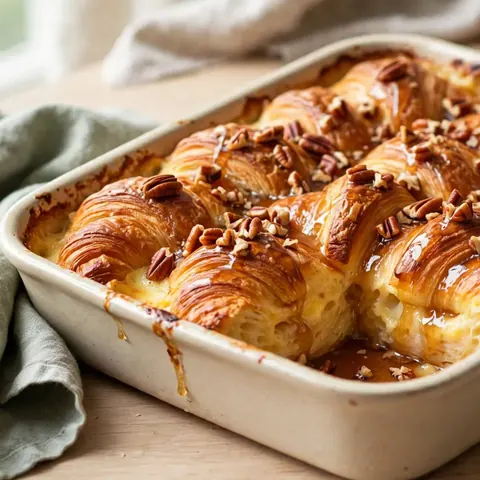
Remove the baking dish from the oven and allow it to rest for at least 5 minutes before serving. Drizzle the warm bourbon maple syrup over the crackling croissant peaks while they are still warm to enhance the flavors. Serve immediately while the texture is at its peak of crispiness and creaminess. The resting period allows the custard to settle, making it easier to portion.
You’ll need: bourbon maple syrup
Look for: The syrup should glaze the top of the casserole, and the dish should be warm enough to serve immediately after the resting period.
Tip: Resting the casserole is important, as it allows the custard to set firmly, making it much easier to scoop into individual portions.
Checkpoint
The casserole is finished when it has puffed up significantly and the top layer of pecans and sugar has transformed into a deep, glossy, golden-brown crust. The aroma of caramelized sugar and toasted pecans should be prominent in the kitchen. Check that the center is firm to the touch and has reached 160°F (71°C). The edges should be crispy, while the interior remains moist and creamy. It should look like a decadent, professional-grade brunch dish that is ready to be drizzled with syrup and served warm.
Doneness
How to tell it’s done
The croissant bake is done when the top is puffed and a deep, rich golden brown. The center should be completely set, with no signs of liquid custard remaining. When you insert a knife into the center, it should come out clean. The internal temperature must reach 160°F (71°C) to ensure the egg-based custard is fully cooked and safe to consume. Allow the dish to rest for 5 minutes after removing it from the oven, as this helps the layers settle and makes it much easier to portion for your guests.
Avoid these
Common mistakes
A common mistake is using croissants that are too fresh, which can lead to a mushy texture rather than a creamy, custard-soaked one. Another error is failing to fully whisk the egg and cream mixture, which can result in pockets of unmixed egg white. Ensure you press the croissants down into the liquid so they are fully saturated. Finally, avoid rushing the baking process; if the casserole is not fully set in the center, it will be difficult to serve and will lack the desired structure.
Cook safely
Food safety
Safe internal temperatures
Cook to at least these temperatures, measured with an instant-read thermometer in the thickest part.
| Food | Minimum internal temperature |
|---|---|
| Egg dishes | 160°F (71°C) |
Raw or lightly cooked ingredients
The eggs in this dish are served soft and custardy. Use pasteurised eggs for pregnant women, young children, older adults and anyone with a weakened immune system.
Better results
Tips
Tip 1
For an even more intense flavor, you can toast the chopped pecans in a dry pan for 2 to 3 minutes before mixing them with the brown sugar and butter. This draws out the natural oils in the nuts and adds a deeper, nuttier profile to the praline topping. Be careful not to let them burn, as they can transition from toasted to charred very quickly. Once cooled slightly, they will provide the perfect crunch contrast to the soft, custardy interior of the croissants.
Tip 2
When serving, consider adding a side of fresh berries or a dollop of lightly whipped cream to cut through the richness of the custard and praline. The acidity of the berries complements the sweetness of the maple syrup and brown sugar perfectly. If you are serving this for a larger crowd, you can easily double the recipe and use two separate baking dishes, which ensures that the heat distribution remains consistent and the crust stays perfectly crispy across every single portion.
Make it yours
Variations
Chocolate Pecan Croissant Bake
Add 1/2 cup of high-quality dark chocolate chips to the croissant layers before pouring over the custard. The melted chocolate creates a rich, indulgent contrast with the maple and pecan flavors, making this variation a favorite for those who enjoy a touch of cocoa in their brunch dishes.
Spiced Apple Croissant Bake
Incorporate 1 cup of thinly sliced apples tossed in cinnamon and nutmeg between the croissant layers. The fruit adds a bright, slightly tart note that balances the richness of the custard, while the warm spices enhance the comforting, autumnal profile of the dish for a cozy breakfast.
Orange Zest and Vanilla
Whisk 1 tablespoon of freshly grated orange zest and 1 teaspoon of pure vanilla extract into the custard mixture. The bright, citrusy aroma lifts the heaviness of the cream and butter, providing a refreshing finish that makes this version feel lighter and more sophisticated for a brunch gathering.
Savory Bacon and Gruyere
Replace the maple syrup and pecan topping with crispy chopped bacon and 1 cup of shredded Gruyere cheese. This savory twist creates a hearty, salty-sweet profile that is perfect for those who prefer a non-dessert brunch option, while still maintaining the signature flaky, custardy texture of the original.
On the table
Serving suggestions
This dish is best served warm, shortly after it has rested, when the contrast between the crispy praline crust and the soft, custardy center is most pronounced. Use a large spoon or a spatula to carefully lift out portions, ensuring that each guest gets a generous amount of both the soaked croissant base and the caramelized pecan topping. Drizzling the warm bourbon maple syrup over each serving right before it reaches the table adds a final touch of sophistication that elevates the entire dining experience.
Because the casserole is quite rich, it pairs beautifully with simple sides like fresh fruit, a light salad, or a cup of strong, black coffee. The acidity of fresh citrus or berries helps to balance the sweetness, while the coffee grounds the flavors and provides a nice contrast to the decadence of the dish. Remember to keep the syrup warm so that it flows easily over the peaks of the croissant, ensuring that every bite is perfectly coated and absolutely delicious for your guests.
Leftovers
Storage & make-ahead
- Fridge
- Store in an airtight container for up to 3 days. Ensure the casserole has cooled completely to room temperature before covering it for the refrigerator.
- Freezer
- Wrap individual portions tightly in plastic wrap followed by aluminum foil. Freeze for up to 1 month. Thaw overnight in the refrigerator before reheating.
- Reheat
- Reheat portions in a 350°F oven for 10-15 minutes until warmed through and the top regains its crispiness. Avoid using the microwave if possible.
If you have leftovers, allow the casserole to cool completely at room temperature for no more than 2 hours before transferring it to the refrigerator. Cover the dish tightly with plastic wrap or transfer the pieces to an airtight container to prevent them from drying out or absorbing other odors from the fridge. Properly stored, the casserole will maintain its flavor and quality for up to three days, making it an excellent option for enjoying a quick, luxurious breakfast throughout the week.
Make ahead
You can assemble the base of the casserole the night before, but wait to add the pecan topping until just before baking. Assemble the croissant and custard layers, cover the dish securely, and keep it in the refrigerator overnight. This allows the croissants to soak thoroughly, resulting in an even creamier texture. In the morning, prepare the pecan topping, sprinkle it over the dish, and bake as directed. This method saves significant time, making it ideal for stress-free weekend mornings or hosting brunch for guests.
Questions
Frequently asked questions
Can this croissant bake be made ahead of time?
Yes, you can assemble the base of the casserole the night before. Simply prepare the croissant and custard layers, cover the dish tightly, and store it in the refrigerator overnight. This allows the croissants to soak thoroughly, which actually improves the final texture. Just be sure to add the pecan topping fresh in the morning right before you place the dish in the oven to ensure it stays crunchy and does not become soggy during the overnight refrigeration process.
Why is it important to use day-old croissants?
Using day-old croissants is crucial because they are slightly drier than fresh pastries. This lack of moisture allows the bread to act like a sponge, absorbing the custard mixture more effectively without becoming mushy. Fresh croissants contain more moisture, which can cause them to break down too quickly when soaked. By using slightly stale bread, you ensure that the casserole maintains a perfect balance of a tender, custard-infused interior and a crispy, golden-brown top layer, which is essential for a high-quality brunch bake.
What is the best way to tell when the casserole is fully baked?
The casserole is fully baked when the top is puffed and has turned a deep, rich golden brown. The center should feel firm when gently pressed and not show any signs of liquid custard. For the most accurate result, use a kitchen thermometer to check the internal temperature in the center; it should reach 160°F (71°C). This ensures the eggs are fully set and safe to eat, while maintaining a creamy, luxurious consistency that makes this dish so appealing for any special morning meal.
Can other nuts be used instead of pecans?
Certainly, you can substitute other nuts if you prefer. Walnuts or sliced almonds work exceptionally well in this recipe and provide a similar level of crunch and flavor. If you choose to use walnuts, they will offer a slightly earthier taste, while almonds will provide a milder, more delicate crunch. Regardless of the nut you choose, ensure they are chopped to a similar size as the pecans to guarantee an even distribution and consistent caramelization across the entire surface of the croissant casserole.
How should leftovers be stored and reheated?
Leftovers should be cooled to room temperature and then stored in an airtight container in the refrigerator for up to three days. To reheat, the best method is to place portions in a preheated 350°F (175°C) oven for about 10 to 15 minutes. This helps the topping regain its original crispiness. Avoid using the microwave, as it tends to soften the pastry and topping, which can compromise the delightful contrast of textures that makes this dish so enjoyable to eat even after it has been stored.
Everything in one place: the recipe card below gathers the ingredients, steps and estimated nutrition, ready to print.
Recipe card
Rich Custard Croissant Brunch Bake with Pecan Praline
Transform day-old buttery croissants into a decadent, custardy brunch casserole topped with a crunchy, caramelized brown-sugar pecan praline layer. Note: This dish contains eggs that are served soft and custardy; use pasteurized eggs for vulnerable individuals.
- Prep
- Cook
- Rest
- Total
- Servings
- one 9x9 inch baking dish
Ingredients
Casserole
- 6 flaky butter croissants, torn into halves
Custard
- 4 large eggs, whisked
- 250 ml heavy cream
- 30 ml maple syrup
Topping
- 80 g chopped pecans
- 40 g brown sugar
- 30 g unsalted butter, softened
Serving
- warm bourbon maple syrup, for serving
Instructions
Prepare the Croissant Base. Using a serrated knife, tear or cut the six flaky butter croissants into halves. Arrange these pieces evenly across the bottom of a buttered ceramic baking dish. Ensure the pieces are snug so they can effectively soak up the custard mixture during the preparation phase before baking. This creates a uniform foundation that will absorb the rich custard evenly throughout the entire dish.
Whisk the Custard Mixture. In a medium mixing bowl, whisk together the four large eggs, 250 milliliters of heavy cream, and 30 milliliters of maple syrup until the mixture is completely uniform and smooth. Ensure the eggs are fully incorporated into the cream to prevent any streaks in the final baked dish. A thorough whisking ensures the custard base remains consistent and velvety throughout the baking process.
Soak the Croissants. Pour the custard mixture evenly over the arranged croissant pieces in the ceramic baking dish. Use a silicone spatula to gently press down on the croissants, ensuring that every piece is fully saturated by the liquid. Allow the mixture to rest briefly so the croissants become tender and fully infused. This soaking period is vital for achieving the desired creamy texture in every single bite.
Prepare the Pecan Praline Topping. In a small bowl, combine the 80 grams of chopped pecans, 40 grams of brown sugar, and 30 grams of softened butter. Mix these ingredients together until the butter is evenly distributed and the pecans are thoroughly coated in the sugar and butter mixture, creating a crumbly, uniform topping. This mixture will caramelize in the oven to provide a delightful, crunchy contrast to the soft, tender croissant base.
Add the Topping. Sprinkle the prepared pecan praline mixture evenly over the soaked croissants in the baking dish. Spread it out with your fingers or a spoon to ensure every part of the casserole is covered, which will create a beautiful, crispy, and caramelized crust once the dish is finished baking in the oven. An even distribution ensures that every serving contains the perfect balance of crunch and creaminess.
Bake the Casserole. Place the baking dish into the preheated oven at 375°F (190°C). Bake for 25 minutes until the casserole is puffed and the topping has caramelized into a deep, rich golden brown. To ensure the egg-based custard is fully cooked for safety, the center should reach an internal temperature of 160°F (71°C). This temperature ensures the custard is set while maintaining its luxurious, creamy consistency.
Finish and Serve. Remove the baking dish from the oven and allow it to rest for at least 5 minutes before serving. Drizzle the warm bourbon maple syrup over the crackling croissant peaks while they are still warm to enhance the flavors. Serve immediately while the texture is at its peak of crispiness and creaminess. The resting period allows the custard to settle, making it easier to portion.
Allergens: Gluten, Eggs, Milk, Tree nuts
Nutrition (estimated, per serving)
- Calories
- 520 kcal
- Protein
- 9.5 g
- Carbs
- 38 g
- Fat
- 37 g
- Fiber
- 2.5 g
- Sugar
- 18 g
- Sodium
- 320 mg
Estimates only: values vary with brands, substitutions and portion sizes.
Recipe by EasyCooks Kitchen · easycooksrecipes.com
Share this recipe
Send it to someone who’d love it, or save it for later.
Spotted a mistake in this recipe? Let us know.
Keep cooking


