Authentic Crispy Chilaquiles with Smoky Guajillo Salsa
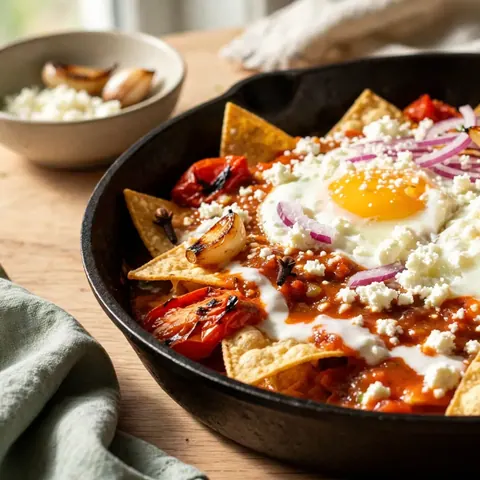
Experience the bold flavors of Mexico with these authentic crispy chilaquiles. Fried corn totopos are tossed in a vibrant, smoky guajillo salsa and topped with fresh eggs for a satisfying breakfast.
Published 11 min read
- Total time
- Prep
- Cook
- Serves
- 2
- Cuisine
- Mexican
- Calories
- 420
- per serving, estimated

On this page16 sections
Discover the secret to making legendary chilaquiles that balance intense smoky flavors with a satisfying, iconic crunch. This classic Mexican breakfast dish is a masterful display of how simple, high-quality ingredients can be transformed into a culinary experience that feels both rustic and sophisticated. By focusing on the perfect harmony between the vibrant guajillo salsa and crispy corn totopos, you can recreate the authentic spirit of a sunlit Mexican kitchen in your own home with ease.
Chilaquiles represent the heart of Mexican comfort food, offering a bold start to the day that is as delicious as it is straightforward. This recipe focuses on the traditional method of simmering crispy tortilla chips in a rich, homemade guajillo salsa, which provides a deep, smoky undertone that elevates the dish beyond standard breakfast fare. By controlling the timing of the toss, you ensure that every bite remains crunchy and perfectly coated. Topped with creamy eggs and fresh garnishes, this dish is a testament to the power of texture and vibrant, fresh flavors that define authentic Mexican cuisine.
The appeal
Why you’ll love it
The method of simmering the chips in a hot, reduced salsa ensures that the tortillas absorb the deep, earthy flavors of the guajillo chilies while the high heat of the cast-iron skillet keeps them from becoming soft. This technique relies on the rapid evaporation of the salsa, which coats the chips in a thick, glossy layer that locks in the seasoning and provides a complex, smoky foundation for the entire dish.
Using a cast-iron skillet is essential for this recipe because it provides superior thermal mass. As the salsa hits the hot iron, it creates an immediate sear that intensifies the flavors of the roasted tomatoes and garlic. This controlled heat allows for a precise cooking window of forty-five seconds, which is the exact amount of time required to achieve a perfectly coated chip that retains its structural integrity and signature crunch.
What you need
Ingredients
Makes 2 servings.
Salsa
Chilaquiles
Garnish
Contains:
- Eggs
- Milk
Served raw or lightly cooked
The eggs are prepared with a tender yolk. Pasteurized eggs are recommended for pregnant women, children, and those with weakened immune systems.
Tools
Equipment
- High-speed blender
- Cast-iron skillet
- Chef's knife
- Tongs
- Measuring cup
Swaps
Substitutions
Instead ofGuajillo chilies
UseUse dried California or New Mexico chilies for a similar mild, smoky flavor profile.
Instead ofQueso fresco
UseSubstitute with mild, crumbled feta cheese if queso fresco is not readily available.
Instead ofMexican crema
UseUse full-fat sour cream thinned with a splash of milk as a direct replacement.
Instead ofChicken broth
UseVegetable broth can be used to maintain the depth of flavor in the salsa base.
Good to know
Notes
Ingredient selection is paramount for this dish. Use high-quality corn tortillas that have been fried until golden and crisp, as they provide the necessary structure to withstand the salsa. The guajillo chilies should be rehydrated in warm water until pliable, which allows them to blend into a perfectly smooth, velvety sauce that is neither too thin nor overly thick, ensuring it clings to every surface of the tortilla triangles.
The choice of equipment, specifically the cast-iron skillet, is not just for aesthetics; it is a functional requirement. The seasoning of the skillet imparts a subtle flavor that complements the smoky salsa. If you do not have a cast-iron skillet, a heavy-bottomed stainless steel pan will work, provided it is capable of maintaining a high, consistent temperature during the brief cooking process. Always ensure your pan is clean and properly preheated before starting.
Prep
Before you start
Before you begin, ensure all ingredients are measured and ready, as the cooking process moves very quickly. Rehydrate the guajillo chilies in warm water until they are soft, then remove the stems and seeds. Roast the Roma tomatoes in a dry pan until the skins are charred and blistered. Peel the garlic cloves and have your broth measured out. Having everything organized in small bowls allows you to focus entirely on the timing of the salsa reduction and the final assembly of the dish.
Step by step
Method
Phase 1
Salsa preparation
Step 1: Prepare the smoky salsa
Place the rehydrated guajillo chilies, roasted Roma tomatoes, peeled garlic cloves, and broth into a high-speed blender. Pulse the mixture until it becomes a smooth, glossy red salsa. Ensure all ingredients are fully incorporated to achieve a uniform consistency that will coat the tortilla chips perfectly once heated in the skillet.
You’ll need: rehydrated guajillo chilies · roasted Roma tomatoes · garlic cloves · broth
Look for: The salsa should be completely smooth, vibrant red, and hold a glossy appearance without any large chunks of chili skin or tomato remains.
Tip: Roasting the tomatoes until they have slight char marks on the skin significantly enhances the depth of smokiness in the final salsa.
Step 2: Heat the skillet
Place your cast-iron skillet over medium-high heat until it reaches approximately 185°C. Ensure the surface is evenly heated so the salsa begins to simmer immediately upon contact. This high temperature is crucial for quickly reducing the salsa and maintaining the structural integrity of the tortilla chips during the brief cooking process.
Look for: The skillet is ready when a drop of water flicked onto the surface sizzles and evaporates instantly without sticking to the pan.
Tip: Use a heavy-bottomed cast-iron skillet to retain heat effectively, which ensures the salsa cooks rapidly without cooling down when the chips are added.
Checkpoint
The salsa should be a deep, vibrant crimson color with a smooth, glossy texture that coats the back of a spoon. It should smell intensely of roasted tomatoes and earthy guajillo chilies, with no visible chunks of skin remaining. Before proceeding, ensure the consistency is thick enough to cling to the chips, as a thin salsa will make the tortillas soft and compromise the integrity of the dish.
Phase 2
Cooking the chips
Step 3: Simmer and coat the chips
Pour the prepared salsa into the hot skillet. Once it begins to bubble vigorously, add the freshly fried corn tortilla triangles. Using tongs, toss the chips constantly for exactly 45 seconds. This short duration ensures the tortillas absorb the smoky flavor of the salsa while retaining a satisfying crunch that defines authentic chilaquiles.
You’ll need: corn tortilla triangles
Look for: The chips should be thoroughly coated in a thick, simmering layer of salsa, appearing glossy and bright red while still holding their crisp shape.
Tip: Do not over-toss the chips, as the goal is to coat them quickly; excessive agitation will cause the tortillas to break and lose their crunch.
Checkpoint
The chips should be uniformly coated in the reduced salsa, appearing shiny and bright. They must retain a firm, crunchy texture when tested with tongs. The smell should be savory and smoky, filling the kitchen with the aroma of toasted corn and chili. If the salsa appears to be drying out too quickly, remove the skillet from the heat immediately to prevent the chips from burning on the bottom.
Phase 3
Final assembly
Step 4: Cook the eggs
Carefully crack the eggs into the skillet over the saucy chips. Reduce the heat slightly and cover if necessary to ensure the whites set while the yolks remain creamy. Cook until the eggs reach an internal temperature of 160°F (71°C) to ensure safety. This creates a rich, velvety topping that balances the acidity of the salsa.
You’ll need: eggs
Internal temperature 160°F (71°C)
Look for: The egg whites should be completely opaque and firm, while the yolks appear glossy and tender, indicating they are cooked through to the required safety standard.
Tip: Crack the eggs into a small bowl first to ensure you remove any shell fragments before adding them directly onto the hot salsa.
Step 5: Garnish and serve
Once the eggs are cooked, remove the skillet from the heat immediately. Drizzle the Mexican crema over the top and scatter the crumbled queso fresco generously across the dish. Serve the chilaquiles immediately while the chips are still crisp and the salsa is warm to enjoy the full contrast of textures and temperatures.
You’ll need: Mexican crema · queso fresco
Look for: The final dish should look vibrant with the red salsa contrasting against the white crema and crumbly cheese, creating a visually appealing and aromatic meal.
Tip: Add the garnishes at the very last moment to prevent the crema and cheese from melting too quickly or making the chips soggy before serving.
Checkpoint
The eggs should be fully cooked with firm whites and creamy, stable yolks. The garnish of Mexican crema and queso fresco should be applied just before serving to maintain a contrast between the cool, creamy toppings and the warm, spicy salsa. The dish should look visually balanced, with the red salsa, white cheese, and yellow egg yolks creating a beautiful presentation that is ready to be served immediately.
Doneness
How to tell it’s done
The dish is considered done when the salsa has reduced to a thick, clinging consistency that coats the chips without pooling at the bottom of the skillet. The eggs must be cooked through to an internal temperature of 160°F (71°C). At this point, the egg whites will be opaque and firm, while the yolks maintain a creamy, tender texture. The tortilla chips should still feel rigid and crunchy to the touch, indicating they have been cooked for the correct amount of time.
Avoid these
Common mistakes
A common mistake is using tortillas that are not fried enough, which leads to a soggy final dish. Another error is over-simmering the chips; exceeding the forty-five-second mark will cause the corn to break down and turn mushy. Additionally, overcrowding the skillet can cause the temperature to drop, preventing the salsa from reducing properly. Always ensure the skillet is hot enough before adding the salsa to maintain the necessary heat for a fast, effective cook that preserves the desired texture.
Cook safely
Food safety
Safe internal temperatures
Cook to at least these temperatures, measured with an instant-read thermometer in the thickest part.
| Food | Minimum internal temperature |
|---|---|
| Egg dishes | 160°F (71°C) |
Raw or lightly cooked ingredients
The eggs are prepared with a tender yolk. Pasteurized eggs are recommended for pregnant women, children, and those with weakened immune systems.
Better results
Tips
Tip 1
To achieve the best flavor, toast the rehydrated guajillo chilies briefly in a dry pan before blending them with the roasted tomatoes. This extra step releases the essential oils in the chili skin, which intensifies the smoky profile of the salsa. Always use fresh, high-quality Roma tomatoes, as their lower water content is ideal for creating a concentrated salsa that won't make the tortilla chips soggy during the final cooking phase.
Tip 2
If you prefer a spicier version of this dish, consider adding a small amount of roasted serrano or jalapeño pepper to the blender. The heat from these fresh peppers complements the deep, fruitier notes of the guajillo chilies. Always taste your salsa before adding it to the skillet, as the saltiness of the broth can vary; adjust with a pinch of kosher salt if needed to ensure the flavors are perfectly balanced.
Make it yours
Variations
Verde Chilaquiles
Replace the guajillo chilies and Roma tomatoes with roasted tomatillos, serrano peppers, and fresh cilantro. This creates a bright, tangy, and acidic version of the classic dish that pairs perfectly with the same egg and cheese toppings, offering a completely different but equally authentic flavor profile.
Hearty Chilaquiles
Add shredded rotisserie chicken or cooked chorizo to the skillet along with the chips. The meat adds a savory depth and heartiness to the breakfast, making it a more substantial meal while still maintaining the iconic crispy texture of the tortilla chips coated in the smoky salsa.
Vegetable-Forward Chilaquiles
Incorporate sautéed onions, bell peppers, and corn kernels into the skillet before adding the salsa. These vegetables add sweetness and texture to the dish, providing a colorful and flavorful variation that complements the smoky guajillo base and the creamy, rich toppings of the traditional recipe.
Spicy Habanero Chilaquiles
Include one roasted habanero pepper in the blender mixture for a significant increase in heat. The fruity intensity of the habanero works exceptionally well with the smoky guajillo chilies, creating a bold, fiery salsa that is ideal for those who enjoy a more aggressive spice level in their breakfast.
On the table
Serving suggestions
Serve these chilaquiles immediately in the cast-iron skillet they were cooked in, which helps maintain the temperature of the dish while adding a rustic, authentic touch to your table. The contrast between the hot, spicy chips and the cooling, creamy elements like the Mexican crema and crumbled queso fresco is the highlight of this meal. Provide extra crema and cheese on the side for those who prefer a richer, more indulgent finish to their breakfast.
Pair this dish with a glass of fresh orange juice or a strong cup of Mexican coffee to cut through the richness of the eggs and the smokiness of the salsa. The combination of textures—crunchy chips, tender eggs, and creamy garnishes—makes for a complete and satisfying meal that requires no additional sides. If desired, a simple garnish of fresh cilantro or thinly sliced red onion can add a bright, fresh note to the final plate.
Leftovers
Storage & make-ahead
- Fridge
- Store leftovers in a sealed container for up to 2 days, though the texture will soften over time.
- Freezer
- Freezing is not recommended as the texture of the fried tortilla chips and the eggs will degrade significantly.
- Reheat
- Reheat gently in a skillet over low heat until warmed through, adding a splash of broth if the sauce has thickened too much.
Store any leftovers in an airtight container in the refrigerator for up to two days. Note that the tortilla chips will lose their crunch over time as they absorb the salsa, so it is best to consume the dish immediately upon preparation. If you must store the components, keep the salsa separate from the chips and assemble them fresh to ensure the best possible texture and flavor experience for every serving.
Make ahead
You can prepare the guajillo salsa up to two days in advance and keep it refrigerated in a sealed glass jar. When you are ready to serve, simply heat the salsa in your skillet until it is simmering before adding the chips. This method saves significant time in the morning while ensuring that the final dish retains all the fresh, vibrant qualities of a made-from-scratch breakfast prepared entirely in one session.
Questions
Frequently asked questions
Can the tortilla chips be baked instead of fried?
Yes, you can bake the tortilla triangles at 400°F (200°C) until golden and crisp. While frying provides the most authentic texture and flavor, baking is a viable alternative that still yields a crunchy result, provided you ensure the chips are completely dry and crisp before you toss them in the hot salsa during the final assembly phase of the recipe.
Why is it important to use a cast-iron skillet?
A cast-iron skillet provides excellent heat retention, which is critical for this recipe. When the salsa is added, a thin-walled pan might lose heat too quickly, leading to a soggy result. Cast iron ensures the salsa maintains a vigorous simmer, allowing it to reduce rapidly and coat the chips efficiently, which is the secret to achieving that perfect balance of textures in authentic chilaquiles.
Can this recipe be made with store-bought salsa?
Using a high-quality store-bought salsa is possible, but it will not provide the same smoky depth as a homemade guajillo and roasted tomato blend. If you choose to use a store-bought version, look for one that is relatively thick and low in added sugar. You may need to simmer it longer in the skillet to reach the desired consistency before adding the corn tortilla chips.
How can the sogginess be avoided in leftovers?
Sogginess is a natural result of the tortilla chips absorbing the moisture from the salsa over time. To minimize this, serve the dish immediately after preparation. If you anticipate having leftovers, store the salsa and the chips in separate containers and combine them only when you are ready to serve. This ensures that the crunch remains intact for every serving of your chilaquiles.
What is the best way to rehydrate dried chilies?
Place the dried guajillo chilies in a heat-proof bowl and cover them with boiling water. Let them soak for about 15 to 20 minutes until they become soft and pliable. Ensure you remove the stems and seeds before blending them with the other ingredients. This process is essential for creating a smooth, velvety salsa that lacks any tough or chewy bits of chili skin.
Everything in one place: the recipe card below gathers the ingredients, steps and estimated nutrition, ready to print.
Recipe card
Authentic Crispy Chilaquiles with Smoky Guajillo Salsa
Experience the bold flavors of Mexico with these authentic crispy chilaquiles. Fried corn totopos are tossed in a vibrant, smoky guajillo salsa and topped with fresh eggs for a satisfying breakfast.
- Prep
- Cook
- Total
- Servings
- 2 servings
Ingredients
Salsa
- 4 rehydrated guajillo chilies
- 3 roasted Roma tomatoes
- 2 garlic cloves
- 100 milliliters broth
Chilaquiles
- 150 grams freshly fried corn tortilla triangles
- 2 eggs
Garnish
- 30 milliliters Mexican crema
- 40 grams queso fresco
Instructions
Prepare the smoky salsa. Place the rehydrated guajillo chilies, roasted Roma tomatoes, peeled garlic cloves, and broth into a high-speed blender. Pulse the mixture until it becomes a smooth, glossy red salsa. Ensure all ingredients are fully incorporated to achieve a uniform consistency that will coat the tortilla chips perfectly once heated in the skillet.
Heat the skillet. Place your cast-iron skillet over medium-high heat until it reaches approximately 185°C. Ensure the surface is evenly heated so the salsa begins to simmer immediately upon contact. This high temperature is crucial for quickly reducing the salsa and maintaining the structural integrity of the tortilla chips during the brief cooking process.
Simmer and coat the chips. Pour the prepared salsa into the hot skillet. Once it begins to bubble vigorously, add the freshly fried corn tortilla triangles. Using tongs, toss the chips constantly for exactly 45 seconds. This short duration ensures the tortillas absorb the smoky flavor of the salsa while retaining a satisfying crunch that defines authentic chilaquiles.
Cook the eggs. Carefully crack the eggs into the skillet over the saucy chips. Reduce the heat slightly and cover if necessary to ensure the whites set while the yolks remain creamy. Cook until the eggs reach an internal temperature of 160°F (71°C) to ensure safety. This creates a rich, velvety topping that balances the acidity of the salsa.
Garnish and serve. Once the eggs are cooked, remove the skillet from the heat immediately. Drizzle the Mexican crema over the top and scatter the crumbled queso fresco generously across the dish. Serve the chilaquiles immediately while the chips are still crisp and the salsa is warm to enjoy the full contrast of textures and temperatures.
Allergens: Eggs, Milk
Nutrition (estimated, per serving)
- Calories
- 420 kcal
- Protein
- 16.5 g
- Carbs
- 38 g
- Fat
- 22 g
- Fiber
- 5.5 g
- Sugar
- 4 g
- Sodium
- 650 mg
Estimates only: values vary with brands, substitutions and portion sizes.
Recipe by EasyCooks Kitchen · easycooksrecipes.com
Share this recipe
Send it to someone who’d love it, or save it for later.
Spotted a mistake in this recipe? Let us know.
Keep cooking


