Vibrant Green Shakshuka with Spinach and Feta
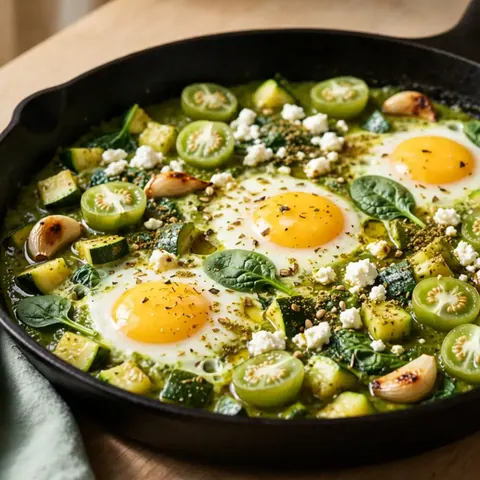
Experience a fresh take on brunch with this vibrant green Shakshuka, featuring tender zucchini, tomatillos, and baby spinach simmered in a creamy sauce and topped with jammy eggs.
Published 12 min read
- Total time
- Prep
- Cook
- Serves
- 3
- Cuisine
- Mediterranean
- Calories
- 320
- per serving, estimated

On this page16 sections
Elevate your brunch experience with this vibrant green Shakshuka. By swapping traditional tomato bases for a fresh, herbaceous mix of tomatillos, zucchini, and spinach, you create a sophisticated dish that is as visually stunning as it is delicious. Finished with creamy sheep feta and jammy eggs, this recipe brings a refreshing, modern twist to a classic Mediterranean staple, making it an ideal choice for a luxurious weekend morning or a special gathering with friends and family at home.
This green Shakshuka offers a refreshing departure from the usual red-sauce versions, relying on seasonal vegetables and aromatic spices to build depth. The combination of sautéed zucchini, tart tomatillos, and tender spinach creates a complex, savory base that perfectly complements the richness of the cream and the delicate texture of the eggs. It is a straightforward, elegant dish that showcases how simple, high-quality ingredients can come together in one skillet for a meal that feels both wholesome and indulgent, perfect for those who appreciate bright, vibrant flavors in their morning routine.
The appeal
Why you’ll love it
The method of sautéing the vegetables before adding the cream is essential for building a deep, concentrated flavor profile. By cooking the zucchini, tomatillos, and garlic until they are soft and golden, you develop a natural sweetness that anchors the dish. The subsequent wilting of the spinach allows it to integrate seamlessly into the sauce, ensuring that every bite contains a balance of textures and flavors that would not be achieved if the vegetables were added all at once.
Steaming the eggs within the vegetable base is the key to achieving the perfect consistency. By creating small wells in the mixture, you ensure the eggs cook evenly in the residual heat and moisture. Covering the skillet traps the steam, which gently sets the egg whites while keeping the yolks jammy and rich. This technique allows for minimal cleanup and guarantees that the eggs remain tender and moist, providing a luxurious contrast to the hearty vegetable sauce underneath.
What you need
Ingredients
Makes 3 servings.
Ingredients
Topping
Contains:
- Eggs
- Milk
Served raw or lightly cooked
The eggs in this recipe are prepared to be moist and tender with a jammy yolk. For those at higher risk of foodborne illness, use pasteurized eggs.
Tools
Equipment
- Large skillet with lid
- Chef knife
- Cutting board
- Measuring spoons
- Measuring jug
- Silicone spatula
Swaps
Substitutions
Instead ofTomatillos
UseSubstitute with green tomatoes or additional zucchini if tomatillos are unavailable in your local market.
Instead ofSheep feta
UseUse goat cheese or a mild cow milk feta as a readily available alternative to sheep feta.
Instead ofZhoug chili oil
UseReplace with a bright herb-based chimichurri or a simple drizzle of spicy chili oil if zhoug is not accessible.
Instead ofHeavy cream
UseUse full-fat coconut milk for a dairy-free version that maintains the rich texture required for the sauce base.
Good to know
Notes
When selecting ingredients, look for firm zucchini and bright, taut tomatillos to ensure the best texture and flavor. If fresh zhoug oil is unavailable, you can substitute it with a homemade blend of cilantro, parsley, green chilies, and garlic, or a high-quality store-bought version. For the cream, using a full-fat version ensures the sauce is thick and luxurious, though a lighter dairy or plant-based alternative can be used if you prefer a slightly thinner consistency for your shakshuka base.
The choice of skillet is important; a non-stick or well-seasoned cast iron pan works best to prevent the eggs from sticking during the steaming process. Ensure your lid fits tightly to trap the necessary steam for cooking the eggs correctly. If your skillet does not have a matching lid, a heat-safe plate or a sheet of aluminum foil can be used to cover the pan securely, allowing you to achieve the desired jammy yolk consistency without losing heat during the final stage.
Prep
Before you start
Before you begin cooking, ensure all your vegetables are prepped and ready to go. Dice the zucchini into uniform pieces so they cook evenly. Remove the papery husks from the tomatillos and wash them thoroughly, then halve them. Mince your garlic finely to ensure it disperses well throughout the sauce. Have your cream, eggs, and toppings measured and placed within easy reach of your stovetop. Being organized before you turn on the heat is the secret to a smooth, stress-free cooking process that allows you to focus on achieving the perfect textures for this vibrant green meal.
Step by step
Method
Phase 1
Sautéing the base
Step 1: Prepare the aromatics and vegetables
Heat the olive oil in a large skillet over medium heat. Add the diced zucchini and halved tomatillos, sautéing them until they begin to soften. Stir in the minced garlic and ground coriander, ensuring the aromatics are fragrant and well-distributed throughout the vegetable mixture for a balanced flavor profile in every bite.
You’ll need: olive oil · diced zucchini · halved tomatillos · garlic · ground coriander
Look for: Look for the vegetables to become tender and the garlic to release a strong, pleasant aroma throughout the kitchen.
Tip: Keep the heat at a steady medium level to prevent the garlic from browning too quickly, which can turn the flavor bitter.
Step 2: Wilt the greens
Incorporate the baby spinach into the skillet with the sautéed vegetables. Stir gently until the leaves have completely wilted down into the mixture. This step ensures the greens are fully integrated, creating a lush, vibrant foundation for the eggs that will be added in the final stages of the cooking process.
You’ll need: baby spinach
Look for: The spinach should be fully wilted and dark green, significantly reduced in volume compared to when it was first added.
Tip: Use a pair of tongs to move the spinach around if your skillet is crowded, which helps it wilt evenly and quickly.
Checkpoint
At the end of this phase, your skillet should be filled with a fragrant mixture of golden-brown zucchini and soft, tender tomatillos. The garlic and coriander should have infused the oil with a deep, earthy aroma. The mixture should look cohesive, with the vegetables beginning to soften significantly. If you see excess liquid, continue to cook for another minute to ensure the base is concentrated and flavorful, providing the perfect foundation for the spinach that will be added next.
Phase 2
Simmering with cream
Step 3: Create the creamy sauce base
Pour the cream into the skillet over the wilted greens and vegetable mixture. Stir thoroughly to combine, allowing the cream to thicken slightly as it bubbles with the vegetables. This rich, velvety sauce provides the perfect environment for the eggs to cook, ensuring they remain moist and tender throughout the final steaming period.
You’ll need: cream
Look for: The sauce should bubble gently and look uniform, with the cream fully incorporated into the vegetable and spinach base.
Tip: Maintain a gentle simmer once the cream is added to prevent it from separating or browning at the bottom of the pan.
Step 4: Nestle the eggs
Use your spatula to create three small wells in the vegetable and cream mixture. Crack one egg into each well carefully. Cover the skillet with a lid and steam for exactly three and a half minutes. This precise timing ensures the whites are set while keeping the yolks perfectly jammy and rich for serving.
You’ll need: eggs
Internal temperature 160°F (71°C)
Look for: The egg whites should be opaque and set, while the yolks remain soft and glossy to the touch when gently pressed.
Tip: If you prefer firmer eggs, extend the steaming time by thirty seconds, but watch closely to maintain the desired jammy yolk consistency.
Checkpoint
Once the cream is added and the eggs are nestled into the wells, the dish should look vibrant and inviting. The cream should be bubbling gently around the eggs, creating a glossy, rich sauce. The eggs should be sitting comfortably in the mixture, with the whites beginning to set. Check that the heat is low enough to maintain a gentle simmer without scorching the bottom of the pan, which ensures the eggs cook through perfectly while the sauce remains smooth and velvety.
Phase 3
Finishing the dish
Step 5: Final garnish and serving
Remove the skillet from the heat. Immediately top the dish with the crumbled sheep feta, sliced avocado, and a generous drizzle of zhoug chili oil. Serve directly from the skillet to maintain the heat, offering crusty sourdough bread on the side for dipping into the creamy, jammy yolks and the flavorful green sauce.
You’ll need: crumbled sheep feta · sliced avocado · zhoug chili oil
Look for: The dish is ready when the toppings are added and the sauce is still warm, inviting immediate consumption with the crusty bread.
Tip: Add the avocado slices at the very last second to ensure they remain cool and vibrant against the warm, cooked shakshuka base.
Checkpoint
When you remove the skillet from the heat, the final dish should look bright and textured. The crumbled feta should be lightly melting into the warm sauce, and the avocado slices should be nestled on top. The entire presentation should feel fresh and abundant, with the green colors of the spinach and zhoug popping against the creamy sauce. The final check is to ensure the eggs are cooked to your desired jammy consistency before bringing the skillet to the table for serving.
Doneness
How to tell it’s done
The dish is perfectly done when the vegetable base is thick, creamy, and fragrant. The eggs are the primary indicator of doneness: the whites should be fully opaque and set, while the yolks should remain soft and glossy. When gently pressed with a spoon, the yolks should yield slightly, indicating they are jammy. If you prefer a firmer egg, you can cook them for an additional minute, but be careful not to overcook the yolks, as they should remain a luxurious, creamy element of the final dish.
Avoid these
Common mistakes
A common mistake is overcrowding the skillet, which can lead to steaming the vegetables rather than sautéing them, resulting in a watery sauce. Ensure your skillet is large enough to spread the vegetables in an even layer. Another error is adding the eggs before the sauce has thickened; the cream must be reduced slightly to create a stable base that holds the eggs in place. Finally, avoid using high heat, which can scorch the bottom of the sauce or cause the cream to separate before the eggs are properly cooked through.
Cook safely
Food safety
Safe internal temperatures
Cook to at least these temperatures, measured with an instant-read thermometer in the thickest part.
| Food | Minimum internal temperature |
|---|---|
| Egg dishes | 160°F (71°C) |
Raw or lightly cooked ingredients
The eggs in this recipe are prepared to be moist and tender with a jammy yolk. For those at higher risk of foodborne illness, use pasteurized eggs.
Better results
Tips
Tip 1
To maximize the vibrant green color of your Shakshuka, add the baby spinach at the very last moment before the cream. This prevents the leaves from becoming too soft or losing their bright emerald hue during the initial sautéing phase. If you find the sauce is too thick before adding the eggs, you can add a small splash of water or vegetable broth to reach your preferred consistency, ensuring the base remains silky and easy to eat with your crusty sourdough bread.
Tip 2
For an extra layer of flavor, consider lightly toasting your ground coriander in the dry skillet for thirty seconds before adding the olive oil. This simple technique intensifies the spice's aroma and adds a subtle nuttiness that complements the tartness of the tomatillos perfectly. Always serve the dish immediately while the skillet is still warm, as the residual heat continues to soften the cheese and keep the eggs at the ideal temperature for dipping your bread into the rich, flavorful sauce.
Make it yours
Variations
Spicy Green Shakshuka
Add one finely minced serrano pepper or a teaspoon of crushed red pepper flakes during the initial sautéing phase. This variation adds a pleasant kick that cuts through the creaminess of the sauce and complements the earthiness of the coriander and the fresh, bright flavor of the tomatillos perfectly.
Hearty Vegetable Shakshuka
Incorporate diced bell peppers or asparagus pieces along with the zucchini to add more texture and volume to the dish. These vegetables cook at a similar rate to zucchini, making them an easy addition that enhances the overall complexity of the vegetable base.
Herbed Feta Shakshuka
Mix fresh chopped dill, mint, and parsley directly into the crumbled feta before topping the dish. This infusion of fresh herbs adds a bright, aromatic dimension that elevates the overall flavor profile and pairs beautifully with the creamy, jammy eggs and the tangy tomatillo sauce base.
Protein-Boosted Shakshuka
Stir in a handful of cooked chickpeas or white beans when adding the spinach. This addition provides a satisfying, heartier texture to the dish, making it a more substantial meal while still maintaining the delicate balance of the vibrant green sauce and the perfectly cooked eggs.
On the table
Serving suggestions
Serve this green Shakshuka directly from the skillet to maintain its warmth and rustic presentation. Place the pan on a heat-safe trivet in the center of the table, allowing guests to serve themselves. Provide plenty of warm, crusty sourdough bread, which is essential for scooping up the creamy, jammy yolk and the flavorful vegetable sauce. A side of fresh, crisp greens or a simple cucumber salad can add a refreshing crunch that balances the richness of the feta and cream in the main dish.
For a more substantial brunch, you can offer a selection of accompaniments such as olives, marinated artichokes, or even some warm flatbreads alongside the sourdough. Ensure each guest has a small bowl or plate for their eggs and bread, and provide a spoon to help scoop up all the delicious sauce left at the bottom of the skillet. The combination of textures—from the soft eggs to the crunchy crust of the bread—creates a satisfying and memorable eating experience for everyone at the table.
Leftovers
Storage & make-ahead
- Fridge
- Store in an airtight container in the refrigerator for up to 2 days. Ensure the dish has cooled for no more than 2 hours before refrigerating.
- Reheat
- Reheat gently in a skillet over low heat until warmed through, adding a splash of water if the sauce has thickened too much during storage.
If you have leftovers, allow the Shakshuka to cool completely for no more than two hours at room temperature before transferring it to an airtight container. Keep it in the refrigerator for up to two days. Note that the texture of the eggs may change slightly upon reheating, so it is best to consume this dish fresh whenever possible. If you must store it, try to keep the eggs separate from the sauce if you anticipate having leftovers, as this helps maintain their quality.
Make ahead
You can prepare the vegetable and cream base up to one day in advance. Store the cooled mixture in an airtight container in the refrigerator. When you are ready to serve, reheat the base in your skillet over medium heat until it is bubbling, then create the wells and add the eggs as directed in the recipe. This method is an excellent way to save time on a busy morning without sacrificing the fresh, vibrant quality of the final brunch dish.
Questions
Frequently asked questions
Can this green Shakshuka be made ahead of time?
Yes, you can prepare the vegetable and cream base up to one day in advance. Store the cooled mixture in an airtight container in the refrigerator. When you are ready to serve, reheat the base in your skillet over medium heat until it is bubbling, then create the wells and add the eggs as directed in the recipe. This method is an excellent way to save time on a busy morning without sacrificing the fresh, vibrant quality of the final brunch dish for your guests.
What is the best way to tell if the eggs are cooked through?
The eggs are perfectly cooked when the whites are fully opaque and set, while the yolks remain soft and glossy. When gently pressed with a spoon, the yolks should yield slightly, indicating they are jammy. If you prefer a firmer egg, you can cook them for an additional thirty seconds, but watch closely to ensure the yolks remain creamy. The safe internal temperature for eggs is 160°F (71°C), which ensures they are cooked through while maintaining their desired moist and tender consistency.
Can a different type of cheese be used if feta is unavailable?
Yes, you can easily substitute the sheep feta with goat cheese or a mild cow milk feta. Both alternatives provide a similar tangy contrast to the creamy sauce. If you prefer a milder flavor, a fresh goat cheese is an excellent choice as it melts beautifully into the warm vegetable base. Whatever cheese you choose, ensure it is crumbled finely so that it distributes evenly across the top of the Shakshuka, allowing each bite to have a balanced, savory flavor profile.
Why is it important to sauté the vegetables before adding the cream?
Sautéing the vegetables before adding the cream is essential for building a deep, concentrated flavor profile. By cooking the zucchini, tomatillos, and garlic until they are soft and golden, you develop a natural sweetness that anchors the dish. The subsequent wilting of the spinach allows it to integrate seamlessly into the sauce, ensuring that every bite contains a balance of textures and flavors that would not be achieved if the vegetables were added all at once or boiled in the cream from the start.
Is it necessary to cover the skillet while the eggs are cooking?
Yes, covering the skillet is the key to achieving the perfect consistency for the eggs. The lid traps the steam, which gently sets the egg whites while keeping the yolks jammy and rich. This technique allows for minimal cleanup and guarantees that the eggs remain tender and moist, providing a luxurious contrast to the hearty vegetable sauce underneath. If your skillet does not have a matching lid, a heat-safe plate or a sheet of aluminum foil can be used to cover the pan securely during the steaming process.
Everything in one place: the recipe card below gathers the ingredients, steps and estimated nutrition, ready to print.
Recipe card
Vibrant Green Shakshuka with Spinach and Feta
Experience a fresh take on brunch with this vibrant green Shakshuka, featuring tender zucchini, tomatillos, and baby spinach simmered in a creamy sauce and topped with jammy eggs.
- Prep
- Cook
- Total
- Servings
- 3 servings
Ingredients
Ingredients
- 25 ml olive oil
- 150 g diced zucchini
- 100 g halved tomatillos
- 150 g baby spinach
- 2 cloves garlic, minced
- 4 g ground coriander
- 50 ml cream
- 3 large eggs
Topping
- Crumbled sheep feta, to taste
- Sliced avocado, to taste
- Zhoug chili oil, to taste
Instructions
Prepare the aromatics and vegetables. Heat the olive oil in a large skillet over medium heat. Add the diced zucchini and halved tomatillos, sautéing them until they begin to soften. Stir in the minced garlic and ground coriander, ensuring the aromatics are fragrant and well-distributed throughout the vegetable mixture for a balanced flavor profile in every bite.
Wilt the greens. Incorporate the baby spinach into the skillet with the sautéed vegetables. Stir gently until the leaves have completely wilted down into the mixture. This step ensures the greens are fully integrated, creating a lush, vibrant foundation for the eggs that will be added in the final stages of the cooking process.
Create the creamy sauce base. Pour the cream into the skillet over the wilted greens and vegetable mixture. Stir thoroughly to combine, allowing the cream to thicken slightly as it bubbles with the vegetables. This rich, velvety sauce provides the perfect environment for the eggs to cook, ensuring they remain moist and tender throughout the final steaming period.
Nestle the eggs. Use your spatula to create three small wells in the vegetable and cream mixture. Crack one egg into each well carefully. Cover the skillet with a lid and steam for exactly three and a half minutes. This precise timing ensures the whites are set while keeping the yolks perfectly jammy and rich for serving.
Final garnish and serving. Remove the skillet from the heat. Immediately top the dish with the crumbled sheep feta, sliced avocado, and a generous drizzle of zhoug chili oil. Serve directly from the skillet to maintain the heat, offering crusty sourdough bread on the side for dipping into the creamy, jammy yolks and the flavorful green sauce.
Allergens: Eggs, Milk
Nutrition (estimated, per serving)
- Calories
- 320 kcal
- Protein
- 14.5 g
- Carbs
- 18 g
- Fat
- 22 g
- Fiber
- 5 g
- Sugar
- 6 g
- Sodium
- 450 mg
Estimates only: values vary with brands, substitutions and portion sizes.
Recipe by EasyCooks Kitchen · easycooksrecipes.com
Share this recipe
Send it to someone who’d love it, or save it for later.
Spotted a mistake in this recipe? Let us know.
Keep cooking


