Effortless Eggs Royale with Blender Hollandaise
Master the art of a gourmet brunch at home with this simple Eggs Royale recipe. Featuring perfectly poached eggs, smoked salmon, and a luxurious blender hollandaise.
Published 8 min read
- Total time
- Prep
- Cook
- Serves
- 2
- Cuisine
- French-British Fusion
- Calories
- 480
- per serving, estimated

On this page16 sections
Transform your morning routine with the ultimate brunch luxury. This Eggs Royale recipe relies on a foolproof blender technique to create a restaurant-quality hollandaise sauce that is ready in minutes. Whether you are hosting guests or simply treating yourself to a decadent start, this dish brings professional results to your home kitchen with minimal stress and maximum flavor impact. Experience the perfect harmony of textures and flavors in every bite of this classic breakfast staple.
Eggs Royale is a timeless brunch dish that pairs delicate poached eggs with savory smoked salmon atop a buttery, toasted base. The key to its success is a rich, tangy hollandaise sauce. Traditionally considered a difficult technique, this blender version simplifies the process, allowing for instant emulsification. By following these precise steps, you can achieve a silky, stable sauce every single time. This recipe is designed for ease, ensuring you spend less time in the kitchen and more time enjoying a truly gourmet meal experience at home.
The appeal
Why you’ll love it
The blender method works by using the high-speed vortex to force the hot butter into the egg yolks and lemon juice. This rapid agitation creates a stable emulsion that is significantly less likely to break or scramble compared to traditional stovetop methods. The heat from the butter also provides the necessary warmth to thicken the yolks, resulting in a sauce that is both luxurious and safe to serve.
Using a precise water temperature of 188°F (88°C) for poaching ensures the egg whites set firmly while protecting the delicate yolk from overcooking. This method creates the signature 'burst' of liquid gold when the egg is sliced. By poaching in a controlled environment, you maintain the structural integrity of the egg, ensuring a professional presentation that holds up beautifully when layered over the salmon and toasted brioche.
What you need
Ingredients
Makes 2 servings.
Hollandaise
Assembly
Garnish
Contains:
- Gluten
- Eggs
- Fish
- Milk
Served raw or lightly cooked
The eggs are served with a runny yolk and are not fully cooked through. Pasteurized eggs are recommended for pregnant women, young children, older adults, and those with weakened immune systems.
Tools
Equipment
- High-speed blender
- Small saucepan
- Poaching pan or deep skillet
- Toaster
- Fine-mesh sieve
- Whisk
Swaps
Substitutions
Instead ofBrioche
UseEnglish muffin or crusty sourdough bread
Instead ofSmoked Scottish salmon
UseSmoked trout or thinly sliced prosciutto
Good to know
Notes
The quality of your ingredients is paramount here. Use fresh, high-quality egg yolks and the best cold-smoked Scottish salmon you can find. The brioche should be fresh and lightly toasted to provide a sturdy base that absorbs the rich sauce without becoming soggy. If you cannot find brioche, a high-quality English muffin or a slice of crusty sourdough bread will provide a suitable texture and flavor profile to complement the salmon and egg.
Equipment choice plays a significant role in your success. A high-speed blender is essential for creating the stable emulsion required for the hollandaise. Ensure your blender jar is completely dry before adding the eggs. For the poaching step, a deep saucepan is preferable to a shallow skillet, as it allows the egg to hold its shape better as it sinks and then rises. Keep your ingredients organized and measured before you begin, as the assembly happens quickly.
Prep
Before you start
Before you start, ensure all ingredients are measured and ready to go. Place the butter in a small saucepan over medium heat until it is fully melted and reaches 158°F (70°C). Prepare your poaching water by filling a deep saucepan and bringing it to 188°F (88°C). Have your toaster ready and preheat your plates if desired. Having everything organized will make the process smooth and efficient, allowing you to serve the dish at its peak temperature.
Step by step
Method
Phase 1
Emulsifying the Hollandaise
Step 1: Prepare the Hollandaise
Combine the egg yolks, fresh lemon juice, and cayenne pepper in a high-speed blender. Blend on medium speed until combined. While the blender is running, slowly and steadily stream in the hot, melted butter. Continue blending until the sauce is thick, emulsified, and velvety in texture. Keep the sauce warm until ready to serve.
You’ll need: egg yolks · fresh lemon juice · cayenne pepper · unsalted butter, melted and hot
Internal temperature 160°F (71°C)
Look for: The sauce should be thick and creamy, coating the back of a spoon without breaking.
Tip: Ensure the butter is hot but not boiling, as this heat is essential for cooking the egg yolks sufficiently during emulsification.
Checkpoint
The sauce should look smooth, glossy, and pale yellow. It should be thick enough to hold its shape when drizzled over the back of a spoon. If the sauce appears too thin, continue blending for a few more seconds. If it seems too thick, add a tiny splash of warm water to loosen it to the desired consistency before serving.
Phase 2
Perfectly Poached Eggs
Step 2: Poach the Eggs
Bring a large saucepan of water to a gentle simmer at 188°F (88°C). Crack each egg into a small ramekin or fine-mesh sieve to remove excess loose whites. Carefully slide the eggs into the water. Poach for exactly three minutes until the whites are set and opaque but the yolks remain soft and liquid. Remove with a slotted spoon.
You’ll need: large eggs
Internal temperature 160°F (71°C)
Look for: The whites should be firm and opaque, while the yolk feels soft to the touch.
Tip: Adding a splash of vinegar to the water can help keep the egg whites together while poaching.
Checkpoint
The eggs should have a clean, rounded shape with no stray wisps of white floating in the water. The whites should be firm and set all the way through, while the yolk should still be soft and yielding to gentle pressure. Ensure the water remains at a very gentle simmer throughout the process to avoid damaging the delicate eggs.
Phase 3
Final Assembly
Step 3: Assemble the Dish
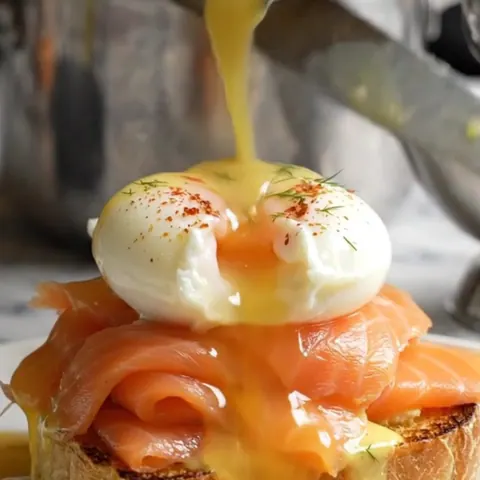
Toast the brioche rounds until golden brown. Place one portion of cold-smoked Scottish salmon onto each toasted brioche round. Top each with a poached egg. Generously nap the eggs with the warm blender hollandaise and finish with a sprinkle of fresh dill and a few capers. Serve immediately while warm.
You’ll need: brioche bread · cold-smoked Scottish salmon · fresh dill · capers
Look for: The brioche should be crisp, and the hollandaise should flow smoothly over the poached egg.
Tip: Warm your plates beforehand to ensure the hollandaise does not solidify too quickly when plated.
Checkpoint
The final dish should be vibrant and inviting. The golden hollandaise should be draped neatly over the poached eggs, showcasing the contrast between the silky sauce and the firm white. The salmon should be visible around the base, and the brioche should be golden and warm. Ensure the dish is served immediately while the components are still at their optimal serving temperatures.
Doneness
How to tell it’s done
The hollandaise is done when it reaches a thick, velvety, and pourable consistency that coats the back of a spoon. The poached eggs are done when the whites are completely opaque and firm to the touch, while the yolk remains soft and liquid. The internal temperature of the egg must reach 160°F (71°C) to be considered safe. Be careful not to exceed this, or the yolk will harden and lose its signature richness.
Avoid these
Common mistakes
A common mistake is adding the butter too quickly, which can cause the emulsion to break, resulting in a thin or oily sauce. Always stream the butter in a slow, steady, and thin thread. Another mistake is using cold eggs; ensure they are at room temperature to help the emulsion process. Finally, avoid over-poaching the eggs; three minutes is generally sufficient in a controlled simmer. If the whites look too loose, use a fine-mesh sieve to strain the watery outer whites before poaching.
Cook safely
Food safety
Safe internal temperatures
Cook to at least these temperatures, measured with an instant-read thermometer in the thickest part.
| Food | Minimum internal temperature |
|---|---|
| Fish | 145°F (63°C) |
| Egg dishes | 160°F (71°C) |
Raw or lightly cooked ingredients
The eggs are served with a runny yolk and are not fully cooked through. Pasteurized eggs are recommended for pregnant women, young children, older adults, and those with weakened immune systems.
Better results
Tips
Tip 1
To keep your hollandaise warm while you poach the eggs, place the blender jar in a bowl of warm water. Do not let it get too hot, as this can cause the sauce to scramble. If the sauce does thicken too much while sitting, whisk in a teaspoon of warm water just before serving to restore its light, airy texture.
Tip 2
For the best poached egg presentation, strain the eggs through a fine-mesh sieve before adding them to the water. This removes the thin, watery part of the egg white that creates messy 'tails' in the pan. This simple step ensures a clean, professional-looking poached egg every time, which is essential for a high-quality brunch presentation when serving guests or preparing a special meal.
Make it yours
Variations
Eggs Benedict
Replace the smoked salmon with two slices of crispy, pan-seared Canadian bacon or high-quality thick-cut ham for a classic breakfast experience.
Florentine Style
Substitute the smoked salmon with a generous portion of sautéed baby spinach that has been well-drained to ensure the brioche base stays crisp.
On the table
Serving suggestions
Serve this dish on warmed plates to ensure the hollandaise retains its silky texture for as long as possible. Accompany the Eggs Royale with a side of fresh greens, such as baby arugula tossed in a light lemon vinaigrette, to cut through the richness of the butter and egg yolks. This balance provides a refreshing contrast that rounds out the meal, making it feel complete and well-composed.
The visual appeal of this dish is a significant part of the experience. Arrange the brioche, salmon, and egg carefully to create height. The drizzle of hollandaise should be artistic, and the garnish of fresh dill and capers should be placed with intention. Serving immediately ensures that the brioche remains crisp, the salmon stays cool, and the hollandaise remains warm and luscious, providing the best possible sensory experience for your diners.
Leftovers
Storage & make-ahead
- Fridge
- Store any leftover salmon and brioche in airtight containers in the refrigerator for up to 24 hours. Do not store leftover hollandaise or poached eggs.
- Reheat
- Do not reheat the hollandaise or the poached eggs. If necessary, lightly toast the brioche again in an oven or toaster to refresh its crispness before serving.
This dish is best enjoyed immediately upon preparation. Hollandaise sauce does not store well due to its delicate emulsion and the risk of bacterial growth in the egg yolks. If you must have leftovers, keep the salmon and brioche separate from the sauce and eggs. The hollandaise should be discarded after one hour if not consumed, as it is a perishable egg-based sauce that cannot be safely reheated.
Make ahead
You can prepare the hollandaise sauce shortly before serving, but it is not recommended to make it hours in advance. You can toast the brioche and prepare the salmon plates ahead of time. Keep the poached eggs in a bowl of warm water if you are preparing them just before assembly. This minimizes the time spent in the kitchen when your guests are ready to eat, allowing you to focus on the final assembly.
Questions
Frequently asked questions
Can the hollandaise be made without a blender?
While a blender is the most efficient tool for this recipe, you can whisk the ingredients in a heatproof bowl over a pan of simmering water. However, this requires constant whisking and careful temperature control to prevent the eggs from scrambling, which is why the blender method is preferred for its reliability and speed.
Why did the hollandaise sauce break?
A broken sauce usually occurs when the butter is added too quickly or if the butter is not hot enough to cook the yolks. If the sauce begins to look oily or separated, stop adding the butter and blend in a small amount of warm water or an extra egg yolk to help re-emulsify the mixture. Always stream the butter in a very thin, slow, and steady flow.
How can the eggs be kept warm while preparing the sauce?
You can keep the poached eggs warm by placing them in a bowl of warm water (not boiling) for a few minutes before assembly. This maintains their internal temperature without continuing to cook the yolks. Ensure the water is around 120°F (49°C) to keep them warm without risking further coagulation of the whites or yolks.
Everything in one place: the recipe card below gathers the ingredients, steps and estimated nutrition, ready to print.
Recipe card
Effortless Eggs Royale with Blender Hollandaise
Master the art of a gourmet brunch at home with this simple Eggs Royale recipe. Featuring perfectly poached eggs, smoked salmon, and a luxurious blender hollandaise.
- Prep
- Cook
- Total
- Servings
- 2 servings
Ingredients
Hollandaise
- 3 egg yolks
- 15 ml fresh lemon juice
- 1 g cayenne pepper
- 115 g unsalted butter, melted and hot
Assembly
- 2 large eggs
- 2 rounds brioche bread, toasted
- 80 g cold-smoked Scottish salmon
Garnish
- fresh dill, for serving
- capers, for serving
Instructions
Prepare the Hollandaise. Combine the egg yolks, fresh lemon juice, and cayenne pepper in a high-speed blender. Blend on medium speed until combined. While the blender is running, slowly and steadily stream in the hot, melted butter. Continue blending until the sauce is thick, emulsified, and velvety in texture. Keep the sauce warm until ready to serve.
Poach the Eggs. Bring a large saucepan of water to a gentle simmer at 188°F (88°C). Crack each egg into a small ramekin or fine-mesh sieve to remove excess loose whites. Carefully slide the eggs into the water. Poach for exactly three minutes until the whites are set and opaque but the yolks remain soft and liquid. Remove with a slotted spoon.
Assemble the Dish. Toast the brioche rounds until golden brown. Place one portion of cold-smoked Scottish salmon onto each toasted brioche round. Top each with a poached egg. Generously nap the eggs with the warm blender hollandaise and finish with a sprinkle of fresh dill and a few capers. Serve immediately while warm.
Allergens: Gluten, Eggs, Fish, Milk
Nutrition (estimated, per serving)
- Calories
- 480 kcal
- Protein
- 18.5 g
- Carbs
- 15 g
- Fat
- 38 g
- Fiber
- 1 g
- Sugar
- 2 g
- Sodium
- 650 mg
Estimates only: values vary with brands, substitutions and portion sizes.
Recipe by EasyCooks Kitchen · easycooksrecipes.com
Share this recipe
Send it to someone who’d love it, or save it for later.
Spotted a mistake in this recipe? Let us know.
Keep cooking


