Sugar-Free White Cake with Fluffy White Frosting
A tender, ultra-fluffy white cake layered with billowy white frosting and made without added sugar. Simple steps, a pale crumb, and a frosting whipped to soft peaks.
Published 12 min read
- Total time
- Prep
- Cook
- Rest
- Serves
- 12
- Makes one 8-inch two-layer cake
- Cuisine
- American
- Calories
- 420
- per serving, estimated

On this page16 sections
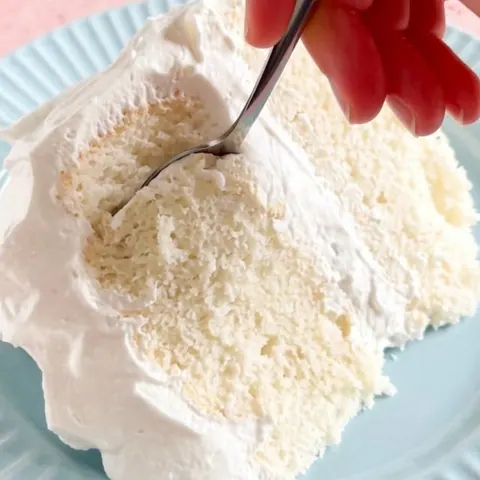
Sink a fork into a tender, ultra-fluffy slice of white cake with billowy white frosting and you will understand why this sugar-free version earns its place on your dessert table. The crumb is soft and pale, the frosting whips to glossy peaks, and each layer stays neat and even. Plan for a little cooling time so the frosting settles and holds clean edges.
This sugar-free white cake is a classic two-layer celebration cake, built around a light, airy sponge and a soft whipped frosting. The sweetness comes from a granulated sugar substitute in the layers and a powdered sugar substitute in the frosting, so the cake keeps its pristine white color and fine, delicate texture. Every step is short and direct: cream the butter and sweetener, add the egg whites, alternate the flour with the milk, bake, cool, whip the frosting, and assemble. Work with room-temperature ingredients and do not overmix, and the cake will rise high and bake up tender. The method is straightforward, but the order matters, so follow it closely.
The appeal
Why you’ll love it
Creaming softened butter with the sweetener traps tiny air pockets in the batter. Those pockets expand in the oven and give the cake its lift, which is why the first mixing stage is given full attention rather than rushed. A stand mixer makes this step faster and more even, though a hand mixer works well too.
Alternating the dry ingredients with the milk keeps the batter balanced and prevents the flour from becoming overworked. Adding the flour in three parts and the milk in two keeps the crumb soft and tender. Stopping as soon as the flour disappears protects the structure, so the layers bake up light instead of dense or rubbery.
What you need
Ingredients
Makes one 8-inch two-layer cake.
Cake layers
White frosting
Contains:
- Gluten
- Eggs
- Milk
Tools
Equipment
- Two 8-inch round cake pans
- Parchment paper
- Stand mixer or hand mixer
- Fine-mesh sieve
- Offset spatula
- Cooling rack
Swaps
Substitutions
Instead ofSugar substitute
UseSame weight of a granulated sugar alternative that measures cup for cup, such as allulose; sweetness and browning may differ slightly
Instead ofCake flour
UseAll-purpose flour, 2 cups minus 2 tbsp per cup, sifted with the baking powder and salt
Instead ofHeavy cream
UseAdditional cream cheese softened with 2 tbsp whole milk, for a slightly denser frosting
Good to know
Notes
Use cake flour when you can. Its lower protein content gives a finer, whiter crumb than all-purpose flour, which suits a delicate white cake. If you only have all-purpose flour, sift it carefully and reduce the amount slightly as described in the substitutions.
Two 8-inch round pans give layers that bake through evenly and stack neatly. Parchment on the bottoms makes release simple, and a stand mixer keeps the egg whites and batter smooth. A fine-mesh sieve helps the flour blend without lumps, and a cooling rack lets the layers cool evenly.
Prep
Before you start
Set everything out before you begin, because this cake moves quickly once the batter is mixed. Take the butter, cream cheese, eggs and milk out of the refrigerator about 30 minutes ahead so they reach room temperature. Heat the oven to 350°F (175°C) and position a rack in the center. Grease two 8-inch round pans, line the bottoms with parchment and sift the flour, baking powder and salt together. Measure the sugar substitute and the powdered sugar substitute into separate bowls. Chill the heavy cream until you need it, and set a mixing bowl in the freezer for the frosting if the kitchen is warm. Having every ingredient measured and every tool within reach keeps the batter smooth and prevents the butter from softening too far while you search for something.
Step by step
Method
Phase 1
Cake batter is smooth
Step 1: Preheat and prepare pans
Heat the oven to 350°F (175°C). Grease two 8-inch round cake pans, line the bottoms with parchment paper, and set them aside. Sift the cake flour, baking powder and fine salt together in a bowl so the leavening spreads evenly through the batter.
You’ll need: cake flour · baking powder · fine salt
Look for: Pans are greased, lined and sitting ready on the counter.
Tip: Let the eggs and milk sit out for 30 minutes so the batter blends smoothly.
Step 2: Cream butter and sweetener
Beat the softened butter and the sugar substitute in a stand mixer on medium-high speed for 3 to 4 minutes, until pale, light and fluffy. Scrape the bowl down once so no butter stays stuck to the sides.
You’ll need: unsalted butter, softened · granulated sugar substitute
Look for: The mixture turns pale ivory and looks light and airy.
Tip: Soft butter creams faster and traps more air, which keeps the crumb fluffy.
Step 3: Whip egg whites
Add the egg whites one at a time, beating well after each addition. Mix in the vanilla extract. Keep beating until the batter looks smooth and no streaks of egg white remain.
You’ll need: large egg whites · vanilla extract
Internal temperature 160°F (71°C)
Look for: The batter looks smooth, glossy and evenly blended.
Tip: Add each egg white slowly so the mixture stays emulsified and does not curdle.
Checkpoint
At the end of the first phase, the creamed butter and sweetener should look pale, light and fluffy, and the egg whites should be fully blended into a glossy batter with no streaks. The batter should smell faintly of vanilla and feel smooth against the spatula. Before moving on, check the bowl sides for unmixed butter and scrape them down once. If the batter looks curdled or separated, keep beating on medium speed for another minute. A properly creamed batter is the foundation of a fine, even crumb, so take the time to get this stage right before you add any flour.
Phase 2
Layers baked and cooled
Step 4: Alternate flour and milk
Reduce the mixer to low speed. Add one third of the flour mixture, then half of the milk, then another third of the flour, the rest of the milk, and finally the last of the flour. Mix only until the batter is just combined.
You’ll need: cake flour · baking powder · fine salt · whole milk
Look for: The batter is thick, smooth and pourable with no dry streaks.
Tip: Stop mixing as soon as the flour disappears to keep the cake tender.
Step 5: Bake the layers
Divide the batter evenly between the two prepared pans and smooth the tops with a spatula. Bake for 25 to 30 minutes, rotating the pans halfway through, until the layers spring back when lightly pressed and a toothpick comes out clean.
You’ll need: cake flour · granulated sugar substitute
Internal temperature 160°F (71°C)
Look for: The tops are pale golden and the centers spring back when touched.
Tip: Rotate the pans halfway through baking for even browning and rise.
Step 6: Cool completely
Cool the layers in their pans on a rack for 10 minutes. Turn them out onto the rack, peel off the parchment and let them cool completely, about 1 hour, before frosting so the frosting does not melt.
You’ll need: cake flour
Look for: The layers feel cool to the touch and release cleanly from the pans.
Tip: Wrap cooled layers loosely and chill for 15 minutes if they feel delicate to handle.
Checkpoint
At the end of the second phase, the layers should be pale golden on top, domed slightly, and springy when lightly pressed. A toothpick inserted into the center should come out clean. The cake should pull away gently from the pan edges and smell sweet and warm. Let the layers cool fully before frosting, because warm cake softens the frosting and causes sliding. Check that the layers are level and feel cool to the touch. If the tops look pale in the center, bake for a few more minutes and test again. Cooled, sturdy layers make the assembly neat and the slices clean.
Phase 3
Frosting whipped and assembled
Step 7: Whip the frosting
Beat the cream cheese and butter until smooth. Add the powdered sugar substitute and vanilla, then pour in the cold heavy cream. Whip on high speed for 2 to 3 minutes until the frosting is billowy and holds soft peaks.
You’ll need: cream cheese, softened · unsalted butter, softened · powdered sugar substitute · cold heavy cream · vanilla extract
Look for: The frosting is fluffy, glossy and holds a soft peak on the beater.
Tip: Keep the cream very cold for the lightest, most stable whipped texture.
Step 8: Frost and assemble
Place one cake layer on a serving plate and spread about one third of the frosting over the top. Set the second layer on top, then spread the remaining frosting over the top and sides in smooth, even strokes.
You’ll need: unsalted butter, softened · powdered sugar substitute · cold heavy cream
Look for: The frosting is smooth, even and holds clean swirls on the sides.
Tip: Chill the assembled cake for 20 minutes to firm the frosting before slicing.
Step 9: Slice and serve
Chill the cake for 20 minutes to set the frosting. Slice with a clean, sharp knife dipped in warm water and wiped dry between cuts, then serve each slice with the crumb side facing up.
You’ll need: whole milk · cake flour
Look for: Slices lift cleanly with a crisp edge and a tender, fluffy crumb.
Tip: Warm the knife between cuts for neat, clean slices.
Checkpoint
At the end of the final phase, the frosting should be billowy, glossy and hold a soft peak on the beater without collapsing. The cake should look smooth and even on top and sides, with no thin patches or gaps between the layers. Chill the assembled cake for 20 minutes so the frosting firms and the slices hold their shape. Check the surface for any bare spots and fill them with a little extra frosting. The finished cake should look pristine, with a clean white finish and a soft, tender crumb visible in every cut slice.
Doneness
How to tell it’s done
The layers are done when the tops are pale golden, the centers spring back under light pressure, and a toothpick inserted in the middle comes out clean with no wet batter attached. The edges should pull away slightly from the pans. The cake should smell sweet and fragrant. If the center sinks or the toothpick shows wet batter, bake for another two to three minutes and test again. There is no meat or poultry in this recipe, but the eggs in the batter are cooked through when the layers reach an internal temperature of 160°F (71°C). Use an instant-read thermometer in the center of one layer to confirm. A set, cooked crumb is light and tender, not rubbery, so avoid overbaking.
Avoid these
Common mistakes
The most common mistake is overmixing once the flour goes in. Beating the batter too long develops gluten, which makes the crumb tough and dense rather than tender and fluffy. Mix on low speed and stop as soon as the flour streaks disappear. Another frequent problem is cold butter. Butter that is too firm will not cream properly, leaving small lumps and a heavy texture. Start with softened butter and give it three to four minutes of creaming. Frosting that is applied to warm layers will melt and slide, so always cool the cake completely first. Finally, whipping the heavy cream for too long can turn it grainy. Stop as soon as the frosting holds soft peaks, and keep the cream cold for the best texture.
Cook safely
Food safety
Safe internal temperatures
Cook to at least these temperatures, measured with an instant-read thermometer in the thickest part.
| Food | Minimum internal temperature |
|---|---|
| Egg dishes | 160°F (71°C) |
Better results
Tips
Tip 1
Measure the sugar substitute by weight when you can, since blends differ in sweetness and volume. Keep the granulated and powdered substitutes separate, because the powdered version dissolves more smoothly in the frosting. Use a light hand with the mixer on the final stage, and keep the bowl and beaters clean so the egg whites whip properly and the batter stays pale.
Tip 2
Chill the frosting for 10 minutes if it softens while you work. Whip the cream until soft peaks form, then stop. Spread the frosting in smooth strokes with an offset spatula, dipping the blade in warm water for a glossy finish. Refrigerate the cake before slicing so each piece holds its shape and the frosting looks pristine.
Make it yours
Variations
Lemon Zest Version
Add the finely grated zest of one lemon to the creamed butter and sweetener. The bright citrus lifts the flavor of the sponge while keeping the cake pale and fluffy, and it pairs beautifully with the vanilla frosting.
Almond Flavor Layers
Replace half of the vanilla extract in the cake batter with almond extract for a subtle, sweet aroma. Keep the frosting vanilla so the flavors stay balanced and the cake retains its classic white appearance.
Stabilized Frosting
Add one tablespoon of cold cream cheese to the heavy cream before whipping to firm the frosting. This keeps the billowy texture stable for longer, which helps when the cake is served at a warm gathering.
Mini Cupcake Option
Divide the batter among lined mini muffin cups, filling each about two thirds full. Bake for 12 to 15 minutes until springy, cool fully, and pipe the frosting on top for a delicate, bite-sized dessert.
On the table
Serving suggestions
Serve each slice chilled or at cool room temperature, so the frosting is soft and the crumb feels tender. A simple cake like this pairs well with fresh berries on the side, a pot of tea or a cup of coffee, or a glass of cold milk. Arrange the slices on a white plate to show off the pristine finish and the soft, fluffy layers.
For a special occasion, present the whole cake on a footed stand and cut it at the table. Use a sharp knife warmed in hot water and wiped dry between cuts for clean slices. Offer small forks so guests can enjoy the light crumb and billowy frosting, and keep any extra slices covered until everyone has been served.
Leftovers
Storage & make-ahead
- Fridge
- Store covered in the refrigerator for up to four days. Let slices sit at room temperature for 20 minutes before serving so the frosting softens.
- Freezer
- Freeze unfrosted cooled layers wrapped tightly in plastic and foil for up to two months.
- Reheat
- No reheating is needed. Serve the cake chilled or at cool room temperature, and avoid warming it, which softens the frosting too much.
Keep the finished cake covered in the refrigerator, where the frosting stays firm and the crumb stays moist. Store it in an airtight container or under a cake dome for up to four days. Bring the slices to near room temperature for 20 minutes before serving so the frosting softens and the cake tastes its best. Leftovers should not sit out for more than two hours, so return them to the refrigerator promptly after serving.
Make ahead
You can bake the layers a day ahead. Cool them completely, wrap each layer tightly in plastic wrap, and keep them at room temperature until frosting day. Whip the frosting the same day for the best volume and texture. Assemble the cake and chill it for at least 20 minutes before slicing. Making the frosting ahead is possible too: cover it and refrigerate for up to one day, then re-whip briefly with a mixer before spreading so it becomes fluffy again.
Questions
Frequently asked questions
Can the sugar substitute be replaced with regular sugar?
Regular granulated sugar can be used in place of the sugar substitute, but the cake will no longer be sugar-free. Use the same measure of sugar for the layers and powdered sugar for the frosting. The texture will be slightly more tender and the crust will brown a little more deeply in the oven. Keep the bake time the same and check the cake a few minutes early.
Why does the frosting turn grainy?
Grainy frosting usually comes from whipping the heavy cream or the cream cheese mixture for too long, or from using cold cream cheese that did not soften fully. Keep the cream cold, stop whipping as soon as soft peaks form, and make sure the cream cheese is at room temperature. Using powdered sugar substitute rather than granulated helps the frosting stay smooth, as it dissolves more fully.
Why is your cake dense instead of fluffy?
A dense cake often means the batter was overmixed after the flour went in, or the butter was not creamed long enough. Mix on low speed and stop as soon as the flour disappears. Confirm the eggs and milk were at room temperature, since cold ingredients can prevent the batter from trapping air. Also check that your baking powder is fresh, because old leavening loses its lift.
How do you keep the layers from sticking to the pans?
Grease the pan sides and bottoms, then press a round of parchment into the bottom. After baking, let the layers rest in their pans for about 10 minutes before turning them onto a rack. This short rest lets the structure set so the layers release cleanly. Run a thin knife around the edges if needed, and peel the parchment off once the cake is fully cooled.
Can the cake be frosted the same day it is baked?
The layers should be cooled completely before frosting, which takes about an hour at room temperature. Frosting warm cake causes the frosting to melt and slide, and it can look uneven. Wrap the cooled layers loosely and keep them at room temperature until you are ready to frost. A short chill of 15 minutes can firm the layers if they feel delicate to handle.
Everything in one place: the recipe card below gathers the ingredients, steps and estimated nutrition, ready to print.
Recipe card
Sugar-Free White Cake with Fluffy White Frosting
A tender, ultra-fluffy white cake layered with billowy white frosting and made without added sugar. Simple steps, a pale crumb, and a frosting whipped to soft peaks.
- Prep
- Cook
- Rest
- Total
- Servings
- one 8-inch two-layer cake
Ingredients
Cake layers
- 2 cups cake flour, sifted
- 2 tsp baking powder
- 1/4 tsp fine salt
- 1/2 cup unsalted butter, softened
- 1 cup granulated sugar substitute, such as allulose or erythritol blend
- 4 large egg whites, at room temperature
- 2 tsp vanilla extract
- 3/4 cup whole milk, at room temperature
White frosting
- 8 oz cream cheese, softened
- 1/4 cup unsalted butter, softened
- 1/2 cup powdered sugar substitute
- 1/2 cup cold heavy cream
- 1 tsp vanilla extract
Instructions
Preheat and prepare pans. Heat the oven to 350°F (175°C). Grease two 8-inch round cake pans, line the bottoms with parchment paper, and set them aside. Sift the cake flour, baking powder and fine salt together in a bowl so the leavening spreads evenly through the batter.
Cream butter and sweetener. Beat the softened butter and the sugar substitute in a stand mixer on medium-high speed for 3 to 4 minutes, until pale, light and fluffy. Scrape the bowl down once so no butter stays stuck to the sides.
Whip egg whites. Add the egg whites one at a time, beating well after each addition. Mix in the vanilla extract. Keep beating until the batter looks smooth and no streaks of egg white remain.
Alternate flour and milk. Reduce the mixer to low speed. Add one third of the flour mixture, then half of the milk, then another third of the flour, the rest of the milk, and finally the last of the flour. Mix only until the batter is just combined.
Bake the layers. Divide the batter evenly between the two prepared pans and smooth the tops with a spatula. Bake for 25 to 30 minutes, rotating the pans halfway through, until the layers spring back when lightly pressed and a toothpick comes out clean.
Cool completely. Cool the layers in their pans on a rack for 10 minutes. Turn them out onto the rack, peel off the parchment and let them cool completely, about 1 hour, before frosting so the frosting does not melt.
Whip the frosting. Beat the cream cheese and butter until smooth. Add the powdered sugar substitute and vanilla, then pour in the cold heavy cream. Whip on high speed for 2 to 3 minutes until the frosting is billowy and holds soft peaks.
Frost and assemble. Place one cake layer on a serving plate and spread about one third of the frosting over the top. Set the second layer on top, then spread the remaining frosting over the top and sides in smooth, even strokes.
Slice and serve. Chill the cake for 20 minutes to set the frosting. Slice with a clean, sharp knife dipped in warm water and wiped dry between cuts, then serve each slice with the crumb side facing up.
Allergens: Gluten, Eggs, Milk
Nutrition (estimated, per serving)
- Calories
- 420 kcal
- Protein
- 5.5 g
- Carbs
- 38 g
- Fat
- 27 g
- Fiber
- 0 g
- Sugar
- 2 g
- Sodium
- 260 mg
Estimates only: values vary with brands, substitutions and portion sizes.
Recipe by EasyCooks Kitchen · easycooksrecipes.com
Share this recipe
Send it to someone who’d love it, or save it for later.
Spotted a mistake in this recipe? Let us know.
Keep cooking
More dessert recipes
Desserts
Sugar-Free Turtle Cake with Gooey Caramel, Pecans and Chocolate Frosting
Total time: 1 hr 30 mins
Desserts
Chocolate Wacky Cake with Fudgy Chocolate Frosting, No Eggs or Dairy
Total time: 1 hr 25 mins