Volcano Salmon Sushi Bake: A Crowd-Pleasing Casserole
This volcano salmon sushi bake layers seasoned rice, spicy salmon, and creamy crab under a blistered cheese topping. Baked until golden and bubbly, it's a show-stopping casserole perfect for sharing.
Published 9 min read
- Total time
- Prep
- Cook
- Serves
- 6
- Makes one 9x13-inch casserole
- Cuisine
- Japanese-inspired
- Calories
- 510
- per serving, estimated

On this page16 sections
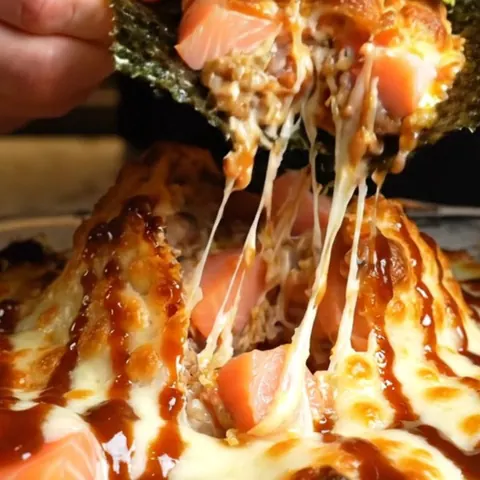
This volcano salmon sushi bake is the ultimate viral crowd-pleaser. Layer seasoned rice with spicy salmon and creamy crab, then bake until the cheese topping blisters into golden peaks. Scoop it up with crispy roasted seaweed for a fun, interactive meal that's perfect for parties, game days, or any night you want something a little special. The combination of textures and flavors—creamy, spicy, savory, and fresh—makes every bite irresistible.
Sushi bakes have taken the internet by storm, and this volcano version lives up to the hype. It's a deconstructed sushi roll baked into a casserole, with all the familiar flavors: seasoned rice, nori, spicy mayo, salmon, and crab. The magic happens in the oven, where the top turns into a golden, bubbly crust reminiscent of a volcano's peak. Serve it with seaweed sheets for scooping, and watch it disappear. This recipe is straightforward, using easy-to-find ingredients, and comes together in under an hour.
The appeal
Why you’ll love it
Baking the casserole at high heat ensures the salmon cooks through while the rice stays moist and the toppings meld together. The short broil at the end creates a blistered, golden cheese crust that adds a delightful contrast in texture. This method is forgiving and hands-off, making it perfect for a weeknight dinner or a crowd.
Layering the ingredients—rice, furikake, salmon mixture, and cheese—ensures every bite has a balance of flavors and textures. The furikake adds umami and a subtle crunch, while the spicy mayo and sriracha provide heat and creaminess. The final drizzle of unagi sauce and fresh avocado brighten the dish, cutting through the richness.
What you need
Ingredients
Makes one 9x13-inch casserole.
Contains:
- Gluten
- Crustaceans
- Eggs
- Fish
- Soy
- Milk
- Sesame
Tools
Equipment
- 9x13-inch baking dish
- Mixing bowls
- Spatula
- Chef's knife
- Cutting board
- Measuring cups and spoons
- Oven mitts
Swaps
Substitutions
Instead ofKewpie mayo
UseRegular mayonnaise (use a good-quality one; add a pinch of sugar and a splash of rice vinegar to mimic Kewpie's flavor)
Instead ofKani crab
UseImitation crab sticks (shredded) or cooked, flaked crab meat
Instead ofSriracha
UseOther hot chili sauce, such as sambal oelek or gochujang (adjust to taste)
Instead ofMozzarella
UseMonterey Jack, provolone, or a blend of melting cheeses
Good to know
Notes
Seasoned sushi rice is available at Japanese grocery stores or online; it's pre-seasoned with rice vinegar, sugar, and salt. If you can't find it, make your own by mixing cooked sushi rice with a bit of rice vinegar, sugar, and salt. Furikake is a Japanese seasoning blend of dried fish, sesame seeds, seaweed, and sometimes wasabi—it's worth seeking out for authentic flavor.
Kewpie mayo is a Japanese mayonnaise that is creamier and more savory than American mayo, thanks to the use of rice vinegar and egg yolks. It's available in most Asian markets or online. If you can't find it, use regular mayonnaise and add a pinch of sugar and a splash of rice vinegar. Shredded kani crab is imitation crab, usually made from white fish and starch; it's sold in the refrigerated seafood section.
Prep
Before you start
Before starting, ensure the sushi rice is at room temperature or slightly warm; cold rice is harder to press evenly. Shred the kani crab if not already shredded, and cube the salmon into bite-size pieces. Measure out the Kewpie mayo and sriracha. Have the baking dish ready. Preheat the oven to 400°F (200°C) about 15 minutes before you plan to bake, so it's fully hot when the casserole goes in. If using a glass dish, place it on a baking sheet to protect the glass from the broiler's high heat.
Step by step
Method
Phase 1
Build the Layers
Step 1: Prepare the Rice Layer
Press the seasoned sushi rice evenly into the bottom of a 9x13-inch baking dish. Sprinkle a generous layer of furikake over the rice, covering it completely.
You’ll need: seasoned sushi rice · furikake
Look for: The rice should be compact and level, with furikake sprinkled evenly across the surface.
Tip: Use wet hands or a spatula to press the rice firmly so it holds together when serving.
Step 2: Mix the Salmon and Crab
In a bowl, combine the shredded kani crab, cubed salmon, Kewpie mayo, and sriracha. Mix gently until everything is coated with the spicy mayo.
You’ll need: shredded kani crab · cubed salmon · Kewpie mayo · sriracha
Look for: The mixture should be creamy and well combined, with salmon and crab evenly coated.
Tip: Be gentle when mixing to keep the salmon cubes intact.
Step 3: Layer the Salmon Mixture
Spread the salmon and crab mixture over the furikake-topped rice in an even layer.
You’ll need: shredded kani crab · cubed salmon · Kewpie mayo · sriracha
Look for: The topping should be spread evenly to the edges.
Tip: Use a spatula to smooth the top gently.
Checkpoint
The rice should be firmly pressed into the dish, with furikake evenly sprinkled. The salmon mixture should be creamy and well combined, spread evenly over the rice. The casserole should look neat and inviting, with the salmon and crab mixture covering the rice completely.
Phase 2
Bake and Broil
Step 4: Bake the Casserole
Preheat the oven to 400°F (200°C). Bake the casserole for 12 minutes, until heated through and the edges are bubbling.
You’ll need: seasoned sushi rice · shredded kani crab · cubed salmon · Kewpie mayo · sriracha
Internal temperature 145°F (63°C)
Look for: The casserole should be hot and the edges just starting to bubble.
Tip: Place the dish on a baking sheet to catch any overflow.
Step 5: Add Cheese and Broil
Sprinkle the shredded mozzarella evenly over the top. Switch the oven to broil and cook for 2 minutes, until the cheese is melted and blistered into golden peaks.
You’ll need: shredded mozzarella cheese
Internal temperature 160°F (71°C)
Look for: The cheese should be bubbly and browned in spots, with golden volcano-like peaks.
Tip: Watch closely during broiling to prevent burning.
Checkpoint
After baking, the casserole should be hot and bubbling at the edges. After broiling, the cheese should be melted, golden, and blistered in spots, reminiscent of a volcano's peak. The top should be visually striking, with the cheese creating a golden crust.
Phase 3
Finish and Serve
Step 6: Finish and Serve
Remove the casserole from the oven. Drizzle with unagi sauce, top with avocado slices and masago. Serve hot with roasted seaweed sheets for scooping.
You’ll need: unagi sauce · avocado, sliced · masago · roasted seaweed sheets
Look for: The top should be golden and bubbly, with avocado and masago adding color.
Tip: Let the casserole rest for a few minutes before serving to set slightly.
Checkpoint
The finished casserole should be drizzled with unagi sauce, topped with avocado slices and masago. The colors should be vibrant: golden cheese, green avocado, orange masago, and dark sauce. The dish should be served hot with nori sheets for scooping.
Doneness
How to tell it’s done
The casserole is done when the salmon is cooked through and reaches an internal temperature of 145°F (63°C). The cheese topping should be melted, bubbly, and blistered with golden-brown spots. The edges of the casserole will be visibly bubbling. The rice should be hot and the entire dish heated through. Let the casserole rest for a few minutes before serving to allow it to set slightly, making it easier to scoop.
Avoid these
Common mistakes
A common mistake is pressing the rice too thick or too thin; aim for an even layer about 1 inch thick. Another is overmixing the salmon mixture, which can break the salmon into small pieces; fold gently. Overbaking can dry out the salmon and make the rice tough; stick to the timing and rely on the broiler for the golden top. Skipping the furikake layer loses a key flavor; don't skip it. Finally, be careful when broiling—watch it closely to avoid burning the cheese.
Cook safely
Food safety
Safe internal temperatures
Cook to at least these temperatures, measured with an instant-read thermometer in the thickest part.
| Food | Minimum internal temperature |
|---|---|
| Fish | 145°F (63°C) |
| Shellfish | 145°F (63°C) |
| Egg dishes | 160°F (71°C) |
Better results
Tips
Tip 1
For the best texture, use freshly cooked sushi rice that's still slightly warm; it presses more easily and stays moist. If using leftover rice, sprinkle it with a little water before pressing. To get clean, neat squares when serving, let the casserole rest for 5-10 minutes after baking, then use a sharp knife dipped in water to cut portions.
Tip 2
When broiling, keep a close eye on the casserole—it can go from golden to burnt in seconds. Rotate the dish halfway through for even browning. If you prefer a spicier kick, add extra sriracha to the salmon mixture or serve with additional hot sauce on the side. For a more indulgent version, add a layer of cream cheese before the salmon mixture.
Make it yours
Variations
Spicy Tuna Sushi Bake
Replace the salmon with 300 g of sushi-grade tuna, cubed. Mix with the same spicy mayo and crab. Bake as directed. The tuna will cook through, but be careful not to overcook it; reduce baking time by 2 minutes if you prefer it slightly rare.
Vegetarian Sushi Bake
Omit the salmon and crab. Increase the amount of furikake and add 1 cup of diced cucumber, 1 cup of diced avocado, and 1 cup of cooked shiitake mushrooms. Mix with the spicy mayo and proceed with the recipe. The result is fresh and satisfying.
Spicy Mayo Swap
For a different flavor, replace the sriracha with 2 tablespoons of gochujang (Korean chili paste) mixed with 1 tablespoon of rice vinegar. This adds a deeper, more complex heat. Adjust the amount to taste.
Cheese Variations
Substitute the mozzarella with a blend of cheddar and Monterey Jack for a sharper flavor, or use provolone for a nuttier taste. For a dairy-free option, use a plant-based mozzarella-style shreds that melt well.
On the table
Serving suggestions
Serve the volcano sushi bake hot, straight from the oven. Provide a basket of roasted seaweed sheets for scooping, and let each person create their own sushi bites. The casserole can be served as a main dish with a side salad, or as an appetizer for a party—just cut it into smaller portions.
For a complete meal, pair it with a simple cucumber salad or miso soup. The richness of the casserole pairs well with light, refreshing sides. For drinks, consider sake, green tea, or a crisp white wine like Sauvignon Blanc. The dish is best enjoyed immediately, but leftovers are also tasty cold.
Leftovers
Storage & make-ahead
- Fridge
- Store in an airtight container in the fridge for up to 3 days. Reheat gently in the oven or microwave until hot.
- Freezer
- Freeze in a freezer-safe container for up to 1 month. Thaw overnight in the fridge before reheating.
- Reheat
- Reheat in a 350°F (175°C) oven for 10-15 minutes, or microwave in 30-second bursts until hot.
Store leftovers in an airtight container in the refrigerator for up to 3 days. The rice may absorb moisture and become slightly soft, but the flavors will remain delicious. Reheat individual portions in the microwave or in a 350°F (175°C) oven until warmed through.
Make ahead
The casserole can be assembled up to 24 hours in advance and kept covered in the refrigerator. When ready to bake, add a few extra minutes to the baking time to compensate for the cold start. The salmon mixture can also be prepared a day ahead and stored separately.
Questions
Frequently asked questions
Can this sushi bake be made ahead of time?
Yes, the casserole can be assembled up to 24 hours in advance and stored covered in the refrigerator. When ready to bake, add a few extra minutes to the baking time to ensure it's heated through. The salmon mixture can also be prepared a day ahead and kept separately.
What is the best way to reheat leftover sushi bake?
Reheat leftovers in a 350°F (175°C) oven for 10-15 minutes, or in the microwave in 30-second bursts until hot. The cheese will melt again, and the flavors will still be delicious. Avoid overheating, as the rice can become dry.
Can this recipe be made without kani crab?
Yes, you can substitute the kani crab with cooked, flaked crab meat, or simply omit it and increase the salmon to 400 g. The casserole will still be delicious. If using real crab, be gentle when mixing to avoid breaking it up too much.
Is it safe to eat leftover sushi bake cold?
Yes, it is safe to eat cold if it has been properly refrigerated. However, the rice may harden slightly. If you prefer it warm, reheat it gently. Always ensure leftovers are stored within 2 hours of cooking and consumed within 3 days.
What if you don't have seasoned sushi rice?
You can make your own by cooking sushi rice and mixing it with a seasoning of rice vinegar, sugar, and salt. A simple ratio is 3 tablespoons rice vinegar, 2 tablespoons sugar, and 1 teaspoon salt for 4 cups of cooked rice. Adjust to taste.
Everything in one place: the recipe card below gathers the ingredients, steps and estimated nutrition, ready to print.
Recipe card
Volcano Salmon Sushi Bake: A Crowd-Pleasing Casserole
This volcano salmon sushi bake layers seasoned rice, spicy salmon, and creamy crab under a blistered cheese topping. Baked until golden and bubbly, it's a show-stopping casserole perfect for sharing.
- Prep
- Cook
- Total
- Servings
- one 9x13-inch casserole
Ingredients
- 400 g seasoned sushi rice
- furikake, for sprinkling, to taste
- 250 g shredded kani crab
- 300 g cubed salmon
- 60 g Kewpie mayo
- 30 ml sriracha
- 1 cup shredded mozzarella cheese
- unagi sauce, for drizzling, to taste
- 1 avocado, sliced
- masago, for topping, to taste
- roasted seaweed sheets, for serving
Instructions
Prepare the Rice Layer. Press the seasoned sushi rice evenly into the bottom of a 9x13-inch baking dish. Sprinkle a generous layer of furikake over the rice, covering it completely.
Mix the Salmon and Crab. In a bowl, combine the shredded kani crab, cubed salmon, Kewpie mayo, and sriracha. Mix gently until everything is coated with the spicy mayo.
Layer the Salmon Mixture. Spread the salmon and crab mixture over the furikake-topped rice in an even layer.
Bake the Casserole. Preheat the oven to 400°F (200°C). Bake the casserole for 12 minutes, until heated through and the edges are bubbling.
Add Cheese and Broil. Sprinkle the shredded mozzarella evenly over the top. Switch the oven to broil and cook for 2 minutes, until the cheese is melted and blistered into golden peaks.
Finish and Serve. Remove the casserole from the oven. Drizzle with unagi sauce, top with avocado slices and masago. Serve hot with roasted seaweed sheets for scooping.
Allergens: Gluten, Crustaceans, Eggs, Fish, Soy, Milk, Sesame
Nutrition (estimated, per serving)
- Calories
- 510 kcal
- Protein
- 28 g
- Carbs
- 45 g
- Fat
- 24 g
Estimates only: values vary with brands, substitutions and portion sizes.
Recipe by EasyCooks Kitchen · easycooksrecipes.com
Share this recipe
Send it to someone who’d love it, or save it for later.
Spotted a mistake in this recipe? Let us know.
Keep cooking


