Crispy Air-Fried Salmon Sushi Folded Wraps
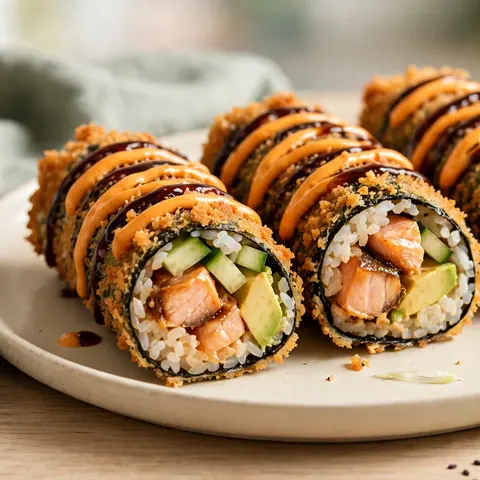
Experience the viral sensation of crispy air-fried sushi wraps. These folded nori triangles are packed with teriyaki salmon, creamy avocado, and seasoned rice for a perfect crunch.
Published 11 min read
- Total time
- Prep
- Cook
- Serves
- 2
- Makes 2 folded sushi wraps
- Cuisine
- Japanese-American Fusion
- Calories
- 320
- per serving, estimated

On this page16 sections
Elevate your lunch game with this innovative air-fried sushi wrap that combines the best elements of a classic roll with the irresistible crunch of a deep-fried snack. By folding a single sheet of nori into four quadrants filled with savory teriyaki salmon, cool avocado, and creamy cheese, you create a handheld meal that is both incredibly satisfying and fun to eat. It is the ultimate quick-fix recipe for when you crave bold, restaurant-quality flavors in minutes.
This unique preparation method transforms standard sushi ingredients into a crispy, warm delight that defies expectations. The air-frying technique serves a dual purpose: it toasts the delicate nori seaweed to a satisfying shatter-crisp texture while warming the salmon and melting the cream cheese into a decadent, savory filling. Whether you are looking for a fast workday lunch or a creative appetizer for guests, this folded sushi wrap delivers a complex profile of textures and tastes in every single bite.
The appeal
Why you’ll love it
The folding method creates a structural integrity that keeps the fillings neatly contained while providing multiple layers of crispy nori. By using the air fryer, you achieve a uniform, golden-brown finish on the seaweed without the need for deep-frying in oil. This process ensures that the exterior remains incredibly light and crunchy, while the interior components stay perfectly tender and flavorful. It is a highly efficient way to prepare a complex-tasting dish with minimal cleanup.
Air circulation in the fryer works to dehydrate the nori surface rapidly, creating a distinctively crispy shell that contrasts beautifully with the soft, creamy interior ingredients. This method also allows the heat to penetrate the salmon quickly and evenly, ensuring it is cooked through while keeping the avocado and cucumber relatively cool and fresh. The combination of heat and texture creates a professional-grade culinary experience that is accessible to any home cook using standard kitchen equipment.
What you need
Ingredients
Makes 2 folded sushi wraps.
Topping
Contains:
- Fish
- Milk
- Sesame
- Soy
- Eggs
Tools
Equipment
- Air fryer
- Kitchen shears
- Small mixing bowl
- Cutting board
- Chef knife
Swaps
Substitutions
Instead ofTeriyaki salmon
UseUse canned tuna mixed with teriyaki sauce or cooked shrimp as a quick alternative protein.
Instead ofAvocado oil
UseAny neutral high-heat oil like grapeseed or refined coconut oil works perfectly for the air fryer.
Instead ofEel sauce
UseMix equal parts soy sauce and honey with a pinch of sugar for a simple homemade glaze.
Good to know
Notes
For the best results, use high-quality sushi rice that has been properly seasoned with vinegar, salt, and a touch of sugar. The rice provides a necessary base that helps hold the other ingredients in place during the folding process. If you are using pre-cooked salmon, ensure it is flaked into small, manageable chunks that allow for easy folding. The quality of your nori sheets is also important; look for sheets that are flexible and not prone to breaking when folded.
The choice of equipment is straightforward, as any standard basket-style air fryer will work effectively for this recipe. Ensure your air fryer is preheated to 390°F to guarantee the nori crisps up immediately upon contact with the hot air. If you do not have a spray bottle for the avocado oil, use a pastry brush to apply a very light, even coating over the surface of the wrap to ensure even browning and to prevent the seaweed from drying out too much.
Prep
Before you start
Before beginning the assembly, ensure all your ingredients are prepped and ready on your workspace. Slice your avocado into thin, uniform pieces and prepare your cucumber ribbons using a vegetable peeler for the best texture. If your sushi rice is freshly cooked, allow it to cool slightly to room temperature so it does not cause the nori to soften or become soggy before you even have a chance to fold it. Having everything laid out in front of you is essential for a smooth assembly.
Step by step
Method
Phase 1
Preparation and Filling
Step 1: Prepare the nori
Using sharp kitchen shears, cut a single slit from the center of one edge of the nori sheet to the midpoint of the sheet. This creates the necessary opening to fold the sheet into four distinct quadrants for layering your ingredients effectively. Ensure the nori is fresh and crisp so it does not crack prematurely during the folding process.
You’ll need: nori
Look for: A clean cut reaching the center point of the nori square.
Tip: Ensure the nori is fresh and crisp so it does not crack prematurely during the folding process.
Step 2: Layer the fillings
Place the cooked sushi rice, teriyaki salmon chunks, sliced avocado, cucumber ribbons, and cream cheese into the four separate quadrants of the nori sheet. Distribute each ingredient evenly to ensure every bite of the final folded wrap contains a balanced combination of textures and flavors. Do not overfill the quadrants, as this can make the folding process difficult and cause the nori to tear.
You’ll need: sushi rice · teriyaki salmon · avocado · cucumber · cream cheese
Look for: Ingredients are contained within their respective quarters of the sheet.
Tip: Do not overfill the quadrants, as this can make the folding process difficult and cause the nori to tear.
Checkpoint
At this stage, your nori sheet should be neatly divided into four clean quadrants, with each ingredient portioned out and placed correctly. The rice should be tacky enough to adhere to the seaweed, and the salmon chunks should be small enough to sit flat. Check that you have not overloaded any single quadrant, as this will prevent a clean fold later. Everything should look organized and symmetrical before you transition to the folding phase of the process.
Phase 2
Folding the Nori
Step 3: Fold the wrap
Starting at the cut edge, fold the nori quadrant over the next, continuing in a clockwise motion until you have formed a compact, four-layered triangle. Gently press the edges together to ensure the filling remains secure within the nori layers during the air-frying process. If the nori feels too brittle, lightly dampen your fingers with water to help the edges stick together better.
You’ll need: nori
Look for: A tight, uniform triangle shape that holds all ingredients inside.
Tip: If the nori feels too brittle, lightly dampen your fingers with water to help the edges stick together better.
Checkpoint
The folded triangle should look compact and secure, with the edges of the nori overlapping slightly to keep the fillings encased. It should feel firm to the touch, not loose or overly fragile. If you notice any significant gaps or tears in the nori, use a tiny drop of water as a sealant to patch the area. A well-folded triangle will hold its shape perfectly when transferred to the air fryer basket without any shifting or leaking of the ingredients.
Phase 3
Air Frying and Finishing
Step 4: Air fry to crisp
Lightly spray the exterior of the folded nori triangle with avocado oil. Place it in the air fryer and cook at 390°F (199°C) for 5 minutes. The salmon must reach an internal temperature of 145°F (63°C) to be fully cooked and safe for consumption. Watch the air fryer closely during the last minute to prevent the nori from burning or becoming overly dark.
You’ll need: avocado oil
Internal temperature 145°F (63°C)
Look for: The exterior of the nori is deep green and crispy to the touch.
Tip: Watch the air fryer closely during the last minute to prevent the nori from burning or becoming overly dark.
Step 5: Garnish and serve
Carefully remove the crispy sushi triangle from the air fryer and transfer it to a serving plate. Drizzle the top generously with eel sauce and spicy mayo before serving immediately to maintain the contrast between the hot, crunchy exterior and the cool, creamy fillings inside. Apply the sauces just before serving to ensure the nori remains as crispy as possible for the longest time.
You’ll need: eel sauce · spicy mayo
Look for: Sauces are drizzled evenly over the hot, crispy surface.
Tip: Apply the sauces just before serving to ensure the nori remains as crispy as possible for the longest time.
Checkpoint
After five minutes, the exterior should be visibly crisp, with a matte texture that indicates it has been properly toasted by the circulating air. The salmon should be hot and tender, and the cream cheese should be slightly melted into the surrounding rice. Once you drizzle the eel sauce and spicy mayo, the colors should pop against the dark green nori. The wrap should be served immediately while the exterior remains at its peak level of crunchiness for the best eating experience.
Doneness
How to tell it’s done
The wrap is ready when the nori exterior has turned a deep, vibrant green and feels rigid and crispy to the touch. The internal salmon must reach a safe temperature of 145°F (63°C) to ensure it is fully cooked. You can test this by inserting a digital meat thermometer into the thickest part of the salmon inside the wrap. The final product should be steaming hot throughout, with the cheese visibly softened and the sauces drizzled on top just before serving.
Avoid these
Common mistakes
A common mistake is using too much filling, which makes it nearly impossible to fold the nori into a neat triangle without tearing. Always measure your ingredients carefully according to the recipe to maintain the structural integrity of the wrap. Another frequent error is failing to preheat the air fryer properly. Without a hot environment, the nori will not crisp immediately and may become chewy or tough instead of light and crunchy, which is the primary goal of this specific cooking method.
Cook safely
Food safety
Safe internal temperatures
Cook to at least these temperatures, measured with an instant-read thermometer in the thickest part.
| Food | Minimum internal temperature |
|---|---|
| Fish | 145°F (63°C) |
Better results
Tips
Tip 1
To achieve the most consistent results, try to keep the ingredient portions uniform across all four quadrants. This ensures that the wrap folds evenly and cooks at the same rate throughout the entire structure. If you enjoy extra heat, consider adding a dash of chili oil or a sprinkle of toasted sesame seeds to the salmon before folding. These small additions can significantly enhance the depth of flavor without complicating the preparation process or requiring any additional cooking time in the air fryer.
Tip 2
If you find that your nori is slightly too brittle, store the unopened package in a cool, dry place to prevent moisture from affecting the texture. When you are ready to assemble, keeping the sheets away from steam or damp surfaces is crucial. If you are preparing multiple wraps, work on one at a time to ensure the nori stays crisp. This attention to detail will ensure that your final product maintains the perfect textural contrast between the crunchy shell and the creamy, savory center.
Make it yours
Variations
Spicy Tuna Version
Substitute the teriyaki salmon with spicy canned tuna mixed with a little sriracha and sesame oil. This variation offers a bolder, spicier flavor profile that pairs exceptionally well with the crispy nori shell and creamy avocado.
Vegetarian Delight
Replace the salmon with marinated firm tofu cubes and extra cucumber ribbons. This version remains just as satisfying and crispy while providing a fresh, plant-based alternative that highlights the texture of the nori and the creaminess of the cheese.
California Style
Use imitation crab meat mixed with a touch of mayonnaise instead of salmon. Add thin slices of fresh mango to introduce a subtle sweetness that balances the savory elements perfectly when air-fried to a golden crisp.
Teriyaki Chicken Fold
Swap the salmon for thinly sliced teriyaki-glazed chicken breast. The chicken provides a heartier protein option that holds up beautifully to the air-frying process, resulting in a robust and savory meal that is perfect for a quick dinner.
On the table
Serving suggestions
Serve these wraps immediately upon removing them from the air fryer to enjoy the maximum crunch of the nori. Pair them with a side of pickled ginger or extra spicy mayo to complement the savory notes of the teriyaki salmon. The handheld nature of these wraps makes them an ideal choice for a casual, fast-paced meal that feels special without requiring elaborate plating. Simply place them on a clean serving board or individual plates for a presentation that looks just as good as it tastes.
For a more substantial meal, consider serving the folded wraps alongside a light salad dressed with a sesame-ginger vinaigrette. The freshness of the greens balances the intensity of the air-fried wrap, creating a more complete dining experience. Whether you are hosting a quick lunch or enjoying a quiet evening, these wraps are versatile enough to fit any occasion. Ensure that every guest has napkins nearby, as the crispy layers are best enjoyed with your hands and may be slightly messy.
Leftovers
Storage & make-ahead
- Fridge
- Keep in an airtight container for up to 24 hours. Re-crisp in an air fryer for 1-2 minutes to restore texture.
- Reheat
- Reheat in an air fryer at 350°F for 2-3 minutes until heated through and crispy. Do not use a microwave.
Store any leftovers in an airtight container in the refrigerator for up to 24 hours. Note that the nori will lose its crispness over time, so it is best consumed fresh.
Make ahead
You can prepare the filling ingredients up to 24 hours in advance, but do not assemble the wraps until you are ready to cook them, as the moisture will soften the nori.
Questions
Frequently asked questions
Can this recipe be made ahead of time?
It is highly recommended to assemble these wraps immediately before cooking. If you assemble them too far in advance, the moisture from the rice and fillings will cause the nori to soften and lose its signature crisp texture, which is essential for the quality of the dish. You can prepare and portion all your fillings, such as slicing the avocado and preparing the salmon, well in advance to keep the final assembly process quick and efficient when you are ready to eat.
Why does the nori become chewy instead of crispy?
The most common reason for a chewy texture is an air fryer that has not been properly preheated. The nori requires a blast of intense, dry heat to crisp up quickly before the moisture from the inside can penetrate the sheet. Always ensure your air fryer is fully up to temperature at 390°F before placing the wrap inside. Additionally, ensure the exterior is lightly sprayed with oil, as this helps facilitate the browning process and ensures a consistent, crunchy finish across the entire surface.
Is it possible to use a different protein?
Absolutely, this recipe is quite versatile. You can use any cooked protein that is flaked or cut into small pieces, such as cooked shrimp, canned tuna, or even leftover shredded chicken. The key is to ensure the protein is not overly wet, as excess liquid will compromise the structure of the nori sheet. If you are using a protein with a strong flavor, ensure it pairs well with the creamy components like avocado and cream cheese to maintain a balanced taste in every bite.
What is the best way to reheat leftovers?
The best way to reheat these wraps is to place them back into the air fryer at 350°F for about two to three minutes. This method helps to restore some of the original crispness to the nori shell while warming the interior through. Avoid using a microwave, as it will cause the nori to become rubbery and soft, completely ruining the texture. Reheating is most effective when the wrap has been stored properly in an airtight container to prevent it from drying out too much.
Can the cream cheese be omitted?
Yes, you can omit the cream cheese if you prefer a different flavor profile. The cream cheese acts as a binding agent that adds a creamy texture, but you can substitute it with a small amount of spicy mayo or even a little bit of mashed avocado if you want to keep the interior cohesive. If you choose to omit it entirely, just ensure the other ingredients are distributed evenly so the wrap remains easy to fold and holds its shape well during the cooking process.
Everything in one place: the recipe card below gathers the ingredients, steps and estimated nutrition, ready to print.
Recipe card
Crispy Air-Fried Salmon Sushi Folded Wraps
Experience the viral sensation of crispy air-fried sushi wraps. These folded nori triangles are packed with teriyaki salmon, creamy avocado, and seasoned rice for a perfect crunch.
- Prep
- Cook
- Total
- Servings
- 2 folded sushi wraps
Ingredients
- 2 sheets nori
- 100 g sushi rice, cooked
- 80 g teriyaki salmon chunks
- 1/2 avocado, sliced
- 1/4 cup cucumber, sliced into ribbons
- 20 g cream cheese
Topping
- 1 tsp avocado oil
- 1 tbsp eel sauce
- 1 tbsp spicy mayo (contains eggs)
Instructions
Prepare the nori. Using sharp kitchen shears, cut a single slit from the center of one edge of the nori sheet to the midpoint of the sheet. This creates the necessary opening to fold the sheet into four distinct quadrants for layering your ingredients effectively. Ensure the nori is fresh and crisp so it does not crack prematurely during the folding process.
Layer the fillings. Place the cooked sushi rice, teriyaki salmon chunks, sliced avocado, cucumber ribbons, and cream cheese into the four separate quadrants of the nori sheet. Distribute each ingredient evenly to ensure every bite of the final folded wrap contains a balanced combination of textures and flavors. Do not overfill the quadrants, as this can make the folding process difficult and cause the nori to tear.
Fold the wrap. Starting at the cut edge, fold the nori quadrant over the next, continuing in a clockwise motion until you have formed a compact, four-layered triangle. Gently press the edges together to ensure the filling remains secure within the nori layers during the air-frying process. If the nori feels too brittle, lightly dampen your fingers with water to help the edges stick together better.
Air fry to crisp. Lightly spray the exterior of the folded nori triangle with avocado oil. Place it in the air fryer and cook at 390°F (199°C) for 5 minutes. The salmon must reach an internal temperature of 145°F (63°C) to be fully cooked and safe for consumption. Watch the air fryer closely during the last minute to prevent the nori from burning or becoming overly dark.
Garnish and serve. Carefully remove the crispy sushi triangle from the air fryer and transfer it to a serving plate. Drizzle the top generously with eel sauce and spicy mayo before serving immediately to maintain the contrast between the hot, crunchy exterior and the cool, creamy fillings inside. Apply the sauces just before serving to ensure the nori remains as crispy as possible for the longest time.
Allergens: Fish, Milk, Sesame, Soy, Eggs
Nutrition (estimated, per serving)
- Calories
- 320 kcal
- Protein
- 14.5 g
- Carbs
- 28 g
- Fat
- 16.5 g
- Fiber
- 3.2 g
- Sugar
- 2.1 g
- Sodium
- 450 mg
Estimates only: values vary with brands, substitutions and portion sizes.
Recipe by EasyCooks Kitchen · easycooksrecipes.com
Share this recipe
Send it to someone who’d love it, or save it for later.
Spotted a mistake in this recipe? Let us know.
Keep cooking


