Authentic Quiche Lorraine with Silky Gruyère Custard
Experience the classic French bistro favorite at home with this authentic Quiche Lorraine recipe featuring smoky bacon lardons, aged Gruyère, and a luxurious heavy cream custard baked in a perfectly flaky, buttery pastry shell.
Published 9 min read
- Total time
- Prep
- Cook
- Rest
- Serves
- 8
- Makes one 9-inch quiche
- Cuisine
- French
- Calories
- 420
- per serving, estimated

On this page16 sections
Unlock the secret to a perfectly silky, trembling French Quiche Lorraine that brings the elegance of a traditional Alsace bakery straight to your own kitchen table. This classic dish is a masterclass in balancing savory, smoky, and creamy elements, creating a centerpiece that is as beautiful as it is delicious. By mastering the fundamental techniques of custard preparation and pastry management, you will elevate your home cooking to professional standards, ensuring every bite is a testament to the timeless appeal of French culinary traditions.
Quiche Lorraine is the quintessential French savory tart, celebrated for its perfect harmony of smoky, savory, and rich flavors. This recipe focuses on quality components: a buttery, crisp pastry shell, high-quality smoked lardons, nutty Gruyère cheese, and a luxurious heavy cream custard. By honoring the traditional ratios and techniques, you can achieve a quiche that is both sophisticated and deeply satisfying. Whether serving it for a special brunch or a light dinner, this dish is a testament to the beauty of simple, high-quality ingredients prepared with care and precision. It remains a staple for those who appreciate the finer details of classic cooking.
The appeal
Why you’ll love it
The method of rendering the lardons in a cold pan allows the fat to melt slowly, resulting in perfectly crispy, flavorful pieces that do not become tough or chewy during the baking process. This step is crucial for achieving the authentic smoky depth that defines a true Quiche Lorraine. By starting cold, you ensure the fat renders fully, which provides a rich base that infuses the entire tart with a deep, savory character that is essential for a balanced final flavor profile.
Using a specific ratio of whole eggs to extra yolks, combined with rich heavy cream, creates a custard that sets into a velvety, trembling consistency. This balance prevents the quiche from becoming dry or rubbery, ensuring each bite remains silky and luxurious while perfectly holding the savory fillings in place. The addition of freshly grated nutmeg provides a subtle, aromatic warmth that cuts through the richness of the cream, ensuring the custard is complex, flavorful, and perfectly set for an elegant presentation.
What you need
Ingredients
Makes one 9-inch quiche.
Filling
Shell
Custard
Contains:
- Gluten
- Eggs
- Milk
Served raw or lightly cooked
The eggs in this recipe are served soft and custardy. Use pasteurised eggs for pregnant women, young children, older adults, and anyone with a weakened immune system.
Tools
Equipment
- 9-inch fluted tart pan
- Large skillet
- Whisk
- Mixing bowl
- Oven
Swaps
Substitutions
Instead ofSmoked pork lardons
UseThick-cut bacon, cut into small strips
Instead ofGruyère cheese
UseEmmental or Comté cheese
Good to know
Notes
For the best results, use a high-quality, aged Gruyère cheese. Its complex, nutty flavor profile is essential to the success of this dish. If you cannot find authentic lardons, thick-cut bacon is a suitable substitute, provided it is diced into uniform pieces to ensure it cooks evenly and reaches the desired level of crispness. The quality of your dairy is also paramount; ensure you use fresh, high-quality heavy cream to achieve the signature texture that makes this dish stand out in any setting.
A fluted tart pan with a removable bottom is highly recommended for this recipe. It allows for the easy release of the delicate pastry shell, ensuring your quiche maintains its beautiful, professional appearance when sliced. Ensure your pastry is thoroughly blind-baked before adding the filling to prevent a soggy bottom. Using a high-quality butter for the crust will also ensure a shatteringly crisp texture that complements the smooth, rich custard perfectly, providing a delightful contrast in every single bite you take.
Prep
Before you start
Before beginning, ensure all ingredients are at room temperature to facilitate even mixing. Preheat your oven to 350°F (175°C) so it is ready for the baking process. Have your fluted tart pan and all necessary mixing tools prepared. If using a pre-made pastry shell, ensure it has been blind-baked until golden and is completely cool before adding the filling, as this is critical for preventing a soggy crust. Organizing your workspace and having all components ready will ensure a smooth and efficient cooking process.
Step by step
Method
Phase 1
Filling Preparation
Step 1: Prepare the filling
Place the thick-cut smoked pork lardons into a cold skillet. Turn the heat to medium and render the fat until the lardons are golden brown and crisp. Remove the lardons from the pan and drain them briefly on paper towels. Sprinkle the crispy lardons evenly into the bottom of the prepared, blind-baked butter pastry shell. Follow by scattering the shredded Gruyère cheese uniformly over the lardons to ensure a balanced distribution of flavor in every bite.
You’ll need: thick-cut smoked pork lardons · shredded Gruyère cheese · blind-baked 23-centimeter all-butter pastry shell
Look for: The lardons should be rendered and crisp, and the cheese should be evenly distributed.
Tip: Ensure the pastry shell is completely cool before adding the filling to maintain its structural integrity.
Checkpoint
At the end of this phase, the lardons should be rendered to a deep golden brown and perfectly crisp. The Gruyère cheese should be evenly distributed throughout the pastry shell, creating a uniform base that provides a savory foundation for the custard. The crust should appear dry, golden, and ready to hold the liquid mixture without leaking, ensuring the structural integrity of the final tart remains intact throughout the baking process.
Phase 2
Custard Mixing
Step 2: Whisk the custard
In a medium mixing bowl, combine the 4 whole eggs and 2 egg yolks. Whisk gently until the eggs are broken down and combined. Gradually pour in the 350 milliliters of heavy cream while continuing to whisk until the mixture is smooth and fully incorporated. Grate fresh nutmeg into the custard, stirring well to distribute the warm, aromatic spice throughout the liquid. The resulting custard should be uniform in color and texture.
You’ll need: large eggs · egg yolks · heavy cream · freshly grated nutmeg
Look for: The mixture should be smooth, velvety, and well-combined with no visible streaks of egg.
Tip: Whisk gently to avoid creating excess air bubbles, which can affect the final texture of the quiche.
Checkpoint
The custard should be a pale, uniform color with a smooth, velvety consistency. When whisked, it should be free of large air bubbles and fully integrated, with the freshly grated nutmeg dispersed evenly throughout the mixture. It should smell fragrant and rich, indicating that the cream and eggs are perfectly balanced for the upcoming bake. The mixture should be pourable and consistent, ready to be added to the prepared shell for the final transformation in the oven.
Phase 3
Final Baking
Step 3: Bake the quiche
Carefully pour the custard mixture into the pastry shell over the lardons and cheese, ensuring it reaches the edges without overflowing. Transfer the tart pan to a preheated oven set to 350°F (175°C). Bake for 32 minutes, or until the custard is set and trembling slightly in the center. To ensure the eggs are fully cooked, the internal temperature of the custard must reach 160°F (71°C). Remove from the oven and allow to rest for 10 minutes before slicing.
You’ll need: large eggs · egg yolks · heavy cream · freshly grated nutmeg
Internal temperature 160°F (71°C)
Look for: The quiche should be golden on top and set with a slight wobble in the very center.
Tip: Place the tart pan on a baking sheet to catch any potential drips and make it easier to handle.
Checkpoint
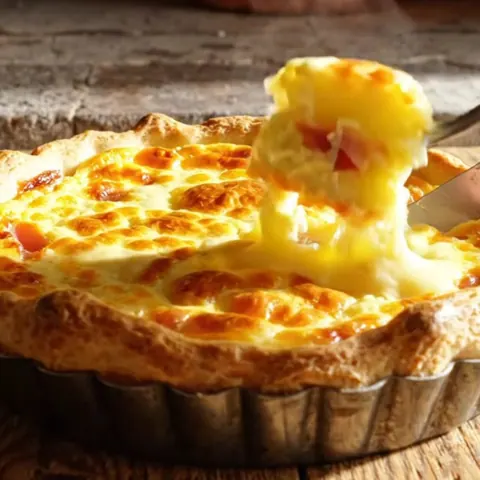
The quiche is complete when the top is beautifully golden and the custard has set firmly while maintaining a slight, elegant wobble in the center. The pastry should be crisp and shatteringly delicate. After resting, the quiche should hold its shape perfectly when sliced, revealing a smooth, dense, and flavorful interior that is ready to be served warm or at room temperature. The aroma should be savory and inviting, signaling that the dish is ready for enjoyment.
Doneness
How to tell it’s done
The quiche is perfectly cooked when the edges are set and firm, while the center still retains a slight, gentle tremble. Use a digital thermometer to ensure the internal temperature of the custard reaches 160°F (71°C), confirming the eggs are fully cooked. The pastry should be a deep golden brown and crisp to the touch, providing a beautiful contrast to the smooth, creamy filling within. A perfectly baked quiche will hold its shape when sliced, revealing a smooth, dense, and flavorful interior that is ready to be served.
Avoid these
Common mistakes
A common mistake is over-whisking the custard, which introduces too many air bubbles and can cause the quiche to puff excessively and then deflate. Another error is not blind-baking the pastry sufficiently; a pale, undercooked crust will not support the weight of the custard. Finally, avoid using heavy cream alternatives, as the high fat content is essential for achieving the signature silky texture. Note that the eggs are served soft and custardy; use pasteurised eggs for vulnerable groups as they are not cooked through to a firm state.
Cook safely
Food safety
Safe internal temperatures
Cook to at least these temperatures, measured with an instant-read thermometer in the thickest part.
| Food | Minimum internal temperature |
|---|---|
| Egg dishes | 160°F (71°C) |
Raw or lightly cooked ingredients
The eggs in this recipe are served soft and custardy. Use pasteurised eggs for pregnant women, young children, older adults, and anyone with a weakened immune system.
Better results
Tips
Tip 1
For a cleaner slice, allow the quiche to rest for at least ten minutes after taking it out of the oven. This brief rest period allows the custard to stabilize, ensuring that each wedge maintains its structure and clean edges when removed from the pan. Serving it slightly warm rather than piping hot also improves the flavor perception, allowing the nutty notes of the Gruyère and the richness of the cream to shine through without being masked by excessive heat.
Tip 2
To elevate the presentation, garnish the finished quiche with a light sprinkle of fresh herbs like chives or parsley. The touch of green adds a vibrant contrast to the golden top of the quiche and provides a fresh note that cuts through the richness of the cheese and cream, making for a truly professional finish. This simple addition enhances the visual appeal of the dish, making it an impressive choice for brunch or dinner gatherings where presentation is just as important as taste.
Make it yours
Variations
Spinach and Gruyère
Add one cup of sautéed, well-drained baby spinach to the shell along with the lardons and cheese. Ensure the spinach is squeezed dry to prevent excess moisture from compromising the custard.
Caramelized Onion
Sauté two thinly sliced yellow onions until deeply caramelized and sweet. Spread them over the pastry shell before adding the lardons and cheese for a richer, sweeter flavor profile.
On the table
Serving suggestions
Serve the Quiche Lorraine warm or at room temperature for the best flavor experience. It pairs beautifully with a simple, crisp green salad dressed with a light vinaigrette. The acidity of the salad dressing provides a perfect counterpoint to the rich, savory custard and smoky lardons, creating a balanced and delightful dining experience for any occasion. This combination is a classic for a reason, offering a satisfying meal that feels both elegant and approachable for any guest.
For a more substantial meal, accompany the quiche with roasted seasonal vegetables or a light soup. The quiche serves as a versatile centerpiece that works equally well for a sophisticated brunch, a light lunch, or a comforting dinner. Its classic flavor profile ensures it is always well-received by guests and family members alike, making it a reliable staple that you can turn to whenever you want to provide a memorable and delicious meal for those you care about.
Leftovers
Storage & make-ahead
- Fridge
- Store in an airtight container in the refrigerator for up to 3 days.
- Freezer
- Wrap individual slices tightly in plastic wrap and store in a freezer-safe bag for up to 1 month.
- Reheat
- Reheat slices in a 300°F (150°C) oven until warmed through and the crust is crisp again.
Store any leftover quiche in an airtight container to keep the crust from absorbing moisture. It is best to consume it within two days to enjoy the optimal texture of the pastry. If you need to store it longer, ensure it is completely cooled before covering it to prevent condensation from softening the crust, which can detract from the overall quality of the dish when you are ready to serve it again.
Make ahead
You can prepare the pastry shell in advance and keep it stored in an airtight container for up to two days. The custard mixture can also be whisked a few hours ahead of time and kept in the refrigerator, but it should be brought to room temperature before pouring into the shell and baking to ensure even cooking. This preparation strategy allows you to save time on the day of serving while maintaining the high quality of the final result.
Questions
Frequently asked questions
Can this quiche be made ahead of time?
Yes, the quiche can be baked in advance and served at room temperature. It holds its texture well for several hours, making it an ideal dish for entertaining. Simply bake as directed and allow it to cool completely before serving.
Why does the custard sometimes crack?
Cracking often occurs if the quiche is overbaked or if the oven temperature is too high. Ensure you monitor the cooking time closely and remove the quiche as soon as the center is set and the internal temperature reaches 160°F (71°C).
Is it possible to freeze the quiche?
While the quiche can be frozen, the texture of the custard may change slightly upon thawing. For best results, freeze individual slices wrapped tightly in plastic and reheat them gently in the oven to help restore the crispness of the pastry.
Everything in one place: the recipe card below gathers the ingredients, steps and estimated nutrition, ready to print.
Recipe card
Authentic Quiche Lorraine with Silky Gruyère Custard
Experience the classic French bistro favorite at home with this authentic Quiche Lorraine recipe featuring smoky bacon lardons, aged Gruyère, and a luxurious heavy cream custard baked in a perfectly flaky, buttery pastry shell.
- Prep
- Cook
- Rest
- Total
- Servings
- one 9-inch quiche
Ingredients
Filling
- 150 grams thick-cut smoked pork lardons
- 100 grams shredded Gruyère cheese
Shell
- 1 unit blind-baked 23-centimeter all-butter pastry shell
Custard
- 4 whole large eggs
- 2 units egg yolks
- 350 milliliters heavy cream
- 1/4 tsp freshly grated nutmeg
Instructions
Prepare the filling. Place the thick-cut smoked pork lardons into a cold skillet. Turn the heat to medium and render the fat until the lardons are golden brown and crisp. Remove the lardons from the pan and drain them briefly on paper towels. Sprinkle the crispy lardons evenly into the bottom of the prepared, blind-baked butter pastry shell. Follow by scattering the shredded Gruyère cheese uniformly over the lardons to ensure a balanced distribution of flavor in every bite.
Whisk the custard. In a medium mixing bowl, combine the 4 whole eggs and 2 egg yolks. Whisk gently until the eggs are broken down and combined. Gradually pour in the 350 milliliters of heavy cream while continuing to whisk until the mixture is smooth and fully incorporated. Grate fresh nutmeg into the custard, stirring well to distribute the warm, aromatic spice throughout the liquid. The resulting custard should be uniform in color and texture.
Bake the quiche. Carefully pour the custard mixture into the pastry shell over the lardons and cheese, ensuring it reaches the edges without overflowing. Transfer the tart pan to a preheated oven set to 350°F (175°C). Bake for 32 minutes, or until the custard is set and trembling slightly in the center. To ensure the eggs are fully cooked, the internal temperature of the custard must reach 160°F (71°C). Remove from the oven and allow to rest for 10 minutes before slicing.
Allergens: Gluten, Eggs, Milk
Nutrition (estimated, per serving)
- Calories
- 420 kcal
- Protein
- 14.5 g
- Carbs
- 12 g
- Fat
- 34 g
- Fiber
- 0.5 g
- Sugar
- 1.5 g
- Sodium
- 580 mg
Estimates only: values vary with brands, substitutions and portion sizes.
Recipe by EasyCooks Kitchen · easycooksrecipes.com
Share this recipe
Send it to someone who’d love it, or save it for later.
Spotted a mistake in this recipe? Let us know.
Keep cooking