Creamy 2-Minute Tonkotsu-Style Ramen Upgrade
Turn a 50-cent pack of instant ramen into a rich, velvety tonkotsu-style bowl with a simple hack: whisk egg yolk, Kewpie mayo, garlic, and sesame oil into the broth.
Published Updated 9 min read
- Total time
- Prep
- Cook
- Serves
- 1
- Makes 1 bowl
- Cuisine
- Japanese-inspired
- Calories
- 520
- per serving, estimated

On this page16 sections
This two-minute hack transforms a humble pack of instant ramen into a luxuriously creamy, tonkotsu-style bowl that tastes like it simmered for hours. The secret is a simple emulsion of egg yolk, Kewpie mayonnaise, and garlic, whisked with boiling noodle water to create a rich, velvety broth that clings to every noodle. With a jammy soy-marinated egg on top, this is the ultimate midnight upgrade for a dorm-room staple.
Instant ramen is a pantry hero, but it can be a little one-dimensional. This recipe elevates it with a few pantry staples and a technique borrowed from tonkotsu ramen: emulsifying fat and egg into the broth. The result is a bowl that is creamy, savory, and deeply satisfying, all in about five minutes. It's perfect for a quick lunch, a late-night snack, or a weeknight dinner when you want something comforting without the fuss.
The appeal
Why you’ll love it
The combination of egg yolk and Kewpie mayonnaise creates a rich emulsion that thickens the broth and gives it a silky, tonkotsu-like texture. Kewpie mayo is made with egg yolks and a touch of MSG, which adds an umami depth that regular mayo lacks. Whisking in boiling water gradually ensures the egg doesn't scramble, and the result is a stable, creamy sauce that coats the noodles beautifully.
The grated garlic and toasted sesame oil add aromatic complexity, while the ramen seasoning packet provides the salty, savory base. The 6-minute egg, with its jammy yolk, adds richness and a beautiful presentation. This recipe is all about working with what you have to create something greater than the sum of its parts, and it's endlessly customizable.
What you need
Ingredients
Makes 1 bowl.
Topping
Contains:
- Gluten
- Eggs
- Soy
- Sesame
- Milk
Served raw or lightly cooked
The egg yolk in the broth and the jammy egg are not cooked through. Pregnant women, young children, older adults, and anyone with a weakened immune system should use pasteurized eggs.
Tools
Equipment
- Medium saucepan
- Mixing bowl
- Whisk
- Measuring spoons
- Fine grater
- Tongs or chopsticks
Swaps
Substitutions
Instead ofKewpie mayonnaise
UseRegular mayonnaise (use 1 1/2 tbsp; flavor will be slightly less tangy)
Instead ofToasted sesame oil
UseAny neutral oil (like canola or grapeseed) mixed with a drop of sesame oil for flavor
Instead of6-minute soy-marinated egg
UseA soft-boiled egg seasoned with a splash of soy sauce
Instead ofInstant ramen
UseFresh ramen noodles (cook according to package, then use the noodle cooking water)
Good to know
Notes
Kewpie mayonnaise is the key to this recipe. It has a higher egg yolk content and a more pronounced umami flavor than standard mayo. If you can't find it, use regular mayo but expect a slightly less tangy and less rich result. The garlic should be fresh and grated on a microplane to ensure it dissolves into the broth without leaving chunks.
The 6-minute soy-marinated egg is a make-ahead component that can be prepared while the ramen cooks, or even the day before. To make it, boil an egg for exactly 6 minutes, then plunge it into ice water. Peel and marinate in a mixture of soy sauce, mirin, and a little sugar for at least 30 minutes. This step is optional but highly recommended for the full experience.
Prep
Before you start
Before you start, make sure you have all the ingredients ready: the ramen pack, egg yolk, Kewpie mayo, garlic, sesame oil, and boiling water. If using the soy-marinated egg, have it halved and ready. Set out your mixing bowl, whisk, and measuring tools. Bring a pot of water to a boil for the noodles. The entire process is quick, so having everything prepped is essential.
Step by step
Method
Phase 1
Phase 1: Build the Base
Step 1: Whisk the flavor base
In a medium mixing bowl, whisk together the egg yolk, Kewpie mayonnaise, grated garlic, the ramen seasoning packet, and toasted sesame oil until smooth and well combined. The mixture will be thick and paste-like.
You’ll need: large egg yolk · Kewpie mayonnaise · garlic, grated · toasted sesame oil · instant ramen (with seasoning packet)
Look for: The mixture should be a uniform, pale yellow paste with no streaks of egg white.
Tip: Grate the garlic on a microplane for a finer paste that dissolves into the broth.
Step 2: Cook the ramen noodles
Bring a medium saucepan of water to a rolling boil. Add the ramen noodles and cook according to package directions, usually 2 to 3 minutes, until tender but still chewy. Reserve 400 ml of the noodle cooking water, then drain the noodles.
You’ll need: instant ramen (with seasoning packet)
Look for: The noodles should be separate and pliable, not mushy.
Tip: Do not overcook the noodles; they will continue to soften in the hot broth.
Checkpoint
After whisking the egg yolk, mayo, garlic, seasoning, and sesame oil, you should have a thick, uniform paste. It should smell aromatic and look pale yellow. The noodles should be cooked and drained, and the reserved water should be boiling. This is the foundation for the creamy broth.
Phase 2
Phase 2: Emulsify the Broth
Step 3: Emulsify the broth
Slowly pour the 400 ml of boiling noodle cooking water into the egg-mayo paste while whisking vigorously. Keep whisking until the mixture becomes a rich, frothy, creamy broth, about 30 seconds.
You’ll need: boiling water
Look for: The broth should be smooth and velvety, with a light foam on top.
Tip: Pouring slowly and whisking constantly prevents the egg from scrambling.
Step 4: Combine broth and noodles
Add the cooked ramen noodles to the bowl with the broth and stir gently to coat them evenly. The noodles should be fully submerged in the creamy liquid.
You’ll need: instant ramen (with seasoning packet)
Look for: The noodles will be glossy and well coated with the broth.
Tip: Use tongs or chopsticks to lift and turn the noodles without breaking them.
Checkpoint
As you whisk in the boiling water, the mixture will transform into a frothy, golden liquid. It should be smooth with no lumps, and the surface should have a light foam. The aroma will be rich and savory. The noodles are now coated in the broth, ready for toppings.
Phase 3
Phase 3: Top and Serve
Step 5: Assemble and serve
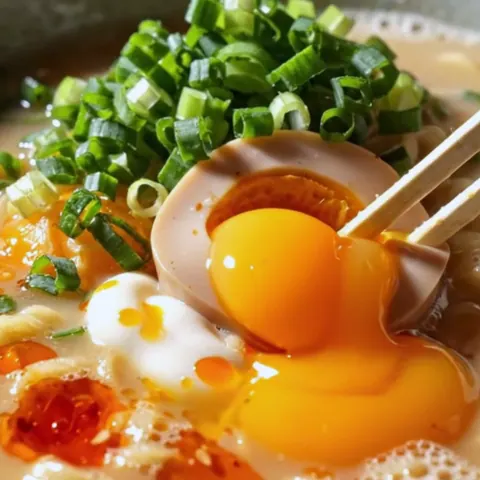
Top the ramen with the halved soy-marinated egg, sliced scallions, and a drizzle of chili oil. Serve immediately while hot.
You’ll need: 6-minute soy-marinated egg, halved · sliced scallions · chili oil
Internal temperature 160°F (71°C)
Look for: The egg yolk should be jammy and glossy, and the scallions add a fresh green contrast.
Tip: For an extra touch, sprinkle with a pinch of sesame seeds if desired (not included in the recipe).
Checkpoint
The final bowl should look inviting: glossy noodles submerged in a creamy broth, topped with a halved jammy egg, scallions, and a drizzle of chili oil. The egg yolk should be set but still moist, and the scallions should add a fresh crunch. Serve immediately for the best texture and temperature.
Doneness
How to tell it’s done
The broth is done when it is smooth, creamy, and slightly thickened, with a light foam on the surface. The noodles should be tender but still chewy, and the egg yolk should be jammy and glossy. If using a fresh egg in the broth, ensure it is cooked through by reaching 160°F (71°C) if you prefer a fully set yolk. For the classic soft yolk, the broth will be slightly under this temperature, so use pasteurized eggs if you are concerned.
Avoid these
Common mistakes
One common mistake is adding the boiling water too quickly, which can cause the egg to scramble. Always pour slowly while whisking constantly. Another mistake is using cold water, which won't emulsify the mayonnaise properly. Also, overcooking the noodles can make them mushy; follow the package timing and drain immediately. Finally, don't skip the garlic and sesame oil—they add essential flavor depth.
Cook safely
Food safety
Safe internal temperatures
Cook to at least these temperatures, measured with an instant-read thermometer in the thickest part.
| Food | Minimum internal temperature |
|---|---|
| Egg dishes | 160°F (71°C) |
Raw or lightly cooked ingredients
The egg yolk in the broth and the jammy egg are not cooked through. Pregnant women, young children, older adults, and anyone with a weakened immune system should use pasteurized eggs.
Better results
Tips
Tip 1
To achieve the perfect jammy egg, bring a small pot of water to a boil, gently lower the egg in, and boil for exactly 6 minutes. Transfer immediately to an ice bath to stop the cooking. The yolk will be set but still moist and creamy. For a soy marinade, combine 2 tablespoons soy sauce, 1 tablespoon mirin, and 1 teaspoon sugar, and let the peeled egg sit in it for at least 30 minutes.
Tip 2
If you want a spicier broth, stir in a teaspoon of chili crisp or a pinch of red pepper flakes along with the seasoning packet. For a richer texture, you can add a small pat of butter to the broth just before serving. The recipe is forgiving, so feel free to adjust the garlic or sesame oil to your taste.
Make it yours
Variations
Spicy Miso Ramen
Stir in 1 teaspoon miso paste and 1 teaspoon chili garlic sauce into the broth before adding the noodles. Top with a sprinkle of shichimi togarashi for extra heat.
Veggie Loaded Ramen
Add a handful of baby spinach, sliced mushrooms, or corn kernels to the boiling water for the last minute of cooking the noodles. This adds color and nutrition without changing the broth.
Garlic Butter Ramen
Whisk in 1 tablespoon unsalted butter along with the egg yolk mixture. The butter adds an extra silky richness and a nutty flavor. Top with a pat of butter just before serving.
Crispy Onion Ramen
Top the finished ramen with a generous spoonful of crispy fried onions or shallots. They add a delightful crunch and a sweet, savory flavor that complements the creamy broth.
On the table
Serving suggestions
Serve this ramen in a deep bowl, with the noodles arranged neatly and the broth poured over. Place the halved egg cut-side up, and sprinkle with scallions. Drizzle chili oil in a circular motion for a beautiful presentation. Pair with a cold beer or a glass of iced green tea for a complete meal.
For a more substantial meal, add a handful of fresh spinach or bok choy to the boiling water for the last minute of cooking, then add to the bowl. You can also top with slices of cooked pork or chicken for extra protein. The ramen is quite rich, so a light side salad with a tangy dressing would balance it nicely.
Leftovers
Storage & make-ahead
- Fridge
- Store leftover broth and noodles separately in airtight containers in the fridge for up to 2 days.
- Freezer
- The broth can be frozen for up to 1 month, but the noodles are best fresh. Thaw in the fridge overnight and reheat gently. The egg is not suitable for freezing.
- Reheat
- Reheat the broth in a saucepan over medium heat, stirring occasionally, until hot. Cook the noodles in boiling water for about 30 seconds to warm them through.
This ramen is best enjoyed immediately, as the noodles will continue to absorb the broth and become soggy. If you must store leftovers, keep the broth and noodles separate and refrigerate for up to 2 days. Reheat the broth gently on the stove, adding a splash of water if needed, and cook the noodles briefly in hot water.
Make ahead
The soy-marinated egg can be made up to 2 days ahead and kept in the marinade in the refrigerator. The garlic can be grated and mixed with the sesame oil a few hours in advance, but the egg yolk and mayo should be added just before cooking. The broth is best made fresh to preserve its creamy texture.
Questions
Frequently asked questions
Can this ramen be made without the egg yolk?
Yes, but the broth will be less creamy and rich. You can increase the Kewpie mayo to 2 tablespoons to compensate, or add a splash of milk or cream. The egg yolk is what gives the broth its velvety texture, so the result will be different.
Why does the broth sometimes curdle?
Curdling happens when the egg yolk gets too hot too quickly. To prevent this, ensure the water is boiling but add it slowly while whisking constantly. Also, make sure the egg yolk is at room temperature before starting. If it does curdle, whisk in a teaspoon of cold water to help smooth it out.
Can this recipe be doubled?
Yes, simply double all the ingredients and use a larger bowl. Whisk the broth in a heatproof bowl or pot to make it easier. The cooking time for the noodles remains the same, but you may need to use a larger pot.
Is it safe to eat raw egg yolk?
The egg yolk in the broth is not fully cooked, as it reaches a temperature below 160°F (71°C) when mixed with the boiling water. If you are concerned about raw eggs, use pasteurized eggs or heat the broth to 160°F (71°C) after mixing. The jammy egg is also soft in the center.
What type of ramen works best?
Any instant ramen with a seasoning packet works, but the thinner noodles found in brands like Maruchan or Sapporo Ichiban are ideal. Avoid ramen that comes with a liquid broth packet, as it may alter the balance of flavors.
Everything in one place: the recipe card below gathers the ingredients, steps and estimated nutrition, ready to print.
Recipe card
Creamy 2-Minute Tonkotsu-Style Ramen Upgrade
Turn a 50-cent pack of instant ramen into a rich, velvety tonkotsu-style bowl with a simple hack: whisk egg yolk, Kewpie mayo, garlic, and sesame oil into the broth.
- Prep
- Cook
- Total
- Servings
- 1 bowl
Ingredients
- 1 pack instant ramen (with seasoning packet)
- 1 large egg yolk
- 1 1/2 tbsp Kewpie mayonnaise
- 1 clove garlic, grated
- 1 tsp toasted sesame oil
- 400 ml boiling water
Topping
- 1 6-minute soy-marinated egg, halved
- 1 tbsp sliced scallions
- chili oil, for drizzling, to taste
Instructions
Whisk the flavor base. In a medium mixing bowl, whisk together the egg yolk, Kewpie mayonnaise, grated garlic, the ramen seasoning packet, and toasted sesame oil until smooth and well combined. The mixture will be thick and paste-like.
Cook the ramen noodles. Bring a medium saucepan of water to a rolling boil. Add the ramen noodles and cook according to package directions, usually 2 to 3 minutes, until tender but still chewy. Reserve 400 ml of the noodle cooking water, then drain the noodles.
Emulsify the broth. Slowly pour the 400 ml of boiling noodle cooking water into the egg-mayo paste while whisking vigorously. Keep whisking until the mixture becomes a rich, frothy, creamy broth, about 30 seconds.
Combine broth and noodles. Add the cooked ramen noodles to the bowl with the broth and stir gently to coat them evenly. The noodles should be fully submerged in the creamy liquid.
Assemble and serve. Top the ramen with the halved soy-marinated egg, sliced scallions, and a drizzle of chili oil. Serve immediately while hot.
Allergens: Gluten, Eggs, Soy, Sesame, Milk
Nutrition (estimated, per serving)
- Calories
- 520 kcal
- Protein
- 14 g
- Carbs
- 54 g
- Fat
- 28 g
Estimates only: values vary with brands, substitutions and portion sizes.
Recipe by EasyCooks Kitchen · easycooksrecipes.com
Share this recipe
Send it to someone who’d love it, or save it for later.
Spotted a mistake in this recipe? Let us know.
Keep cooking


