Crispy Pork Belly Okonomiyaki Savory Cabbage Pancake
Master the art of the Japanese savory pancake with this crispy pork belly okonomiyaki recipe. Featuring a tender cabbage base and signature sauce lattice, it is a perfect home-cooked meal.
Published 12 min read
- Total time
- Prep
- Cook
- Serves
- 2
- Makes 2 pancakes
- Cuisine
- Japanese
- Calories
- 420
- per serving, estimated

On this page16 sections
Crispy pork belly okonomiyaki is the ultimate savory pancake that brings the vibrant energy of Japanese street food directly into your home kitchen. This dish is celebrated for its incredible contrast between the crunchy, rendered pork belly topping and the tender, flavorful cabbage batter. It is a satisfying, multi-layered experience that transforms simple pantry staples into a restaurant-quality meal. By mastering this technique, you can create a centerpiece dish that is as visually stunning as it is delicious to eat.
Okonomiyaki is a beloved Japanese savory pancake, often referred to as a Japanese pizza. The name translates to grilled as you like it, reflecting the versatility of the dish. This specific version highlights the richness of pork belly paired with a base of shredded cabbage, grated nagaimo yam, and a savory dashi-infused batter. The magic happens on a hot griddle, where the cabbage steams into a sweet, tender interior while the exterior develops a golden, crispy crust. Finished with a signature drizzle of tangy sauce and creamy mayonnaise, it offers a perfect balance of flavors in every bite.
The appeal
Why you’ll love it
The combination of nagaimo yam and eggs creates a unique, airy structure that holds the cabbage together perfectly while remaining light. The yam contains natural enzymes that act as a binder, giving the pancake a slightly fluffy texture that distinguishes it from a dense fritter. When cooked at a consistent high heat, the moisture from the cabbage evaporates just enough to concentrate the flavors, resulting in a sweet and savory profile that is deeply satisfying.
Searing the pork belly directly onto the batter allows the fat to render and crisp up, infusing the top of the pancake with rich, savory notes. This technique creates a physical barrier that helps maintain the integrity of the pancake during the flip, ensuring that the pork belly becomes the star of the dish. By using a hot griddle, you achieve a professional-grade char that provides a textural contrast to the soft, tender cabbage and the creamy, tangy mayonnaise garnish.
What you need
Ingredients
Makes 2 pancakes.
Pancake Batter
Toppings
Contains:
- Gluten
- Eggs
- Fish
- Soy
Served raw or lightly cooked
This dish contains eggs that are not cooked through. Use pasteurized eggs for pregnant women, young children, older adults, and those with weakened immune systems.
Tools
Equipment
- Large mixing bowl
- Teppan griddle or large skillet
- Spatula
- Whisk
- Grater
- Squeeze bottle
Swaps
Substitutions
Instead ofNagaimo yam
UseGrated mountain yam or simply use extra flour and dashi if unavailable
Instead ofDashi stock
UseChicken or vegetable broth mixed with a pinch of bonito powder
Instead ofPork belly
UseThinly sliced bacon or pancetta strips
Instead ofOkonomiyaki sauce
UseA blend of Worcestershire sauce, ketchup, and a touch of honey or molasses
Good to know
Notes
For the best results, use a high-quality dashi stock, which provides the authentic umami foundation for the batter. If you cannot find nagaimo yam, you can substitute it with a small amount of extra flour or cornstarch, though the specific texture provided by the yam is authentic to traditional recipes. Ensure that the cabbage is shredded into very thin, consistent ribbons to guarantee that it cooks through evenly and integrates seamlessly with the batter, preventing any large, raw chunks from ruining the pancake's texture.
A heavy-bottomed skillet or a dedicated teppan griddle is essential for achieving the perfect sear without burning the exterior. The temperature control is vital, so monitor your heat carefully to maintain a steady 375°F (190°C). If you are using a standard stovetop, ensure the pan is preheated fully before adding the batter. Using a squeeze bottle for the mayonnaise lattice is a simple way to achieve the professional look seen in street food stalls, allowing for precise control and a beautiful, intricate finish.
Prep
Before you start
Before you begin cooking, ensure all your ingredients are measured and ready, as the cooking process moves quickly once the batter is on the griddle. Finely shred the cabbage into thin ribbons to ensure it softens quickly during the sear. Prepare your sauce and mayonnaise in squeeze bottles for easy application at the end. Make sure your griddle is clean and lightly oiled to prevent sticking. Having your spatula ready and your workspace organized will help you manage the high heat effectively and ensure each pancake is cooked to perfection without any stress during the assembly.
Step by step
Method
Phase 1
Batter preparation
Step 1: Prepare the batter
In a large mixing bowl, combine the shredded green cabbage, grated nagaimo yam, flour, dashi stock, eggs, and tempura bits. Use a whisk or large spoon to fold everything together until the ingredients are thoroughly combined into a cohesive, thick batter. Ensure the cabbage is evenly coated with the mixture to create a stable pancake structure during the cooking process. Do not overmix, as this will lead to a dense texture rather than a light, airy pancake.
You’ll need: shredded green cabbage · grated nagaimo yam · all-purpose flour · dashi stock · large eggs · tempura bits
Look for: The mixture should be thick, with the cabbage held together by the batter.
Tip: Grate the nagaimo carefully, as it can be slippery; use a fine grater to ensure a smooth consistency that binds the pancake effectively.
Checkpoint
At the end of this phase, you should have a thick, cohesive batter where the shredded cabbage is evenly distributed. The mixture should sound slightly moist when mixed, and the aroma of the fresh dashi should be apparent. Check that the cabbage is cut into small, manageable pieces so that the batter can easily bind everything together. If the mixture appears too dry, add a small splash of dashi, but be careful not to make it too loose, as the pancake needs to hold its round shape on the hot griddle surface.
Phase 2
Searing and cooking
Step 2: Sear the base
Heat your teppan griddle or large flat-top skillet to 375°F (190°C). Pour the cabbage batter onto the hot surface, shaping it into a round pancake about one inch thick. Immediately place three strips of pork belly over the top of the raw batter. Cook the pancake for five minutes, allowing the bottom to become golden brown and crispy while the cabbage inside steams gently from the trapped heat.
You’ll need: pork belly
Look for: The pancake should be golden brown on the bottom and the pork belly should start to render its fat.
Tip: Press down lightly with a spatula to ensure the pork belly adheres to the batter as it cooks and browns evenly.
Step 3: Flip and finish
Carefully flip the pancake over using a wide spatula so that the pork belly side is now facing down against the hot griddle. Cook for another five minutes to ensure the pork belly becomes crispy and the internal temperature of the egg mixture reaches 160°F (71°C). The cabbage should be tender and sweet, and the overall structure of the pancake should be firm and stable, indicating that the egg binder is fully cooked and set throughout.
You’ll need: large eggs
Internal temperature 160°F (71°C)
Look for: The pork belly should be crispy and golden, and the pancake should feel firm when pressed.
Tip: Use a steady hand when flipping to keep the pancake intact, as the weight of the cabbage can make it slightly delicate during the movement.
Checkpoint
Once you finish this phase, the okonomiyaki should have a beautiful, golden-brown crust on both sides, and the pork belly should be perfectly rendered and crispy. The pancake should emit a savory, slightly smoky aroma, and the cabbage should be tender. Check that the internal structure is firm and that no liquid batter remains in the center. The pancake should sound crisp when tapped with a spatula. This is the stage where the transformation from individual ingredients into a unified, savory pancake is fully realized and ready for garnishing.
Phase 3
Final garnish
Step 4: Garnish and serve
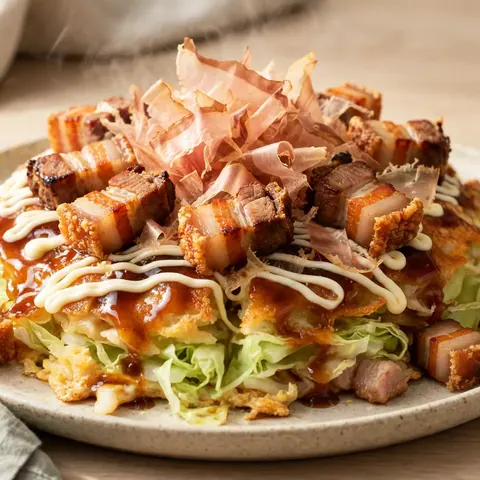
Remove the cooked okonomiyaki from the griddle and place it on a serving plate. Drizzle the top generously with okonomiyaki sauce in a back-and-forth motion. Using a squeeze bottle, apply the Japanese mayonnaise in a decorative lattice pattern over the sauce. Finish by sprinkling a handful of bonito flakes over the top, which will dance from the residual heat of the pancake. Serve immediately while the edges remain crispy and the center is warm and tender.
You’ll need: okonomiyaki sauce · Japanese mayonnaise · bonito flakes
Look for: The bonito flakes should move slightly on the surface of the hot pancake.
Tip: Cut the pancake into wedges using a sharp knife or pizza cutter to ensure clean slices without crushing the crispy pork belly layer.
Checkpoint
The final result should be a visually striking pancake with a glossy sauce and a crisp, white mayonnaise lattice. The bonito flakes should be moving slightly, responding to the residual heat of the pancake. Check that the sauce is applied evenly and the lattice is distinct. The pancake should look appetizing, with the crispy pork belly clearly visible on top. Serve immediately while the contrasts in texture and temperature are at their peak, ensuring every bite provides the intended combination of savory, creamy, and crunchy elements.
Doneness
How to tell it’s done
The pancake is fully cooked when it achieves a deep golden-brown crust on both sides and feels firm to the touch. The internal temperature of the egg mixture must reach 160°F (71°C) to ensure the structure is fully set. The pork belly should be rendered and crisp, providing a audible crunch when sliced. If the pancake feels soft or loose in the middle, continue cooking for an additional minute. The cabbage should be tender and sweet, having released its natural sugars into the batter, resulting in a cohesive, flavorful pancake that holds its shape when lifted.
Avoid these
Common mistakes
A common mistake is overcrowding the griddle, which prevents the pancake from crisping properly and can result in a steamed, soggy texture. Always cook one pancake at a time unless you have a very large surface area. Another error is using too much batter, which makes the pancake difficult to flip and results in a raw, doughy center. Keep the thickness consistent at about one inch. Finally, neglecting to preheat the griddle thoroughly will cause the pancake to stick and prevent the pork belly from crisping correctly, leading to a lackluster final result.
Cook safely
Food safety
Safe internal temperatures
Cook to at least these temperatures, measured with an instant-read thermometer in the thickest part.
| Food | Minimum internal temperature |
|---|---|
| Egg dishes | 160°F (71°C) |
| Whole cuts of meat | 145°F (63°C)Then rest at least 3 minutes |
Raw or lightly cooked ingredients
This dish contains eggs that are not cooked through. Use pasteurized eggs for pregnant women, young children, older adults, and those with weakened immune systems.
Better results
Tips
Tip 1
To achieve the most authentic texture, always use fresh green cabbage and grate the nagaimo yam just before mixing the batter. The yam oxidizes quickly, so timing is important. If you want an extra layer of flavor, consider adding a sprinkle of ginger or green onions into the batter, though keep the additions minimal to maintain the integrity of the classic pork belly okonomiyaki. The key to success is keeping the pancake thickness consistent so that the heat penetrates through the center at the same rate the exterior browns.
Tip 2
When applying the mayonnaise lattice, start from one side of the pancake and move in a steady, continuous motion to create clean, professional-looking lines. If the mayonnaise is too thick, you can thin it slightly with a drop of water or vinegar to make it easier to squeeze. The bonito flakes are essential for the traditional flavor profile, as they add a deep, smoky umami that complements the richness of the pork belly and the tanginess of the okonomiyaki sauce perfectly, so do not skip this final garnish.
Make it yours
Variations
Seafood Okonomiyaki
Replace the pork belly with a mix of shrimp, squid, and octopus. Sear the seafood directly onto the batter as you would with the pork, ensuring the shellfish cooks through until opaque and tender, providing a delicious oceanic flavor profile to the savory pancake.
Cheese and Corn
Add a generous layer of shredded mozzarella or processed cheese and sweet corn kernels to the batter before cooking. The cheese creates a gooey, melted center that pairs beautifully with the crispy pork belly and the sweetness of the steamed cabbage.
Extra Vegetable
Incorporate finely sliced scallions, grated carrots, or bean sprouts into the batter. These additions add fresh texture and color, making the pancake feel even more substantial while maintaining the core savory flavor profile of the traditional cabbage-based okonomiyaki.
Spicy Kick
Mix a teaspoon of chili paste or finely chopped jalapeños into the batter for a spicy variation. The heat cuts through the richness of the pork belly and the creamy mayonnaise, offering a modern twist on the classic savory pancake recipe.
On the table
Serving suggestions
Serve the okonomiyaki immediately while it is still hot from the griddle to enjoy the best contrast between the crispy pork belly and the tender cabbage interior. It is traditionally served on a flat plate or a small wooden board, allowing each diner to cut their own wedges. Pair the dish with a simple side, such as pickled ginger or a light salad, to balance the richness of the savory pancake. The goal is to highlight the pancake as the main event of the meal, with its layers of flavor and texture.
When serving, provide a sharp knife or a clean spatula for each person to slice through the pancake easily without compressing the layers. The combination of the tangy sauce and the creamy mayonnaise creates a rich flavor profile that needs no further adjustment, but you can offer extra sauce on the side if desired. Encourage your guests to enjoy the dish while the bonito flakes are still reacting to the heat, as this sensory detail is part of the traditional okonomiyaki experience and adds to the overall enjoyment of the meal.
Leftovers
Storage & make-ahead
- Fridge
- Store in an airtight container in the refrigerator for up to 2 days. The texture may soften, but the flavor remains excellent.
- Freezer
- Wrap tightly in plastic wrap and store in a freezer-safe bag for up to 1 month. Thaw in the refrigerator before reheating.
- Reheat
- Reheat in a skillet over medium heat until warmed through and crispy on the edges, or use an oven at 350°F (175°C) for 10 minutes.
If you have leftovers, allow the okonomiyaki to cool completely at room temperature for no more than two hours before storing. Place the cooled pancake in an airtight container to keep it from drying out. While the crispy texture of the pork belly is best enjoyed fresh, proper storage will keep the pancake moist and flavorful. Ensure that the container is sealed tightly to prevent any absorption of other refrigerator odors, which could alter the delicate balance of the dashi and sauce flavors.
Make ahead
You can prepare the batter components in advance, keeping the shredded cabbage and the liquid ingredients in separate containers until you are ready to cook. However, do not combine the batter until the moment you are ready to sear, as the cabbage will release too much water if it sits in the batter for too long, resulting in a soggy pancake. The sauce, mayonnaise, and bonito flakes can be kept ready at room temperature, making the final assembly a quick and easy process once the pancakes are cooked.
Questions
Frequently asked questions
Can the nagaimo yam be skipped?
Yes, it can be skipped if it is unavailable. While nagaimo provides a unique, fluffy texture due to its binding properties, you can simply increase the amount of flour and dashi slightly to achieve a similar consistency. The pancake will still be delicious and hold together well, though it may be slightly denser than the version made with the traditional yam.
How is the pork belly determined to be perfectly crispy?
The pork belly is done when it has turned a deep, golden-brown color and the fat has rendered significantly. You should be able to see the edges curling and becoming rigid. When you press the pancake with a spatula, the pork belly should offer a firm, crunchy resistance, indicating that it has achieved the desired crispy texture that contrasts with the soft cabbage interior.
Why is it important to use dashi instead of water?
Dashi provides a foundational umami flavor that is essential for authentic Japanese cooking. Using water would result in a bland pancake, as the dashi infuses the batter with a savory, oceanic depth that complements the cabbage and pork belly. If you do not have dashi, a high-quality chicken or vegetable broth is a suitable alternative, but it will change the flavor profile slightly.
Can this be made ahead of time?
It is best to cook the okonomiyaki immediately before serving to maintain the crispy texture of the pork belly and the lightness of the cabbage. You can prepare the individual ingredients in advance, but avoid mixing the batter until you are ready to heat the griddle, as the cabbage will release moisture and cause the batter to become watery if it sits for too long.
What is the best way to get a perfect mayo lattice?
The secret to a perfect mayonnaise lattice is using a squeeze bottle with a narrow tip. Start your drizzle on one side of the pancake and move in a steady, continuous motion across the surface. Once you have finished the lines in one direction, rotate the pancake or move your hand in the opposite direction to create the cross-hatched pattern. If the mayonnaise is too thick, thin it with a tiny amount of vinegar.
Everything in one place: the recipe card below gathers the ingredients, steps and estimated nutrition, ready to print.
Recipe card
Crispy Pork Belly Okonomiyaki Savory Cabbage Pancake
Master the art of the Japanese savory pancake with this crispy pork belly okonomiyaki recipe. Featuring a tender cabbage base and signature sauce lattice, it is a perfect home-cooked meal.
- Prep
- Cook
- Total
- Servings
- 2 pancakes
Ingredients
Pancake Batter
- 300 g finely shredded green cabbage
- 100 g grated nagaimo yam
- 80 g all-purpose flour
- 1/2 cup dashi stock
- 2 large eggs
- 2 tbsp tempura bits
Toppings
- 6 strips pork belly
- to taste okonomiyaki sauce
- to taste Japanese mayonnaise
- to taste bonito flakes
Instructions
Prepare the batter. In a large mixing bowl, combine the shredded green cabbage, grated nagaimo yam, flour, dashi stock, eggs, and tempura bits. Use a whisk or large spoon to fold everything together until the ingredients are thoroughly combined into a cohesive, thick batter. Ensure the cabbage is evenly coated with the mixture to create a stable pancake structure during the cooking process. Do not overmix, as this will lead to a dense texture rather than a light, airy pancake.
Sear the base. Heat your teppan griddle or large flat-top skillet to 375°F (190°C). Pour the cabbage batter onto the hot surface, shaping it into a round pancake about one inch thick. Immediately place three strips of pork belly over the top of the raw batter. Cook the pancake for five minutes, allowing the bottom to become golden brown and crispy while the cabbage inside steams gently from the trapped heat.
Flip and finish. Carefully flip the pancake over using a wide spatula so that the pork belly side is now facing down against the hot griddle. Cook for another five minutes to ensure the pork belly becomes crispy and the internal temperature of the egg mixture reaches 160°F (71°C). The cabbage should be tender and sweet, and the overall structure of the pancake should be firm and stable, indicating that the egg binder is fully cooked and set throughout.
Garnish and serve. Remove the cooked okonomiyaki from the griddle and place it on a serving plate. Drizzle the top generously with okonomiyaki sauce in a back-and-forth motion. Using a squeeze bottle, apply the Japanese mayonnaise in a decorative lattice pattern over the sauce. Finish by sprinkling a handful of bonito flakes over the top, which will dance from the residual heat of the pancake. Serve immediately while the edges remain crispy and the center is warm and tender.
Allergens: Gluten, Eggs, Fish, Soy
Nutrition (estimated, per serving)
- Calories
- 420 kcal
- Protein
- 18.5 g
- Carbs
- 32 g
- Fat
- 24.5 g
- Fiber
- 3.5 g
- Sugar
- 4 g
- Sodium
- 850 mg
Estimates only: values vary with brands, substitutions and portion sizes.
Recipe by EasyCooks Kitchen · easycooksrecipes.com
Share this recipe
Send it to someone who’d love it, or save it for later.
Spotted a mistake in this recipe? Let us know.
Keep cooking


