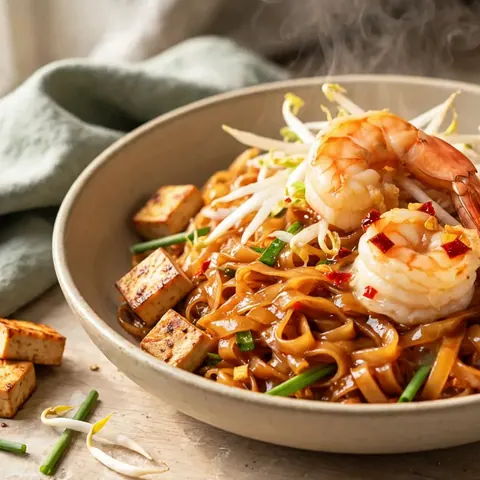
Authentic Smoky Pad Thai with Tiger Prawns
Experience the bold flavors of a Bangkok street food favorite. This authentic Pad Thai recipe features succulent tiger prawns, caramelized rice noodles, and a signature tamarind glaze for a smoky, restaurant-quality meal at home.
Published 12 min read
- Total time
- Prep
- Cook
- Serves
- 2
- Cuisine
- Thai
- Calories
- 450
- per serving, estimated

On this page16 sections
Unlock the authentic, smoky essence of Bangkok street food right in your own kitchen with this rapid-fire Pad Thai recipe. By utilizing high-heat wok techniques, you can achieve that elusive, restaurant-quality char in just minutes. This method focuses on efficiency and precision, ensuring that every element—from the succulent tiger prawns to the perfectly caramelized rice noodles—retains its ideal texture and flavor profile, creating a balanced, professional dish that is both accessible and incredibly rewarding to prepare at home.
Pad Thai is a culinary masterpiece defined by its intricate balance of sweet, sour, salty, and spicy notes. This version highlights the importance of the wok's intense heat, often referred to as wok hei, which imparts a unique, smoky depth that defines authentic Thai cooking. With carefully prepared ingredients and a streamlined assembly process, you can master this classic dish without needing years of experience. Whether you are a seasoned home cook or just starting your journey into Thai cuisine, this recipe provides the fundamental steps to creating a truly memorable meal that captures the vibrant energy of a bustling Southeast Asian night market.
The appeal
Why you’ll love it
The method works by prioritizing extremely high heat, which is essential for achieving the necessary caramelization of the rice noodles. When the wok is properly smoking, the tamarind-palm sugar sauce reduces rapidly, coating the noodles in a sticky, savory layer that locks in flavor rather than steaming the dish into a soft, unappealing consistency. This technique ensures that the prawns stay juicy and the vegetables maintain their structural integrity throughout the cooking process.
Additionally, the modular approach of searing the proteins and eggs separately before combining them prevents uneven cooking. By clearing the wok to scramble the eggs, you ensure they remain tender and perfectly set without curdling or sticking to the noodles. This systematic process allows for total control over every component, resulting in a cohesive dish where every bite offers a harmonious blend of textures and bold, authentic flavors that are characteristic of the best street-side Pad Thai stalls.
What you need
Ingredients
Makes 2 servings.
Main Ingredients
Sauce
Garnish
Contains:
- Crustaceans
- Eggs
- Fish
- Peanuts
- Soy
Served raw or lightly cooked
The eggs in this recipe are served soft. Use pasteurised eggs for pregnant women, young children, older adults, and anyone with a weakened immune system.
Tools
Equipment
- Carbon-steel wok
- Long-handled tongs
- Mixing bowls
- Chef knife
- Cutting board
- Measuring cups
- Measuring spoons
Swaps
Substitutions
Instead ofTiger prawns
UseFirm tofu cubes or sliced chicken breast for a different protein base
Instead ofGarlic chives
UseGreen onions or scallions provide a similar mild onion flavor
Instead ofChantaboon rice noodles
UseStandard dried rice sticks found in most Asian grocery aisles
Instead ofPalm sugar
UseLight brown sugar can be used if palm sugar is unavailable
Good to know
Notes
For the best results, use a traditional carbon-steel wok, as it conducts heat more efficiently than standard non-stick pans. If you do not have a wok, a large, heavy-bottomed stainless steel skillet is a suitable alternative, though you may need to cook in smaller batches to maintain the necessary high heat. Ensure all ingredients are prepped, measured, and placed within reach before you turn on the burner, as the actual cooking process moves very quickly once the high heat is applied.
When selecting ingredients, look for fresh tiger prawns that are plump and firm to the touch. If garlic chives are unavailable at your local market, standard green onions or scallions are excellent substitutes, though they will offer a slightly milder onion flavor. The quality of the tamarind-palm sugar fish sauce is paramount; opt for a balanced, high-quality bottled version if you are not making your own, as it serves as the foundation for the entire dish's flavor profile.
Prep
Before you start
Before you begin, ensure your workspace is completely organized with all ingredients prepped and ready for immediate use. Peel and devein the tiger prawns, cube the pressed tofu, and cut the garlic chives into uniform pieces. Soak the rice noodles in warm water until they are pliable but still firm, then drain them thoroughly to prevent excess moisture. Having your sauce measured and your garnishes prepared in small bowls will allow you to focus entirely on the rapid, high-heat cooking process without any pauses or interruptions.
Step by step
Method
Phase 1
Wok Searing and Noodle Integration
Step 1: Sear Prawns and Tofu
Heat your carbon-steel wok over high heat until it begins to smoke slightly. Add the tiger prawns, pressed tofu, and garlic chives to the center. Sear these ingredients quickly, ensuring the prawns reach an internal temperature of 145°F (63°C) for safety. Move them to the outer edges of the wok to make room for the noodles in the next step.
You’ll need: tiger prawns · pressed tofu · garlic chives
Internal temperature 145°F (63°C)
Look for: Look for the prawns to turn opaque and pink while the tofu develops a light golden-brown sear on its exterior surfaces.
Tip: Keep the wok moving constantly to ensure even heat distribution and prevent any single ingredient from burning during this rapid searing process.
Step 2: Incorporate Rice Noodles
Add the soaked chantaboon rice noodles directly into the center of the hot wok. Immediately pour the tamarind-palm sugar fish sauce over the noodles. Use your tongs to vigorously toss the noodles with the sauce, allowing them to absorb the liquid and soften into a glossy, uniform texture as they heat through.
You’ll need: chantaboon rice noodles · tamarind-palm sugar fish sauce
Look for: The noodles should quickly soften and change color as they absorb the dark tamarind sauce, becoming glossy and flexible within about one minute of tossing.
Tip: Ensure the noodles are fully drained after soaking so they do not steam in the wok, which helps them caramelize properly in the tamarind glaze.
Checkpoint
At this stage, the prawns and tofu should be seared to a golden brown and the noodles should be coated in the tamarind reduction. The wok should be hot enough that the sauce sizzles immediately upon contact, creating a fragrant steam. Check that the prawns are fully opaque and that the noodles are soft and glossy. If the noodles appear dry, add a tiny splash of water, but ensure the liquid reduces quickly before moving to the next step to maintain the desired flavor concentration.
Phase 2
Egg Scramble and Final Toss
Step 3: Caramelize and Scramble
Push all the ingredients to one side of the wok. Add the beaten farm eggs into the cleared space. Allow the eggs to set, then gently scramble them until they reach an internal temperature of 160°F (71°C) to ensure they are cooked through. Once firm, incorporate the eggs back into the noodle mixture to ensure they are evenly distributed throughout the dish.
You’ll need: farm eggs
Internal temperature 160°F (71°C)
Look for: The eggs should form creamy curds that are fully cooked through, appearing integrated and set before mixing them into the noodles.
Tip: Work quickly once the eggs hit the wok to prevent them from drying out, aiming for a texture that is tender and perfectly integrated.
Step 4: Final Sauté with Sprouts
Add the bean sprouts to the wok during the final minute of cooking. Toss everything together over the high flame to wilt the sprouts slightly while maintaining their signature crisp texture. The entire mixture should be steaming hot and well-coated in the reduction, with a distinct smoky aroma emanating from the wok's surface.
You’ll need: bean sprouts
Look for: The bean sprouts should remain slightly crisp to the bite, providing a fresh contrast to the tender noodles and savory, caramelized tamarind-coated prawn mixture.
Tip: Do not overcook the bean sprouts, as their crunch is essential to the authentic mouthfeel of this dish, adding a necessary textural dimension to every bite.
Checkpoint
The eggs should now be scrambled into creamy, set curds that are incorporated into the noodle mixture. The bean sprouts should be added and tossed just long enough to wilt slightly while maintaining their crunch. The entire mixture should be uniform in color and texture, with a rich, savory aroma. Verify that the eggs are completely cooked and that no liquid remains at the bottom of the wok, ensuring a clean, professional finish that highlights the quality of the ingredients.
Phase 3
Garnish and Final Presentation
Step 5: Garnish and Serve
Remove the wok from the heat immediately. Transfer the Pad Thai to serving plates. Top each portion with a generous sprinkle of crushed peanuts and chili flakes. Serve alongside fresh lime wedges, which the diner can squeeze over the noodles just before eating to add a bright, acidic finish to the deep, smoky flavors.
You’ll need: crushed peanuts · fresh lime · chili flakes
Look for: The dish is ready when it is steaming hot and the garnishes are neatly arranged, inviting an immediate serving while the flavors are at their peak.
Tip: Squeezing the lime juice just before the first bite is crucial for balancing the sweetness of the tamarind and the saltiness of the fish sauce.
Checkpoint
The final phase involves transferring the Pad Thai to plates and applying the garnishes. The crushed peanuts should provide a nutty crunch, and the chili flakes should add a subtle heat. The lime wedges should be placed on the side to maintain their freshness until the diner is ready to eat. The dish should look vibrant, with distinct textures from the prawns, tofu, sprouts, and garnishes, ready to be enjoyed immediately while the smoky flavors are at their absolute peak of intensity.
Doneness
How to tell it’s done
The dish is perfectly done when the prawns are opaque, firm, and have reached an internal temperature of 145°F (63°C). The noodles should be tender yet retain a slight chew, uniformly coated in the dark, reduced tamarind sauce. The eggs should be fully set, appearing creamy and integrated throughout the mixture without any runny residue. The entire dish should be steaming hot, aromatic, and free of excess liquid at the bottom of the wok, indicating that the flavors have properly concentrated during the final high-heat toss.
Avoid these
Common mistakes
A common mistake is overcrowding the wok, which lowers the temperature and causes the ingredients to steam rather than sear, leading to mushy noodles. Avoid adding the sauce too early, which can prevent the noodles from properly caramelizing. Another error is overcooking the bean sprouts, which should provide a crisp textural contrast. Finally, ensure the eggs are fully set before incorporating them into the main mixture, as failing to do so will result in a messy, wet texture that compromises the integrity of the finished Pad Thai.
Cook safely
Food safety
Safe internal temperatures
Cook to at least these temperatures, measured with an instant-read thermometer in the thickest part.
| Food | Minimum internal temperature |
|---|---|
| Shellfish | 145°F (63°C) |
| Egg dishes | 160°F (71°C) |
Raw or lightly cooked ingredients
The eggs in this recipe are served soft. Use pasteurised eggs for pregnant women, young children, older adults, and anyone with a weakened immune system.
Better results
Tips
Tip 1
Achieving authentic wok hei requires the highest heat your stove can safely provide. If you are using an electric or induction cooktop, consider using a high-quality, heavy-duty wok that can retain heat effectively. Do not be afraid of the high heat; the goal is to create a rapid sear that caramelizes the sauce onto the noodles, which is the secret to that signature street-food taste. If the wok starts to smoke excessively, ensure your kitchen is well-ventilated, as this is a natural part of the process.
Tip 2
For a more complex flavor profile, you can adjust the ratio of tamarind to palm sugar based on your preference for sour versus sweet notes. Always taste the sauce before adding it to the wok to ensure it meets your expectations. Additionally, adding the garnishes at the very last moment preserves their texture; the peanuts should remain crunchy, and the lime should be kept separate until the moment of consumption to keep the dish's final flavor profile bright, balanced, and perfectly fresh for the diner.
Make it yours
Variations
Chicken Pad Thai
Substitute the tiger prawns with thinly sliced chicken breast. Sear the chicken until it reaches 165°F (74°C) before adding the noodles. This variation offers a hearty, familiar flavor profile that pairs perfectly with the tamarind glaze and scrambled eggs, making it a popular choice for those who prefer poultry over shellfish.
Vegetarian Tofu Pad Thai
Increase the amount of pressed tofu and add a variety of colorful vegetables like julienned carrots and snap peas. Ensure the fish sauce is replaced with a high-quality vegetarian stir-fry sauce or a soy sauce and mushroom broth blend to maintain the savory depth of the dish without any animal-based ingredients.
Spicy Chili Pad Thai
Incorporate fresh bird's eye chilies into the initial sear along with the garlic chives. This adds a clean, sharp heat that permeates the entire dish. Adjust the quantity of chilies based on your heat preference, ensuring they are finely minced to disperse the spice evenly throughout the noodles and sauce.
Extra Crunchy Peanut Pad Thai
Double the amount of crushed peanuts and add a tablespoon of smooth peanut butter into the tamarind sauce before tossing. This creates a richer, more decadent glaze that clings to the noodles, providing an intense nutty flavor that complements the sweetness of the palm sugar and the saltiness of the fish sauce.
On the table
Serving suggestions
Serve the Pad Thai immediately on warm plates to maintain the ideal temperature and texture of the noodles and prawns. The dish should be presented with the garnishes clearly visible, inviting the diner to mix the crushed peanuts, chili flakes, and fresh lime juice into the noodles themselves. This interactive element not only enhances the presentation but also allows each person to customize the balance of acidity and heat, ensuring a personalized dining experience that highlights the fresh, vibrant components of the traditional recipe.
Consider pairing this dish with a cooling beverage to balance the intensity of the smoky wok flavors. A chilled coconut water or a light, crisp Thai-style iced tea complements the savory notes of the fish sauce and tamarind glaze perfectly. By serving the meal as soon as it leaves the wok, you guarantee that the prawns remain succulent and the bean sprouts provide that essential, refreshing crunch, delivering the most authentic and satisfying experience possible for your guests or family members at home.
Leftovers
Storage & make-ahead
- Fridge
- Store in an airtight container in the refrigerator for up to 2 days.
- Reheat
- Reheat in a hot wok or skillet with a tiny splash of water until steaming hot, tossing constantly for about 2 minutes.
Store any leftovers in an airtight container to maintain moisture and prevent the noodles from drying out. Place them in the refrigerator promptly, ensuring they have cooled for no more than two hours after cooking. When properly stored, the dish will remain fresh for up to two days, though the texture of the rice noodles and the crunch of the bean sprouts are best enjoyed immediately after preparation. Avoid storing with the lime wedges, as the acidity can alter the flavors over time.
Make ahead
While Pad Thai is best served immediately, you can prepare the components ahead of time to streamline the final assembly. Soak the rice noodles, chop the chives, and prepare the tamarind sauce in advance. Keep the prawns and tofu refrigerated until you are ready to cook. Having all ingredients pre-portioned and ready will allow you to complete the high-heat cooking process in minutes, ensuring that you can serve a fresh, high-quality meal even on busy weeknights without compromising on the authentic texture.
Questions
Frequently asked questions
Can this recipe be made with other types of noodles?
While chantaboon rice noodles are traditional, you can use other types of flat rice noodles if they are available. Ensure they are soaked according to the package instructions until flexible but still firm. Avoid using wheat-based noodles, as they do not have the same texture and will not absorb the tamarind sauce in the same way, which is crucial for achieving an authentic Pad Thai experience at home.
Why is the wok temperature so important?
The high heat of the wok is essential for creating wok hei, or the breath of the wok. This unique, smoky flavor is developed when the sauce and ingredients are seared rapidly at very high temperatures. It also ensures that the noodles caramelize rather than steam, giving them a distinct, chewy texture. Without this high heat, the dish may lack the depth and complexity that defines professional-quality Pad Thai.
How can the sauce be adjusted for sweetness?
The balance of the sauce depends on your personal preference. To make the dish sweeter, add a small amount of palm sugar or light brown sugar to the tamarind mixture. To increase the acidity, add a bit more tamarind concentrate. Always adjust the sauce in small increments and taste it before adding it to the wok, as the flavors will concentrate during the rapid cooking process, becoming more intense as the liquid reduces.
What is the best way to prevent the noodles from sticking?
To prevent noodles from sticking, ensure they are thoroughly drained after soaking. Do not over-soak them; they should be pliable but still firm to the touch. Using a well-seasoned carbon-steel wok and ensuring it is sufficiently hot before adding the noodles will also help. Keep the ingredients moving constantly with your tongs during the cooking process to ensure even coating and to prevent any single part of the noodle mass from clumping together.
Can the bean sprouts be omitted?
While bean sprouts are a key component of traditional Pad Thai, they can be omitted if preferred. However, they provide a necessary fresh crunch that balances the tender noodles and savory sauce. If you choose to omit them, consider adding another crunchy element, such as thinly sliced radish or more crushed peanuts, to maintain the desired textural contrast that is so essential to the authentic eating experience of this classic Thai noodle dish.
Everything in one place: the recipe card below gathers the ingredients, steps and estimated nutrition, ready to print.
Recipe card
Authentic Smoky Pad Thai with Tiger Prawns
Experience the bold flavors of a Bangkok street food favorite. This authentic Pad Thai recipe features succulent tiger prawns, caramelized rice noodles, and a signature tamarind glaze for a smoky, restaurant-quality meal at home.
- Prep
- Cook
- Total
- Servings
- 2 servings
Ingredients
Main Ingredients
- 200 g tiger prawns, peeled and deveined
- 100 g pressed tofu, cubed
- 1/4 cup garlic chives, cut into 2-inch pieces
- 200 g chantaboon rice noodles, soaked in warm water
- 2 farm eggs, lightly beaten
- 1 cup bean sprouts
Sauce
- 80 ml tamarind-palm sugar fish sauce
Garnish
- 2 tbsp crushed peanuts
- 1 fresh lime, cut into wedges
- 1 tsp chili flakes
Instructions
Sear Prawns and Tofu. Heat your carbon-steel wok over high heat until it begins to smoke slightly. Add the tiger prawns, pressed tofu, and garlic chives to the center. Sear these ingredients quickly, ensuring the prawns reach an internal temperature of 145°F (63°C) for safety. Move them to the outer edges of the wok to make room for the noodles in the next step.
Incorporate Rice Noodles. Add the soaked chantaboon rice noodles directly into the center of the hot wok. Immediately pour the tamarind-palm sugar fish sauce over the noodles. Use your tongs to vigorously toss the noodles with the sauce, allowing them to absorb the liquid and soften into a glossy, uniform texture as they heat through.
Caramelize and Scramble. Push all the ingredients to one side of the wok. Add the beaten farm eggs into the cleared space. Allow the eggs to set, then gently scramble them until they reach an internal temperature of 160°F (71°C) to ensure they are cooked through. Once firm, incorporate the eggs back into the noodle mixture to ensure they are evenly distributed throughout the dish.
Final Sauté with Sprouts. Add the bean sprouts to the wok during the final minute of cooking. Toss everything together over the high flame to wilt the sprouts slightly while maintaining their signature crisp texture. The entire mixture should be steaming hot and well-coated in the reduction, with a distinct smoky aroma emanating from the wok's surface.
Garnish and Serve. Remove the wok from the heat immediately. Transfer the Pad Thai to serving plates. Top each portion with a generous sprinkle of crushed peanuts and chili flakes. Serve alongside fresh lime wedges, which the diner can squeeze over the noodles just before eating to add a bright, acidic finish to the deep, smoky flavors.
Allergens: Crustaceans, Eggs, Fish, Peanuts, Soy
Nutrition (estimated, per serving)
- Calories
- 450 kcal
- Protein
- 22 g
- Carbs
- 65 g
- Fat
- 12 g
- Fiber
- 3 g
- Sugar
- 15 g
- Sodium
- 850 mg
Estimates only: values vary with brands, substitutions and portion sizes.
Recipe by EasyCooks Kitchen · easycooksrecipes.com
Share this recipe
Send it to someone who’d love it, or save it for later.
Spotted a mistake in this recipe? Let us know.
Keep cooking


