Beef Bulgogi Udon with Melted Mozzarella
Caramelized soy-pear beef bulgogi tossed with chewy udon noodles and topped with melted mozzarella — a sweet, smoky Korean BBQ dinner in 15 minutes.
Published Updated 11 min read
- Total time
- Prep
- Cook
- Serves
- 4
- Cuisine
- Korean
- Calories
- 650
- per serving, estimated

On this page16 sections
This beef bulgogi udon is the weeknight dinner that feels like a special occasion. Thin slices of ribeye are marinated in a sweet and savory soy-pear sauce, then stir-fried in a screaming-hot wok until caramelized. Chewy udon noodles join the pan, and a blanket of melted mozzarella turns the whole thing into a stretchy, smoky, irresistible bowl of comfort. It comes together in just 15 minutes, but tastes like it simmered for hours.
Korean beef bulgogi is traditionally grilled or stir-fried, but pairing it with thick udon noodles and melted mozzarella takes it to a whole new level. The marinade — soy sauce, grated Asian pear, sesame oil, garlic, and brown sugar — does double duty: it flavors the beef and tenderizes it, while the pear adds a natural sweetness that caramelizes beautifully in the hot wok. The udon noodles soak up the glossy sauce, and the mozzarella melts into a creamy, stretchy layer that coats every bite. This recipe is perfect for a busy weeknight when you want something fast but deeply satisfying. Serve it straight from the wok for the full dramatic cheese pull.
The appeal
Why you’ll love it
The marinade is the heart of this dish. Grated Asian pear contains enzymes that naturally tenderize the ribeye, while the brown sugar and soy sauce create a caramelized crust when the beef hits the hot wok. The high heat of the wok (220°C / 425°F) sears the beef quickly, locking in juices and developing a smoky char that mimics traditional Korean BBQ. Stir-frying in a single layer ensures even browning and prevents the beef from steaming.
The mozzarella is the unexpected twist. As it melts over the hot noodles, it creates a creamy, stretchy sauce that binds the beef and udon together. The mild flavor of mozzarella doesn't overpower the bold bulgogi marinade, but adds richness and a satisfying gooey texture. The contrast between the chewy noodles, tender beef, and melted cheese is what makes this dish a viral sensation.
What you need
Ingredients
Makes 4 servings.
Contains:
- Gluten
- Soy
- Milk
- Sesame
Tools
Equipment
- Large wok or skillet
- Cutting board
- Chef's knife
- Measuring spoons
- Grater
- Spatula
Swaps
Substitutions
Instead ofAsian pear
UseUse 1/2 grated apple or 1 tbsp apple juice mixed with 1 tsp sugar as a substitute for sweetness and tenderizing.
Instead ofRibeye
UseSubstitute with thinly sliced sirloin or flank steak, sliced against the grain.
Instead ofUdon noodles
UseUse thick wheat noodles like lo mein or spaghetti if udon is unavailable.
Instead ofMozzarella
UseUse provolone or low-moisture part-skim mozzarella for a similar melt and stretch.
Good to know
Notes
Look for thinly sliced ribeye at Asian markets or ask your butcher to slice it for you. If you can't find it, partially freeze a ribeye steak and slice it as thin as possible. The udon noodles should be the thick, chewy kind — fresh or frozen udon works best. Pre-cooked vacuum-sealed udon is convenient and reheats well in the wok. For the mozzarella, use low-moisture whole-milk mozzarella for the best melt and stretch.
The grated Asian pear is essential — it adds sweetness and helps tenderize the beef. If you can't find Asian pear, use a regular pear or apple. The scallions add a fresh onion flavor and a pop of color, so don't skip them. You can substitute the mozzarella with provolone or a mild white cheddar if you prefer, but mozzarella gives the most iconic cheese pull.
Prep
Before you start
Before you start, make sure all your ingredients are prepped and within reach: the beef should be marinated, the udon noodles rinsed and separated, the scallions sliced, and the mozzarella shredded. This dish cooks fast, so having everything ready ensures a smooth stir-fry. If you're using frozen udon, thaw it in the refrigerator overnight or run it under hot water until the noodles separate. The wok should be clean and dry before heating. Also, make sure you have a lid or a baking sheet that fits over your wok — you'll need it to melt the cheese.
Step by step
Method
Phase 1
Marinate and prep
Step 1: Marinate the beef
In a medium bowl, combine the thinly sliced ribeye with soy sauce, grated Asian pear, sesame oil, minced garlic, and brown sugar. Stir until every slice is coated. Cover and refrigerate while preparing the other ingredients, up to 30 minutes.
You’ll need: thinly sliced ribeye beef · soy sauce · grated Asian pear · sesame oil · garlic, minced · brown sugar
Look for: The beef should be glossy and evenly coated with the marinade.
Tip: For easier slicing, freeze the ribeye for 15 minutes before cutting.
Step 2: Prepare the noodles and scallions
If using pre-cooked udon noodles, rinse them under hot water to separate and warm through. Slice the scallions thinly, separating white and green parts. Keep the noodles and scallions within reach for the stir-fry.
You’ll need: udon noodles · scallions, sliced
Look for: Noodles should be flexible and separate, not stuck in a clump.
Tip: Rinsing in hot water also removes excess starch that can cause sticking.
Checkpoint
At the end of this phase, the beef is coated in a glossy marinade and resting in the refrigerator. The udon noodles are separated and ready to go, and the scallions are sliced. The kitchen smells sweet and savory from the soy, pear, and garlic. The beef should be kept cold until the wok is ready, and the noodles should be at room temperature or slightly warm.
Phase 2
Sear and toss
Step 3: Heat the wok until smoking
Place a large wok or skillet over high heat and let it get very hot, about 2 minutes. The wok should be smoking lightly before you add the beef. Do not add oil yet, as the beef will release its own fat.
Look for: A drop of water should sizzle and evaporate instantly on the surface.
Tip: A well-heated wok prevents sticking and gives a nice char.
Step 4: Stir-fry the beef
Add the marinated beef to the hot wok in a single layer. Let it sear undisturbed for 30 seconds, then stir-fry vigorously for 1 1/2 minutes, until the beef is browned and caramelized but still tender. Let it rest for 3 minutes before slicing.
You’ll need: thinly sliced ribeye beef
Internal temperature 145°F (63°C)
Look for: The beef should be deeply browned with caramelized edges, and the marinade should form a glossy glaze.
Tip: Work in batches if your wok is small to maintain high heat.
Step 5: Add noodles and scallions
Add the udon noodles and the white parts of the scallions to the wok. Toss everything together for 1 minute, allowing the noodles to absorb the sauce and pick up some char from the wok.
You’ll need: udon noodles · scallions, sliced
Look for: The noodles should be coated in the glossy sauce and slightly charred in spots.
Tip: Use tongs to toss the noodles without breaking them.
Checkpoint
The wok is smoking hot, and the beef sizzles as it hits the surface, releasing a rich, caramelized aroma. The edges of the beef turn deep brown, and the marinade reduces into a glossy glaze. As the noodles go in, they pick up the sauce and a hint of char. The whole pan is alive with steam and sizzling sounds, and the scallions add a fresh, sharp scent. The beef should be cooked through and the noodles evenly coated.
Phase 3
Melt and serve
Step 6: Melt the mozzarella on top
Reduce the heat to medium-low. Sprinkle the shredded mozzarella evenly over the noodles and beef. Cover the wok with a lid or a baking sheet for 1 minute, until the cheese is melted and stretchy.
You’ll need: mozzarella, shredded
Look for: The cheese should be fully melted and beginning to bubble at the edges.
Tip: Covering traps steam and melts the cheese without overcooking the beef.
Step 7: Finish and serve
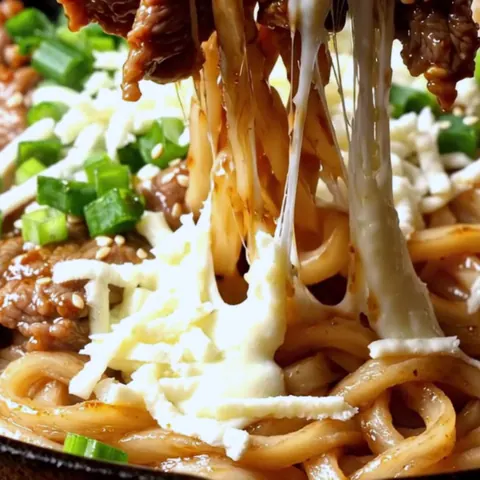
Remove the lid and scatter the green parts of the scallions over the top. Serve immediately from the wok or transfer to a serving platter. The cheese will stretch as you lift the noodles.
You’ll need: scallions, sliced
Look for: The cheese should stretch when you lift a noodle, and the dish should be steaming hot.
Tip: For the best cheese pull, serve right away while the cheese is hot.
Checkpoint
The mozzarella melts into a golden, bubbly blanket over the noodles. When you lift a noodle, the cheese stretches in long, inviting strands. The dish is steaming hot, with a smoky sweetness from the beef and a creamy, milky aroma from the cheese. The scallion greens add a final burst of color. The dish is ready to serve immediately, with the cheese at its most stretchy.
Doneness
How to tell it’s done
The beef is done when it's browned and caramelized on the edges but still tender, with an internal temperature of at least 145°F (63°C) for whole-cut meat. Since the beef is sliced thin, it will cook quickly — about 2 minutes total in the wok. The noodles should be heated through and coated in the sauce, and the mozzarella should be fully melted and stretchy. To check the temperature, insert an instant-read thermometer into the thickest piece of beef. Let the beef rest for 3 minutes before serving to allow the juices to redistribute.
Avoid these
Common mistakes
One of the most common mistakes is overcrowding the wok, which lowers the temperature and causes the beef to steam instead of sear. Work in batches if necessary. Another mistake is not heating the wok enough — it should be smoking before you add the beef. Also, be careful not to overcook the beef, as it can become tough and dry. When adding the noodles, make sure they are well-drained, as excess water can make the dish watery. Finally, don't stir the mozzarella into the noodles — let it melt on top for the best presentation and cheese pull.
Cook safely
Food safety
Safe internal temperatures
Cook to at least these temperatures, measured with an instant-read thermometer in the thickest part.
| Food | Minimum internal temperature |
|---|---|
| Whole cuts of meat | 145°F (63°C)Then rest at least 3 minutes |
Better results
Tips
Tip 1
For the best caramelization, make sure the wok is screaming hot before you add the beef. The high heat creates a Maillard reaction that gives the beef its deep, smoky flavor. Don't stir the beef too often — let it sear for 30 seconds before tossing. This allows the sugars in the marinade to caramelize and stick to the beef, creating those irresistible charred bits.
Tip 2
The mozzarella should be shredded just before using, as pre-shredded cheese often contains anti-caking agents that can affect melting. If you want an even cheesier dish, you can add a handful of grated Parmesan along with the mozzarella, but the video calls for mozzarella only. For the most dramatic cheese pull, serve the dish immediately — as it cools, the cheese will set and lose its stretch.
Make it yours
Variations
Spicy Gochujang Version
Add 1 tablespoon of gochujang (Korean chili paste) to the marinade for a spicy kick. The gochujang adds a deep, fermented heat that pairs well with the sweet soy-pear marinade. Adjust the amount to your heat preference.
Chicken Bulgogi Udon
Swap the ribeye for thinly sliced chicken breast or thighs. Marinate the chicken in the same mixture, but cook it until the chicken reaches 165°F (74°C). The cooking time may be slightly longer, so ensure the chicken is cooked through.
Vegetarian Mushroom Udon
For a meatless version, use 400 g of sliced shiitake or portobello mushrooms in place of the beef. Marinate the mushrooms in the same sauce for 15 minutes, then stir-fry until tender. Skip the beef and reduce the cook time to 3 minutes.
Extra Cheesy Udon
If you love cheese, increase the mozzarella to 200 g and add a handful of grated Parmesan when you add the mozzarella. The Parmesan adds a salty, nutty depth that complements the sweet bulgogi marinade.
On the table
Serving suggestions
Serve the beef bulgogi udon immediately from the wok, with the melted mozzarella stretching as you lift the noodles. For a complete meal, pair it with a simple cucumber salad or kimchi on the side. The dish is rich and satisfying on its own, but the cool crunch of a vegetable side balances the heat and richness. You can also garnish with extra sliced scallions or a sprinkle of sesame seeds, though the video doesn't call for them.
This dish is best enjoyed fresh, but it also makes a great packed lunch — just reheat it in the microwave. The cheese will re-melt and the noodles will stay chewy. For a fun presentation, serve in a hot cast-iron skillet or a Korean dolsot bowl to keep it sizzling at the table. The visual of the melted cheese and glossy noodles is sure to impress family and friends.
Leftovers
Storage & make-ahead
- Fridge
- Store leftovers in an airtight container in the refrigerator for up to 3 days. Reheat in a skillet or microwave until hot and the cheese melts.
- Freezer
- Freeze in a freezer-safe container for up to 2 months. Thaw overnight in the refrigerator and reheat in a skillet with a splash of water.
- Reheat
- Reheat in a skillet over medium heat with a splash of water or soy sauce, tossing until hot. Or microwave in 30-second intervals, stirring between.
Leftover beef bulgogi udon can be stored in an airtight container in the refrigerator for up to 3 days. The cheese will solidify when chilled, but it will re-melt when reheated. To reheat, place the desired portion in a skillet over medium heat with a splash of water or soy sauce, and toss until heated through. Alternatively, microwave in 30-second intervals, stirring in between. The noodles may absorb some sauce, so you might want to add a little extra soy sauce or sesame oil when reheating.
Make ahead
The beef can be marinated up to 24 hours in advance, which makes this dish perfect for meal prep. The marinade flavors the beef more deeply as it sits. You can also pre-cook the udon noodles and keep them in the refrigerator for up to 2 days. When ready to cook, simply follow the recipe — the stir-fry will take just a few minutes. The mozzarella should be shredded fresh, but it can also be shredded a day ahead and stored in a sealed container in the fridge.
Questions
Frequently asked questions
Can this dish be made ahead of time?
Yes, the beef can be marinated up to 24 hours in advance, and the udon noodles can be pre-cooked and refrigerated. However, the dish is best served immediately after cooking, as the cheese will set and the noodles may absorb sauce as they sit. If making ahead, store the components separately and stir-fry just before serving.
What is the best cut of beef for bulgogi udon?
Ribeye is ideal because it has enough fat to stay tender and juicy during the quick stir-fry. Thinly sliced sirloin or flank steak also work well. Look for pre-sliced bulgogi meat at Asian markets, or ask your butcher to slice a steak thinly against the grain.
Can the mozzarella be substituted with another cheese?
Yes, low-moisture mozzarella is best for its stretchy melt, but provolone, fontina, or mild white cheddar can be used. Avoid aged cheeses like Parmesan on their own, as they don't melt as smoothly. A blend of mozzarella and Parmesan works well for extra flavor.
How do you prevent the udon noodles from sticking together?
Rinse the udon noodles under hot water before adding them to the wok. This removes excess starch and warms them through. Toss them with a little sesame oil if they are not used immediately. Make sure the wok is hot enough and stir-fry quickly to avoid sticking.
Is it necessary to use Asian pear in the marinade?
Asian pear is traditional and adds sweetness and enzymes that tenderize the beef. If you can't find it, you can substitute a regular pear or apple, or use 1 tablespoon of apple juice with a pinch of sugar. The flavor will be slightly different but still delicious.
Everything in one place: the recipe card below gathers the ingredients, steps and estimated nutrition, ready to print.
Recipe card
Beef Bulgogi Udon with Melted Mozzarella
Caramelized soy-pear beef bulgogi tossed with chewy udon noodles and topped with melted mozzarella — a sweet, smoky Korean BBQ dinner in 15 minutes.
- Prep
- Cook
- Total
- Servings
- 4 servings
Ingredients
- 400 g thinly sliced ribeye beef
- 45 ml soy sauce
- 2 tbsp grated Asian pear
- 1 tbsp sesame oil
- 4 cloves garlic, minced
- 1 tbsp brown sugar
- 400 g udon noodles
- 4 scallions, sliced
- 150 g mozzarella, shredded
Instructions
Marinate the beef. In a medium bowl, combine the thinly sliced ribeye with soy sauce, grated Asian pear, sesame oil, minced garlic, and brown sugar. Stir until every slice is coated. Cover and refrigerate while preparing the other ingredients, up to 30 minutes.
Prepare the noodles and scallions. If using pre-cooked udon noodles, rinse them under hot water to separate and warm through. Slice the scallions thinly, separating white and green parts. Keep the noodles and scallions within reach for the stir-fry.
Heat the wok until smoking. Place a large wok or skillet over high heat and let it get very hot, about 2 minutes. The wok should be smoking lightly before you add the beef. Do not add oil yet, as the beef will release its own fat.
Stir-fry the beef. Add the marinated beef to the hot wok in a single layer. Let it sear undisturbed for 30 seconds, then stir-fry vigorously for 1 1/2 minutes, until the beef is browned and caramelized but still tender. Let it rest for 3 minutes before slicing.
Add noodles and scallions. Add the udon noodles and the white parts of the scallions to the wok. Toss everything together for 1 minute, allowing the noodles to absorb the sauce and pick up some char from the wok.
Melt the mozzarella on top. Reduce the heat to medium-low. Sprinkle the shredded mozzarella evenly over the noodles and beef. Cover the wok with a lid or a baking sheet for 1 minute, until the cheese is melted and stretchy.
Finish and serve. Remove the lid and scatter the green parts of the scallions over the top. Serve immediately from the wok or transfer to a serving platter. The cheese will stretch as you lift the noodles.
Allergens: Gluten, Soy, Milk, Sesame
Nutrition (estimated, per serving)
- Calories
- 650 kcal
- Protein
- 35 g
- Carbs
- 70 g
- Fat
- 25 g
Estimates only: values vary with brands, substitutions and portion sizes.
Recipe by EasyCooks Kitchen · easycooksrecipes.com
Share this recipe
Send it to someone who’d love it, or save it for later.
Spotted a mistake in this recipe? Let us know.
Keep cooking