Spicy Sesame Noodles in Minutes
Toss warm noodles with a fiery chili-oil sauce, garlic, and sesame paste, then top with cucumber and a soft-boiled egg for a quick, satisfying bowl.
Published Updated 8 min read
- Total time
- Prep
- Cook
- Serves
- 2
- Cuisine
- Asian-inspired
- Calories
- 450
- per serving, estimated

On this page16 sections
This spicy sesame noodle bowl is the kind of dinner that comes together in the time it takes to boil water. A glossy sauce of chili oil, sesame paste, soy sauce, and fresh garlic coats every strand of chewy noodles, while cool cucumber and a soft-boiled egg add freshness and richness. It’s a weeknight hero that feels like a treat.
These noodles are all about the sauce. Whisk together just a few pantry staples, toss with hot noodles and a splash of starchy cooking water, and you have a silky, spicy, deeply savory dish that’s ready in minutes. The heat from the chili oil is balanced by nutty sesame and a punch of raw garlic. Topped with crisp cucumber and a jammy egg, it’s a complete bowl that’s as beautiful as it is delicious.
The appeal
Why you’ll love it
The sauce relies on the technique of emulsifying oil with sesame paste and soy sauce. Whisking them together creates a stable, glossy mixture that clings to noodles instead of pooling. The hot starchy water helps the sauce coat every strand evenly, giving the noodles a velvety texture without being heavy.
Tossing the noodles while they’re still hot is key. Heat opens up the noodles’ starches, allowing them to absorb the sauce better. The reserved cooking water acts as a natural thickener, turning the sauce into a silky glaze. The result is a bowl that tastes like it simmered for hours, but it’s ready in the time it takes to cook the pasta.
What you need
Ingredients
Makes 2 servings.
Sauce
Noodles
Toppings
Contains:
- Gluten
- Soy
- Sesame
- Eggs
Served raw or lightly cooked
The soft-boiled egg is not cooked through. Pregnant women, young children, older adults, and anyone with a weakened immune system should use pasteurized eggs.
Tools
Equipment
- Large pot for boiling noodles
- Colander
- Small bowl for sauce
- Whisk
- Tongs
- Chef's knife
- Cutting board
- Measuring spoons
Swaps
Substitutions
Instead ofSesame paste (tahini)
UseUse natural peanut butter for a different nutty flavor, or sunflower seed butter for a nut-free option.
Instead ofChili oil
UseCombine 2 tablespoons neutral oil with 1 teaspoon red pepper flakes and a pinch of cayenne for a similar heat.
Instead ofSoy sauce
UseUse tamari or coconut aminos for a gluten-free or lower-sodium alternative.
Instead ofWide noodles
UseUse spaghetti, fettuccine, or rice noodles if wide noodles are unavailable.
Good to know
Notes
Use a good-quality chili oil for the best flavor—one that has both oil and sediment for maximum heat and aroma. Sesame paste, also sold as tahini, should be well-stirred before measuring. If it’s too thick, whisk in a teaspoon of warm water to loosen it. Soy sauce adds salt and umami; low-sodium works well.
Wide noodles like lo mein, udon, or even pappardelle are ideal because they have enough surface area to catch the sauce. If using dried noodles, cook them just shy of the package time so they stay chewy. The cucumber should be sliced thin, and the egg can be soft-boiled or fully cooked, depending on preference.
Prep
Before you start
Before starting, fill a large pot with water and bring it to a boil. Grate the garlic and set it aside. Measure the chili oil, sesame paste, and soy sauce. If using a soft-boiled egg, prepare it in advance by simmering for 6–7 minutes, then plunging into ice water. Slice the cucumber and set everything near the stove so the assembly is quick.
Step by step
Method
Phase 1
Make the Sauce
Step 1: Make the Sauce
In a wide ceramic bowl, whisk together the chili oil, sesame paste, soy sauce, and grated garlic until smooth and well combined. The sauce will look glossy and thick.
You’ll need: chili oil · sesame paste (tahini) · soy sauce · garlic, grated
Look for: The sauce should be smooth and emulsified, with no visible separation.
Tip: Whisk vigorously to ensure the sesame paste fully blends with the oil.
Step 2: Cook the Noodles
Bring a large pot of salted water to a boil. Add the wide noodles and cook according to package directions until tender but still chewy. Reserve about 1/2 cup of the starchy cooking water before draining.
You’ll need: wide noodles (such as lo mein or udon)
Look for: The noodles should be al dente, with a slight bite.
Tip: Reserve the cooking water before draining; it helps the sauce cling to the noodles.
Checkpoint
At the end of this phase, you should have a smooth, glossy sauce that smells strongly of garlic and chili. It should be thick but pourable, with no streaks of oil or sesame paste. The color will be a deep reddish-brown, and the texture will be emulsified and uniform.
Phase 2
Cook and Coat Noodles
Step 3: Combine Noodles and Sauce
Using tongs, transfer the hot noodles directly into the bowl with the sauce. Pour in about 1/4 cup of the reserved hot cooking water. Toss the noodles vigorously with chopsticks or tongs until every strand is evenly coated in the thick, rich sauce.
You’ll need: wide noodles (such as lo mein or udon)
Look for: The noodles should look glossy and well coated, with no dry spots.
Tip: Add more cooking water a tablespoon at a time if the sauce seems too thick.
Step 4: Adjust Consistency
If the sauce is too thick, add a splash more of the reserved cooking water and toss again. The sauce should coat the noodles generously but not pool at the bottom of the bowl.
You’ll need: wide noodles (such as lo mein or udon)
Look for: The sauce should cling to the noodles without being pasty.
Tip: Taste and adjust with a pinch of salt or extra chili oil if desired.
Checkpoint
The noodles should be tender and evenly coated in the sauce, with a shiny, almost lacquered appearance. The sauce should cling to each strand without pooling excessively. The aroma should be fragrant with chili and sesame, and the noodles should look inviting and glossy.
Phase 3
Top and Serve
Step 5: Top and Serve
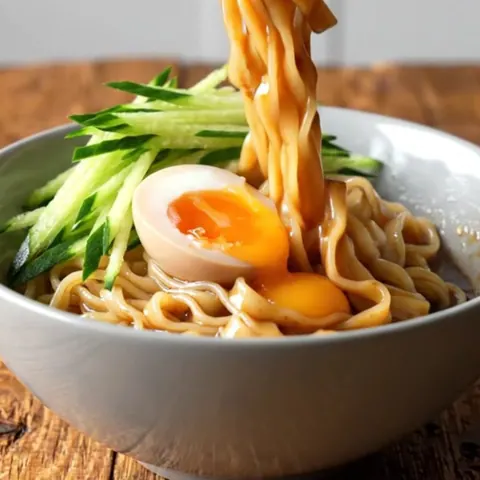
Arrange the cucumber slices on top of the noodles. Add the halved soft-boiled egg. For a fully cooked egg, simmer the egg for 9–10 minutes and ensure the yolk reaches 160°F (71°C). Serve immediately while warm.
You’ll need: cucumber, thinly sliced · soft-boiled egg, halved
Internal temperature 160°F (71°C)
Look for: The egg yolk should be creamy and set, or soft if preferred.
Tip: For a soft-boiled egg, cook for 6–7 minutes and peel carefully.
Checkpoint
The finished bowl should look vibrant: the white and green cucumber slices contrast with the golden noodles, and the egg adds a creamy element. The egg yolk, if soft, should be glossy and slightly runny. The dish should be served warm to fully appreciate the sauce’s texture.
Doneness
How to tell it’s done
The noodles are done when they are tender but still have a slight chew. The sauce should coat the noodles generously, with a glossy sheen and no dry spots. If the sauce is too thick, add more cooking water. For the egg, if you prefer it fully cooked, the yolk should reach 160°F (71°C). The dish is best served immediately, while the noodles are warm and the sauce is silky.
Avoid these
Common mistakes
A common mistake is adding the sauce to cold noodles, which makes it clump and slide off. Always toss the noodles with the sauce while they are hot. Another issue is using too little cooking water—the sauce can become pasty. Add it gradually until the sauce flows like a light glaze. Also, don’t skip the garlic; it provides a sharp contrast to the rich sesame.
Cook safely
Food safety
Safe internal temperatures
Cook to at least these temperatures, measured with an instant-read thermometer in the thickest part.
| Food | Minimum internal temperature |
|---|---|
| Egg dishes | 160°F (71°C) |
Raw or lightly cooked ingredients
The soft-boiled egg is not cooked through. Pregnant women, young children, older adults, and anyone with a weakened immune system should use pasteurized eggs.
Better results
Tips
Tip 1
For the best texture, cook the noodles just until al dente—they will continue to cook slightly when tossed with the hot sauce. If you like extra heat, add a drizzle of chili oil or a sprinkle of red pepper flakes before serving. To make the dish more substantial, add shredded cooked chicken, sautéed mushrooms, or baby spinach.
Tip 2
The sauce can be made up to a day ahead and stored in the refrigerator. Let it come to room temperature before using, or warm it gently. When reheating leftovers, add a splash of water to loosen the sauce. The cucumber and egg are best added fresh, so store them separately if you have leftovers.
Make it yours
Variations
Add Protein
Top the noodles with grilled chicken, sautéed shrimp, or crispy tofu for a more substantial meal. Cook the protein separately and add it just before serving.
Vegetable Boost
Stir in blanched bok choy, snap peas, or shredded carrots along with the noodles to add color and crunch. Toss them with the sauce to coat.
Nutty Twist
Replace half of the sesame paste with smooth peanut butter for a different nutty flavor. Add a teaspoon of rice vinegar for extra brightness.
Herb Finish
Garnish with fresh cilantro, Thai basil, or mint leaves. The herbs add a fresh, aromatic note that balances the spicy sauce.
On the table
Serving suggestions
Serve the noodles warm, straight from the bowl, with the cucumber and egg arranged on top. The cool cucumber provides a refreshing contrast to the spicy, nutty sauce, while the egg adds richness. A sprinkle of sesame seeds or sliced scallions would be a nice touch, though not required.
This dish is satisfying on its own but also pairs well with a simple green salad or steamed vegetables. For a heartier meal, add grilled chicken, shrimp, or tofu. The noodles are best enjoyed immediately, but leftovers can be reheated gently with a splash of water.
Leftovers
Storage & make-ahead
- Fridge
- Store leftovers in an airtight container in the refrigerator for up to 3 days. Keep the cucumber and egg separate to maintain their texture.
- Freezer
- Freezing is not recommended as the texture of the noodles and sauce will change.
- Reheat
- Reheat gently in a skillet or microwave with a splash of water to loosen the sauce. Stir frequently until heated through.
Store leftover noodles in an airtight container in the refrigerator for up to 3 days. Keep the cucumber and egg separate. The sauce may thicken when chilled; add a little water or broth when reheating to restore the silky texture.
Make ahead
The sauce can be prepared up to 2 days in advance and stored in a sealed container in the refrigerator. Soft-boiled eggs can be cooked ahead and kept in their shells for up to 3 days. When ready to serve, cook the noodles, warm the sauce if needed, and assemble.
Questions
Frequently asked questions
Can this dish be made gluten-free?
Yes, use gluten-free noodles such as rice noodles or buckwheat soba, and replace the soy sauce with tamari or coconut aminos. Ensure the chili oil and sesame paste are certified gluten-free.
What is the best type of noodle to use?
Wide, chewy noodles like lo mein, udon, or thick rice noodles work best because they hold the sauce well. Spaghetti or fettuccine are also good substitutes.
How can the sauce be made less spicy?
Reduce the chili oil to 1 tablespoon and add a neutral oil to make up the difference. Alternatively, use a mild chili oil or omit the chili flakes.
Can the egg be omitted for a vegan version?
Absolutely. Simply skip the egg or replace it with extra cucumber, edamame, or roasted tofu for protein. The dish will still be delicious.
Why does the sauce sometimes clump?
Clumping can happen if the sesame paste is too thick or if the sauce is added to cold noodles. Whisk the sauce well and always toss with hot noodles and a splash of cooking water.
Everything in one place: the recipe card below gathers the ingredients, steps and estimated nutrition, ready to print.
Recipe card
Spicy Sesame Noodles in Minutes
Toss warm noodles with a fiery chili-oil sauce, garlic, and sesame paste, then top with cucumber and a soft-boiled egg for a quick, satisfying bowl.
- Prep
- Cook
- Total
- Servings
- 2 servings
Ingredients
Sauce
- 2 tbsp chili oil
- 2 tbsp sesame paste (tahini)
- 2 tbsp soy sauce
- 2 cloves garlic, grated
Noodles
- 8 oz wide noodles (such as lo mein or udon)
Toppings
- 1/2 cucumber, thinly sliced
- 1 soft-boiled egg, halved
Instructions
Make the Sauce. In a wide ceramic bowl, whisk together the chili oil, sesame paste, soy sauce, and grated garlic until smooth and well combined. The sauce will look glossy and thick.
Cook the Noodles. Bring a large pot of salted water to a boil. Add the wide noodles and cook according to package directions until tender but still chewy. Reserve about 1/2 cup of the starchy cooking water before draining.
Combine Noodles and Sauce. Using tongs, transfer the hot noodles directly into the bowl with the sauce. Pour in about 1/4 cup of the reserved hot cooking water. Toss the noodles vigorously with chopsticks or tongs until every strand is evenly coated in the thick, rich sauce.
Adjust Consistency. If the sauce is too thick, add a splash more of the reserved cooking water and toss again. The sauce should coat the noodles generously but not pool at the bottom of the bowl.
Top and Serve. Arrange the cucumber slices on top of the noodles. Add the halved soft-boiled egg. For a fully cooked egg, simmer the egg for 9–10 minutes and ensure the yolk reaches 160°F (71°C). Serve immediately while warm.
Allergens: Gluten, Soy, Sesame, Eggs
Nutrition (estimated, per serving)
- Calories
- 450 kcal
- Protein
- 14 g
- Carbs
- 55 g
- Fat
- 20 g
Estimates only: values vary with brands, substitutions and portion sizes.
Recipe by EasyCooks Kitchen · easycooksrecipes.com
Share this recipe
Send it to someone who’d love it, or save it for later.
Spotted a mistake in this recipe? Let us know.
Keep cooking


