Moist Whole-Lemon Blender Loaf Cake
Discover the secret to an impossibly moist lemon cake. This viral blender recipe uses a whole lemon, peel and all, for maximum citrus flavor and a tender crumb.
Published 8 min read
- Total time
- Prep
- Cook
- Rest
- Serves
- 8
- Makes one 9-inch loaf
- Cuisine
- American
- Calories
- 380
- per serving, estimated

On this page16 sections
Transform a simple whole lemon into a masterpiece of texture and flavor with this innovative blender method. By using the entire fruit, you unlock a depth of citrus intensity that standard zest-only recipes simply cannot match. This approach is designed for those who appreciate the efficiency of modern techniques without sacrificing the classic comfort of a homemade loaf cake. Prepare for a bright, aromatic, and incredibly moist result that will redefine the expectations for citrus desserts in any home kitchen.
This recipe utilizes a unique whole-lemon blender technique to create a cake with unparalleled moisture and a vibrant, punchy flavor profile. By incorporating the entire lemon, including the peel, the natural essential oils are released directly into the batter, providing a robust citrus essence that permeates every bite. The addition of toasted walnuts provides a delightful textural contrast, balancing the zesty notes with an earthy, nutty undertone. This cake is ideal for those seeking a sophisticated dessert that remains accessible and straightforward to execute.
The appeal
Why you’ll love it
The blender method works by emulsifying the whole lemon, oil, and eggs into a stable, velvety puree. This process breaks down the lemon peel into tiny particles, which distributes the flavor evenly throughout the cake while ensuring the texture remains smooth rather than chunky. The high fat content from the oil and the acidity from the lemon work in tandem to keep the crumb tender and moist for days.
Folding the dry ingredients into the liquid base rather than over-blending them is the key to achieving the desired loaf structure. By using a silicone spatula to incorporate the flour and baking powder, the air trapped in the batter is preserved, allowing the cake to rise into a beautiful, domed loaf. The final glaze, applied while the cake is warm, locks in moisture and adds a necessary sweetness to contrast the tart lemon.
What you need
Ingredients
Makes one 9-inch loaf.
Cake Batter
Topping
Lemon Glaze
Contains:
- Gluten
- Eggs
- Milk
- Tree nuts
Tools
Equipment
- Blender
- Mixing bowl
- Silicone spatula
- Loaf pan
- Parchment paper
- Bread knife
- Whisk
Swaps
Substitutions
Instead ofVegetable oil
UseMelted coconut oil or a neutral sunflower oil
Instead ofAll-purpose flour
UseA high-quality gluten-free all-purpose baking blend
Good to know
Notes
For the best results, use a high-powered blender to ensure the lemon wedges are fully pulverized. If a standard blender is used, verify that no large pieces of rind remain before adding the dry ingredients. The walnuts should be toasted lightly in a dry pan before being added to the batter, as this significantly enhances their aroma and flavor, preventing them from tasting raw or dull within the cake.
The choice of loaf pan is important; a standard 9-inch metal pan works best for even heat distribution. Ensure the pan is lined with parchment paper with enough overhang to easily lift the cake out after baking. If the top of the cake browns too quickly, a loose tent of aluminum foil can be placed over the pan for the final 10 minutes of the baking cycle to prevent over-darkening.
Prep
Before you start
Before beginning, ensure all ingredients are at room temperature to allow for proper emulsification during the blending process. Thoroughly wash the lemon under warm water, scrubbing the peel to remove any surface impurities. Preheat the oven to 350°F (175°C) well in advance. Prepare the loaf pan by lining it with parchment paper, ensuring it covers the bottom and sides completely. Measure all ingredients carefully before starting the blender to ensure a seamless workflow as the recipe progresses through the mixing and baking stages.
Step by step
Method
Phase 1
Creating the citrus emulsion
Step 1: Blend the wet base
Place the sliced lemon wedges, eggs, oil, milk, and granulated sugar into a high-speed blender jar. Secure the lid and blend on high speed for two full minutes until the mixture reaches a velvety smooth, pale yellow consistency.
You’ll need: fresh whole lemon · large eggs · vegetable oil · whole milk · granulated sugar
Look for: The mixture should be completely smooth without visible rind pieces.
Tip: Ensure the lemon is thoroughly washed and scrubbed before slicing to remove any wax or debris from the peel.
Checkpoint
The base is ready when the liquid is completely smooth, opaque, and pale yellow. There should be no visible solid pieces of lemon peel remaining in the blender jar. The mixture will have a slightly thick, velvety consistency that smells intensely of fresh citrus. Check that the sugar is fully dissolved into the liquid before proceeding to the next step, as this ensures a consistent texture throughout the final loaf.
Phase 2
Folding and baking
Step 2: Combine and bake
Pour the blended liquid into a large mixing bowl. Gently fold in the all-purpose flour, baking powder, and toasted walnuts using a silicone spatula until just combined. Transfer the batter into a parchment-lined loaf pan. Score a neat line down the center using a knife dipped in softened butter. Bake at 350°F (175°C) for 45 minutes until the cake is domed and deep golden brown.
You’ll need: all-purpose flour · baking powder · chopped toasted walnuts · softened butter
Internal temperature 160°F (71°C)
Look for: The loaf should be golden and a toothpick inserted into the center should come out clean.
Tip: Do not overmix the batter once the flour is added, as this can result in a tougher, less tender crumb.
Checkpoint
The batter should be thick and glossy, with the walnuts evenly distributed throughout. When poured into the loaf pan, it should fill it about two-thirds of the way. The score down the center with butter will help the cake rise evenly and create the signature domed crown. At the end of the baking time, the crust will be firm, golden brown, and fragrant, indicating that the structure is set and the interior is fully cooked.
Phase 3
Glazing the finished cake
Step 3: Glaze and serve
While the cake is still piping hot, whisk the powdered sugar and fresh lemon juice in a small bowl until smooth. Pour the thick, translucent citrus glaze over the warm cake, allowing it to cascade down the sides. Allow to cool slightly before slicing.
You’ll need: powdered sugar · fresh lemon juice
Look for: The glaze should be thick enough to coat the back of a spoon.
Tip: Apply the glaze while the cake is hot so it seeps slightly into the crust for extra flavor.
Checkpoint
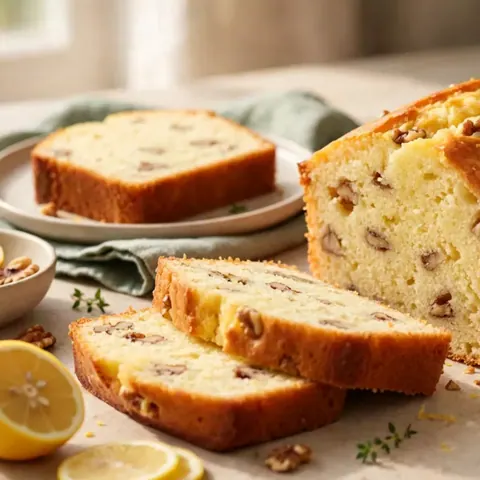
The glaze is ready when it is thick, bright white, and flows smoothly from a whisk. When poured over the hot cake, it should partially absorb into the crust while leaving a glossy, opaque layer on top. The cake should look glistening and inviting. Once the glaze has set for a few minutes, the loaf is ready to be sliced, revealing a moist interior with vibrant yellow color and visible walnut flecks.
Doneness
How to tell it’s done
The lemon loaf is done when the top is deep golden brown and firm to the touch. A wooden skewer or toothpick inserted into the center of the loaf should emerge clean or with just a few moist crumbs attached. Because this cake contains eggs, internal temperature is key for structure; it should reach at least 160°F (71°C) in the center. The cake should be allowed to rest in the pan for at least 10 minutes before being transferred to a wire rack to cool completely.
Avoid these
Common mistakes
A common mistake is failing to blend the lemon thoroughly enough, which leaves bitter or tough chunks of peel in the batter. Always run the blender for the full two minutes to ensure total breakdown. Another error is over-mixing the batter once the flour is added; this develops the gluten, resulting in a dense, rubbery cake rather than a tender, fluffy one. Finally, ensure the oven is fully preheated before putting the cake inside, as an inconsistent temperature will prevent the cake from rising properly.
Cook safely
Food safety
Safe internal temperatures
Cook to at least these temperatures, measured with an instant-read thermometer in the thickest part.
| Food | Minimum internal temperature |
|---|---|
| Egg dishes | 160°F (71°C) |
Better results
Tips
Tip 1
For a more intense lemon flavor, you can add a teaspoon of finely grated lemon zest to the batter along with the dry ingredients. This adds a punch of aromatic intensity that complements the whole-lemon puree. If the walnuts are not preferred, they can be swapped for pecans or simply omitted, though they do provide a necessary textural contrast to the soft, moist crumb of this particular loaf cake.
Tip 2
When slicing the cake, use a serrated bread knife to avoid compressing the delicate crumb. Using a gentle sawing motion will allow you to achieve clean, professional-looking slices without tearing the surface. If you find the cake is too soft to slice when warm, let it cool completely on a wire rack for at least an hour. This allows the crumb to set and makes it much easier to achieve perfect, uniform portions for serving.
Make it yours
Variations
Lemon Poppy Seed Loaf
Add two tablespoons of poppy seeds when folding in the flour to provide a delightful crunch and a classic visual contrast to the bright yellow crumb.
Orange Walnut Twist
Replace the lemon with a large, thin-skinned orange for a sweeter, more mellow citrus profile that pairs exceptionally well with the toasted walnuts.
On the table
Serving suggestions
Serve this lemon loaf at room temperature for the best texture and flavor. It pairs beautifully with a cup of hot tea or coffee, making it a sophisticated choice for brunch or an afternoon snack. The brightness of the lemon cuts through the richness of the cake, making it a refreshing end to any meal without being overly heavy or cloying in sweetness.
For a more elaborate presentation, serve each slice with a dollop of unsweetened whipped cream or a side of fresh berries. The tartness of the lemon glaze works exceptionally well with the creaminess of the whipped topping. Ensure the glaze has fully set before slicing to keep the presentation neat and clean. This cake is versatile enough to be served simply on its own or elevated with these extra accompaniments.
Leftovers
Storage & make-ahead
- Fridge
- Store in an airtight container for up to 7 days.
- Freezer
- Wrap the cooled, unglazed loaf tightly in plastic wrap and foil, then freeze for up to 3 months. Thaw at room temperature before glazing.
- Reheat
- Individual slices can be warmed in the microwave for 10-15 seconds or in a low oven until just heated through.
Keep the lemon loaf in an airtight container at room temperature for up to three days. For longer storage, it can be kept in the refrigerator for up to one week. If storing for an extended period, wrap the cake tightly in plastic wrap followed by a layer of aluminum foil to prevent it from drying out or absorbing other flavors from the fridge. Always ensure the cake is completely cool before wrapping to prevent condensation buildup.
Make ahead
This cake is an excellent make-ahead dessert as the flavors often improve after sitting for a day. The moisture from the lemon and oil ensures that the loaf stays tender well after it is baked. You can bake the cake and store it undecorated, then add the glaze just before serving for the freshest appearance. If baking ahead, keep the loaf whole and slice it only when ready to serve to maintain the maximum amount of moisture.
Questions
Frequently asked questions
Can the lemon peel be too bitter in this recipe?
The bitterness of the lemon peel is effectively neutralized by the sugar and the cooking process. Using a high-speed blender ensures the peel is pulverized into tiny particles that disperse throughout the cake, providing flavor rather than a bitter texture. Ensure the lemon is well-washed to remove any surface debris.
Is it possible to use a different type of nut?
Yes, pecans or even hazelnuts work very well as a substitute for walnuts in this recipe. Just ensure they are toasted before adding them to the batter to bring out their natural oils and enhance the overall flavor profile of the cake.
Why does the cake need to be scored with butter?
Scoring the top of the batter with a strip of softened butter creates a weak point that encourages the cake to rise uniformly and develop a clean, attractive crack down the center. This technique also helps the top crust stay moist and golden during the baking process.
Everything in one place: the recipe card below gathers the ingredients, steps and estimated nutrition, ready to print.
Recipe card
Moist Whole-Lemon Blender Loaf Cake
Discover the secret to an impossibly moist lemon cake. This viral blender recipe uses a whole lemon, peel and all, for maximum citrus flavor and a tender crumb.
- Prep
- Cook
- Rest
- Total
- Servings
- one 9-inch loaf
Ingredients
Cake Batter
- 1 fresh whole lemon, washed and sliced into wedges
- 3 large eggs
- 1 cup vegetable oil
- 1 cup whole milk
- 1 cup granulated sugar
- 2 1/2 cups all-purpose flour
- 1 packet baking powder
- 1 cup chopped toasted walnuts
Topping
- 1 tbsp softened butter
Lemon Glaze
- 1 cup powdered sugar
- 3 tbsp fresh lemon juice
Instructions
Blend the wet base. Place the sliced lemon wedges, eggs, oil, milk, and granulated sugar into a high-speed blender jar. Secure the lid and blend on high speed for two full minutes until the mixture reaches a velvety smooth, pale yellow consistency.
Combine and bake. Pour the blended liquid into a large mixing bowl. Gently fold in the all-purpose flour, baking powder, and toasted walnuts using a silicone spatula until just combined. Transfer the batter into a parchment-lined loaf pan. Score a neat line down the center using a knife dipped in softened butter. Bake at 350°F (175°C) for 45 minutes until the cake is domed and deep golden brown.
Glaze and serve. While the cake is still piping hot, whisk the powdered sugar and fresh lemon juice in a small bowl until smooth. Pour the thick, translucent citrus glaze over the warm cake, allowing it to cascade down the sides. Allow to cool slightly before slicing.
Allergens: Gluten, Eggs, Milk, Tree nuts
Nutrition (estimated, per serving)
- Calories
- 380 kcal
- Protein
- 5.5 g
- Carbs
- 42 g
- Fat
- 22 g
- Fiber
- 1.5 g
- Sugar
- 28 g
- Sodium
- 180 mg
Estimates only: values vary with brands, substitutions and portion sizes.
Recipe by EasyCooks Kitchen · easycooksrecipes.com
Share this recipe
Send it to someone who’d love it, or save it for later.
Spotted a mistake in this recipe? Let us know.
Keep cooking


