Pistachio Crusted Halibut with Blood Orange Beurre Blanc
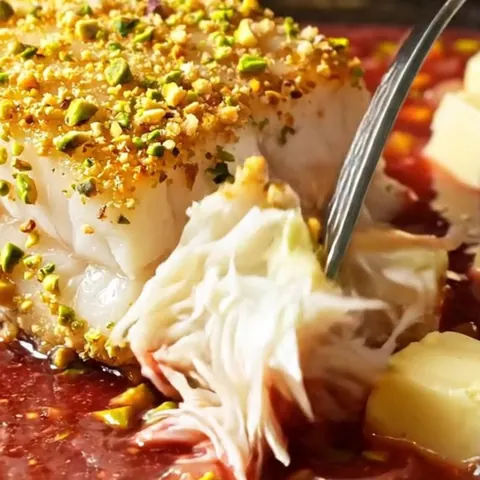
Experience a restaurant-quality meal at home with this elegant, vibrant pistachio-crusted halibut paired with a velvety, bright blood orange butter sauce. This dish combines crunchy textures with delicate, flaky fish and citrus notes for a sophisticated dinner ready in just twenty minutes.
Published 8 min read
- Total time
- Prep
- Cook
- Serves
- 4
- Cuisine
- Sicilian-inspired
- Calories
- 420
- per serving, estimated

On this page16 sections
Elevate your weeknight dinner with this stunning pistachio-crusted halibut. Featuring a vibrant green crust and a luxurious blood orange beurre blanc, this recipe delivers restaurant-quality elegance in just twenty minutes. The balance of textures and the brightness of the citrus sauce transform a simple fish fillet into a true centerpiece that feels sophisticated yet remains incredibly easy to prepare in any home kitchen.
This dish is a masterclass in contrasting flavors and textures. The nutty, earthy crunch of Sicilian pistachios perfectly complements the mild, buttery sweetness of fresh halibut. By coating the fish in Dijon mustard, you create a natural adhesive that keeps the crust intact during roasting. The final touch—a silky blood orange beurre blanc—adds a sophisticated acidity that cuts through the richness of the fish. It is the ultimate recipe for when you want to impress without spending hours over the stove, as the components come together quickly and efficiently.
The appeal
Why you’ll love it
The method of using Dijon mustard as a base for the pistachio crust is essential for achieving a professional finish. The mustard adds a subtle tang that enhances the flavor of the fish while acting as a binder, ensuring the nut crust remains crunchy and perfectly attached during the high-heat roasting process. This technique prevents the crust from slipping off while keeping the fish underneath tender and moist.
Emulsifying cold butter into a reduced citrus base is a classic French technique that results in a luxurious, glossy sauce. By adding the butter in small, cold increments off the heat, the sauce thickens into a stable emulsion that coats the back of a spoon. This technique provides a professional, velvety mouthfeel that elevates the entire dish, turning a simple pan-reduction into a rich and balanced accompaniment.
What you need
Ingredients
Makes 4 servings.
Crust
Fish
Sauce
Contains:
- Fish
- Tree nuts
- Mustard
- Milk
Tools
Equipment
- Food processor
- Skillet
- Pastry brush
- Small saucepan
Swaps
Substitutions
Instead ofBlood orange juice
UseA mix of 3 parts orange juice and 1 part fresh lime juice
Instead ofHalibut
UseCod or sea bass fillets
Good to know
Notes
When selecting pistachios, ensure they are roasted but unsalted to maintain control over the dish's seasoning. If you only have salted pistachios, reduce the amount of added salt in the rest of the meal to compensate. For the halibut, look for thick, uniform fillets to ensure that they roast evenly in the oven. If your fillets are thin, reduce the cooking time slightly to avoid overcooking the fish.
The equipment used in this recipe is minimal. A food processor is ideal for achieving the desired coarse texture for the crust, but a sharp knife and a cutting board will work just as well if you prefer to chop the nuts by hand. A heavy-bottomed skillet is recommended for roasting to ensure even heat distribution, but any oven-safe pan will perform adequately for this specific preparation.
Prep
Before you start
Before starting, ensure that all ingredients are measured and ready to go. The fish should be taken out of the refrigerator about 15 minutes before cooking so it reaches a more uniform temperature, which helps with even roasting. Prepare your food processor and have a baking sheet or skillet ready to receive the fish. Mince the shallots finely to ensure they melt into the sauce, and cube the cold butter so it is ready to be whisked in at the final moment.
Step by step
Method
Phase 1
Crust preparation
Step 1: Prepare the pistachio crust
In a food processor, pulse the shelled roasted pistachios, fresh parsley, lemon zest, and two tablespoons of olive oil until the mixture resembles a coarse, vibrant green meal. Be careful not to over-process, as this will turn the nuts into a paste rather than a crunchy topping. Transfer the mixture to a shallow bowl for easy application.
You’ll need: shelled roasted pistachios · fresh parsley · lemon zest · olive oil
Look for: The mixture should be uniformly green and slightly crumbly with a tactile, coarse texture.
Tip: Keep the mixture in the refrigerator if not using immediately to maintain the freshness of the herbs.
Checkpoint
The pistachio mixture should look like a vibrant, coarse sand with visible bits of green and bright lemon zest. When you pinch a small amount, it should hold together slightly but remain crumbly. The aroma should be fresh and nutty, with the lemon zest providing a clean, citrusy lift that suggests the brightness to come.
Phase 2
Coating the halibut
Step 2: Season and crust the fish
Pat the four halibut fillets dry with paper towels to ensure the mustard adheres well. Using a pastry brush, coat the top of each fillet evenly with the Dijon mustard. Firmly press the pistachio mixture onto the mustard-coated side of each fillet, ensuring a thick, even layer that covers the entire surface.
You’ll need: halibut fillets · Dijon mustard
Look for: The mustard layer should be thin but cover the fish surface completely, with the nuts adhered firmly.
Tip: Press down gently with your fingers to make sure the crust stays attached during the cooking process.
Checkpoint
Each fillet should be completely dry before applying the mustard to ensure the crust adheres evenly. Once the mustard is applied, the pistachio layer should cover the fish without any gaps. The fish should look like it is wearing a thick, textured green coat, ready for the oven heat to turn it golden and crunchy.
Phase 3
Roasting and finishing
Step 3: Roast and prepare the sauce
Place the crusted halibut in a skillet and roast in a 400°F oven for approximately 8 minutes, or until the fish reaches an internal temperature of 145°F (63°C) and flakes easily with a fork. Meanwhile, in a small saucepan, simmer the blood orange juice and minced shallots until reduced by half. Remove from heat and whisk in the cold butter one cube at a time until the sauce is velvety and emulsified.
You’ll need: halibut fillets · blood orange juice · shallots · cold butter
Internal temperature 145°F (63°C)
Look for: The fish should be opaque and flake easily when tested with a fork, while the sauce should be glossy and thickened.
Tip: Whisk the cold butter into the reduced juice off the heat to prevent the sauce from breaking or separating.
Checkpoint
The fish should come out of the oven with a toasted, fragrant crust and a moist, pearly white interior. The sauce in your saucepan should be reduced to a syrupy consistency before the butter is added. Once emulsified, the sauce will look like a vibrant, ruby-colored velvet that is smooth and glossy, perfectly ready to be drizzled over the fish.
Doneness
How to tell it’s done
The halibut is perfectly cooked when it reaches an internal temperature of 145°F (63°C). At this stage, the fish will be opaque throughout and will flake easily when gently pressed with a fork. The pistachio crust should be a deep, toasted green, and the blood orange sauce should be glossy and thick enough to coat a spoon. If the fish is still translucent in the center, return it to the oven for an additional minute.
Avoid these
Common mistakes
A common mistake is using warm butter for the sauce, which will cause it to separate rather than emulsify. Always keep the butter in the refrigerator until the exact moment you are ready to whisk it into the reduced juice. Another error is over-processing the pistachio crust; if the nuts turn into a paste, the texture will be dense rather than crunchy. Pulse the ingredients carefully, monitoring the texture after every few seconds to maintain a coarse, crumbly consistency.
Cook safely
Food safety
Safe internal temperatures
Cook to at least these temperatures, measured with an instant-read thermometer in the thickest part.
| Food | Minimum internal temperature |
|---|---|
| Fish | 145°F (63°C) |
Better results
Tips
Tip 1
For an even more intense flavor, toast the shelled pistachios in a dry skillet for two minutes before pulsing them. This step deepens the nutty aroma and enhances the crunch of the final crust. Allow the nuts to cool completely before processing them to ensure they stay crunchy and do not release their natural oils prematurely.
Tip 2
If you find the sauce is not thickening as expected, ensure the blood orange juice has reduced sufficiently before adding the butter. The reduction process is key to concentrating the sugars and acids in the juice. If the sauce still appears too thin, continue to simmer it for another minute on low heat before beginning the butter incorporation process.
Make it yours
Variations
Almond and Lime Crust
Replace the pistachios with toasted slivered almonds and use lime zest instead of lemon. This variation offers a slightly more delicate nut flavor and a sharper, more tropical acidity that works beautifully with the blood orange sauce.
Walnut and Herb Crust
Use finely chopped walnuts mixed with fresh rosemary and thyme for an earthier, more robust crust. This version pairs exceptionally well with the citrus sauce, creating a sophisticated profile that is perfect for a more formal dinner setting.
On the table
Serving suggestions
To serve, place a single halibut fillet in the center of each plate, ensuring the crust is facing upward. Drizzle the warm blood orange beurre blanc around the base of the fish, rather than directly over the crust, to preserve the crunch. Garnish with a few fresh parsley leaves or a thin wedge of blood orange to highlight the vibrant colors of the dish.
This dish pairs beautifully with simple sides that do not compete with the delicate flavor of the halibut. Consider serving it with steamed asparagus, roasted baby potatoes, or a light fennel and arugula salad. The goal is to provide a refreshing, balanced accompaniment that allows the nutty, buttery, and citrusy flavors of the main course to remain the star of the meal.
Leftovers
Storage & make-ahead
- Fridge
- Store in the refrigerator in an airtight container for up to 2 days.
- Reheat
- Reheat the fish in a 300°F oven for 5 to 8 minutes until warmed through. The sauce should be gently warmed in a small saucepan over low heat.
If you have leftovers, allow the fish to cool to room temperature for no more than two hours before placing it in an airtight container. Keep the sauce in a separate, smaller container to prevent it from soaking into the crust, which will cause it to lose its crunch. Store both in the refrigerator for up to two days.
Make ahead
You can prepare the pistachio crust mixture up to one day in advance and store it in an airtight container in the refrigerator. The blood orange juice can also be reduced with the shallots ahead of time; simply keep the mixture in the fridge and reheat gently before whisking in the cold butter just before serving.
Questions
Frequently asked questions
Can the fish be prepared with the crust on ahead of time?
It is best to apply the pistachio crust immediately before roasting. If the fish sits with the crust on for too long, the moisture from the fish will soften the nuts, preventing the desired crunchy texture. Prepare the crust mixture in advance, but coat the fillets just before putting them into the oven.
What can be used if blood oranges are out of season?
If blood oranges are unavailable, a mixture of regular orange juice and a splash of fresh lime juice is an excellent substitute. This combination mimics the sweet-tart profile of blood oranges, ensuring the sauce retains its bright, acidic balance and vibrant flavor profile.
Why does the beurre blanc sauce sometimes break?
The sauce breaks when the butter is added too quickly or when the temperature of the reduction is too high. Always remove the saucepan from the heat before whisking in the cold butter and add it one cube at a time, ensuring each piece is fully incorporated before adding the next.
Everything in one place: the recipe card below gathers the ingredients, steps and estimated nutrition, ready to print.
Recipe card
Pistachio Crusted Halibut with Blood Orange Beurre Blanc
Experience a restaurant-quality meal at home with this elegant, vibrant pistachio-crusted halibut paired with a velvety, bright blood orange butter sauce. This dish combines crunchy textures with delicate, flaky fish and citrus notes for a sophisticated dinner ready in just twenty minutes.
- Prep
- Cook
- Total
- Servings
- 4 servings
Ingredients
Crust
- 1 cup shelled roasted pistachios
- 2 tbsp fresh parsley, chopped
- 1 tsp lemon zest
- 2 tbsp olive oil
Fish
- 4 halibut fillets (6 ounces each)
- 2 tbsp Dijon mustard
Sauce
- 1/2 cup blood orange juice
- 1 tbsp shallots, minced
- 1 stick cold butter, cubed
Instructions
Prepare the pistachio crust. In a food processor, pulse the shelled roasted pistachios, fresh parsley, lemon zest, and two tablespoons of olive oil until the mixture resembles a coarse, vibrant green meal. Be careful not to over-process, as this will turn the nuts into a paste rather than a crunchy topping. Transfer the mixture to a shallow bowl for easy application.
Season and crust the fish. Pat the four halibut fillets dry with paper towels to ensure the mustard adheres well. Using a pastry brush, coat the top of each fillet evenly with the Dijon mustard. Firmly press the pistachio mixture onto the mustard-coated side of each fillet, ensuring a thick, even layer that covers the entire surface.
Roast and prepare the sauce. Place the crusted halibut in a skillet and roast in a 400°F oven for approximately 8 minutes, or until the fish reaches an internal temperature of 145°F (63°C) and flakes easily with a fork. Meanwhile, in a small saucepan, simmer the blood orange juice and minced shallots until reduced by half. Remove from heat and whisk in the cold butter one cube at a time until the sauce is velvety and emulsified.
Allergens: Fish, Tree nuts, Mustard, Milk
Nutrition (estimated, per serving)
- Calories
- 420 kcal
- Protein
- 35 g
- Carbs
- 12 g
- Fat
- 26 g
- Fiber
- 3 g
- Sugar
- 6 g
- Sodium
- 380 mg
Estimates only: values vary with brands, substitutions and portion sizes.
Recipe by EasyCooks Kitchen · easycooksrecipes.com
Share this recipe
Send it to someone who’d love it, or save it for later.
Spotted a mistake in this recipe? Let us know.
Keep cooking


